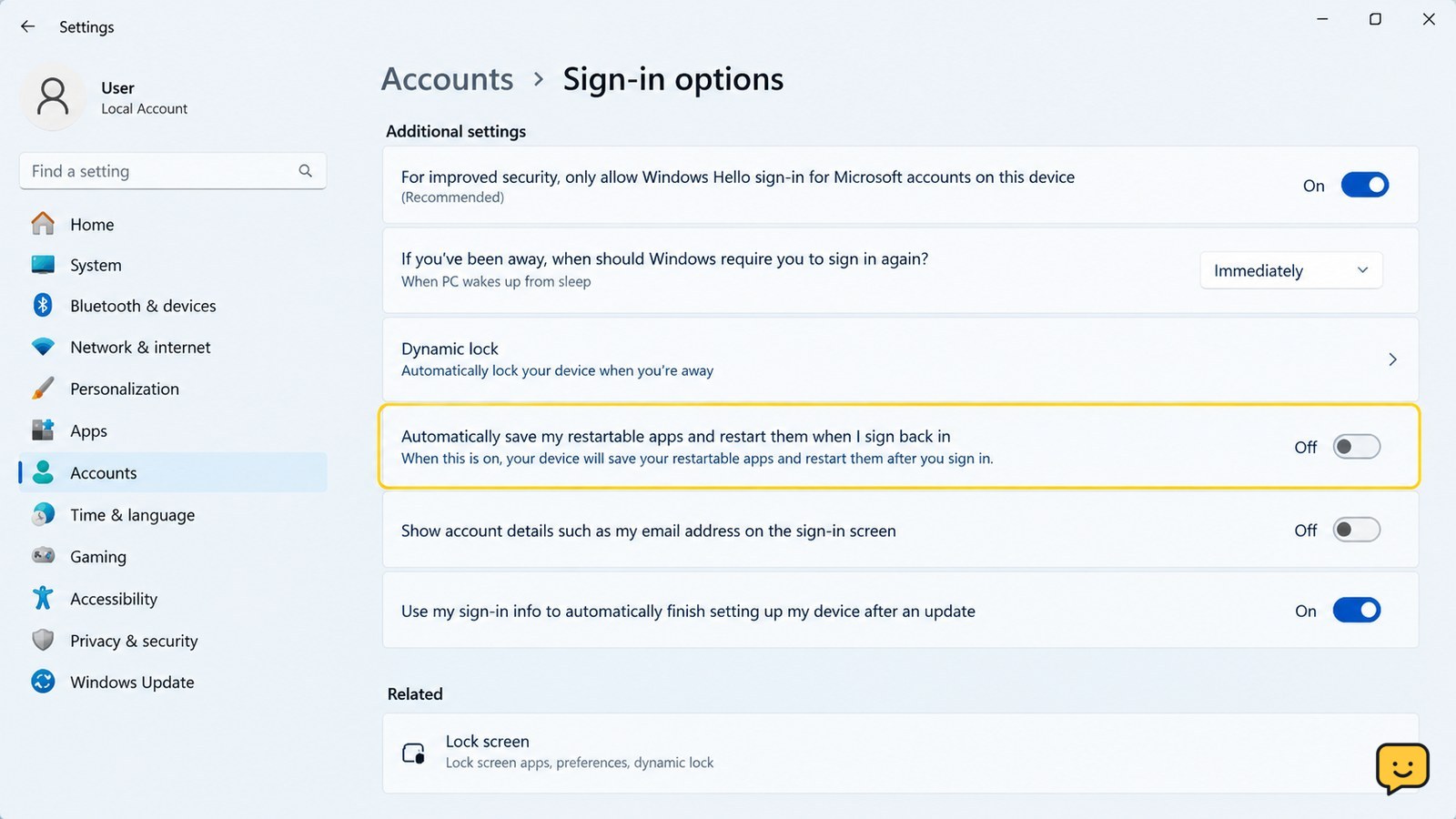
To stop Microsoft Edge from opening on startup, turn off Windows’ option to automatically restart apps: open Settings > Accounts > Sign-in options and disable “Automatically save my restartable apps and restart them when I sign back in.” Then check Settings > Apps > Startup and switch Microsoft Edge off if it appears. Restart Windows to verify.
For more help with this topic, use the Computers Internet guides.
Turn off Windows app restart after sign-in
Windows can reopen applications that were active when you signed out or shut down. Microsoft’s support instructions identify the restartable-apps setting as the first control to change.
- Open Start and select Settings.
- Choose Accounts, then Sign-in options.
- Find Automatically save my restartable apps and restart them when I sign back in.
- Turn the setting Off.
Verify: sign out or restart Windows with Edge closed. Edge should not reappear solely because it was open during the previous session.
Disable Edge in Windows Startup settings
Windows Startup settings control applications that are configured to launch when you sign in, independently of the restartable-apps option.
- Open Settings from the Start menu.
- Go to Apps, then Startup.
- Find Microsoft Edge in the list.
- Switch its control to Off.
If Microsoft Edge is not listed, do not add or remove entries manually. Continue to the next check instead. Startup settings may also show a publisher or startup impact value; use the app name and publisher to avoid disabling an unrelated program.
For broader startup diagnosis, see this guide to checking Windows startup apps when several programs open or the computer starts slowly.
For broader startup diagnosis, see this guide to checking Windows startup apps when several programs open or the computer starts slowly.
Check Edge’s own launch behavior
Microsoft Edge may have a browser-specific startup or background setting that affects how it behaves after Windows starts. Open Edge, select the three-dot menu, choose Settings, and search Settings for startup or system.
Review any option that explicitly says Edge should start with Windows or continue running in the background, and turn it off if present. Do not disable unrelated security, update, or account settings just to prevent startup.
Applicability: setting names and locations can change between Edge releases. If your current Edge Settings page has no launch-related option, rely on the Windows controls above rather than using an old registry instruction.
Restart Windows and confirm the result
A clean restart is the most useful verification because it tests the same sign-in process that triggers startup applications.
- Close every Edge window.
- Restart Windows from Start > Power > Restart.
- Wait until the desktop finishes loading.
- Check whether an Edge window appears without you selecting it.
If Edge stays closed, the change worked. If it still opens, note whether it opens to a normal new tab, restores your previous tabs, or appears only after another application starts. Those symptoms point to different launch sources.
What to do if Edge still opens
If Edge still launches after both Windows startup controls are off, the cause may be a scheduled task, a company policy, another application opening a web link, or a Windows update changing settings.
- Repeat the restart test after confirming Edge is fully closed.
- Check Settings > Apps > Startup again after any major Windows or Edge update.
- Look for a specific program that starts at the same time as Edge, rather than disabling unrelated system services.
- On a work or school computer, ask the administrator whether a policy requires Edge to launch.
Do not remove scheduled tasks or edit the registry based on a generic online fix. If Edge opens with a warning, unexpected extension, or unfamiliar homepage, scan the system with your organization’s approved security software before making further changes.
Frequently asked questions
Why does Edge reopen after I restart Windows?
Edge may reopen because Windows is restoring restartable apps, Microsoft Edge is enabled in Startup settings, or another program is launching it. Turn off the restartable-apps option first, then check Settings > Apps > Startup. Restart with Edge closed to identify whether the behavior has stopped.
What if Microsoft Edge is not listed in Startup settings?
If Edge is not listed, Windows is probably not launching it through the standard Startup list. Turn off the restartable-apps setting under Accounts > Sign-in options, then review Edge’s current Settings search results for startup or system controls. If it continues, check which other application starts at the same time.
Will disabling Edge at startup uninstall or disable the browser?
No. Turning Edge off in Startup settings only prevents it from launching automatically when you sign in. You can still open Edge normally from the Start menu, a taskbar icon, a desktop shortcut, or a web link.
Can a work or school computer force Edge to open at startup?
Yes. An organization can apply Windows or browser policies that override local settings. If a setting is locked, missing, or returns after you change it, do not edit the registry or remove policy files. Contact the organization’s administrator.