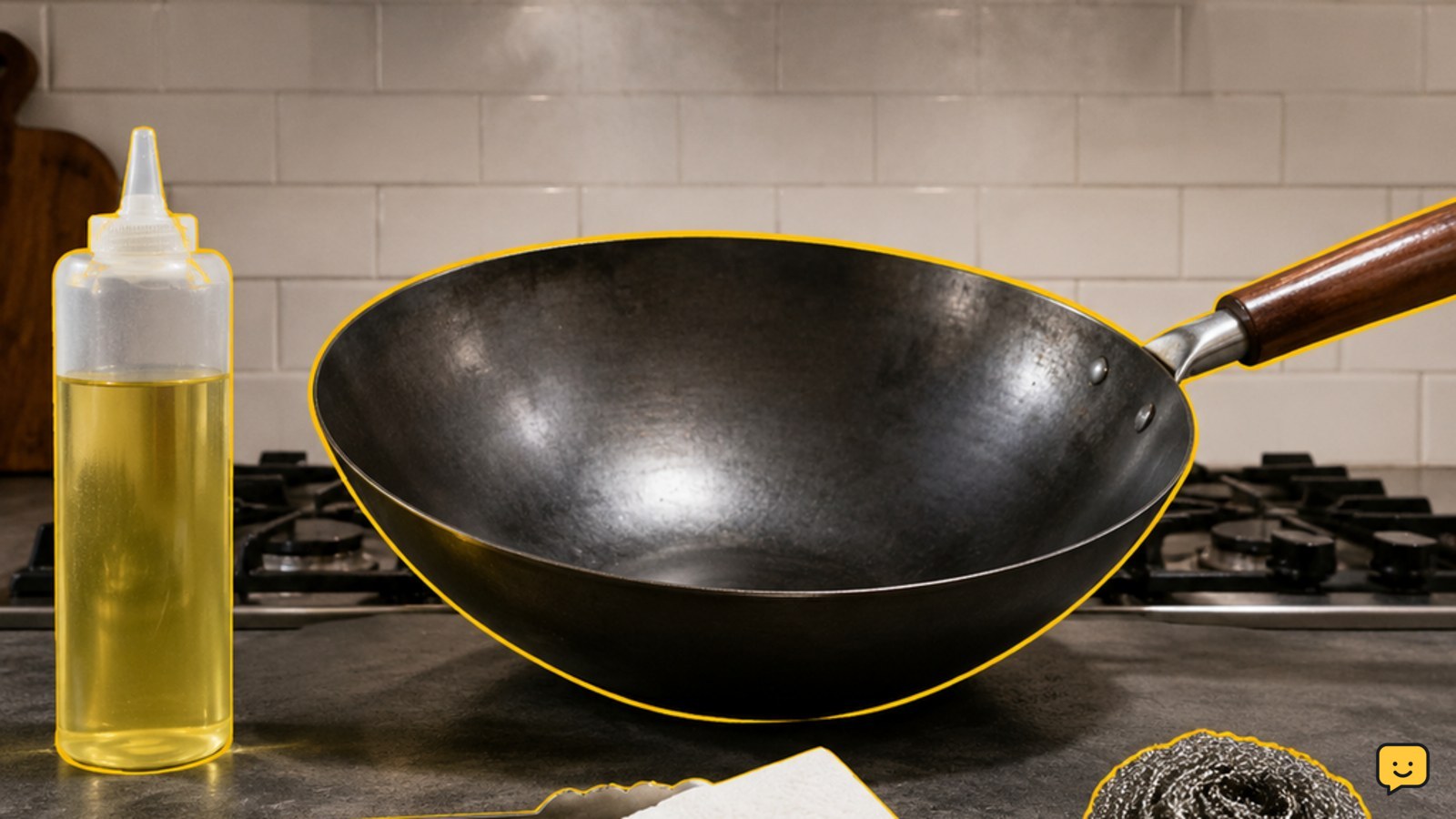
To season a carbon-steel wok, scrub off the factory coating, rinse and dry it, heat it until completely dry, then wipe on a very thin layer of high-smoke-point oil. Heat until the oil smokes lightly, let the wok cool, and repeat the oil-and-heat cycle until the surface looks darker and feels smooth.
For more help with this topic, use the Cooking Basics guides.
Remove the factory coating before heating the wok
A new carbon-steel wok may have a protective factory coating that must be removed before seasoning. Scrub the inside and outside with hot, soapy water and a steel-wool or abrasive pad until the surface no longer feels greasy.
- Wash the wok thoroughly, paying attention to the rim and sides.
- Rinse away all soap.
- Dry it immediately with a towel.
Woklove describes scrubbing a carbon-steel wok with hot soapy water and steel wool to remove the rust-preventing factory coating. If water still beads on the surface or a greasy film remains, scrub again instead of moving to the oil step.
Heat the clean wok until every area is dry
Place the clean wok over the burner and heat it until all visible moisture disappears. Rotate and tilt the wok carefully so the base, lower sides, and upper sides receive heat.
The steel may change color as it heats, but color is not the only success check. The wok should be completely dry, with no water droplets or damp-looking areas. Turn the heat down if the metal begins producing harsh smoke before oil is added.
Apply a thin film of high-smoke-point oil
Seasoning works when a very thin layer of oil bonds to the hot steel. Add about 1 tablespoon of cooking oil, then use long tongs to hold a folded paper towel or soft cloth and spread the oil over the inside surface.
Grapeseed oil is one manufacturer-recommended option, and other neutral oils suitable for high heat can also work. The surface should look lightly glossy, not wet. Wipe out visible streaks, drips, or puddles before heating again.
Keep the towel or cloth away from the flame and use tongs rather than your fingers. Sub-Zero, Wolf, and Cove list cooking oil, tongs, and a soft cloth or paper towel among the needed supplies.
Heat the oiled wok until the film smokes lightly
Heat the oiled wok until the thin film begins to smoke lightly, moving the wok so the oil reaches the sloped sides. The smoke indicates that the oil is being heated enough to form the initial seasoning layer.
Do not leave the wok unattended. A light, brief smoke is expected; thick, acrid smoke or flames are not. Turn off the burner and move the wok away from the heat if the oil ignites or smoke becomes unmanageable.
School of Wok summarizes the basic process as scrub, burn, oil, and smoke. After the smoke subsides, let the wok cool enough to handle safely, then wipe away any excess oil.
Repeat thin oil cycles until the surface darkens
Repeat the wipe, heat, smoke, cool, and wipe cycle several times. Each cycle should leave only a thin bonded film, so use less oil than you think you need and spread it across the entire cooking area.
A newly seasoned wok may not turn uniformly black. Look instead for a darker or blue-brown sheen, a dry smooth feel, and fewer obvious bare patches. Uneven color can improve with regular cooking. If the wok feels tacky, too much oil was used; scrub the sticky area with hot water, dry it over heat, and reseason with a thinner film.
Verify the finish with a simple cooking check
A seasoned wok is ready when the inside is dry-looking, smooth to the touch, and free of sticky oil. Heat it, add a small amount of oil, and cook a simple item such as sliced vegetables rather than delicate eggs or fish for the first test.
If food releases with ordinary stirring and leaves only light residue, the surface is developing correctly. If food sticks heavily, the wok may be under-seasoned, insufficiently preheated, overloaded, or not coated with enough fresh cooking oil. Clean the residue, dry the wok, and continue building the finish through later cooking.
Maintain the seasoning after every cooking session
Wash the warm wok with hot water and a soft sponge or brush, then dry it over low heat. Once dry, wipe on a very small amount of oil and heat it briefly until the surface looks lightly glossy.
Avoid soaking carbon steel for long periods and do not store it wet. Acidic foods, prolonged simmering, and aggressive scouring can weaken a young seasoning layer. If rust appears, scrub the rust away, rinse and dry the wok, then rebuild the oil film with several thin cycles.
For a complete meal workflow, use the same doneness and handling checks described in this guide to make whole chicken in the oven when serving a wok-cooked side dish.
Pair a seasoned wok side dish with guidance to make whole chicken in the oven when planning a larger meal.
Frequently asked questions
What oil is best for seasoning a wok?
A neutral, high-smoke-point cooking oil is suitable. Grapeseed oil is specifically recommended by Sub-Zero, Wolf, and Cove, while other neutral oils may also work. Use only a thin film; the wok should look lightly glossy rather than wet or pooled.
Should I season a wok before using it for the first time?
Yes, if it is unseasoned carbon steel or cast iron. First remove any factory coating with hot soapy water and an abrasive scrub pad. Then dry the wok over heat and build the surface with repeated thin oil-and-heat cycles.
Why is my seasoned wok sticky?
A sticky wok usually has too much oil or was not heated enough after oiling. Scrub the tacky area with hot water, dry the wok over heat, and repeat the process with a much thinner oil film. Stop adding oil when the surface already looks glossy.
Can I use soap on a seasoned wok?
Use dish soap when removing the initial factory coating or cleaning stubborn residue, but avoid prolonged soaking and aggressive scrubbing during routine care. After washing, dry the wok over heat and apply a very thin maintenance layer of oil.
Why does food still stick to my wok after seasoning?
Seasoning is only one factor. Preheat the wok, add oil before the food, keep batches small, and avoid moving food too early. If sticking remains heavy, clean the residue and continue seasoning through regular cooking rather than applying a thick layer of oil.