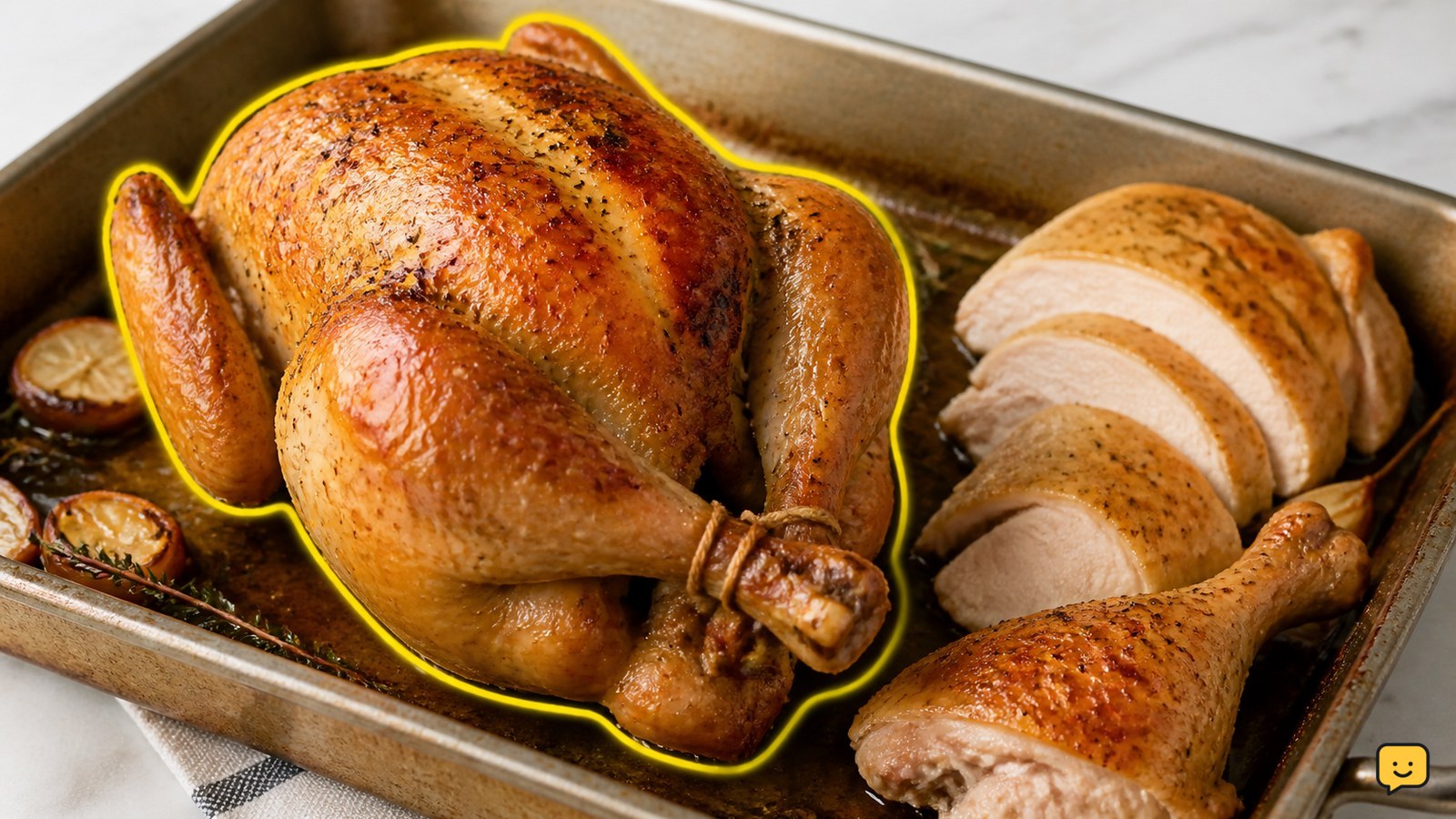
To make a whole chicken in the oven, pat a 3- to 5-pound bird dry, season it, and roast it breast-side up at 425°F for 20 minutes, then 375°F until the thickest breast and thigh reach 165°F. Rest 15 minutes before carving. Use a thermometer—not color or juices—to decide when it is done.
For more help with this topic, use the Cooking Basics guides.
Choose the chicken, pan, and oven temperature
A whole chicken roasts most predictably when it is fully thawed, roughly 3 to 5 pounds, and placed in a pan large enough to leave space around it. Heat the oven to 425°F and position a rack in the center. A shallow roasting pan or oven-safe skillet helps hot air reach the skin; a deep covered pot will produce softer rather than crisp skin.
Remove excess moisture with paper towels. Dry skin browns more readily, while water on the surface can delay browning and cause splattering. Leave the legs untied for faster cooking, or tie them loosely with oven-safe twine for a neater shape.
Season and arrange the whole chicken
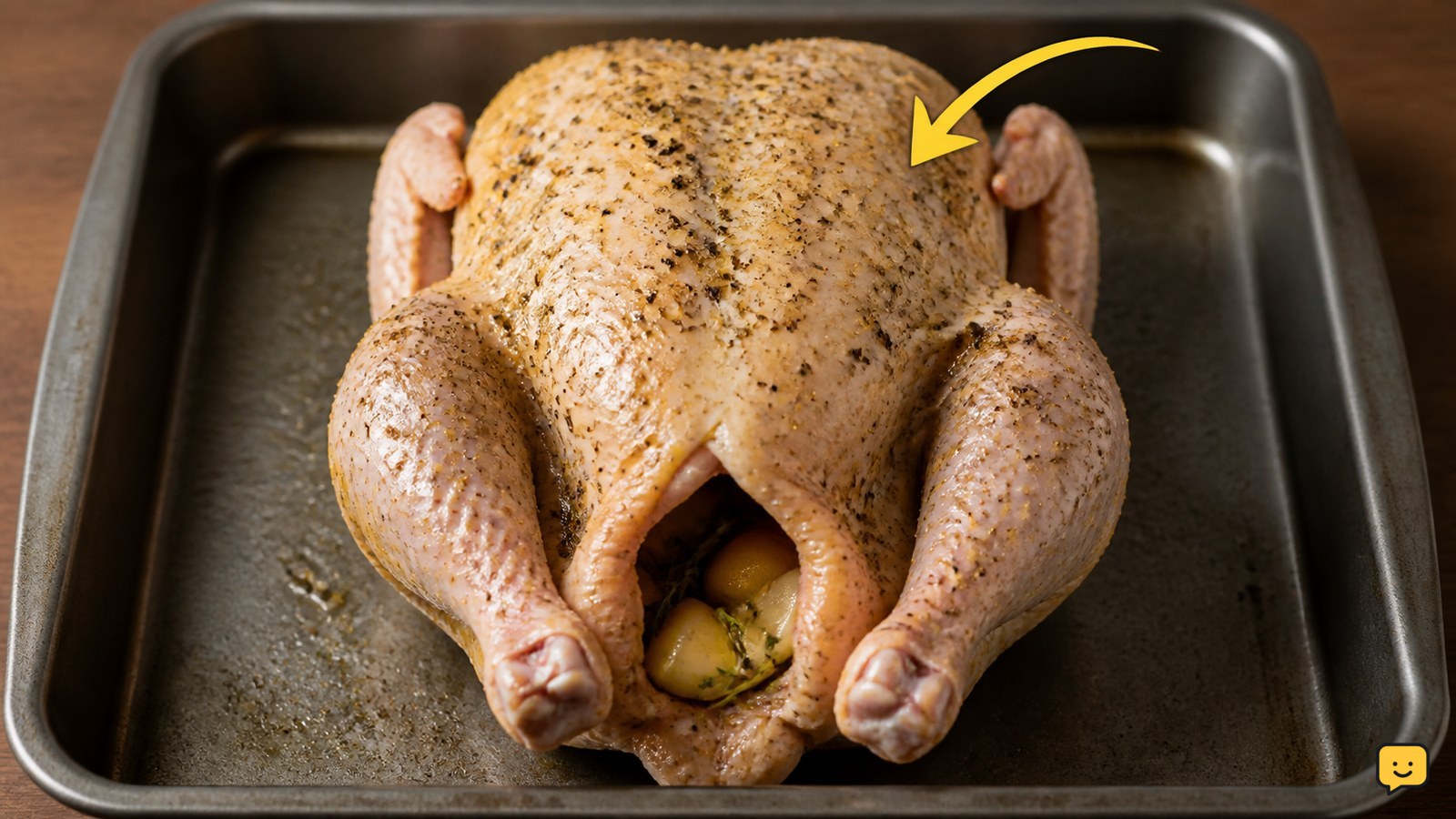
Season the chicken by coating the skin with 1 to 2 tablespoons of oil or softened butter, then adding salt, pepper, and any dry herbs you like. Rub seasoning over the breast, thighs, legs, and back. Put optional aromatics such as a halved lemon, onion, or garlic in the cavity, but do not tightly pack it with bread or stuffing because that can slow cooking.
Set the bird breast-side up in the pan with the legs pointing toward the hotter back area of the oven if your oven browns unevenly. Keep vegetables around—not underneath—the chicken if you want them roasted rather than steamed.
For an alternative oven-safe paper choice, check the difference between wax paper and parchment before lining the pan.
Check the difference between wax paper and parchment before lining the pan.
Roast hot, then finish at 375°F
Roast the chicken at 425°F for 20 minutes, then reduce the oven to 375°F without opening the door for long. Continue roasting until the thermometer confirms doneness. A 3- to 5-pound chicken commonly takes about 1 to 1 1/2 hours total, but shape, starting temperature, pan type, and oven accuracy can change the timing.
The Pioneer Woman’s roast chicken method uses about 1 hour 15 minutes as a timing reference and describes deep golden skin as an observable result; use that only as a visual and timing benchmark, not as a substitute for a thermometer.
If the breast skin becomes deep brown while the legs remain undercooked, place a loose foil tent over the breast and return the pan to the oven. If the skin is pale near the end, remove the foil, confirm the oven is actually at temperature, and continue roasting until the internal temperature is safe.
Verify doneness at the breast and thigh
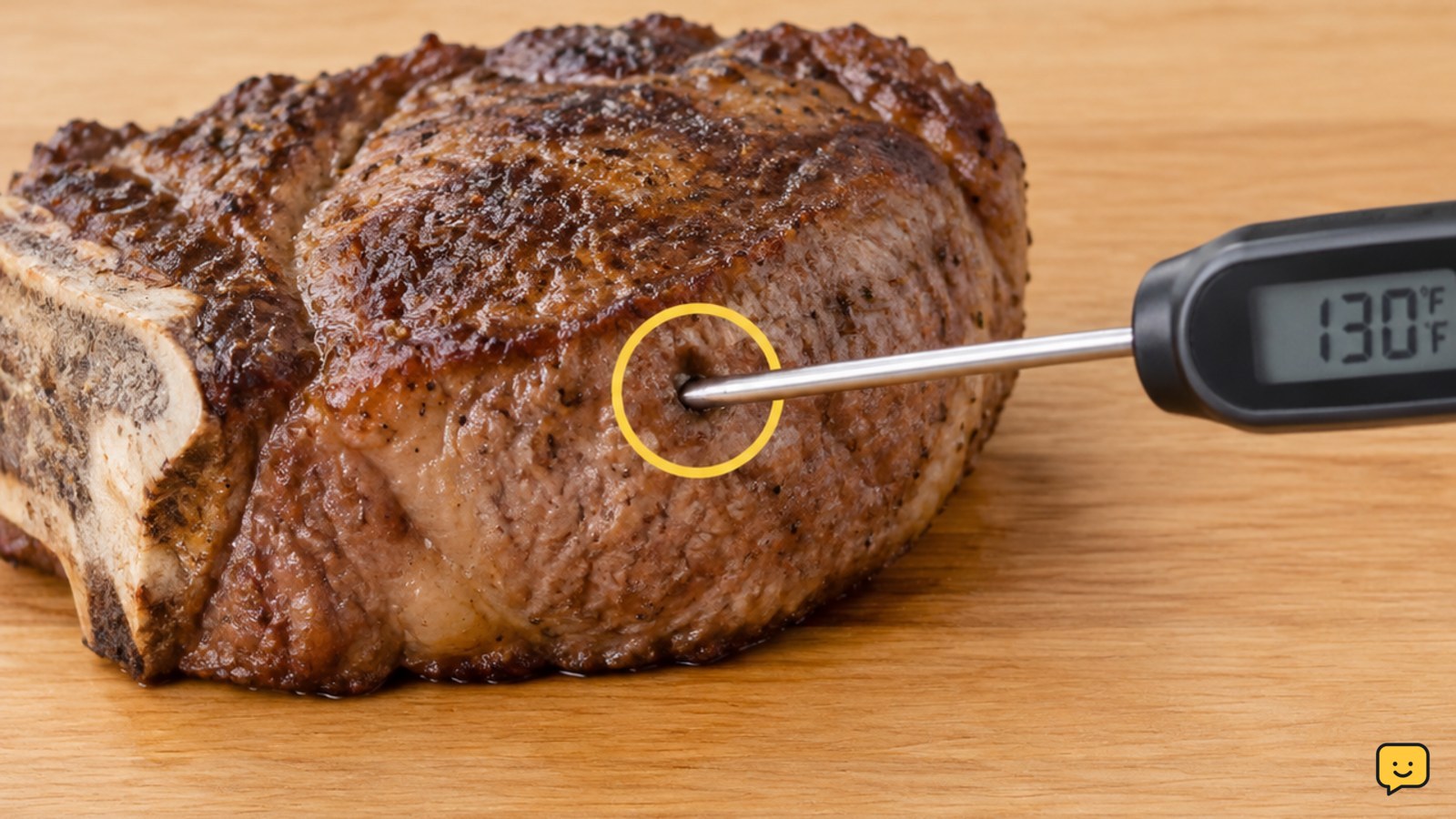
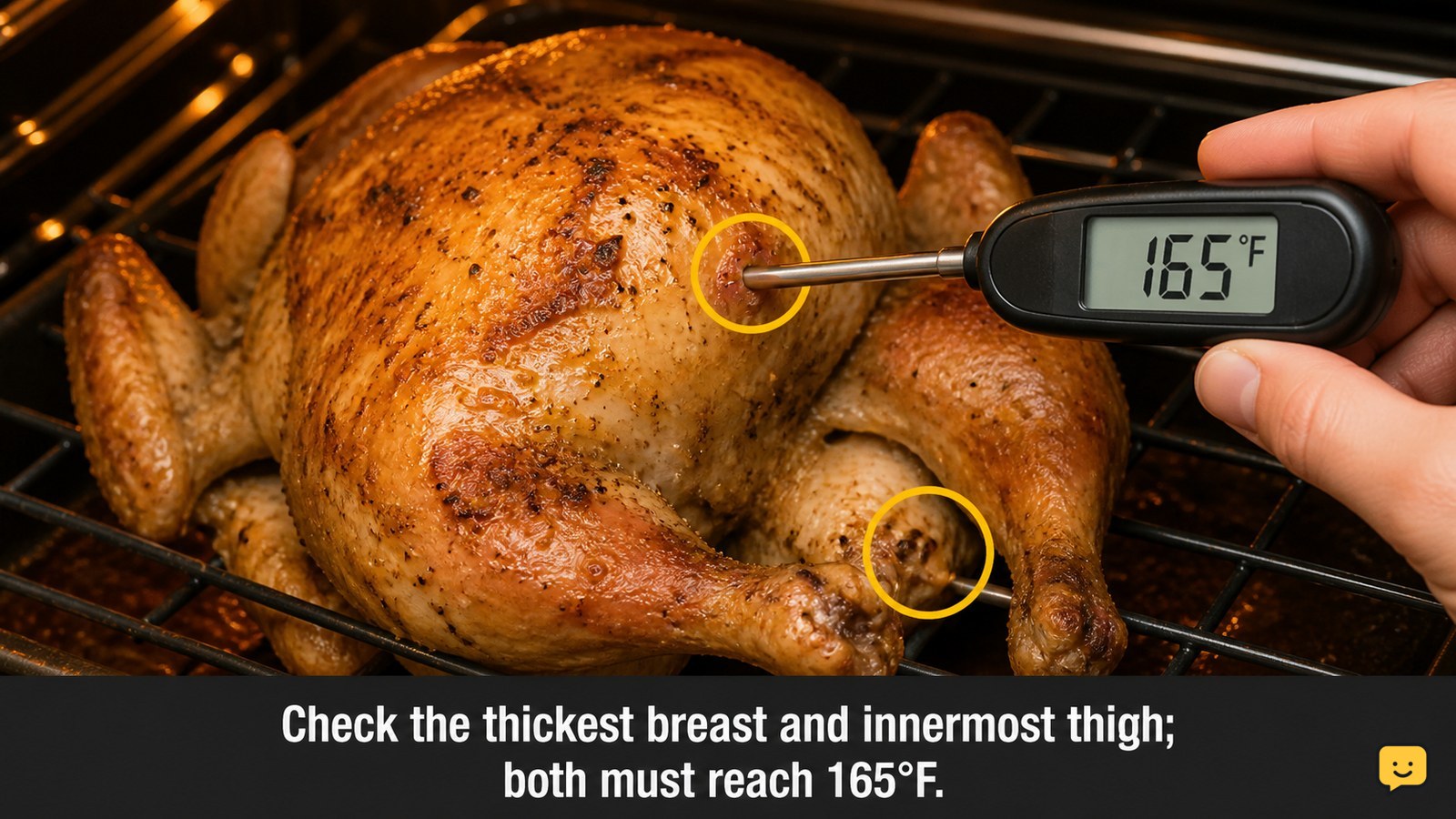
A whole chicken is ready when the thickest part of the breast and the innermost thigh reach at least 165°F, measured without touching bone. Insert the thermometer from the side into the thickest area. Check more than one location because a breast can be done while the joint area remains cooler.
Clear juices, browned skin, and loose leg joints can support the check, but they are not reliable substitutes for temperature. If either reading is below 165°F, return the chicken to the oven for 10 to 15 minutes and check again. If the thermometer reading jumps unusually fast, reposition the probe away from the cavity or bone.
Rest, carve, and store the roasted chicken
Rest the cooked chicken on a board for 15 minutes before carving. This makes handling safer and gives hot juices time to settle. Transfer it to a clean board, remove the legs at the joints, then slice the breast meat across the grain. Spoon pan juices over the meat just before serving.
Refrigerate leftovers in shallow containers within 2 hours. Eat them within 3 to 4 days, or freeze them in airtight portions. If the meat is dry, slice it thinly and reheat it covered with a little stock or pan juice; if it is tough because it was undercooked, return it to the oven and verify 165°F rather than serving it.
If you do not have an oven available, the slow-cooker roast method explains how low, moist heat changes a roast-style cooking process, though it is not a direct substitute for crisp oven skin.
If you do not have an oven available, the slow-cooker roast method explains a different low-heat approach.
Frequently asked questions
Should I cover a whole chicken while roasting?
No, leave it uncovered for crisp skin. If the breast browns too quickly before the thigh reaches 165°F, loosely cover just the breast with foil and keep roasting.
Do I need to put water in the roasting pan?
No. Water is not required for roasting and can soften the skin. Add a small amount of stock or water only if pan drippings begin to burn, keeping the liquid below the chicken skin.
How do I keep the chicken breast from drying out?
Use a thermometer and remove the chicken as soon as the breast reaches 165°F while confirming the thigh is also safe. Resting for 15 minutes and slicing across the grain also improves texture.
Can I roast vegetables with the chicken?
Yes. Cut firm vegetables into similar-size pieces and arrange them around the chicken in a single layer. Leave space around the bird so hot air can circulate and turn the vegetables if their exposed surfaces brown unevenly.