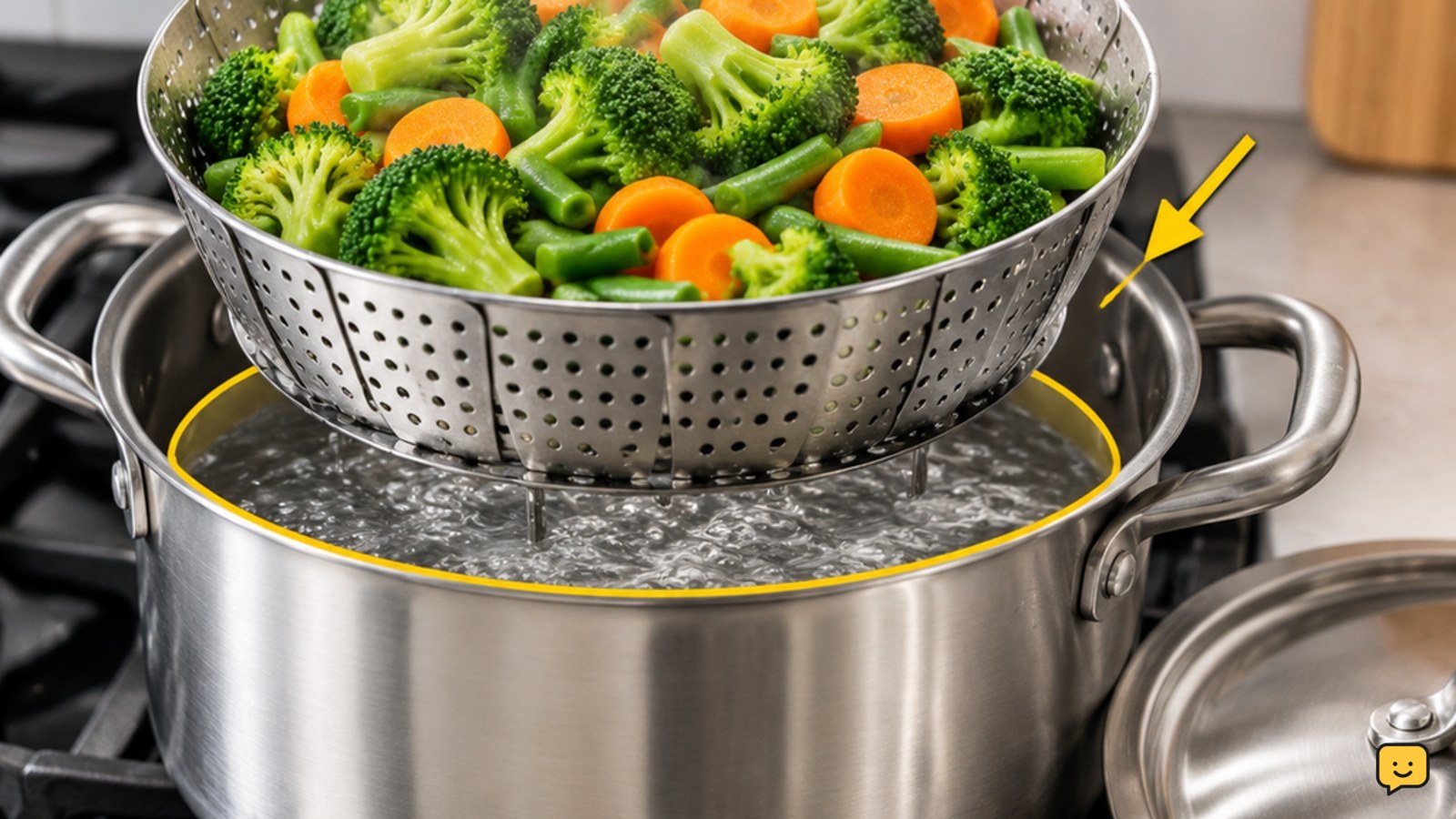
To steam vegetables, add about 1 inch of water to a pot, place cut vegetables in a steamer basket above the water, cover, and bring the water to a steady simmer. Cook until the pieces are bright and tender-crisp, checking with a fork. Add water if needed, but stop cooking when the vegetables reach the texture you want.
For more help with this topic, use the Cooking Basics guides.
Choose the vegetables and cut them evenly
Uniform vegetable pieces steam more evenly because similarly sized pieces receive heat at the same rate. Broccoli and cauliflower florets, carrot slices, green beans, zucchini, asparagus, peas, and Brussels sprouts all work well; cut dense vegetables smaller than quick-cooking ones.
Keep carrot rounds or potato pieces relatively thin, while leaving delicate vegetables such as peas or spinach in larger portions. If combining vegetables, start dense pieces first and add faster-cooking pieces later. Fresh or frozen vegetables can both be steamed, but frozen pieces may need a little more time and should be separated rather than added as one solid block.
Set up a stovetop steamer without submerging the vegetables
A stovetop steamer works when the water stays below the vegetables and the covered pot traps the rising steam. The Kitchn recommends adding about 1 inch of water to the pan; OXO describes using a steamer pot with water brought to a slow boil before adding the prepared vegetables.
Pour the water into the pot, set the steamer basket inside, and check that its base is above the water. Add the vegetables in a loose, even layer, then cover the pot. If the vegetables touch the water, they will begin to boil instead of steam, which can make them waterlogged and unevenly cooked.
Bring the water to a simmer or slow boil before starting the main cooking time. Keep enough water in the pot to produce steam, but do not fill it so high that bubbling water reaches the basket.
Steam until the thickest piece is tender-crisp
Steam vegetables until their color is brighter and the thickest piece can be pierced with a fork while still offering slight resistance. Begin checking after about 3 minutes for peas, spinach, asparagus tips, or thin zucchini; allow roughly 5 to 8 minutes for broccoli, cauliflower, green beans, or thicker zucchini; and expect about 8 to 12 minutes for dense carrot, potato, or Brussels sprout pieces.
These are starting ranges rather than fixed rules because piece size, starting temperature, and basket depth change the result. Lift the lid briefly, test one thick piece, and return the lid promptly if more cooking is needed. The Kitchn specifically emphasizes uniform cuts and avoiding over-steaming.
Remove the basket as soon as the vegetables reach the desired texture. Season while hot with salt, pepper, butter or olive oil, lemon juice, herbs, or a small amount of grated cheese.
Use a microwave when you need a small batch
A microwave can steam a small batch when the vegetables are placed in a microwave-safe dish with a small amount of water and covered with a vented microwave-safe lid or suitable cover. The cover holds steam around the vegetables while allowing pressure to escape.
Microwave in short intervals, stir or rearrange the pieces, and test the thickest piece after each interval. This method is useful for quick portions, but the dish and trapped steam become very hot. Do not use a sealed container, metal, or a cover that is not labeled microwave-safe. If the vegetables are still firm, continue in short bursts rather than committing to one long cooking cycle.
Fix watery, hard, or overcooked vegetables
Watery vegetables usually touched the cooking water or stayed covered after they were done. Lift them out of the basket promptly, drain briefly, and use less water or a higher basket position next time. If the vegetables are hard, check that steam is visibly building under the lid and that the pot has not run dry; add hot water if needed and continue cooking.
If the vegetables are soft, dull, or falling apart, they were steamed too long. Remove them immediately and season them rather than continuing to cook. A pan that has boiled dry must be taken off the heat before adding water, because sudden steam and splattering can cause burns. Let the pan cool enough to handle safely, then refill it.
Cool and store leftovers safely
Steamed vegetables should be cooled promptly and refrigerated in a covered container if they will not be eaten soon. Spread a large batch into a shallow container so it cools more quickly, then reheat only the portion you plan to eat.
Reheated vegetables will usually become softer, so warm them briefly and check the texture before serving. Do not keep using vegetables that smell sour, feel unusually slimy, or show visible spoilage.
Frequently asked questions
Should vegetables be salted before steaming?
You can season vegetables after steaming for better control over flavor and texture. Salt added before cooking is not necessary, and seasonings placed in the steaming water will not reliably flavor the vegetables. Toss the hot vegetables with salt, oil or butter, lemon, herbs, or another preferred seasoning immediately after draining.
Can you steam frozen vegetables without thawing them?
Yes, frozen vegetables can usually be steamed without thawing. Break apart clumps first so steam can reach each piece, then add a little cooking time and test the thickest piece. Avoid packing the basket tightly, because a dense frozen layer slows steaming and produces uneven texture.
How much water should be in a vegetable steamer?
Use enough water to create steady steam while keeping the water below the steamer basket. About 1 inch is a practical starting point for a standard pot, as recommended by The Kitchn. Check during longer cooking sessions and add more water only after removing the pot from heat if the pan is nearly dry.
Why are my steamed vegetables still hard?
Hard vegetables usually need more time, larger pieces may be slowing the batch, or the pot may not be producing enough steam. Confirm that the lid fits, the water is simmering, and the vegetables sit above the water. Continue in short intervals and test the thickest piece rather than judging only by the outside.