To make garlic confit, peel enough garlic cloves to fill a small baking dish in one layer, cover them completely with olive oil, and add salt or herbs if desired. Cover and bake at 250°F for about 2 to 2½ hours, until the cloves are very tender and lightly golden. Cool, refrigerate promptly, and never keep garlic-in-oil at room temperature.
For more help with this topic, use the Cooking Basics guides.
Prepare the garlic and oil
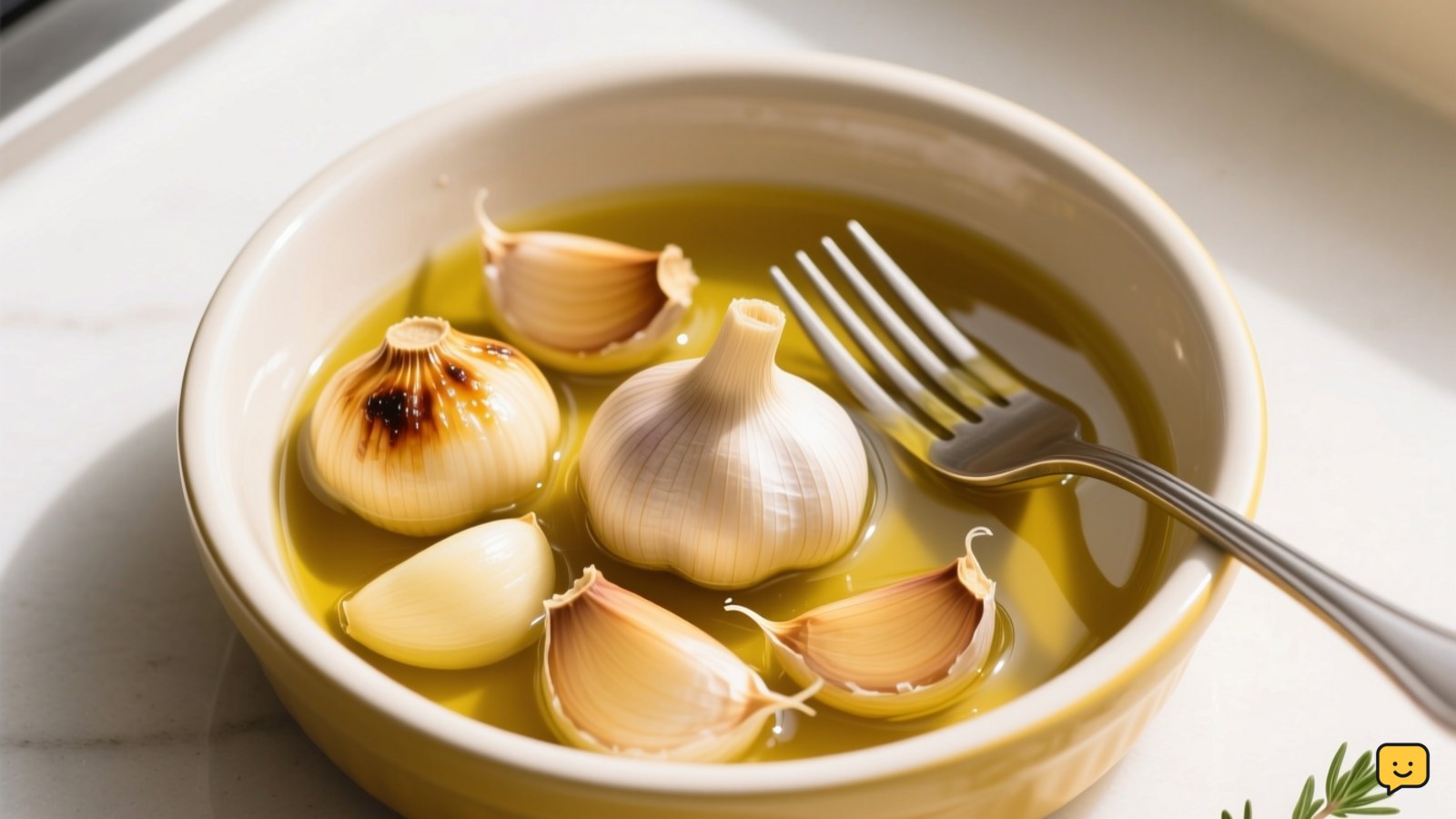
Garlic confit starts with peeled garlic cloves completely covered by olive oil. Separate and peel the cloves, trimming only the dry root end if needed. Leave small cloves whole and halve unusually large cloves so they cook at a similar rate.
- Heat the oven to 250°F.
- Place the cloves in a small baking dish or oven-safe saucepan.
- Add a pinch of salt and optional rosemary, thyme, or a dried chile.
- Pour in olive oil until every clove is submerged.
The cloves should sit in a snug layer rather than spread across a large dish. If any garlic protrudes above the oil, add more oil before cooking. Cover the dish with a lid or foil to slow evaporation.
Bake until the cloves are soft
Garlic confit is ready when the cloves are very tender, lightly golden, and easily pierced with a fork. Bake the covered dish at 250°F for about 2 to 2½ hours; a recipe from Hungry Foodie uses this low-temperature, covered method with fresh herbs.
Begin checking around the two-hour mark. Carefully uncover the dish and test one of the larger cloves with a fork. It should compress easily without a firm center. The oil may show gentle movement, but it should not smoke or rapidly fry the garlic.
If the cloves are still firm, cover the dish again and continue in 15-minute intervals. If they are browning quickly while the centers remain firm, lower the heat, check that the dish is covered, and continue more gently. Stop if the oil smokes or the garlic develops a burnt smell.
Cool and store garlic confit safely
Garlic confit must be cooled and refrigerated promptly because garlic submerged in oil is a low-oxygen food that can support dangerous bacterial growth if held improperly. Remove the dish from the oven, let it stop steaming briefly, and transfer the cloves and oil to a clean shallow container if faster cooling is needed.
Cover and refrigerate the confit as soon as practical. Keep the garlic beneath the oil, use it within 4 days, or freeze portions for longer storage. Do not store homemade garlic confit in a cupboard, on the counter, or in a sealed jar at room temperature.
Discard it without tasting if it has been left out too long, smells spoiled, shows mold, or develops an unusual appearance. Do not rely on reheating to make questionable garlic confit safe.
Use the cloves and infused oil
Tender garlic confit has a soft, spreadable texture and a mellow, sweet flavor. Mash the cloves onto toast, stir them into pasta or mashed potatoes, blend them into a dressing, or fold them into cooked vegetables after the heat is off.
Strain the infused oil only if you want it separately for bread dipping or vinaigrettes. Keep the oil refrigerated with the same storage limit if it has contacted the garlic. For a batch with a stronger garlic flavor, use more cloves in the same snug dish rather than extending the cooking until the cloves brown.
Fix firm, browned, or dry cloves
Firm garlic usually means the cloves were large, not fully submerged, or did not receive enough gentle cooking time. Add oil if needed, cover the dish, and return it to the 250°F oven in short intervals until a fork slides through the center.
Dark brown or bitter cloves indicate excessive heat or prolonged cooking. Remove the burnt cloves and discard them; do not mix them into the usable batch. If the oil has smoked, discard the oil as well. A dry surface means the garlic was exposed above the oil, so stop and correct the coverage before continuing.
Frequently asked questions
Can garlic confit be made on the stovetop?
Yes. Use the lowest heat in a small heavy saucepan and keep the cloves fully covered with oil. The oil should stay gently warm rather than bubble vigorously. Check a clove with a fork and stop when it is soft and lightly golden.
What oil is best for garlic confit?
Olive oil is a practical choice because it adds flavor and becomes useful as an infused oil. A neutral oil also works if you want the garlic flavor to stand out. Whichever oil you choose, keep the cloves completely submerged during cooking.
Why is my garlic confit bitter?
Bitter garlic confit was likely overheated, cooked until dark brown, or made with damaged cloves. Garlic should become soft and lightly golden, not deeply browned. Remove burnt cloves, and discard oil that smoked or tastes scorched.
Can garlic confit be frozen?
Yes. Freeze cooled cloves in small portions, with or without some oil, in an airtight freezer-safe container. Label the container and thaw only the portion you plan to use. Do not thaw it on the counter for extended storage.