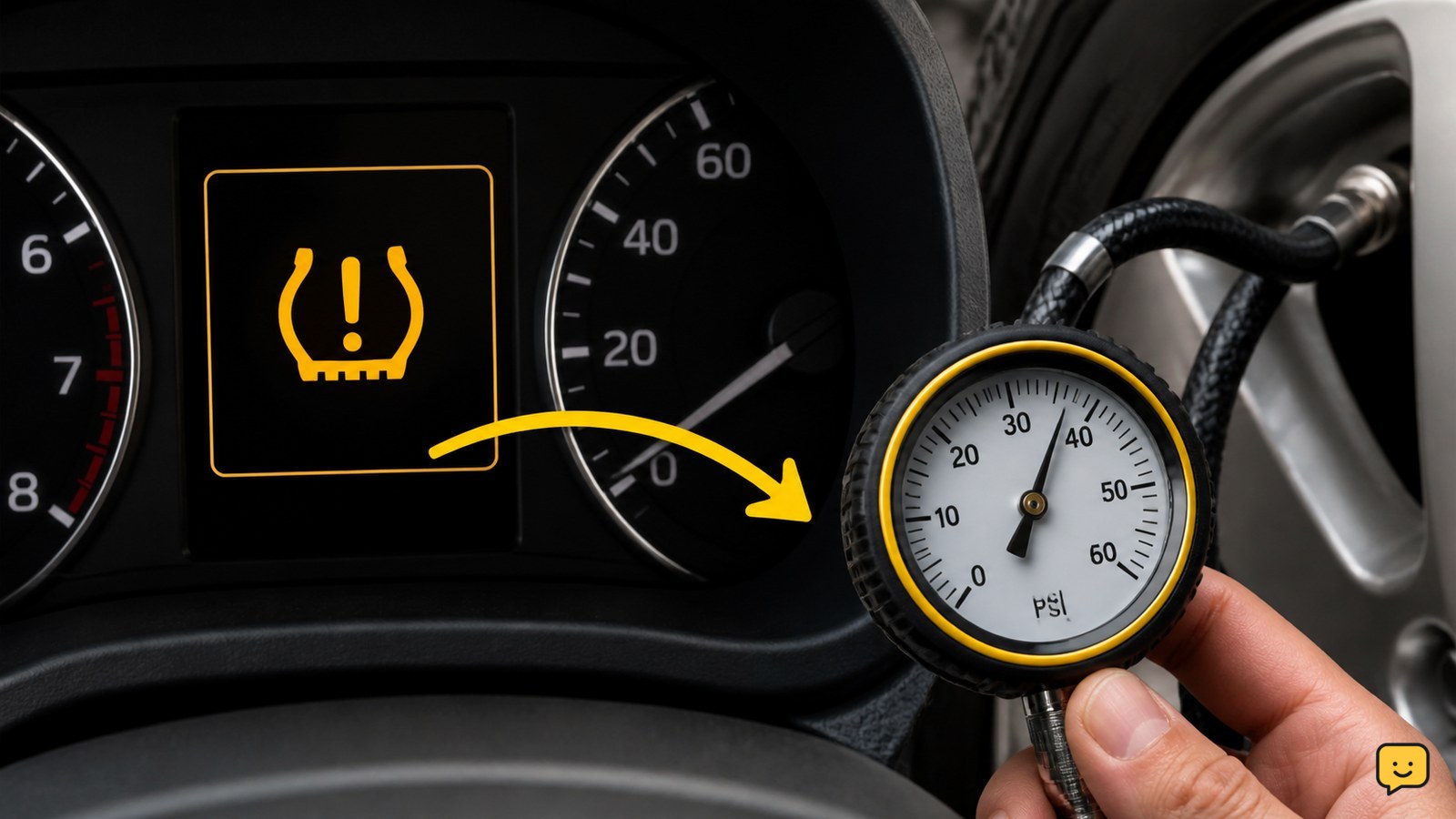
The tire pressure light usually means one or more tires are underinflated. Slow down, avoid hard cornering, and check all four tires with a gauge when they are cold. Inflate them to the pressure on the driver’s doorjamb label, not the number on the tire sidewall. Stop driving if a tire is flat, damaged, losing pressure quickly, or the car handles abnormally.
Browse more Maintenance & Repair guides
Check whether the warning means low pressure or a system fault
The tire pressure light most often means at least one monitored tire is below its recommended pressure. A tire-pressure monitoring system can also show a warning when a sensor is not reporting correctly; a community discussion describes this as a sensor that is not reading, but it is not a substitute for your vehicle’s owner’s manual or a professional diagnosis.
Look at the symbol and its behavior. A steady horseshoe-shaped icon with an exclamation mark usually calls for a pressure check. If the light flashes, stays on after correct inflation, or appears with a message about the monitoring system, treat it as a possible TPMS fault and verify the tires manually before driving farther.
Inspect all four tires before deciding to drive
A visual inspection can identify an unsafe tire before a gauge check. Walk around the vehicle and look for a tire sitting noticeably lower, a nail or screw, sidewall damage, a bulge, a cut, or tread separating from the tire.
- Check all four road tires, even if the dashboard identifies only one corner or the car feels normal.
- Look underneath the vehicle for a spare tire if your model monitors it; monitoring coverage varies by vehicle, so confirm it in the manual.
- Compare the tire positions and note anything that looks different from the others.
If a tire is visibly flat or damaged, do not drive to an air station. Use the spare only if it is correctly inflated and approved for that vehicle, or arrange roadside help.
Measure and set pressure using the doorjamb specification
The correct inflation target is the vehicle manufacturer’s recommended cold pressure, usually printed on the driver’s doorjamb label. The maximum pressure molded into the tire sidewall is not the normal vehicle setting.
- Remove the valve-cap cover and press the gauge firmly onto the valve stem.
- Read and record the pressure for each tire.
- Inflate a low tire to the front or rear value shown for that axle on the vehicle label.
- Replace each valve cap and recheck the reading after adding air.
Do not bleed air from a hot tire just to reach the cold specification. Heat from driving raises pressure temporarily, so recheck the tire when cold. If one tire is much lower than the others, suspect a puncture or leak rather than normal temperature change.
Verify that the warning clears after pressure correction
The warning should clear only after every monitored tire reaches the vehicle’s specified pressure and the system has received the required driving or reset procedure. Some vehicles relearn sensor readings while driving; others require a TPMS reset control or menu, so use the owner’s manual for the exact method.
- Start the vehicle and check whether the light turns off after the normal self-check.
- If it remains on, drive only as permitted by the manual and observe whether the system updates.
- Use the vehicle’s documented TPMS reset or calibration control if one is provided.
- Recheck pressures with a gauge if the light returns.
Successful verification means the pressures are correct, the vehicle handles normally, and the warning is off. If the light stays on, flashes, or returns after a short drive, the issue may be a sensor, relearn, valve, or continuing air leak. Schedule service rather than repeatedly resetting the warning.
Choose the safest next action when the light returns
A returning tire-pressure warning changes the decision from simple inflation to leak or system diagnosis. A tire that loses pressure again may have a puncture, damaged valve, bead leak, or wheel problem, while a warning with normal measured pressures may point to the monitoring system.
- Pressure is low and the tire looks intact: Inflate it to specification and arrange a prompt tire inspection if it loses air again.
- Pressure is very low or the tire is visibly damaged: Stop driving and use roadside assistance or the correctly inflated spare.
- All pressures are correct but the warning remains: Follow the manual’s reset procedure once, then arrange TPMS diagnosis if the light does not clear.
- The vehicle pulls, vibrates, or feels unstable: Stop in a safe location and do not continue until the tire and wheel condition are checked.
Do not assume the warning is harmless because the car still drives. Underinflation can change handling and increase tire heat, so the measured pressure and tire condition—not the dashboard symbol alone—should determine whether driving is safe.
Frequently asked questions
Can I drive with the tire pressure light on?
You may be able to drive a short distance to a safe place if every tire looks intact, the vehicle handles normally, and you reduce speed while checking pressure promptly. Do not continue if a tire is flat or damaged, pressure is dropping quickly, the car pulls, or steering and vibration feel abnormal.
Why is the tire pressure light on when my tires look fine?
A tire can be underinflated without looking obviously low, especially with a stiff sidewall. Measure every tire with a gauge when cold. If all readings match the doorjamb specification but the warning stays on or flashes, the TPMS may need a reset, sensor relearn, battery replacement, or diagnosis.
Should I use the pressure printed on the tire?
No. Use the vehicle manufacturer’s recommended pressure on the driver’s doorjamb label or in the owner’s manual. The number molded into the tire sidewall is generally a maximum pressure for the tire, not the normal setting selected for your car’s load, handling, and tire fitment.
Why did the tire pressure light come on after a cold night?
Lower air temperature can reduce measured tire pressure enough to trigger the warning. Check all tires when cold and inflate them to the vehicle label’s specification. If one tire is substantially lower than the others or loses pressure again, have it inspected for a leak.
What does a flashing tire pressure light mean?
A flashing light can indicate a TPMS communication or sensor problem rather than low pressure alone. Check all tire pressures manually first because a system fault does not guarantee that the tires are correctly inflated. If pressures are correct and the light continues flashing, use the manual’s reset guidance and arrange service.