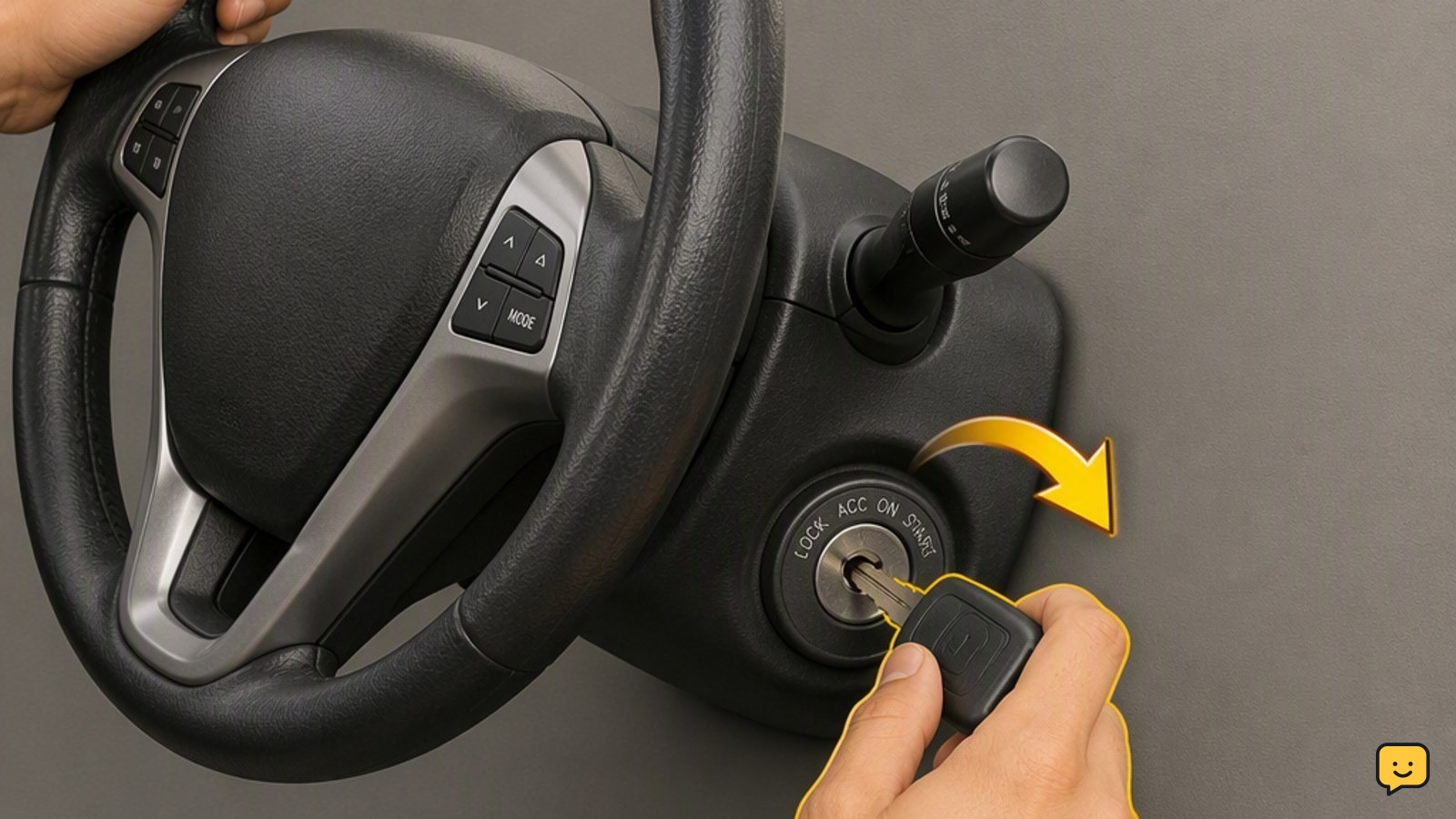
Hold the steering wheel and find the direction in which it moves slightly. Keep gentle pressure in that direction while gently turning the correct ignition key. Do not force either part. If the wheel releases and the key turns, steering-lock tension was the cause; if not, test a spare key and stop if anything binds.
Why the steering wheel and key can lock together
A keyed ignition can mechanically lock the steering wheel after the vehicle is switched off. If the wheel is turned as you park or rests under pressure—especially with the tires against a curb—the lock can remain loaded.
That pressure can make the ignition key feel completely stuck even when the key and lock are otherwise working. Toyota identifies a locked steering wheel as a common reason an ignition key will not turn.
The important distinction is resistance versus damage. Steering-lock tension usually releases when you move the wheel slightly in the correct direction while gently turning the key. A key or ignition fault tends to remain after that pressure is removed.
Release the steering-lock pressure
-
Insert the correct key fully. Do not turn it forcefully or rock it sharply in the slot.
-
Test the steering wheel in both directions. One direction will usually feel solid. The other may move a small amount before reaching a firm stop.
-
Hold the wheel toward the direction with slight movement. Use steady hand pressure rather than jerking or pulling hard.
-
Gently turn the key while maintaining wheel pressure. Apply only the amount of key pressure you would normally use to start the vehicle.
-
Release both as soon as the lock disengages. The wheel should regain movement as the key turns into the accessory or ignition position.
If it does not release, relax the wheel and key, then repeat the test once in the opposite direction. Do not alternate rapidly or use increasing force. Honda service guidance notes that the wheel may move only a little and warns against overpowering it.
Verify that steering-lock tension was the cause
Successful release should be clear: the key turns normally and the steering wheel is no longer held by the lock. Start the vehicle only after confirming that the key moves without unusual resistance.
Switch the engine off and remove the key normally. If the key continues to turn smoothly on a second attempt, the original problem was probably pressure on the steering lock rather than a failed ignition cylinder.
If the problem returns after parking with the wheel turned, straighten the front wheels before switching off when practical. Avoid leaving the tires pressed firmly against a curb, because that can place additional load on the steering system.
If the key still will not turn
Once gentle wheel-pressure release has failed, check the key before assuming the ignition cylinder has failed.
-
Confirm the key belongs to this vehicle. Toyota lists use of a key for a different vehicle as another possible reason the ignition will not turn.
-
Inspect the key. Look for bending, cracks, damaged edges, or obvious wear. Do not use pliers to create more leverage.
-
Try an undamaged spare key. Keep the steering wheel under gentle pressure in its movable direction while testing the spare.
-
Compare the result. If the spare turns but the regular key does not, the regular key is likely worn or damaged. Christian Brothers Automotive recommends trying a spare when key wear may be causing the lock to stick.
Use the spare only as a diagnostic check and temporary solution. Arrange for a correctly cut replacement before the remaining key becomes unreliable.
Recognize a possible ignition-cylinder fault
A lock-cylinder or steering-lock problem becomes more likely when the correct key and an undamaged spare both fail, especially after you have removed steering-wheel pressure.
Other reasons to stop include inconsistent key movement, a key that catches at the same point each time, or a lock that feels rough rather than firmly held by steering tension. These symptoms cannot be confirmed safely by applying more force.
Contact a qualified automotive locksmith, repair shop, or the vehicle manufacturer’s service department. Provide the vehicle’s year, make, model, and a description of whether the wheel moves slightly in either direction. Proof of ownership may be required for key or lock work.
Avoid methods that can make the problem worse
Do not strike the key, steering column, or ignition housing. Do not clamp pliers onto the key, insert tools into the key slot, or attempt to defeat the steering lock. These actions can damage the key, lock cylinder, steering-column components, or security equipment.
Do not spray an unapproved lubricant or cleaner into the ignition. Products that are unsuitable for the lock can retain debris or affect nearby components. Follow the owner’s manual or manufacturer guidance for your specific vehicle.
Most steering-lock tension releases with gentle, coordinated movement. If normal hand pressure does not work, stopping is safer and usually less expensive than dealing with a broken key inside the cylinder.
Frequently asked questions
Which direction should I turn the steering wheel when the key will not turn?
Turn the wheel toward the direction in which it still moves slightly. Hold gentle pressure there while turning the ignition key normally. If the wheel feels completely solid in that direction, relax it and test the other direction. Never pull hard or jerk the wheel.
Can a worn key cause the steering wheel to stay locked?
Yes. A worn or damaged key may fail to operate the ignition cylinder, leaving the steering lock engaged. Try an undamaged spare while gently releasing wheel pressure. If the spare works and the regular key does not, arrange for a correctly cut replacement key.
Why did the steering wheel lock after I parked?
The steering lock may engage when the vehicle is switched off and the wheel is turned. Pressure from turned tires or a curb can load the locking mechanism, making the ignition key difficult to turn until that pressure is released.
Should I force the key if the steering wheel is locked?
No. The key should turn with normal hand pressure while the wheel is held gently in its movable direction. Forcing it can bend or break the key and may damage the ignition cylinder. Stop if the key twists, catches, or requires extra leverage.
Who should repair an ignition key that still will not turn?
Contact a qualified automotive locksmith, repair shop, or manufacturer service department if both the regular key and an undamaged spare fail after steering pressure is released. Stop sooner if the key is damaged, stuck, or producing grinding or scraping sensations.
Browse more Maintenance & Repair guides for help with this topic.