To quit a job professionally, review your contract and workplace policy, decide on your intended last day, tell your manager directly, and send a short written resignation. Keep the explanation brief, document the handoff, return company property, and confirm final pay, benefits, records, and system access. If the workplace is unsafe, prioritize your safety before ordinary notice etiquette.
For more help with this topic, use the Career Workplace guides.
Check your notice terms and choose a last day
Before resigning, check the employment documents and workplace policy that govern notice, final pay, benefits, equipment, and unused leave. The University of Phoenix recommends putting the resignation date and intended last day near the beginning of the written notice, but the correct notice period depends on your agreement and circumstances.
- Find the notice requirement and calculate the intended last day from the date you plan to give notice.
- Check whether the policy specifies a manager, HR contact, form, or delivery method.
- Record the date in your private checklist and keep a copy of the relevant policy.
Verify: You can explain why your proposed last day follows the applicable written terms. If the documents conflict, do not guess. Ask HR or an appropriate employment adviser to clarify before sending the notice.

Tell your manager directly and keep the message brief
Quitting a job starts with a clear conversation with your manager, followed by written confirmation. Ask for a private meeting or call, state that you are resigning, give your intended last day, and avoid turning the meeting into a negotiation unless you genuinely want to consider another arrangement.
- Open with: “I am resigning from my position as [job title]. My intended last day is [date].”
- Give a short, professional reason if you choose, such as pursuing another opportunity or making a personal change.
- Ask how your manager wants the handoff and formal paperwork handled.
- Send the written notice soon after the conversation.
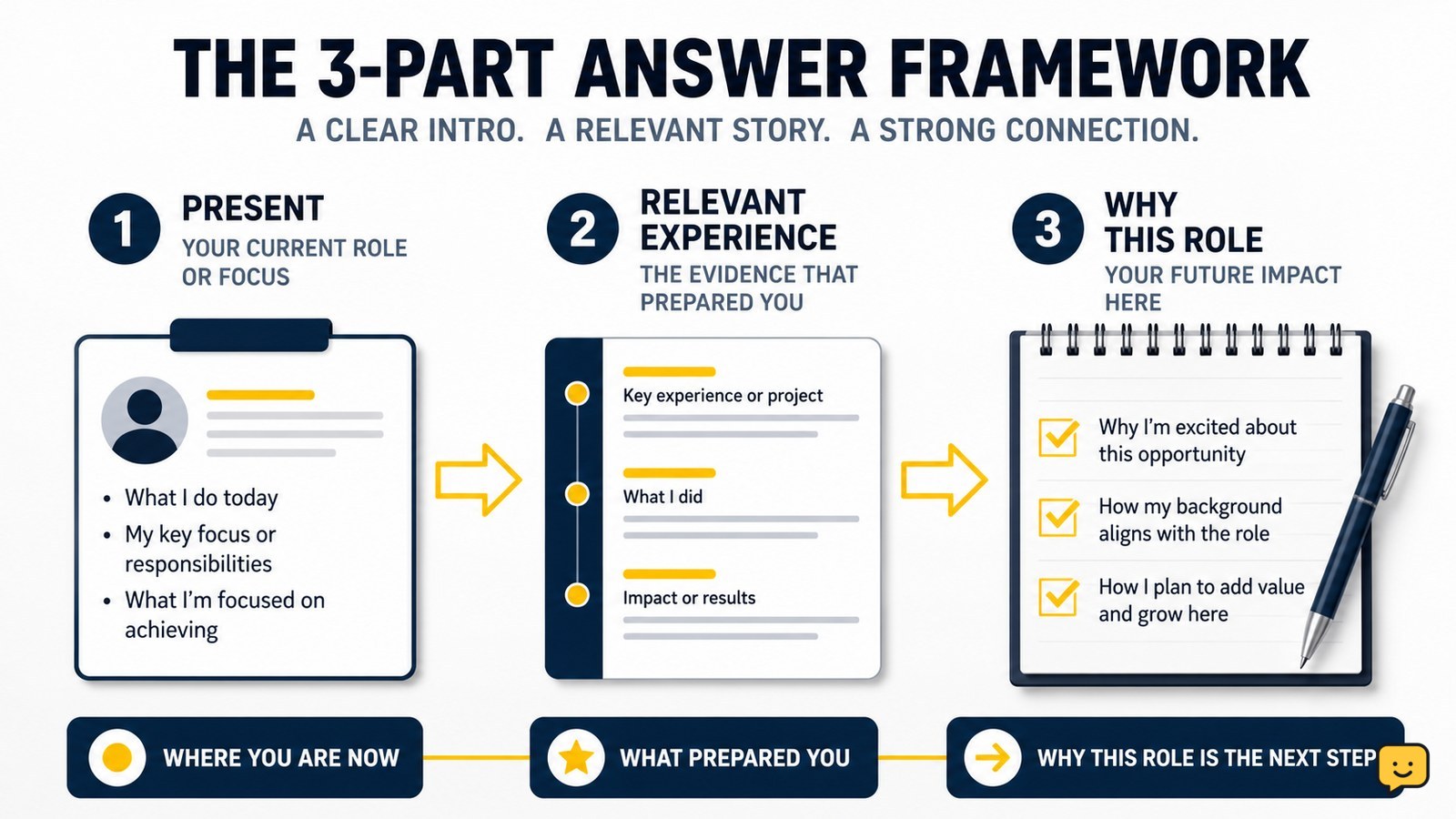
The University of Phoenix notes that a resignation letter does not need a detailed explanation. For help preparing for future interviews after leaving, use this interview introduction structure.
Verify: Your manager can repeat your final date and the next administrative step. If the manager is unavailable, follow the documented HR route and keep evidence of delivery.
For help preparing for future interviews after leaving, use this interview introduction structure.
Send a resignation letter with the essential facts
A resignation letter should identify you, your position, the resignation date, and your intended last working day. The University of Phoenix specifically lists those details as the core of the first paragraph; you do not need to document every complaint or explain your entire career decision.
Use this adaptable format:
Subject: Resignation – [Your name]
Dear [Manager],
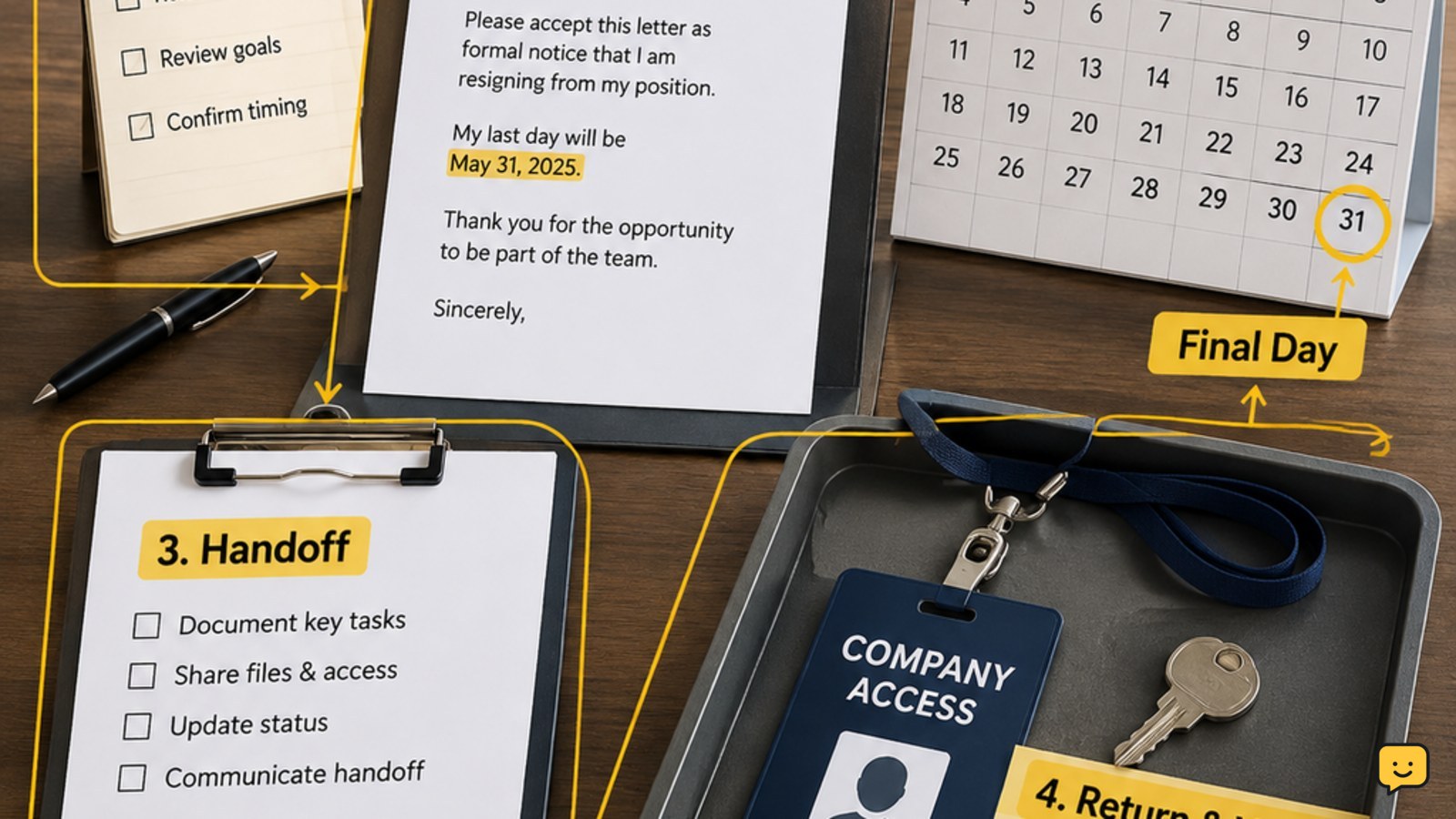
Please accept this letter as formal notice of my resignation from my position as [job title], effective [date]. My intended last day of work is [date].
Thank you for the opportunity to work with [company or team]. I will document my current work and support an orderly handoff during my remaining time.
Sincerely,
[Your name]
- Replace every bracketed field with accurate information.
- Use the delivery method required by your workplace, such as email, an HR portal, or a signed document.
- Save the sent message or submission confirmation with the date and recipient.
Verify: The letter states one unambiguous last day and reaches the correct recipient. If you notice a wrong date, send a correction immediately and ask the recipient to confirm which date is recorded.
Prepare a handoff your manager can verify
A job handoff is complete when another person can identify the status, next action, deadline, and location of each important responsibility. ALTRES recommends passing work on and keeping the departure professional; a structured handoff makes that practical without requiring you to remain indefinitely.
- Create a table with these columns: work item, current status, next action, deadline, owner, file location, and risk or dependency.
- Separate urgent deadlines from routine tasks and recurring meetings.
- Document normal procedures, approved contacts, and decisions already made.
- Schedule a short walkthrough for high-impact work and record unanswered questions.
- Remove personal material while leaving authorized company records in the approved workspace.
Verify: Your manager or replacement can find the referenced files, name the next owner, and identify the next deadline. If a handoff meeting is canceled, send the written tracker and request acknowledgment rather than withholding the information.
Confirm final pay, benefits, records, and company property
Before your last day, confirm the administrative details that can become difficult after access ends. Ask HR or the designated contact when final pay, benefits information, tax or employment records, unused leave treatment, and expense reimbursements will be handled under company policy.
- Request the expected final-pay date and the contact for questions about deductions or reimbursements.
- Ask when health, retirement, insurance, and other benefits end and where continuation information will be sent.
- Save permitted personal records, such as your own pay statements or employment documents, through approved channels.
- List company equipment, keys, badges, cards, and other property for return.
- Confirm the return date and request a receipt or written acknowledgment.
- Remove personal accounts from company devices only as permitted, and never copy confidential work data.
Verify: HR has your current personal email or mailing address, returned-property records are acknowledged, and you know whom to contact after access closes. If an expected document or payment does not arrive, use the company contact first and retain your resignation, policy, and payroll records.
What to do if you must leave quickly or the conversation fails
If ordinary resignation steps do not apply, use the safest documented route available and narrow your message to facts. A hostile response does not require you to argue about your decision, and an unsafe situation takes priority over a customary notice period.
- If you face an immediate safety threat, leave the dangerous setting and contact emergency services or a trusted local support resource as appropriate.
- If the manager retaliates, refuses the meeting, or demands an unclear commitment, send the resignation to the manager and the documented HR channel.
- If illness, caregiving, leave, immigration, licensing, or a contract issue affects your final day, pause and obtain guidance from the relevant qualified adviser.
- If the employer ends access immediately after notice, do not attempt to bypass controls. Ask HR how to return property and receive final documents.
Verify: You have a dated written record, a safe way to receive follow-up documents, and no outstanding company property that you are able to return. Stop trying to resolve the situation directly when continued contact creates a safety risk or requires unauthorized access.
Frequently asked questions
Should you quit before finding another job?
There is no universal answer. Review your finances, benefits, health, safety, and the likelihood of securing another role before choosing your timing. If the workplace is unsafe, immediate safety can outweigh ordinary job-search planning. If you stay while searching, keep the search confidential where appropriate, use personal accounts, and do not use company time or confidential resources.
How much notice should you give when quitting?
Give the notice required by your contract, offer letter, handbook, or applicable workplace process. Do not assume that a customary period applies to every role. If the documents are unclear or conflict, ask HR or a qualified employment adviser before naming your final day.
What should you say when quitting a job you dislike?
Say that you are resigning, state your intended last day, and give only the amount of explanation you are comfortable providing. A neutral statement such as “I have decided to move on” is enough. Put complaints through the appropriate HR or reporting process instead of adding accusations to the resignation letter.
Can you quit by email?
Use email when your workplace accepts written email notices, your manager is unavailable, or a written record is especially important. If policy requires a form, HR portal, signed letter, or a meeting, follow that process and use email as confirmation. Keep the sent message and any acknowledgment.
What happens if your employer tells you to leave immediately?
Ask HR or the designated contact to confirm the effective date, pay and benefits treatment, return-of-property instructions, and where future documents will be sent. Do not take confidential files or try to regain access after systems close. Keep your resignation and the employer’s response for your records.