Park on level ground, switch off the car, and inspect all four tires in good light. Look for tread-wear indicators across the grooves, then measure the main grooves with a tread-depth gauge at several points around each tire. Replace a tire at the wear bars or when the measured tread reaches the applicable minimum; stop driving immediately for exposed cords, a bulge, deep damage, or a rapidly leaking tire.
For more help with this topic, use the Maintenance Repair guides.
Find the tread-wear indicators first
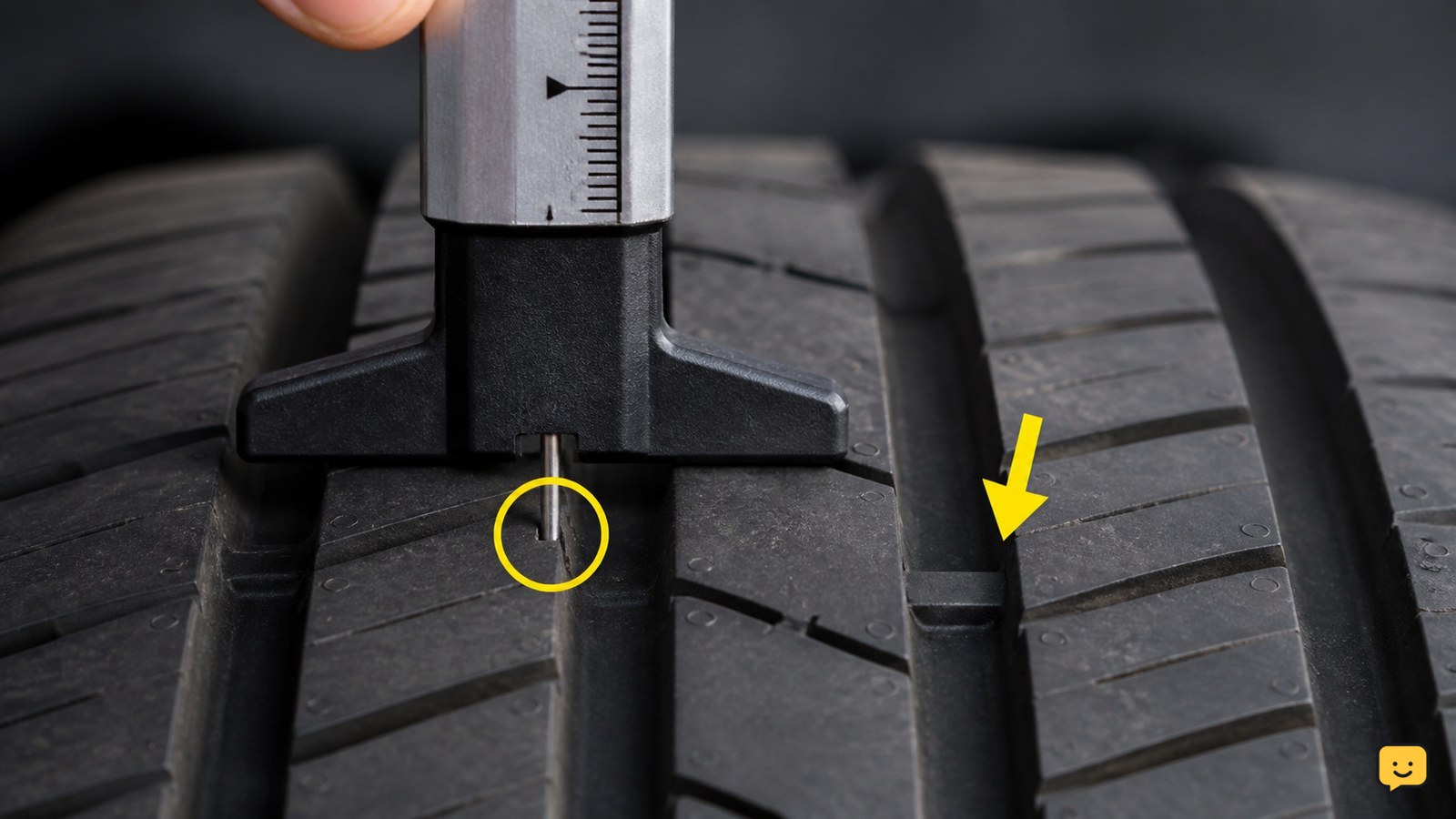
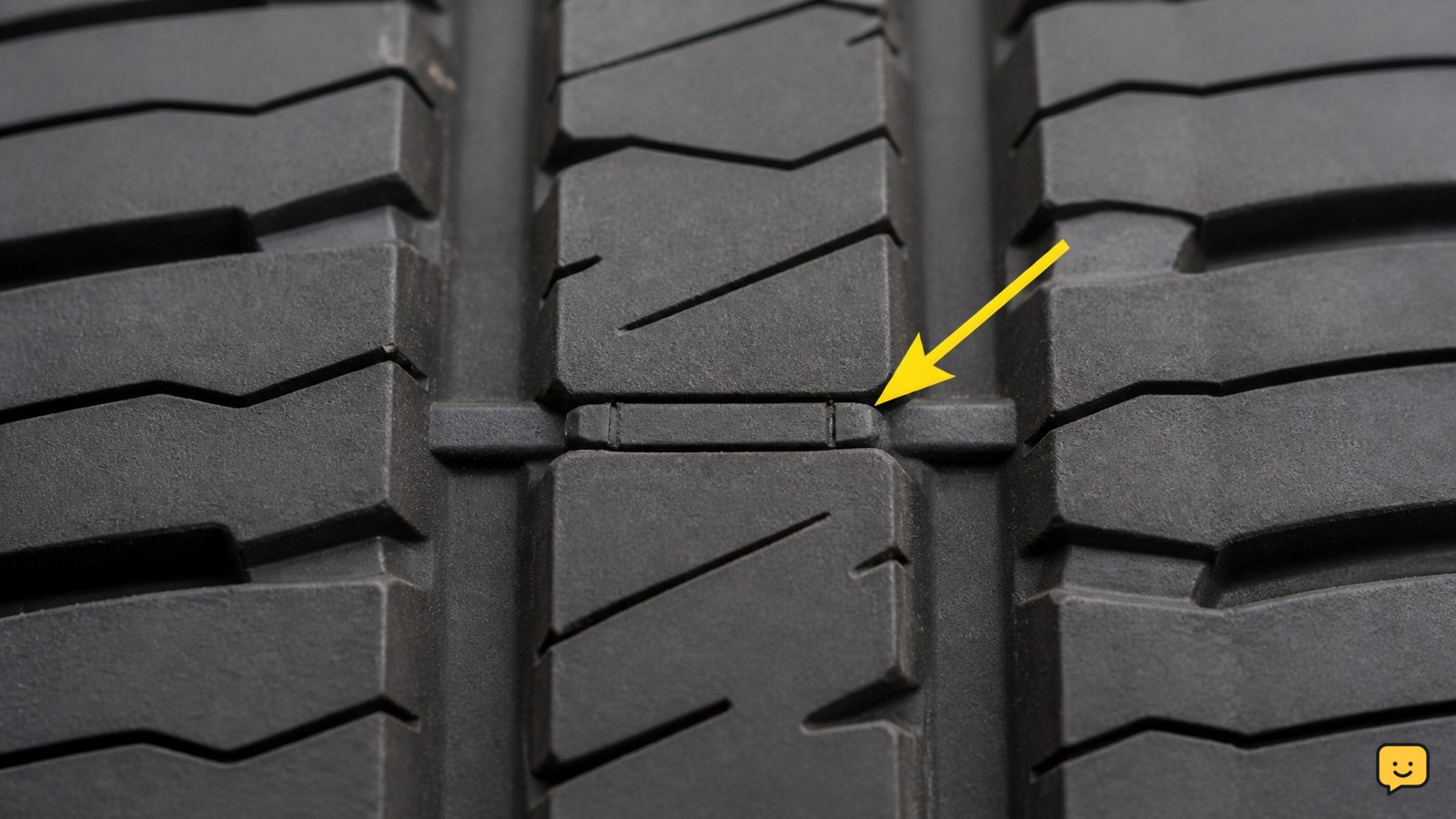
Tire tread-wear indicators are raised bars molded into the main grooves, and they show the replacement point when the surrounding tread is level with them. Look across the tire for several bars running from shoulder to shoulder. Check more than one groove because a tire can wear unevenly.
If the tread blocks are flush with the bars, the tire has reached its wear limit. If the bars are difficult to see, clear stones and dirt from the grooves without using a sharp tool. A bar that is hidden by a plug, object, or damaged rubber is not a reliable result.
Measure tread depth with a gauge
A tread-depth gauge gives the most useful at-home measurement for a passenger-vehicle tire. Press the gauge’s base squarely against the tread and extend its probe into a main groove, avoiding a wear bar.
- Measure at least three grooves across the tire: the inner, center, and outer portions.
- Take readings at several positions around the circumference, such as near the top, quarter-turn points, and bottom.
- Write down the lowest reading for each tire and compare the positions rather than relying on one measurement.
The result is verified when the probe sits fully in a groove and the base is flat on the tread. A reading near the wear bars, a low reading in one shoulder, or a large difference between positions calls for tire-service advice. Goodyear identifies a tread-depth gauge, wear indicators, and coin tests as ways to check tire tread depth; use the gauge when an exact comparison matters.
For reference, 2/32 inch is a commonly used U.S. replacement threshold, but legal requirements and manufacturer recommendations can differ. Check the tire maker’s guidance and local rules before treating a borderline measurement as acceptable.
Use a coin test as a rough screen
A coin test can quickly screen for low tread when you do not have a gauge, but it cannot provide a precise depth measurement. Insert the coin into a major groove at several points around the tire, not across the raised tread block.
Use the coin orientation and pass/fail rule specified for your location or tire manufacturer. The familiar U.S. penny check uses Lincoln’s head first; if the top of his head is visible, the tread is around the commonly cited 2/32-inch threshold or less and needs replacement assessment. Goodyear lists penny and quarter tests as screening methods, while its gauge method is better for measuring.
Repeat the test across the inner, center, and outer grooves. If the result is unclear, the tire is close to the threshold, or wear is uneven, stop relying on the coin and get a gauge reading or professional inspection.
Check for uneven wear and tire damage
A tire can have acceptable center tread and still need attention because the inner edge, outer shoulder, or sidewall is damaged. Run your eyes around the complete tire and compare left and right tires on the same axle.
- One shoulder worn down: may indicate alignment, inflation, or suspension trouble and needs inspection.
- Center worn faster than the shoulders: may be consistent with overinflation, so verify pressure against the vehicle placard when the tires are cold.
- Both shoulders worn faster: may indicate underinflation, but confirm with a pressure gauge rather than judging by appearance.
- Cupping, scalloping, cracks, bulges, or cuts: require a tire professional even if the grooves still look deep.
Do not judge safety from tread depth alone. A tire with a nail, sidewall injury, tread separation, exposed cords, or a visible bulge is a stop condition.
Verify all four tires before driving
The inspection is complete only after all four tires have been checked in the grooves and on the sidewalls. Confirm that no tire is at the wear bars, no reading is substantially lower on one section, and no visible damage changes the decision.
If the tire-pressure warning light is on, tread inspection does not explain or correct the pressure fault; check every tire with a pressure gauge and follow the vehicle placard. For a puncture that has already caused a flat, use the safe procedure in how to change a flat tire rather than driving on the damaged tire.
After checking, schedule replacement or a tire-service inspection when a tire reaches the wear bars, falls at or near the applicable minimum, wears unevenly, or has damage. If all tires pass the visual and depth checks, record the lowest readings and recheck them periodically, especially before long trips.
A tire-pressure warning light needs a separate pressure check; see what the tire-pressure warning light means before driving.
Frequently asked questions
How often should I check tire tread?
Check tire tread at least once a month and before a long trip, while also looking at it whenever you check tire pressure. Inspect sooner after hitting a pothole, noticing vibration, or seeing the vehicle pull to one side. Frequent checks help reveal uneven wear before the lowest section reaches the wear bars.
Should I check the inside edge of a tire?
Yes. The inside edge can wear faster than the visible outer shoulder, particularly when alignment or suspension parts need attention. Turn the front wheels enough to see the inner shoulder, and ask a tire professional to inspect areas you cannot see safely. Never place yourself under a vehicle for a tread check.
Is a coin test accurate enough to approve a tire?
No. A coin test is a rough screening method, not a precise measurement. It can identify tread that is clearly near a replacement threshold, but an unclear result, uneven wear, or borderline tread should be checked with a tread-depth gauge or by a tire professional.
Can a tire have deep tread and still be unsafe?
Yes. Tread depth does not rule out a sidewall bulge, deep cut, exposed cords, cracking, tread separation, or a serious puncture. Stop driving and arrange professional help for structural damage or rapid air loss, regardless of the measured groove depth.