To change a car air filter, park safely, switch off the engine, and find the engine air-cleaner housing under the hood. Open its clips or screws, lift out the old filter, clean loose debris without letting it enter the intake, fit the replacement in the same orientation, then close and secure the housing.
For more help with this topic, use the Maintenance Repair guides.
Find the engine air-filter housing and confirm fitment
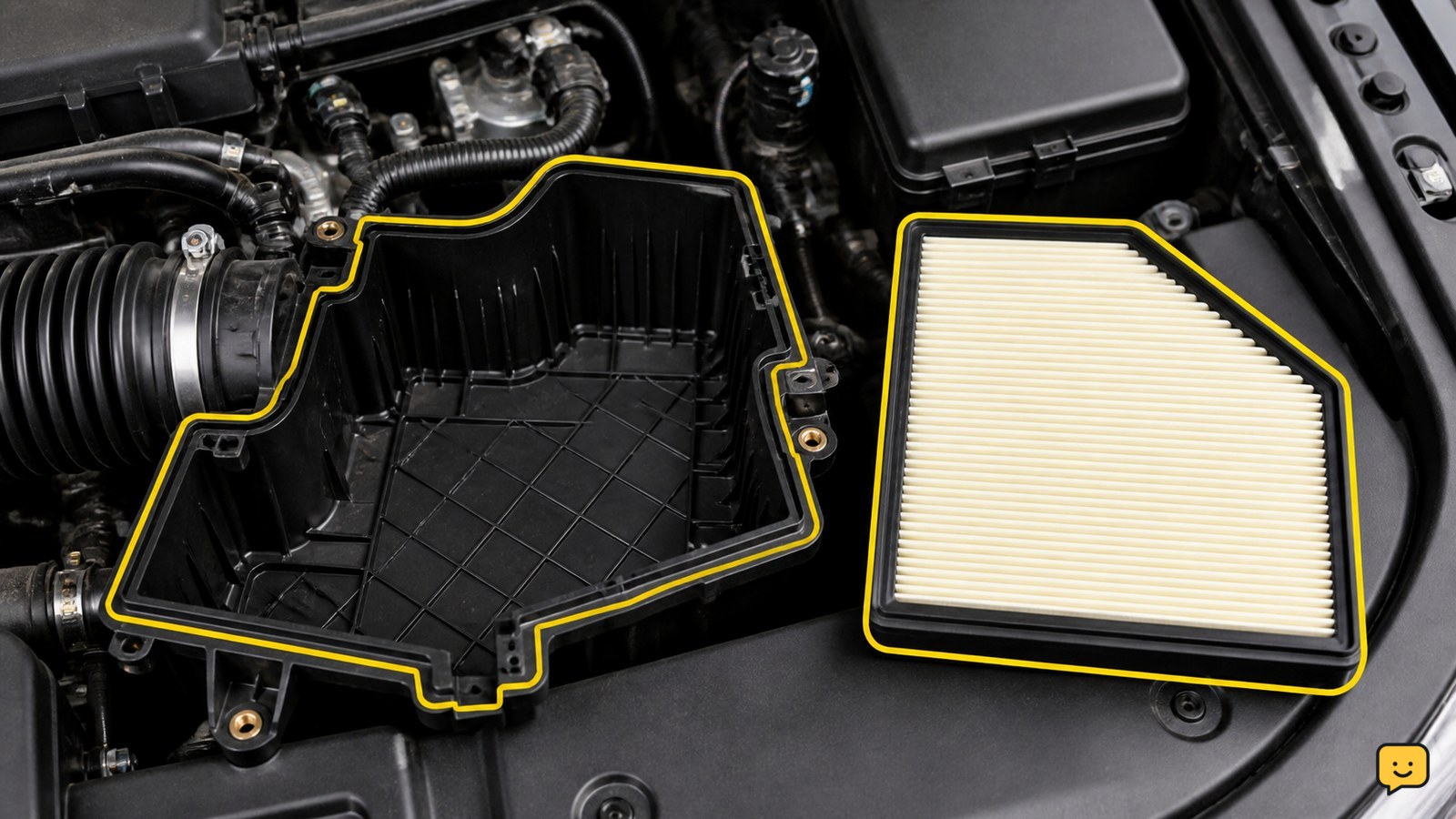
The engine air filter sits inside a plastic air-cleaner housing in the engine bay, usually connected to a wide intake duct leading toward the engine. Its location and shape vary by vehicle, so use the owner’s manual rather than opening an unrelated box.
Before removing anything, compare the replacement with the old filter’s length, width, height, seal shape, and locating features. The replacement must match the vehicle’s specified engine and fitment. AutoZone’s replacement procedure also begins by setting up the vehicle and locating the air-filter housing before opening it.
Open the air-cleaner housing without disturbing the intake
The air-cleaner housing is opened with spring clips, screws, bolts, or a combination of fasteners, depending on the vehicle. Release or remove only the fasteners holding the housing cover, then lift the cover carefully.
- Keep the engine off and the ignition switched off.
- Place removed screws or clips where they cannot fall into the engine bay.
- Lift the cover without pulling on wiring, hoses, or attached sensors.
- If the cover is connected to the intake duct, move it only as far as necessary to expose the filter.
Do not force a stuck cover. A hidden fastener, retaining tab, or connected duct may still be holding it.
Remove the old filter and inspect the housing
Remove the old engine air filter by lifting it straight out when possible, keeping its dirty side facing upward to limit loose debris. Note the direction of any tabs, angled corners, or molded seal before discarding it.
Inspect the filter for heavy dust, leaves, insects, moisture, oil, or physical damage. A dirty filter supports replacement, but liquid or oil contamination can point to a separate intake or engine problem. Wipe loose debris from the empty housing with a clean cloth, taking care not to push dirt into the intake opening.
Kitchen Trials’ vehicle-filter procedure shows the same basic distinction between removing the used filter and preparing the housing before installation, while the exact housing layout remains vehicle-specific.
Install the replacement filter with the seal seated
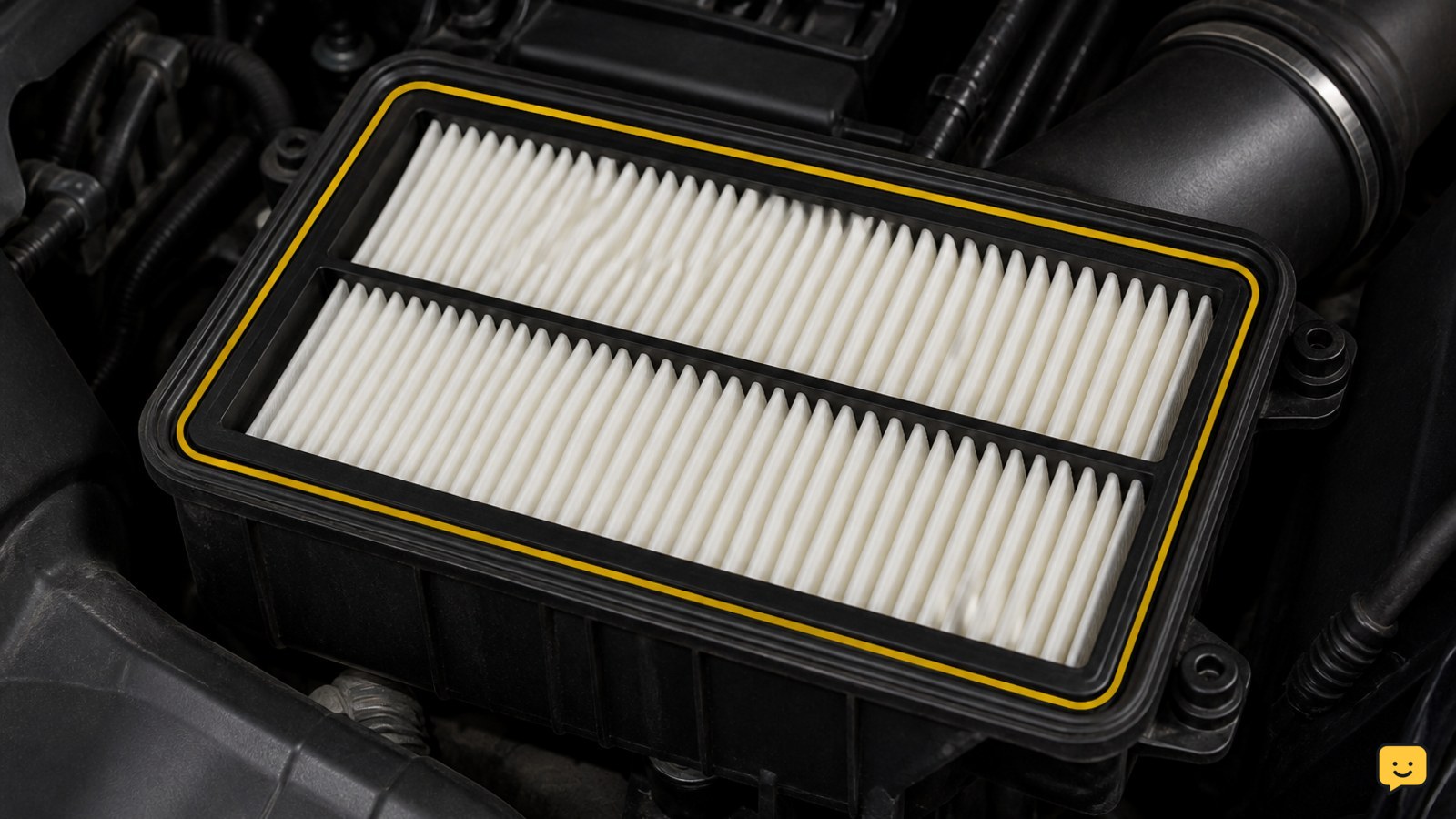
The replacement engine air filter is installed by matching its shape and orientation to the housing, then pressing its perimeter seal evenly into the locating groove or lip.
- Place the filter into the lower half of the housing.
- Align corners, tabs, ridges, or the marked airflow direction if the design provides them.
- Run a finger around the perimeter to confirm that the seal is flat and not folded.
- Lower the cover evenly without pinching the filter or seal.
Do not oil, wash, or modify a disposable paper filter unless the manufacturer specifically identifies it as a reusable type. A filter that appears close but leaves a visible gap is not correctly installed.
Secure the cover and verify the finished installation
A correctly changed car air filter leaves the housing fully closed, every clip or screw secured, and the intake duct firmly connected.
- Tighten screws or bolts evenly until secure; do not overtighten plastic housing fasteners.
- Close every retaining clip and check that none is left partly engaged.
- Look around the housing for a pinched seal, loose duct, disconnected electrical plug, or forgotten tool.
- Start the engine and listen briefly for an unusual hissing, sucking, or rattling sound.
The engine should start and idle without a new intake noise or obvious rough running. If anything sounds different, switch the engine off and repeat the seating and connection checks before driving.
Choose the safe next step when the result is not right
If the cover will not close, remove it and check that the filter is the correct part, fully inside its locating edges, and not upside down. Never clamp the housing shut over a misaligned filter.
If the engine runs roughly after replacement, switch it off and inspect the intake duct, sensor connectors, and housing seal for a disturbed connection. If the problem remains, reinstall the old filter only as a temporary diagnostic comparison if it is intact, then arrange professional diagnosis.
For a cabin air-filter replacement behind the glove box or dashboard, use this separate cabin air filter procedure instead. It uses a different location and installation check.
If you meant the filter for passenger-compartment airflow, use the cabin air filter procedure for its different location and fitting checks.
Frequently asked questions
How often should a car air filter be changed?
Use the replacement interval in your owner’s manual because schedules vary by vehicle and driving conditions. Dusty, rural, construction, or heavily trafficked routes can load a filter faster than clean-road driving. Inspecting the filter at service intervals can reveal leaves, heavy dust, moisture, or damage before the scheduled change.
Which air filter does a car need?
A car needs the engine air filter specified for its exact year, make, model, engine, and sometimes emissions package. Confirm the part number through the owner’s manual, a reputable parts catalog, or VIN-based fitment. The filter’s shape alone is not enough because similar-looking filters can have different seals or dimensions.
Can I clean and reuse a disposable car air filter?
Usually, no. Disposable paper engine filters should be replaced rather than washed, blown out aggressively, or treated with oil. Cleaning can damage the filter media or leave gaps in filtration. Reusable filters are a separate product type and should be serviced only according to their manufacturer’s instructions.
What happens if the air-filter housing does not seal?
An unsealed housing can allow unfiltered air and dirt to bypass the filter, and it may create a hissing or intake noise. Stop before driving, remove the cover, and check the filter orientation, perimeter seal, fasteners, and intake duct. If the housing or retaining hardware is damaged, arrange repair.