A dead car battery is likely if the engine does not crank, you hear rapid clicking, the headlights and interior lights are unusually dim, or the car has little electrical power. Confirm it by checking the battery terminals and measuring the 12-volt battery with a multimeter. If a jump-start works but the car soon fails again, have the battery and charging system tested.
Check what happens when you try to start the car
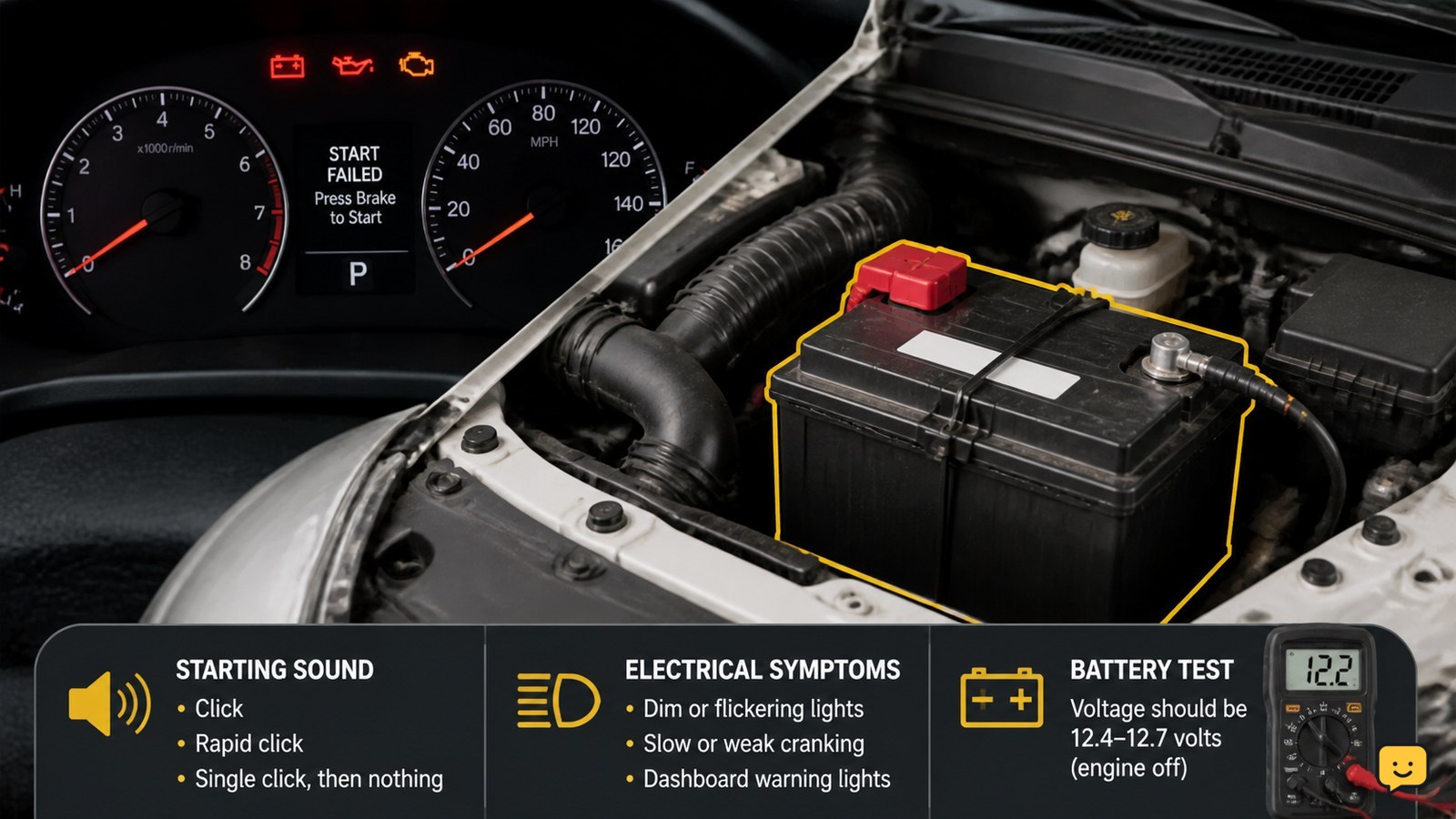
The starting sound is the first useful battery check: no crank, rapid clicking, or a slow crank points toward low battery power, while a single click with bright lights can point toward the starter or its connections.
- No response: Turn on the interior light or headlights, then try the ignition once. No lights or a sudden complete loss of power suggests a severely discharged battery, loose connection, or main fuse problem.
- Rapid clicking: Repeated fast clicks usually mean the starter solenoid is losing power as the battery voltage drops.
- Slow cranking: A sluggish engine crank is a common sign of a weak or failing battery. Hawk Mazda lists slow engine cranking, dim lights, electrical problems, and clicking among common signs of a dying battery.
- One click but no crank: Continue with the light and terminal checks before calling the battery dead. A starter fault or poor cable connection can produce the same symptom.
Verification: a healthy starting attempt should turn the engine at a consistent speed and allow it to start. If the engine cranks normally but does not fire, the battery may not be the main problem.
Check the lights and battery connections
Dim lights that become much weaker when you turn the key support a low-battery diagnosis, but loose or corroded terminals can create the same electrical symptoms.
- Turn on the headlights without starting the engine. Compare their brightness with what you normally see.
- Inspect the battery terminals without touching damaged or leaking parts. Look for a loose clamp, heavy white or blue-green corrosion, or a cable that can be moved by hand.
- Check that the battery hold-down is secure and that the cables are not visibly frayed.
Do not disconnect or scrape terminals while the ignition is on. If a terminal is loose, follow the vehicle manual for tightening or have a roadside technician correct it. If the lights are bright but the engine only clicks once, a dead battery is less certain.
Measure the 12-volt battery with a multimeter
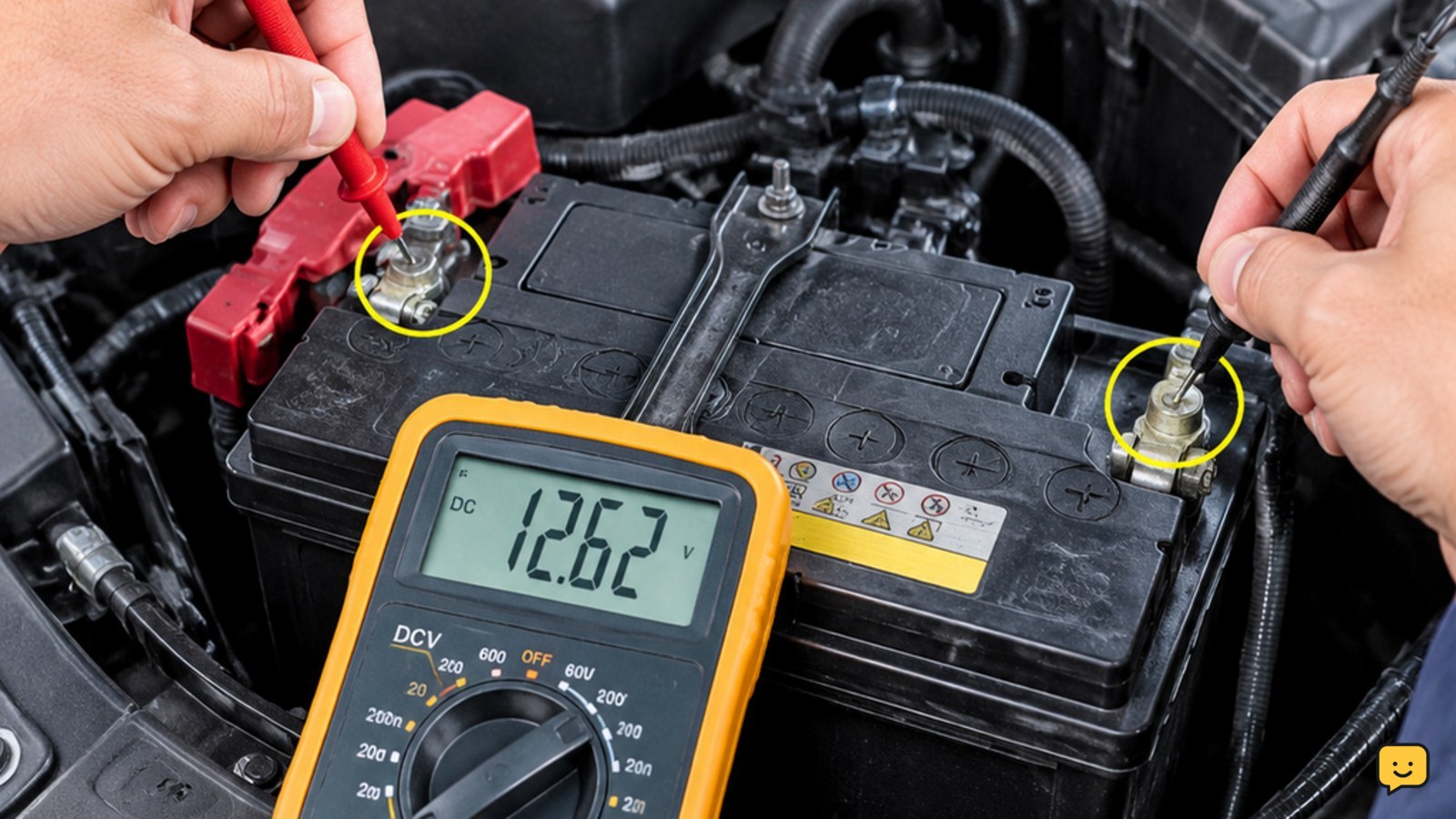
A multimeter gives a better answer than sound alone, but a voltage reading shows the battery’s state of charge more reliably than its ability to deliver starting power.
- Leave the car switched off and let the battery rest before measuring. Turn the meter to DC volts and select a range that covers a 12-volt battery.
- Touch the red probe to the positive terminal and the black probe to the negative terminal. Keep the probes from touching each other.
- Record the reading, then compare it with the battery and vehicle manufacturer’s guidance. A low reading indicates discharge; it does not by itself prove that the battery must be replaced.
Verification: repeat the measurement after charging with an approved charger or after a successful drive, following the vehicle manual. If the voltage falls again, the battery may be unable to hold a charge or the car may have a parasitic drain.
Failure path: if the reading looks normal but the engine still will not crank, check terminal connections and arrange a professional load test. A battery can show acceptable resting voltage yet fail under starter load.
Use a jump-start result to separate the likely fault
A successful jump-start shows that low battery power is involved, but it does not prove the battery alone is defective.
- Use jumper cables or a jump pack only as directed by the vehicle and equipment manuals. Connect the terminals in the specified order and keep the cables clear of belts and fans.
- Attempt to start the car. If it now cranks strongly and starts, leave the cables connected only as instructed, then remove them in the required order.
- Afterward, note whether the car restarts normally and whether the battery warning light remains on.
If the car starts but soon needs another jump, the battery may be failing, the charging system may not be replenishing it, or an electrical drain may be present. Bridgestone warns that a battery warning icon while driving can indicate a charging-system malfunction, so do not treat a jump-start as a complete repair.
If the car still only clicks or does not crank with a properly connected jump source, stop repeated attempts. Have the battery cables, starter circuit, and starting system tested.
Choose recharge, replacement, or professional testing
Recharge a merely discharged battery only when it is physically sound; replace or professionally test it when it repeatedly loses charge or fails a load test.
- Recharge: Choose this path when the battery was left discharged by lights or an accessory, has no damage, and the manufacturer-approved charger is available.
- Test or replace: Choose this path when starts have been getting slower, jump-starts are frequent, the battery will not hold a charge, or a load test shows inadequate starting capacity. Hawk Mazda identifies frequent jump-starts and recurring dim-light or electrical problems as warning signs that service may be needed.
- Inspect the charging system: Choose this path when the battery goes flat again after charging, the battery warning light appears, or the car stalls after starting.
Verification: after service, the engine should crank at its normal speed, the electrical accessories should work normally, and no battery or charging warning should remain illuminated. If those checks fail, stop driving except to move to a safe location and arrange roadside or repair-shop assistance.
Frequently asked questions
Can a car battery be dead if the headlights still work?
Yes. Headlights may still illuminate even when the battery cannot supply enough current to turn the starter. If they dim sharply when you turn the key, the battery is more suspect. Bright headlights with one click or no crank also require checks of the terminals, starter, and wiring.
Does clicking always mean the battery is dead?
No. Rapid clicking commonly occurs when battery power drops under starter load, but one solid click with bright lights can indicate a starter or connection problem. Check the lights, terminals, and jump-start response before deciding that the battery needs replacement.
Will a jump-start tell me whether I need a new battery?
Not by itself. A jump-start can restore enough power to start the engine, but the battery may still be unable to hold a charge. If the car needs another jump soon afterward, request a battery load test and charging-system test rather than replacing parts based only on the first successful start.
What if the car cranks normally but does not start?
A normal-speed crank makes a completely dead battery less likely. The problem may involve fuel, ignition, immobilizer operation, or another engine-control system. Stop repeated starting attempts if the battery begins to weaken, and consult the vehicle manual or roadside service for diagnosis.
For more help with this topic, use the Maintenance Repair guides.