A car battery that keeps dying overnight is usually suffering from a weak battery, an undercharging alternator, or a key-off electrical draw. Fully charge and test the battery first, then check charging output and measure current draw after the vehicle goes to sleep. Remove accessories and isolate the responsible fuse before replacing parts.
Check the battery and charging system first
The battery and alternator must pass basic tests before you hunt for an overnight electrical draw. A battery can lose capacity from age or sulfation, while an alternator can undercharge it; Battery Tender identifies both conditions as possible explanations for repeated discharge.
- Fully charge the battery with the correct charger for its type, then let it rest as directed by the charger or vehicle manual.
- Inspect the case, terminals, ground connection, and positive cable for swelling, corrosion, looseness, or damage.
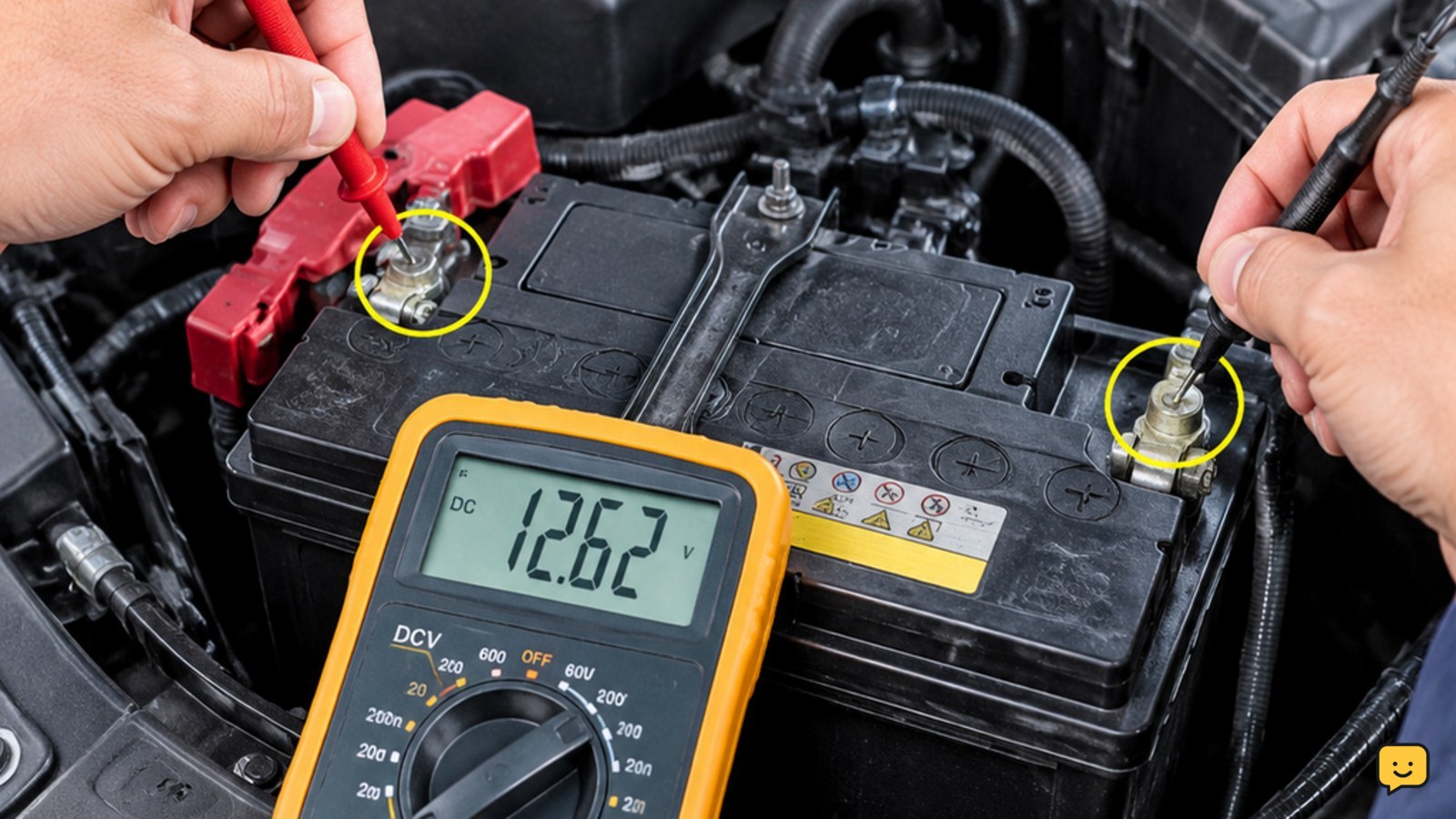
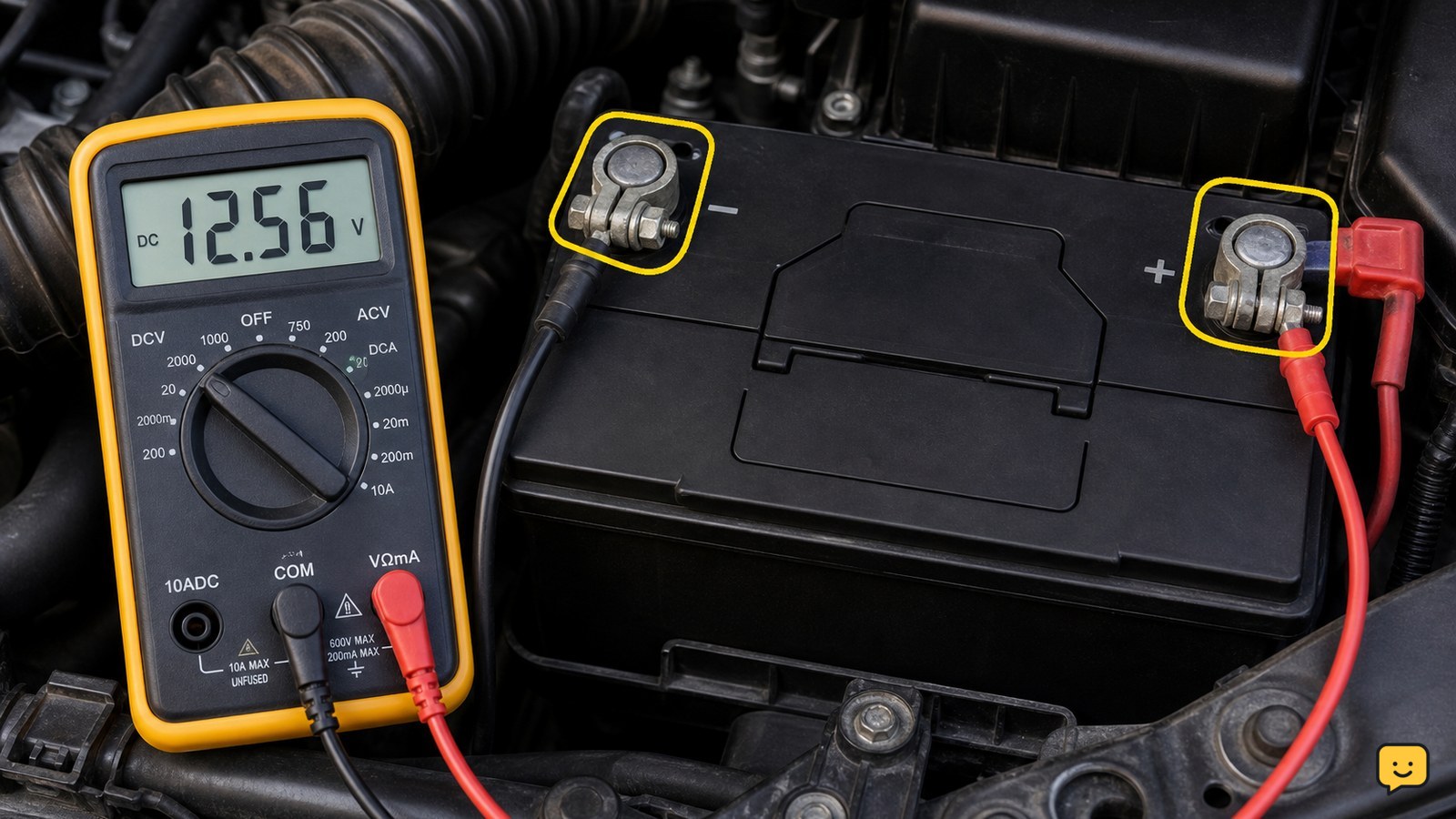
- Have the battery load-tested or conductance-tested. A resting-voltage check alone cannot prove that the battery still has usable capacity.
- With the engine running, check charging performance using the vehicle’s service procedure. Compare the result with the specification for your model rather than applying one universal voltage rule.
If the battery fails its capacity test, replace or professionally test it before measuring parasitic draw. If charging is outside specification, repair that fault first. A new battery will also go flat if the alternator is not replenishing it.
Inspect lights, switches, and added accessories
Interior lights, trunk or glove-box lamps, and aftermarket accessories are the fastest overnight-drain checks because they can remain powered after the key is removed. The supplied video evidence describes this condition as a key-off draw: something remains powered after the vehicle is parked.
- Confirm that the trunk, hood, glove box, doors, and hatch close far enough to operate their switches.
- After locking the vehicle, look through the glass for an interior, cargo, vanity, or warning lamp that remains illuminated. Do not leave a door open while testing modern vehicles unless the manual provides a safe method.
- Unplug non-factory equipment for one full parking period, especially dash cams, USB adapters, trackers, amplifiers, alarms, remote starters, and accessories connected directly to the battery.
- Check whether a phone charger, camera, or display stays warm or shows a power light after the vehicle is locked.
If removing one accessory prevents the next overnight failure, repair its wiring or change its power source so it shuts down with the vehicle. If the battery still dies, continue to a current-draw test instead of replacing more accessories at random.
Measure key-off current only after the vehicle sleeps
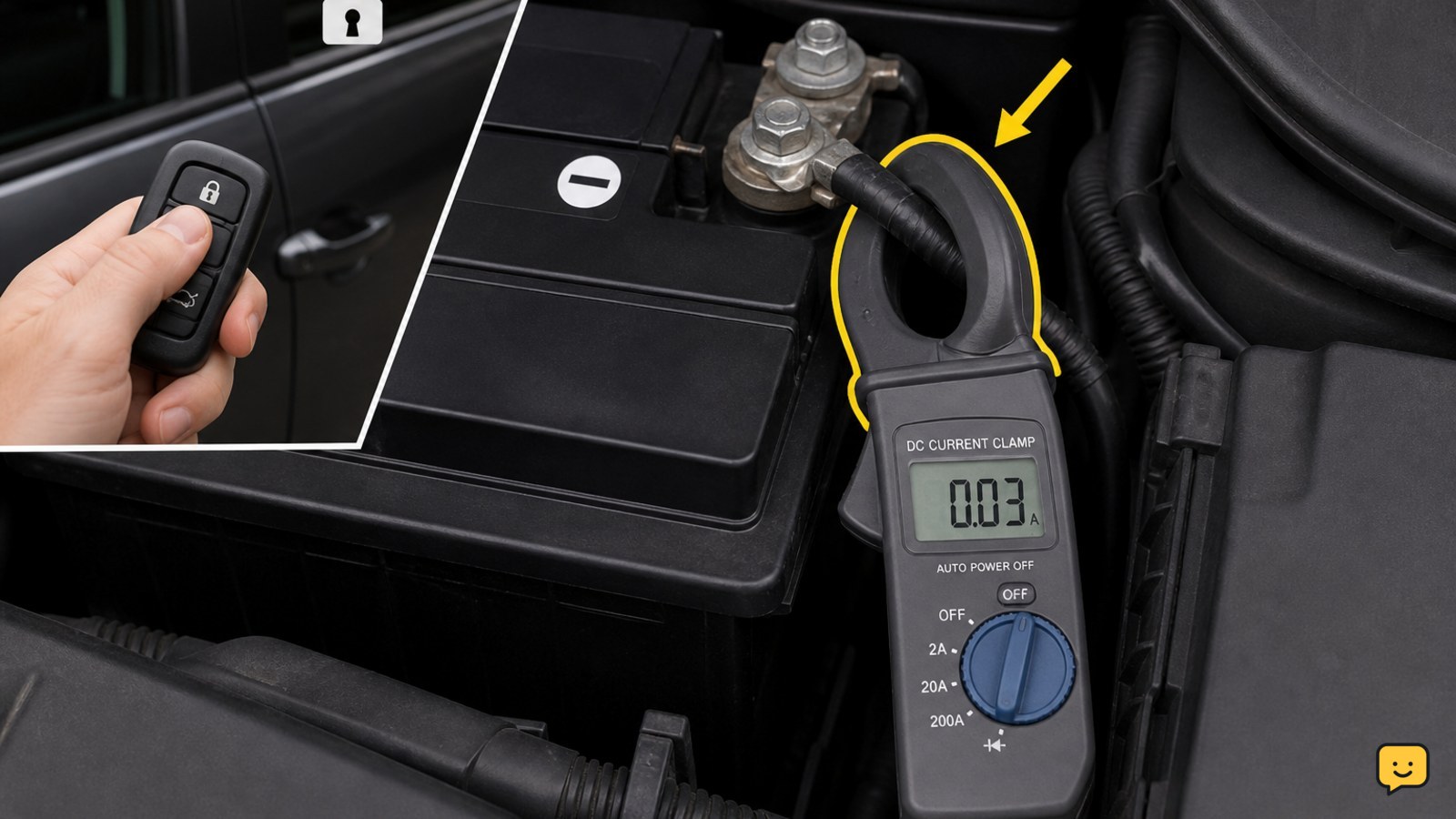
A key-off current test shows whether the vehicle is still consuming excessive power while parked, but the reading is meaningful only after the vehicle’s modules have shut down. Sleep time varies by vehicle, so follow the owner manual and do not assume the car is asleep immediately.
- Charge the battery first and switch off every load. Keep the key fob away from the vehicle so proximity systems do not wake it.
- Use a DC current clamp around the negative battery cable when possible. It avoids opening the circuit and reduces the risk of losing settings or triggering a fault.
- If the vehicle manual permits a series-meter test, connect the meter in its highest current range and correct jack position before disconnecting the negative cable. Keep the doors closed or latched as instructed by the manual.
- Lock the vehicle, wait for the specified sleep period, and watch the reading. Brief activity during locking or module shutdown is not the same as a steady drain.
Compare the stabilized reading with the vehicle manufacturer’s specification. There is no safe universal pass number for every model, because alarm systems, telematics, battery sensors, and networked modules differ. If the reading is within specification but the battery still fails, return to battery capacity, charging, temperature, and driving-pattern checks.
Isolate the drain by fuse and accessory circuit
If the sleeping vehicle draws more current than its specification allows, isolate the circuit rather than guessing at a component. A fuse that causes the reading to fall identifies a circuit, not automatically the failed part.
- Photograph or record the fuse layout before removing anything. Use the manual to identify each fuse and its protected systems.
- Remove one fuse at a time while monitoring the stabilized current. Wait briefly after each change because some modules need time to respond.
- When the draw drops substantially, record the fuse number and every system listed for it. Refit the fuse before moving to the next circuit unless the manual says otherwise.
- Inspect the identified circuit’s aftermarket wiring, relays, lamps, switches, motors, and control modules. A stuck relay or a module that fails to sleep can keep an otherwise normal circuit awake.
If pulling fuses does not reveal a change, the drain may be on an unfused cable, a main power feed, the alternator, or a circuit that wakes only intermittently. Do not disconnect random connectors. Use a wiring diagram, a thermal or current-clamp check, or a repair shop that can monitor the vehicle over time.
Verify the repair through repeat parking tests
The repair is verified only when the battery remains charged after repeated normal parking periods and the original fault no longer appears. A single successful start does not prove the drain is gone.
- Restore every fuse and factory connection, then clear away tools and confirm that cables and covers are secure.
- Repeat the key-off draw measurement if a circuit was repaired, and confirm that the stabilized value now meets the model specification.
- Fully charge the battery and park the vehicle under the same conditions that previously caused failure.
- Check the battery condition and starting performance after the first night, then repeat for several parking periods.
If the battery still goes flat, test it again after the discharge. Repeated deep discharge can damage an otherwise serviceable battery, so a persistent fault deserves professional electrical diagnosis. If the vehicle will not crank, warning lights appear, or the alternator belt or wiring is damaged, stop driving until the charging and starting systems are checked.
Frequently asked questions
Can a bad car battery die overnight without an electrical drain?
Yes. A battery with low capacity can lose enough charge overnight even when the vehicle’s key-off draw is normal. Age, sulfation, freezing temperatures, or repeated deep discharges can reduce capacity. Fully charge the battery and have it load-tested or conductance-tested before spending time isolating circuits.
Can driving recharge a car battery after it dies overnight?
Sometimes, but driving is not a reliable repair. A short trip may not replace the energy used during starting, especially if the alternator is undercharging or the battery has lost capacity. Recharge the battery with a suitable charger, then check battery health and charging performance.
Can a dash cam cause a battery to die overnight?
Yes. A dash cam can continue drawing power in parking mode, particularly when connected directly to constant battery power or when its low-voltage cutoff is missing or faulty. Unplug it for a parking test, then confirm that its wiring and cutoff settings match the vehicle and camera instructions.
When should a technician diagnose an overnight battery drain?
Use a technician when the battery or charging system fails, the draw is intermittent, the fuse test reveals several networked modules, or the vehicle requires battery registration or electronic reset procedures. Also seek help if you cannot safely measure current without disconnecting sensitive systems.
Browse more Maintenance & Repair guides for help with this topic.