Your brake pedal may feel soft because air has entered the hydraulic system, brake fluid is low, a hose or line is leaking, or a hydraulic component is failing. A pedal that sinks, suddenly travels farther, or needs pumping is unsafe to ignore. Park safely, inspect the fluid and visible leaks, and do not drive if stopping power is reduced.
Decide whether the car is safe to move
Test the pedal only while the car is stationary. With the engine off, press the brake pedal firmly and hold it for about 20 seconds. A pedal that continues moving downward suggests a hydraulic problem. A pedal that feels springy or travels unusually far can indicate air, low fluid, a leak, or another brake-system fault.
Start the engine only if the pedal felt firm enough for this stationary check and you are not seeing a warning sign. The pedal may move slightly as the brake booster assists, but it should not suddenly become very low or continue sinking. If braking feels weaker than usual, do not use a short drive as a test. Arrange a tow or mobile inspection instead.
Check the brake-fluid level and visible leaks
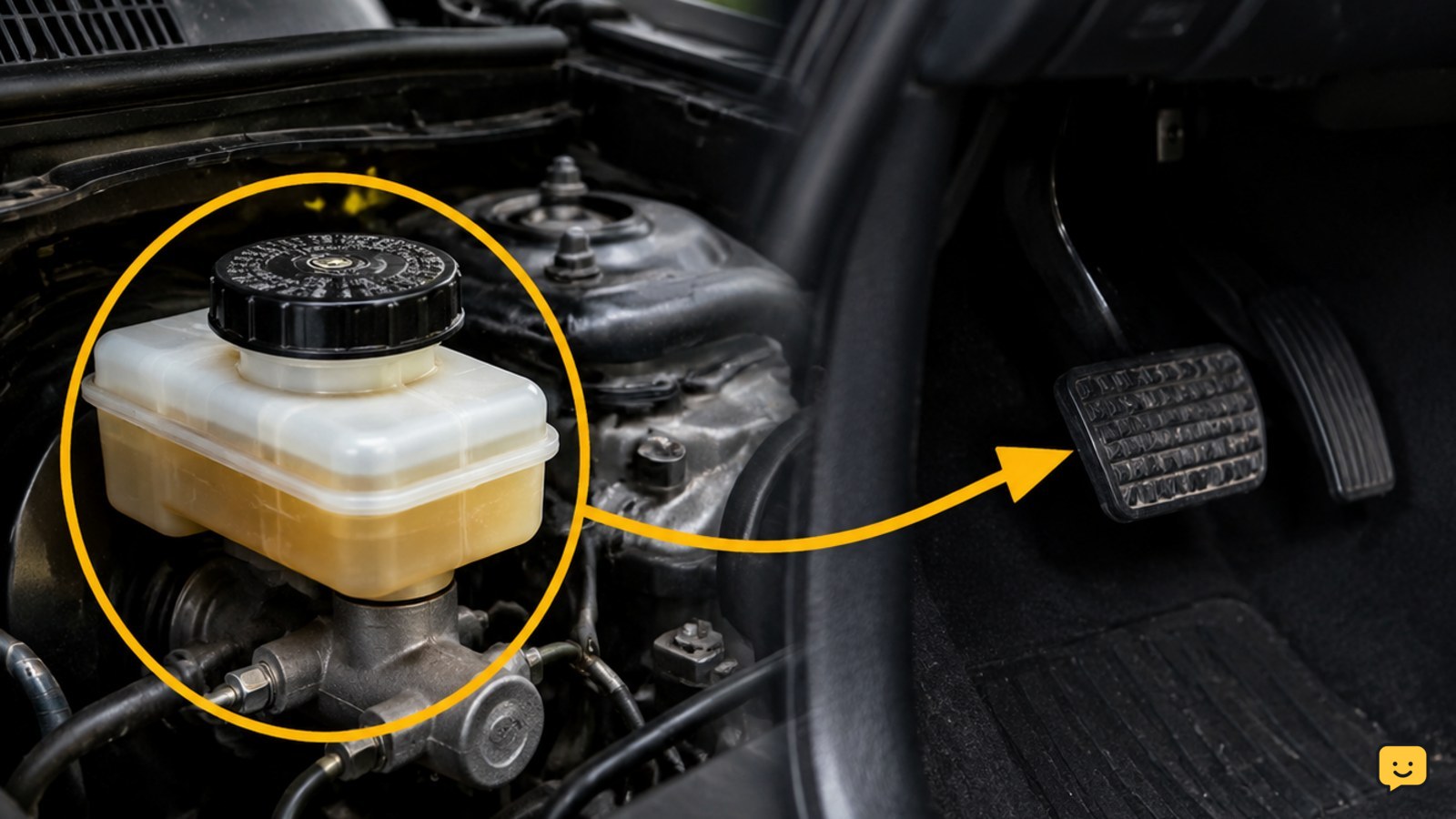
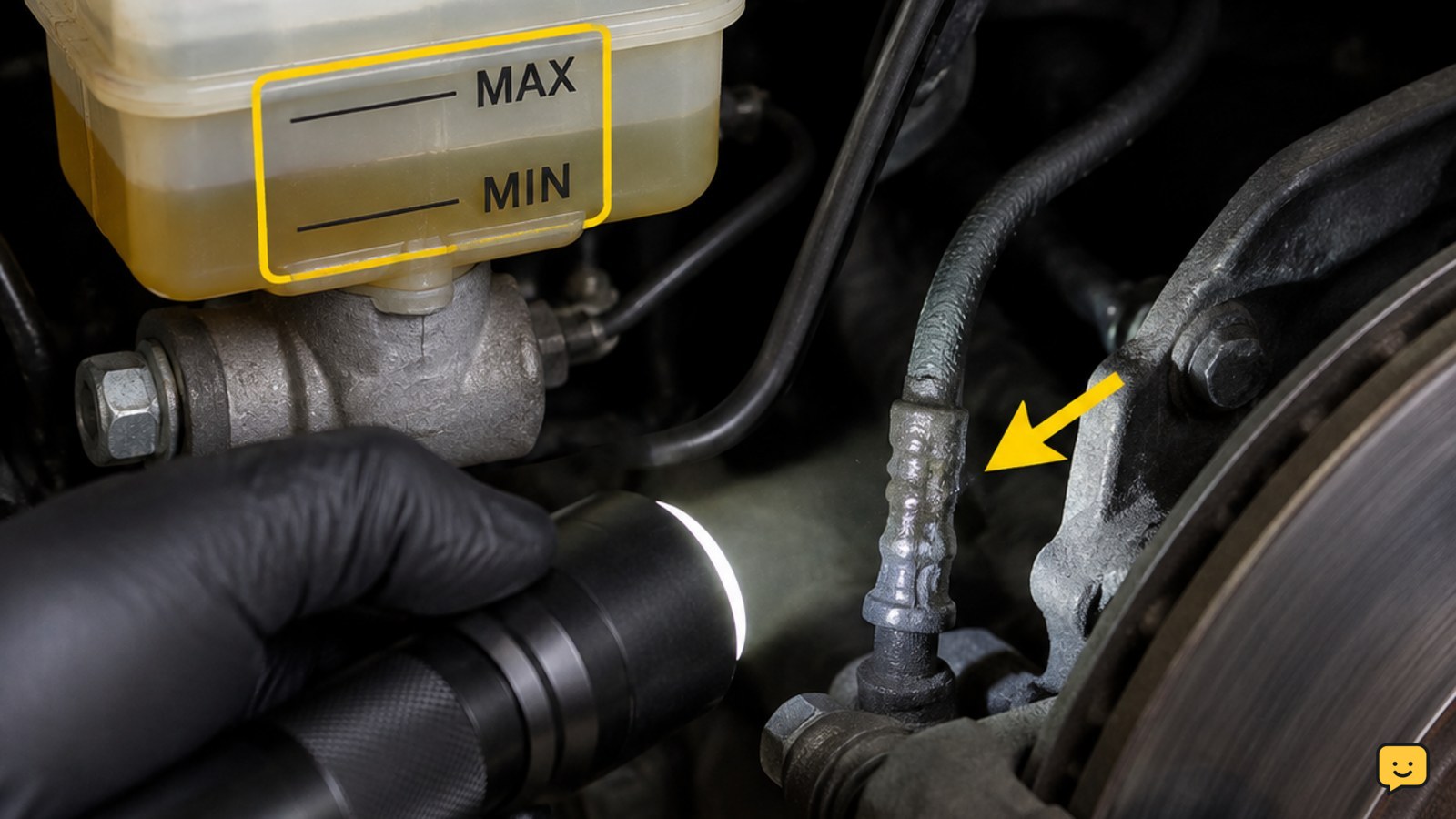
Use the owner’s manual to locate the brake-fluid reservoir and confirm the correct fluid type. With the vehicle parked level, compare the fluid against the MIN and MAX marks. A low level needs an explanation; it can accompany a leak or significant brake-component wear, and adding fluid alone does not repair either condition.
Look behind each wheel, along visible brake lines and hoses, around the master cylinder, and under the car. Fresh, oily fluid is a stop condition. Do not continue driving because no puddle is visible: a leak can be small, hidden, or internal. If the reservoir is empty or nearly empty, do not pump the pedal repeatedly or drive the vehicle.
If the fluid is low, the pedal is soft, or the level keeps dropping, have the complete hydraulic system inspected. Use only the fluid specification listed for your vehicle; the wrong fluid can damage brake-system components.
Use the pedal behavior to narrow the likely cause
A soft or spongy feel that appeared after brake work commonly points to air remaining in the hydraulic system. Air compresses under pedal pressure, so the pedal can feel springy and may sit lower than expected. The usual correction is proper bleeding by a technician or by a person following the vehicle’s exact service procedure.
A pedal that temporarily becomes firmer after pumping is not fixed. That change can indicate air, excessive travel, or a hydraulic fault; it only changes the pedal feel for a short time. Treat the symptom as a reason to stop driving rather than as a way to restore safe braking.
A pedal that slowly sinks while you hold pressure can indicate internal hydraulic bypass or a leak. A pedal that became soft suddenly, especially with a warning light or fluid loss, needs immediate inspection. If the pedal is low but the fluid level is normal, the problem may still be inside the hydraulic or ABS system and is not cleared by topping up the reservoir.
Choose the repair path and verify firm braking
Arrange a brake-system inspection if the pedal is soft, even when no leak is visible. Tell the repairer when the symptom began, whether the vehicle recently had brake work, whether pumping changes the feel, and whether any warning light appeared. This information helps separate trapped air from fluid loss and hydraulic-component faults.
Do not replace parts based only on the pedal sensation. The repair may involve finding and repairing a leak, bleeding the system, correcting a brake adjustment issue, or diagnosing a master-cylinder or ABS fault. The correct procedure and fluid specification depend on the vehicle, so use its service information for any work beyond a visual check.
After repair, verify the result in a stationary test before moving. The pedal should feel consistently firm, remain at a stable height while held, and require no pumping. Then test braking only at very low speed in a safe, clear area. Stop immediately if the pedal drops, the vehicle pulls, braking feels weak, or a warning light remains on. Do not return the car to normal traffic until the fault is corrected.
Frequently asked questions
Can I drive with a soft brake pedal?
Usually, no. If the pedal travels farther than normal, sinks while held, needs pumping, or braking feels weaker, park the car and arrange a tow or mobile inspection. A short distance to a repair shop is not a safe substitute for diagnosis because hydraulic faults can worsen without warning.
Why does my brake pedal get firmer when I pump it?
Pumping can temporarily reduce pedal travel when air, excess clearance, or a hydraulic fault is present. It does not remove the underlying problem. If pumping is needed to obtain a usable pedal, stop driving and have the brake system inspected and repaired.
Is low brake fluid always caused by a leak?
Not always, but a low level should never be dismissed. It can occur with a leak or substantial brake-component wear, and the source must be checked before fluid is added. Use only the specification in the owner’s manual and do not rely on topping up as a repair.
Can air in the brake lines make the pedal soft?
Yes. Air compresses when you press the pedal, producing a springy feel and increased travel. This can happen after brake-system work or when a fault allows air or fluid loss. Correct bleeding requires the vehicle’s proper procedure; if the pedal remains soft afterward, further hydraulic diagnosis is needed.
Browse more Maintenance & Repair guides for help with this topic.