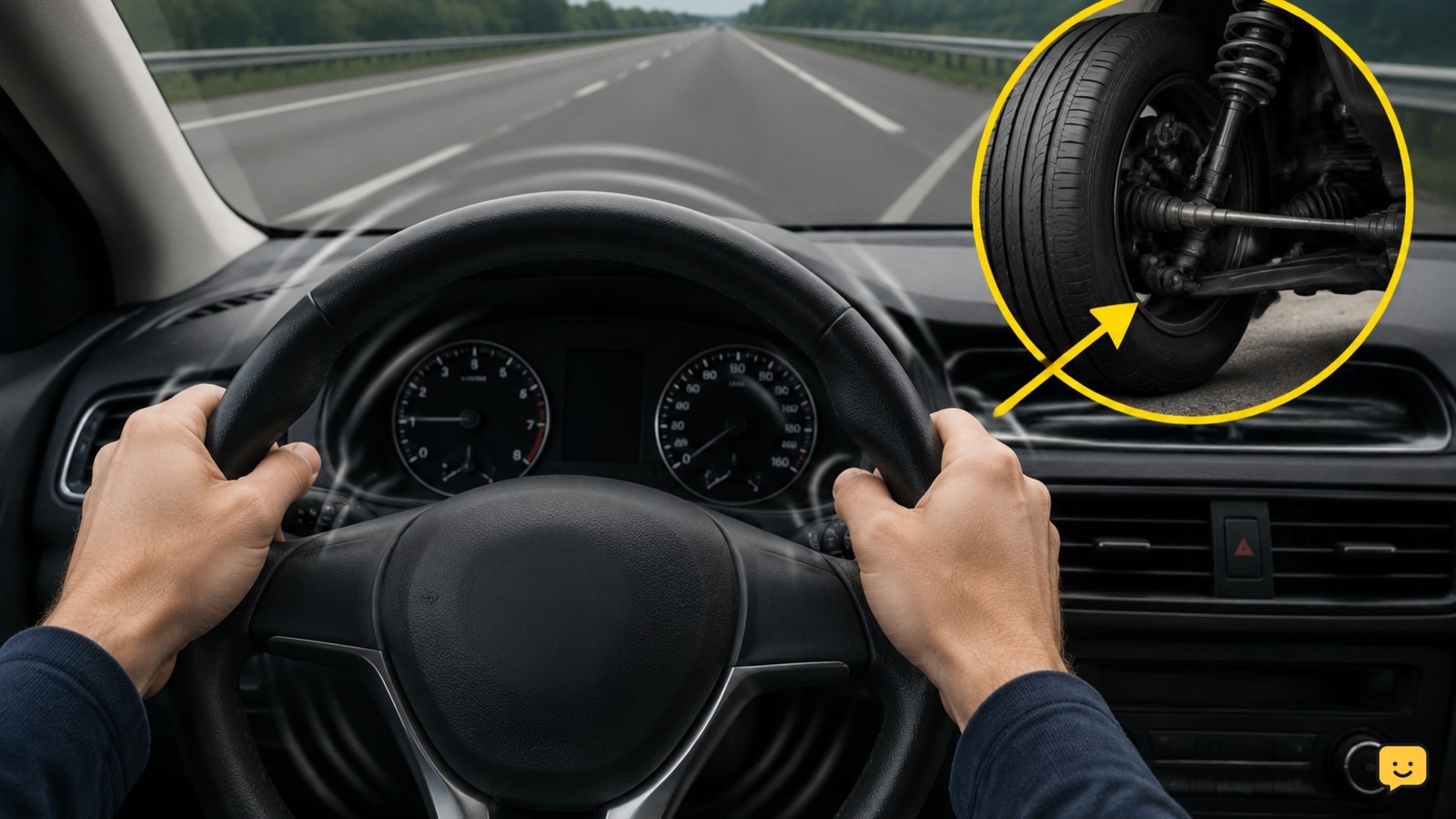
Your car steering wheel usually vibrates at highway speeds because a front wheel or tire is out of balance, damaged, or not running true. Alignment problems and worn steering or suspension parts can also cause shaking, pulling, or uneven tire wear. If the vibration appears during braking, begins after an impact, or comes with looseness, noise, or a damaged tire, stop driving and arrange an inspection.
Start with when the vibration happens
The timing is the fastest way to separate likely causes. A vibration that appears only in a repeatable highway-speed range commonly points first to the rotating wheel-and-tire assembly. One service source identifies improper tire balance as a common cause of high-speed steering-wheel shake because the wheel and tire must rotate evenly.
- Only at a particular speed: suspect wheel balance, a bent wheel, or a tire that is not running evenly.
- At many speeds and over bumps: inspect for tire damage, wheel damage, or worn steering and suspension parts.
- Mostly while braking: compare the symptom with brake-related shaking rather than assuming the wheels only need balancing.
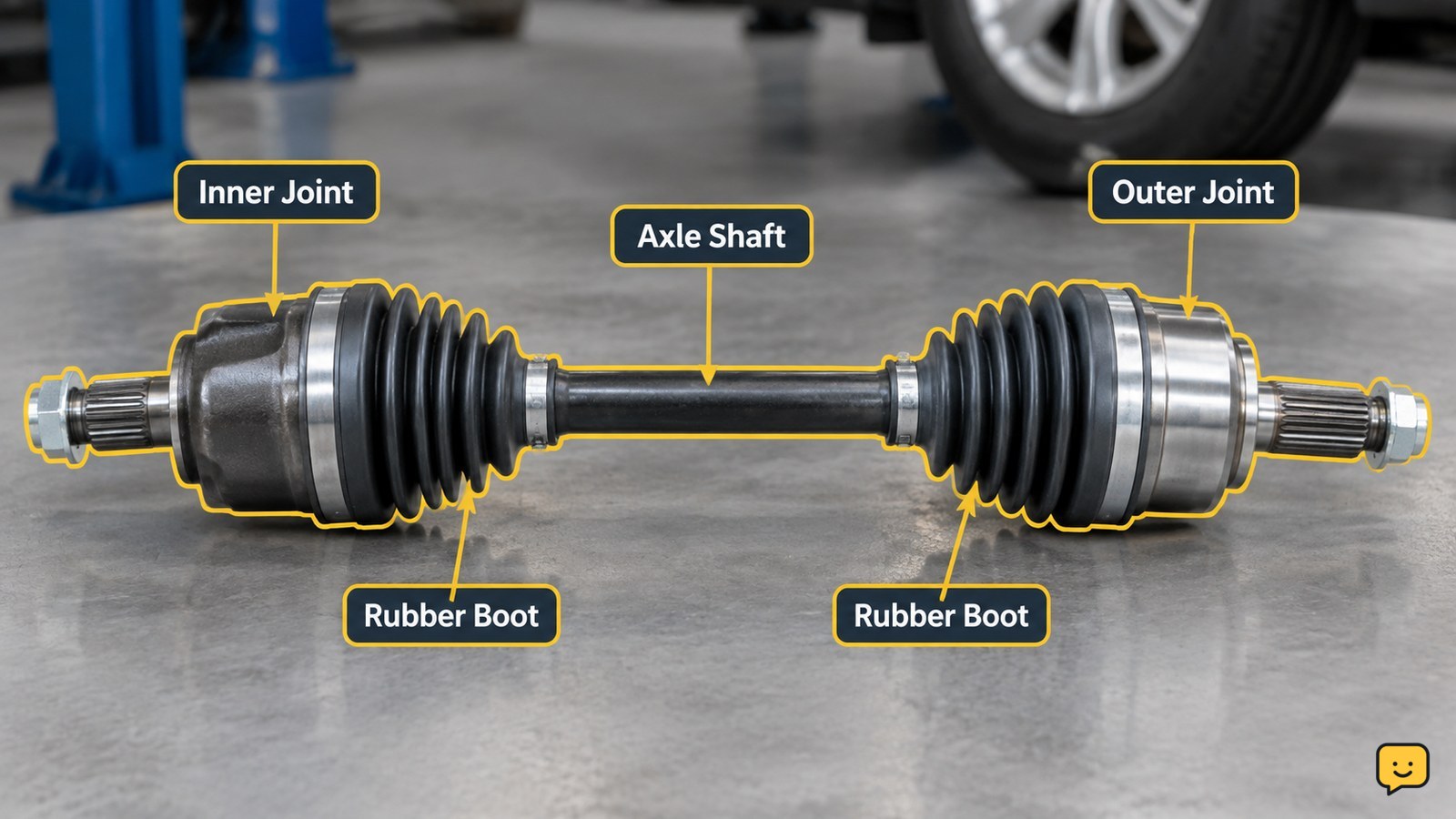
- While accelerating: include driveline or axle faults in the professional diagnosis, especially if the vibration is felt through the floor as well as the wheel.
- With a pull or crooked steering wheel: alignment or a damaged suspension component becomes more likely.
Use this pattern as a starting point, not a final diagnosis. Several faults can exist together, particularly after a pothole impact or tire replacement.
Check wheel balance and wheel damage first
Wheel imbalance is a strong suspect when the steering wheel shakes at highway speed but the vehicle otherwise tracks normally. A missing balance weight, incorrect balancing, packed mud or snow, or a bent rim can make the wheel assembly rotate unevenly. The vibration may be strongest in a narrow speed band and may lessen above or below it.
- Look through the wheel openings for a missing clip-on weight or fresh impact marks. Do not assume every missing-looking spot is a fault; some wheels use adhesive weights inside the rim.
- Inspect the inner and outer rim edges for bends, cracks, or a flattened section.
- Check that the wheel is seated correctly and that no visible object is lodged against it.
- Confirm tire pressure when the tires are cold and correct any clear pressure difference before testing.
Verification: ask a tire shop for a balance check and a runout inspection, not just a pressure check. If balancing removes the vibration, confirm the repair with a cautious road test on a safe road. If the vibration remains, the shop should inspect the tire for uniformity and the wheel for runout before replacing parts.
Failure path: if the wheel cannot be balanced normally, or the machine shows excessive runout, stop pursuing repeated balance adjustments. The tire, wheel, hub, or mounting surface needs a closer inspection.
Rule out a tire problem
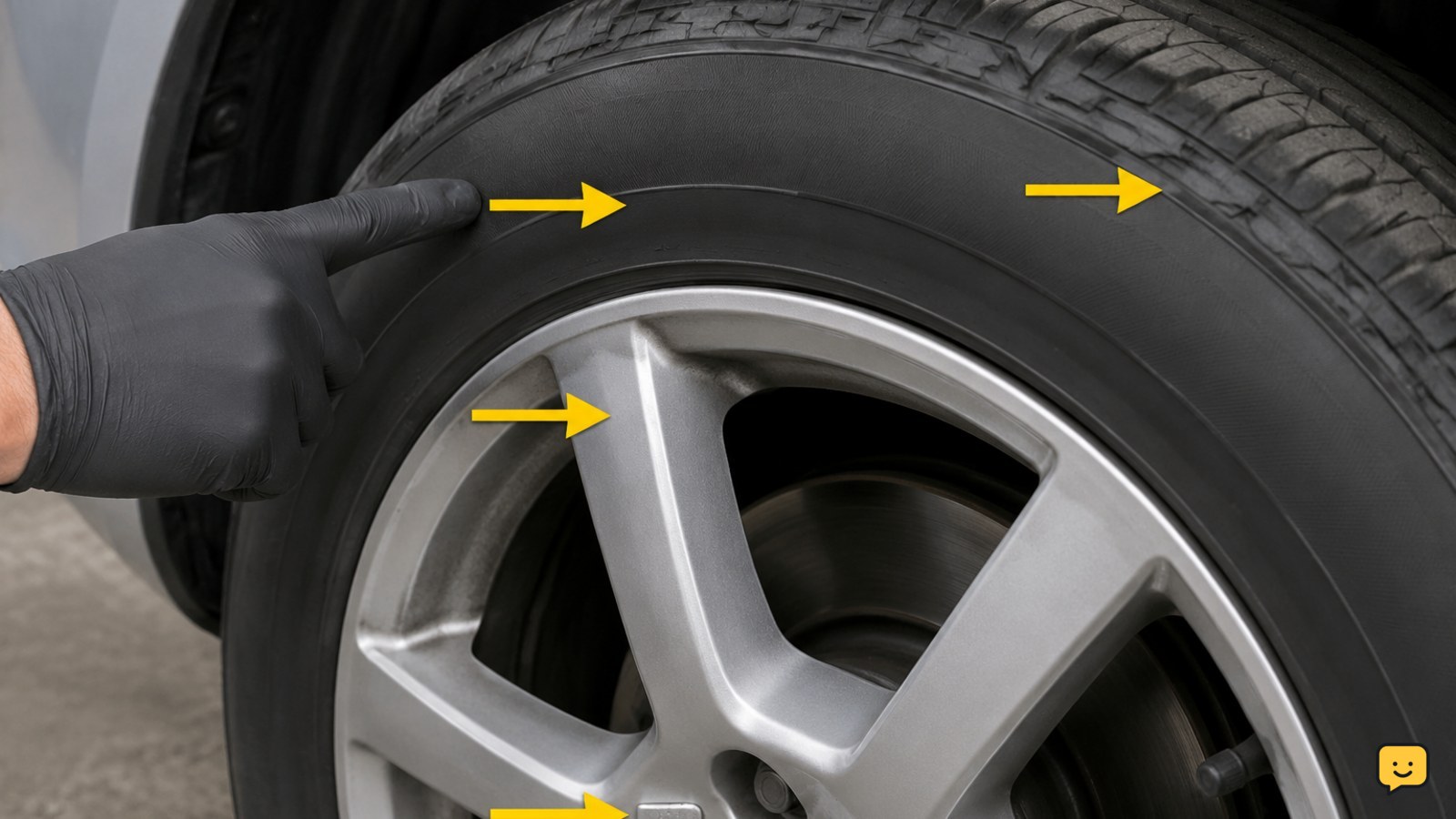
A tire can cause steering vibration even when its tread still looks usable. Internal damage, uneven wear, a shifted belt, a flat spot, or a tire that has been stored underinflated can make it rotate irregularly. A bulge or tread separation is a safety issue rather than a comfort problem.
- Inspect both front tires and the sidewalls for bulges, cuts, cracks, or exposed cords.
- Run your hand lightly across the tread only when the tire is cool and the vehicle is stationary. Feel for sawtooth wear, cupping, or a raised area; do not use this check to excuse visible damage.
- Compare tread wear from inside to outside and compare the two tires on the same axle.
- Check the tire’s age and service history in the owner’s manual or from a qualified tire professional, especially if the vehicle sat for a long period.
Verification: a shop can measure tread and tire uniformity and can inspect whether the tire is seated correctly on the rim. If a tire is replaced, use the correct size, load rating, speed rating, and axle-matching guidance for the vehicle.
Do not rotate tires as a diagnostic experiment if one has a bulge, exposed cord, severe uneven wear, or suspected internal damage. Replace or tow the vehicle for professional assessment instead.
Separate alignment from suspension wear
Alignment problems usually create a pattern beyond simple shaking. The car may pull to one side, require constant steering correction, or wear a tire unevenly. A pothole or curb strike can alter alignment or bend a wheel and suspension part.
- On a straight, reasonably level road, notice whether the car consistently drifts when you relax your grip slightly. Do not release the wheel or test in traffic; road crown and wind can affect the result.
- Check whether the steering wheel sits off-center while the car travels straight.
- Look for feathered or rapidly uneven tread wear.
- With the vehicle parked, listen for clunks when steering at low speed and note any looseness, but do not reach near moving parts.
Worn tie rods, ball joints, bushings, wheel bearings, or other suspension parts can allow the wheel to move instead of holding its intended position. These faults require a proper lift and load check. An alignment should follow the repair of any loose or damaged component; aligning a vehicle with worn parts may not solve the vibration.
Verification: request an alignment printout and a front-end inspection. The result should include the cause found, the parts repaired, and a road-test confirmation. If the vehicle still vibrates after alignment, return to wheel, tire, and runout checks rather than assuming the alignment machine failed.
Use braking and acceleration to narrow it down
Pay attention to whether your foot is on the brake or accelerator. Vibration that appears mainly during braking is a different diagnostic branch from a steady highway-speed shake. It can involve brake components, a sticking caliper, wheel mounting, or front-end wear and deserves inspection if it is strong or worsening.
Vibration that changes with acceleration can involve an axle or driveline component, particularly when it is felt through the seat or floor. A steering-wheel-only vibration that follows vehicle speed more than engine speed still keeps the front wheel-and-tire assembly high on the list.
- Do not deliberately reproduce the problem at excessive speed.
- Record whether the vibration follows road speed, engine speed, braking, turning, or acceleration.
- Tell the repair shop what changed recently, including tire installation, wheel removal, brake work, or an impact.
- After repair, confirm normal steering, straight tracking, braking, and the absence of new noise on a short, cautious road test.
Stop condition: if the vibration is accompanied by pulling during braking, a hot or smoking wheel, grinding, steering looseness, or a warning light, stop the test and arrange professional service.
Frequently asked questions
Is a vibrating steering wheel at highway speeds usually a wheel-balance problem?
Often, yes. A vibration that appears in a repeatable speed range and is not linked to braking commonly starts with wheel balance, tire uniformity, or wheel runout. A balance check is a sensible first professional test, but it does not rule out tire damage, a bent wheel, alignment trouble, or worn steering parts.
Can low tire pressure make the steering wheel vibrate?
Yes, incorrect pressure can contribute to unstable handling and uneven tire behavior, and a pressure difference can make the car pull. Check pressures when the tires are cold using the vehicle’s door-label specification. Pressure correction will not repair a bulge, tread separation, bent wheel, or internal tire damage.
How can I tell whether alignment is causing the vibration?
Alignment is more likely when the car pulls, the steering wheel sits off-center, or the tires show feathered or uneven wear. A narrow speed-specific shake without pulling more strongly suggests balance, tire, or wheel trouble. A shop should inspect suspension parts before performing an alignment.
Should I keep driving if my steering wheel shakes on the highway?
No, not at highway speed until the cause is checked. Stop driving and arrange an inspection if the vibration is severe, suddenly worse, follows an impact, or comes with a tire bulge, falling pressure, loose steering, clunking, grinding, or pulling. A damaged tire or loose front-end component can become hazardous.
Browse more Maintenance & Repair guides for help with this topic.