To use a meat grinder, chill the meat and removable grinder parts until very cold, cut the meat into small cubes, assemble the correct blade and plate, and feed the cubes through the tube with the supplied pusher. Grind into a chilled bowl, check the texture, then unplug, disassemble, wash, dry, and refrigerate or cook the meat promptly.
For more help with this topic, use the Cooking Basics guides.
Gather cold meat and assemble the grinder
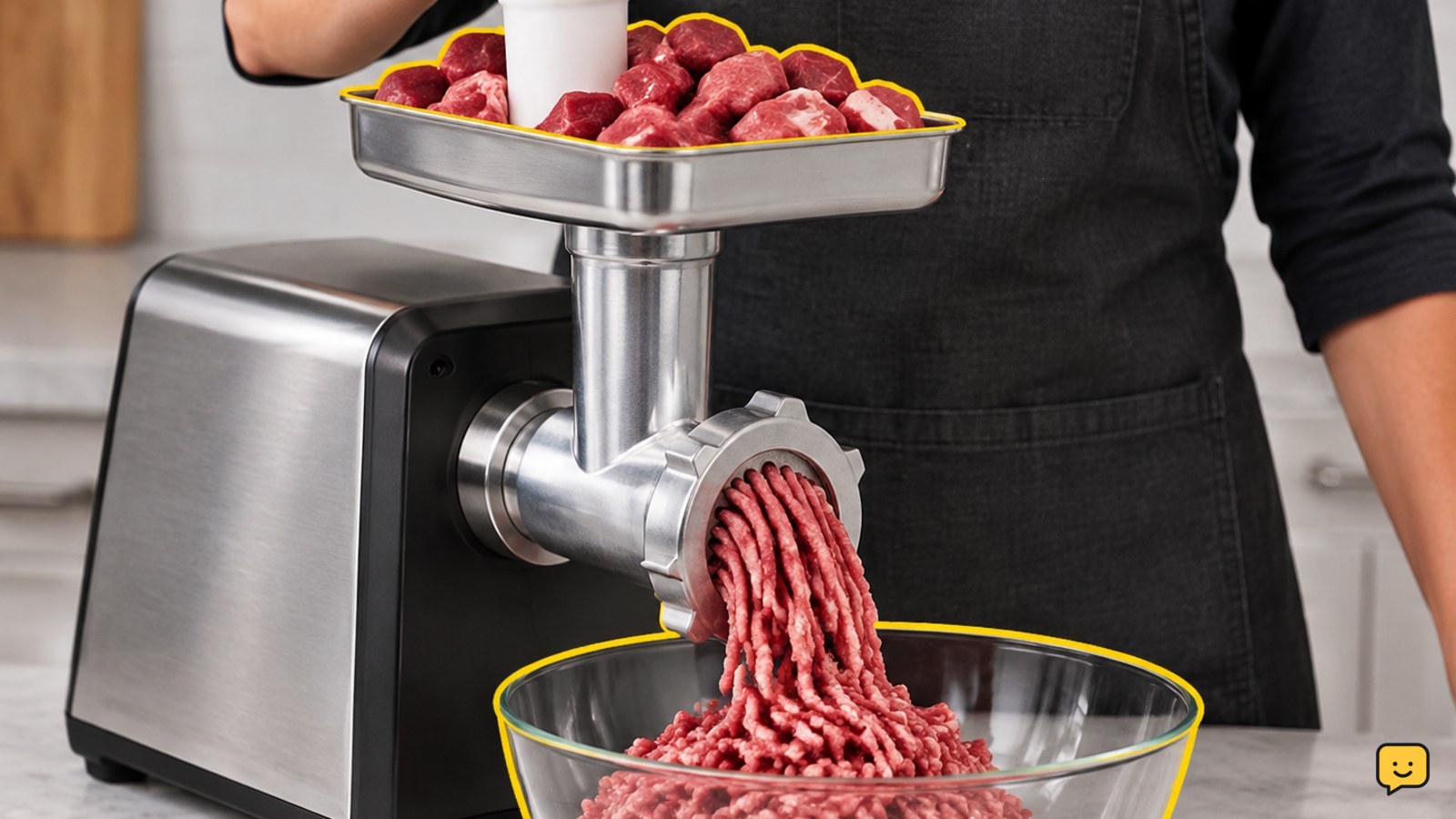
A meat grinder works best when the meat and contact parts are very cold. Chill the cubed meat and removable grinder parts before assembly; firm meat cuts cleanly instead of smearing against the blade. KitchenAid’s meat-grinder instructions likewise direct users to load cubed, chilled meat into the tray and feed tube.
- Fit the grinder head to the motor base or clamp the manual grinder securely to the counter.
- Place the blade on the auger with its cutting edge facing the plate, then fit the selected plate and retaining ring. The exact order can vary by model, so use the manual if the parts differ.
- Lock the tray and place a chilled bowl beneath the outlet.
Choose a coarse plate for a visibly textured grind and a finer plate for a smoother mixture. If you are unsure which plate suits a recipe, start coarse; you can pass the meat through a second time, but you cannot restore texture after grinding too finely.
Feed the meat through at a steady pace
Feed a meat grinder one small handful of chilled cubes at a time, keeping the auger supplied without packing the tube. Turn on an electric grinder, or turn the handle smoothly on a manual model, then use the pusher with light, even pressure.
- Drop several cubes into the tray and let the auger draw them toward the blade.
- Press only when the meat reaches the feed opening. Do not force a large load into the tube.
- Keep the output bowl close to the outlet so the ground meat lands cleanly and does not spread across the counter.
Steady feeding produces a more even result than alternating between an empty tube and an overloaded one. The expected result is loose strands or pieces that retain definition rather than a sticky paste.
For a finer result, chill the first grind again and pass it through the same or a finer plate. Keep the meat cold between passes.
Check texture and fix smearing or a slow feed
Ground meat should look distinct and evenly cut. If it comes out as a soft smear, feels unusually warm, or wraps around the blade instead of exiting in clean strands, stop the grinder and correct the cause before continuing.
- Meat is too soft: Stop, spread the pieces on a tray, and chill them again. Also chill the blade, plate, and grinder head if they have warmed.
- Feed slows or stops: Switch off and unplug the grinder, then remove the blockage according to the manual. Do not reach into the tube while the machine is connected to power.
- Texture is uneven: Cut pieces more uniformly, avoid overloading the tray, and feed at a steady pace.
- Meat wraps around the blade: Stop and inspect the blade, plate, and assembly. A dull, damaged, or incorrectly fitted cutting set needs the manufacturer’s replacement or instructions rather than continued use.
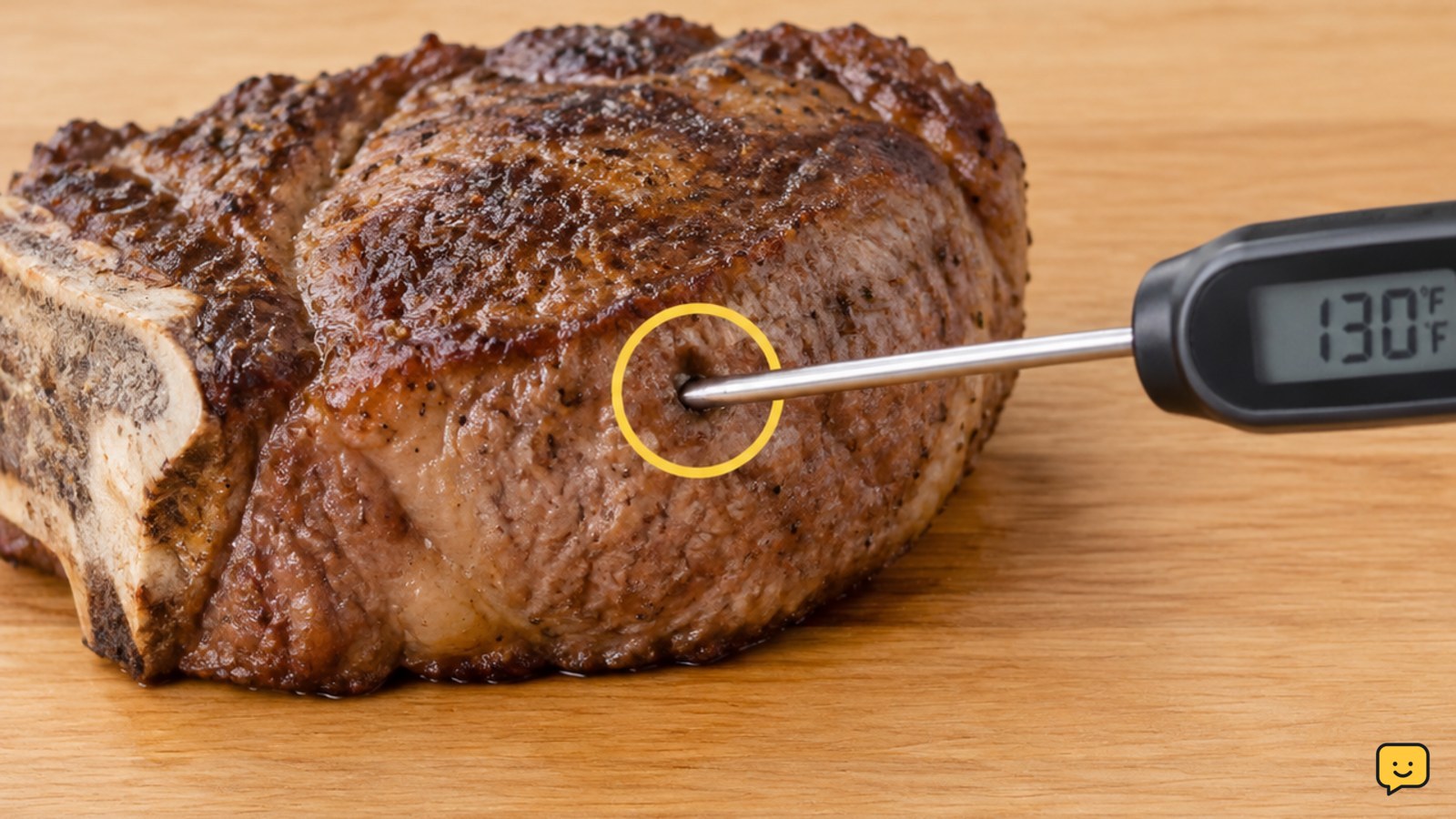
Do not taste raw ground meat. Cook it using a reliable recipe and verify the finished internal temperature with an appropriate thermometer; the meat thermometer safety checks explain how to place the probe and confirm a reading.
Use these meat thermometer safety checks before serving any ground meat.
Clean, dry, and store the grinder
Clean a meat grinder immediately after use, while residue has not dried inside the head, plate, or blade. Turn off and unplug an electric model before removing the tray, pusher, grinder head, retaining ring, plate, blade, and auger.
- Scrape loose meat into the appropriate food-waste container; do not push it deeper into the grinder.
- Wash removable food-contact parts according to the manual. If a part is not dishwasher-safe, use warm water, dish soap, and a small brush to clear the feed tube and plate holes.
- Rinse and dry every part completely. Moisture left on a plate or blade can encourage corrosion.
- Wipe the motor housing with a damp cloth only. Never immerse the motor base or allow water into its controls.
- Store the dry blade and plate where they cannot cut hands or contact dirty surfaces.
Refrigerate or cook the ground meat promptly. If you will not use it soon, package it in shallow portions and follow current food-storage guidance for the type of meat and your refrigerator or freezer.
Frequently asked questions
Should meat be frozen before grinding?
Meat should be very cold and firm, but it does not need to be frozen solid. Chill cubed meat until it holds its shape and the grinder parts are cold. If the meat bends, smears, or warms during grinding, stop and chill it again before continuing.
Why is my meat grinder producing mush?
Mushy output usually means the meat, blade, plate, or grinder head has warmed, or the blade is dull or incorrectly assembled. Unplug the grinder, chill the parts and meat, check the blade direction and plate fit, then resume with smaller cubes and lighter pressure.
Can I put bones through a meat grinder?
Do not put bones through a household meat grinder unless the manufacturer specifically rates that model and attachment for them. Remove bones and hard connective tissue before grinding. If a bone enters the grinder, stop, unplug it, and follow the manual’s jam-clearing instructions.
How do I choose a grinding plate?
Use a coarse plate when you want a more textured grind, such as for some burger mixtures, and a finer plate when a smoother mixture is needed. Plate sizes and labels vary by model, so match the choice to the recipe and the grinder manual.
Can I grind cooked meat in the same grinder?
Only if the grinder’s manual permits cooked food and the parts can be cleaned thoroughly afterward. Many home grinders are used for cold raw meat, so check the model instructions first. Never mix cooked meat with raw-meat residue; wash and sanitize the food-contact parts between uses.