Yes, dogs can eat a small amount of plain, unsweetened applesauce as an occasional treat. Choose applesauce made from apples without added sugar, spices, raisins, or sugar-free sweeteners. Remove any apple stems, leaves, seeds, and core before preparing it. If your dog ate flavored applesauce or develops concerning symptoms, contact a veterinarian or animal poison service promptly.
For more help with this topic, use the Everyday Pet Care guides.
Choose plain, unsweetened applesauce
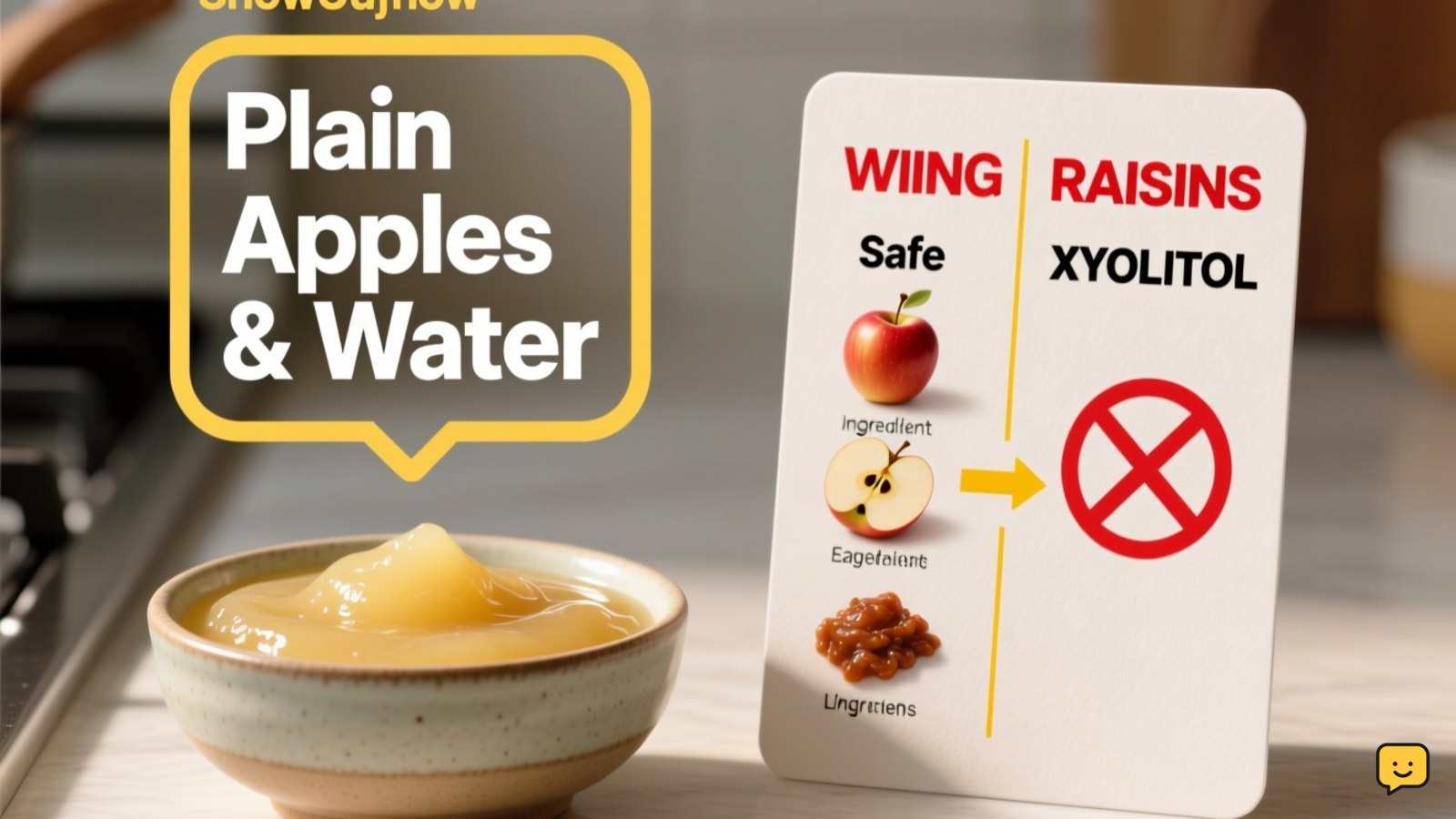
Plain, unsweetened applesauce is the form most appropriate for dogs because it contains cooked apple without recipe ingredients that add avoidable risk. Purina and Petco both identify plain applesauce as the safer choice and recommend moderation.
Check the ingredient list rather than relying on the front label. Avoid products with added sugar, syrups, frosting, dessert fillings, or multiple spices. Sugar is not a poison in the same way as a toxic sweetener, but a sugary snack is a poor routine treat and may cause digestive upset.
Applesauce should remain an occasional treat, not a replacement for a complete, balanced dog food. Individual dogs can still react poorly to new foods, so do not offer more if loose stool, vomiting, or other digestive changes begin.
For another fruit-preparation comparison, plain watermelon for dogs shows the same safety principle: remove hazardous parts and skip seasoned or processed versions.
For another fruit-preparation comparison, plain watermelon for dogs shows the same safety principle: remove hazardous parts and skip seasoned or processed versions.
Prepare apples without seeds, stems, or core
Safe homemade applesauce starts with apple flesh that has no stem, leaves, seeds, or core. Purina describes apples as non-toxic for dogs when used in plain cooked applesauce, while Petco likewise emphasizes seed-free preparation.
- Wash the apple and cut away the stem, leaves, and core.
- Remove every visible seed before cooking. Do not blend the core or seeds into the sauce.
- Cook the apple with water only, then cool it completely.
- Serve the plain sauce by itself, without cinnamon blends, nutmeg, butter, salt, sweeteners, or dessert toppings.
The apple peel or rind is not the central concern in applesauce; the core, stem, and seeds are the parts to remove carefully. Peeling can make the finished sauce smoother, but it does not make an unsafe recipe safe if other ingredients are present.
Do not give whole apples or large hard pieces as an alternative to applesauce. Those forms can create choking or swallowing problems, especially for dogs that gulp food.
Reject flavored and sugar-free products
Flavored or sugar-free applesauce requires an ingredient check because the added ingredients, not the apple itself, may create the emergency.
- Raisins, grapes, sultanas, and Zante currants: Do not wait for symptoms after ingestion. ShowU’s guide to raisins and kidney-injury risk explains why these ingredients need prompt professional guidance.
- Xylitol or another sugar-free sweetener: Treat a confirmed or possible exposure as urgent and contact a veterinarian or animal poison service immediately. Keep the package nearby so the ingredient and product name can be reported accurately.
- Spice-heavy recipes: Skip applesauce containing concentrated spice blends, oils, or large amounts of seasoning. A plain apple product is the simpler choice.
- Pie filling or dessert sauce: Avoid these products because they may contain concentrated sugar, butter, syrups, raisins, or other ingredients not intended as dog treats.
If the label is missing or unreadable, do not guess. Treat the product as unknown and ask a veterinary professional or animal poison service for product-specific advice.
ShowU’s guide to raisins and kidney-injury risk explains why these ingredients need prompt professional guidance.
Watch for symptoms after accidental eating
After a dog eats plain applesauce, watch for digestive changes such as vomiting, diarrhea, reduced appetite, or unusual discomfort. These signs do not identify the cause by themselves, so report what was eaten and when rather than trying to diagnose the problem at home.
Contact a veterinarian promptly if your dog ate applesauce containing raisins, grapes, sultanas, Zante currants, xylitol, or an unknown sweetener, even if the dog appears normal. The absence of immediate symptoms does not make a potentially toxic ingredient safe.
Seek urgent care for trouble breathing, collapse, seizures, severe weakness, repeated vomiting, or marked abdominal swelling. Bring the package or a clear ingredient photo, estimate how much was eaten, and note your dog’s approximate size and the time of exposure.
Verify the portion stays an occasional treat
An appropriate serving is a small treat portion suited to the dog’s overall diet, not a fixed amount that applies to every dog. Petco recommends plain, unsweetened applesauce in moderation, and Purina similarly presents it as an occasional food rather than a dietary staple.
Offer only a little the first time and observe your dog afterward. If the dog remains comfortable with normal stool and appetite, keep future servings small and infrequent. Stop offering it if digestive upset returns.
This advice does not replace veterinary guidance for dogs with food allergies, chronic digestive disease, diabetes, pancreatitis, or a prescribed diet. Ask the dog’s veterinarian before introducing human-food treats when a medical diet or condition affects food choices.
For a related plain-food decision, safe cooked sweet potato forms explains why preparation and recipe additives matter more than the food’s name alone.
Frequently asked questions
Can dogs eat homemade applesauce?
Yes. Homemade applesauce can be suitable when it contains only cooked apple and water, with the stem, leaves, core, and seeds removed first. Cool it before serving and do not add sugar, syrups, butter, salt, spices, or sweeteners.
Can dogs eat cinnamon applesauce?
It is safer to avoid cinnamon applesauce unless you have checked that it contains no other problematic ingredients and only a minimal amount of ordinary ground cinnamon. Skip products with spice blends, cinnamon oil, nutmeg, or dessert additives; plain applesauce is the better choice.
What if my dog ate applesauce with raisins?
Contact a veterinarian or animal poison service promptly, even if your dog seems well. Raisins, grapes, sultanas, and Zante currants can be present in flavored sauces and baked-food fillings. Keep the package and ingredient list available, and do not try a home treatment.
Can sugar-free applesauce hurt dogs?
It can, depending on the sweetener. Check immediately for xylitol and contact a veterinarian or animal poison service if xylitol is listed, suspected, or the label is unclear. Do not wait for symptoms or induce vomiting unless a veterinary professional specifically directs you.