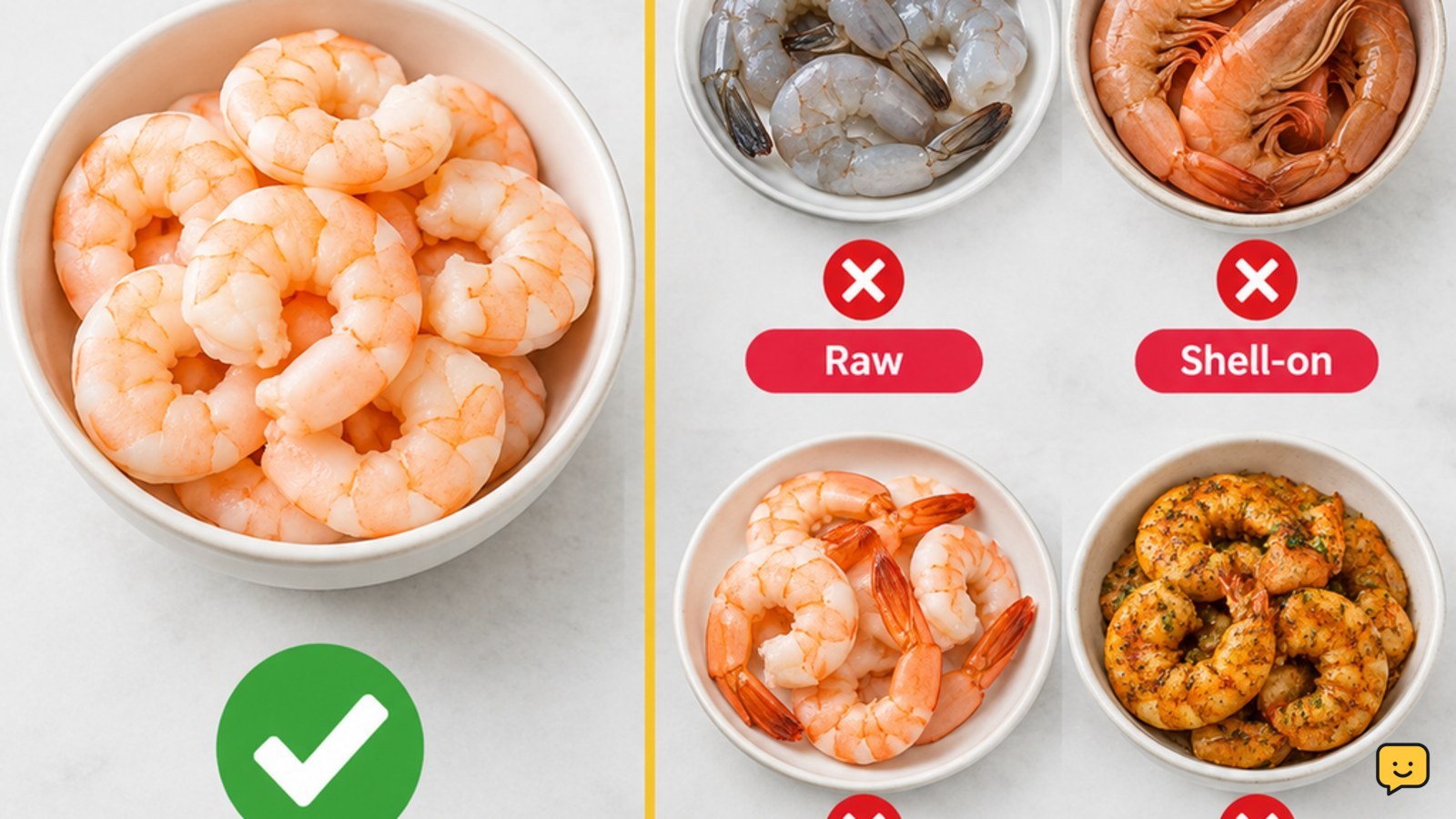
Yes, dogs can eat plain shrimp when it is fully cooked, peeled, unseasoned, and served only as an occasional treat. Do not give raw shrimp, shells, tails, or shrimp prepared with sauces, heavy salt, or unknown additives. If your dog ate shrimp with unsafe ingredients or develops choking, breathing, vomiting, diarrhea, weakness, or unusual behavior, contact a veterinarian promptly.
For more help with this topic, use the Everyday Pet Care guides.
Choose plain, cooked, peeled shrimp
Dogs can eat shrimp when it is plain, fully cooked, and peeled. Petco and York Veterinary Hospital both identify cooked shrimp as the safer form; Petco specifically limits the recommendation to shrimp that is plain, cooked, and peeled, while York Veterinary Hospital notes that cooking helps kill harmful bacteria and may make shrimp easier to digest.
Remove the shell and tail before serving. “Peeled” is the clearest safety boundary in the available veterinary guidance, so do not treat shell-on or tail-on shrimp as an equivalent option. These hard parts can be difficult for a dog to chew and may create a choking or gastrointestinal-obstruction concern.
Allow the shrimp to cool, cut it into a size your dog can manage, and offer only a small treat portion rather than replacing a balanced dog food. A dog that has never eaten shrimp should be watched after the first small serving for digestive upset or an unusual reaction.
Avoid raw, seasoned, and prepared shrimp
Dogs should not be given raw shrimp because the supplied veterinary guidance identifies cooking as the safer preparation and explains that heat kills harmful bacteria. Discard shrimp that is raw, undercooked, spoiled, or left unrefrigerated for an uncertain length of time.
Avoid shrimp cooked with sauces, marinades, spice blends, butter-heavy toppings, or an ingredient list you cannot check. Prepared shrimp can contain more salt, fat, or additives than a dog needs, and a recipe may include ingredients that are unsafe for dogs. Do not scrape seasoning from the surface and assume the food is plain; use unseasoned shrimp instead.
Do not offer fried shrimp, breaded shrimp, shrimp chips, shrimp-flavored snacks, or restaurant leftovers as substitutes. These products are not the plain cooked food addressed by the veterinary sources and may contain coatings, concentrated salt, or other additives.
For another food-safety example involving plain food versus seasoned preparations, see the plain-versus-seasoned food guide. {link}
For another food-safety example involving plain food versus seasoned preparations, see the plain-versus-seasoned food guide.
Check the shrimp before your dog eats it
Before serving, verify four things: the shrimp is fully opaque and cooked through, the shell and tail are removed, no seasoning or sauce remains, and the piece is small enough for your dog to eat without gulping.
- Read the package or recipe. Confirm that the shrimp is not marinated, breaded, smoked, or mixed with an unknown sauce.
- Inspect the whole piece. Remove shell fragments, tail pieces, and hard or sharp remnants.
- Serve it plain and cooled. Do not add salt, oil, butter, spice, or dipping sauce.
- Observe afterward. If your dog remains comfortable and shows no digestive or breathing symptoms, do not increase the serving simply because the first piece caused no visible problem.
This checklist does not make shrimp suitable for every dog. A dog with a history of food reactions, a sensitive digestive system, or a veterinary-prescribed diet needs individual advice from its veterinarian before receiving a new treat.
Watch for symptoms after accidental shrimp ingestion
After a dog eats shrimp, watch for choking or breathing trouble first, then monitor for vomiting, diarrhea, weakness, unusual behavior, or other sudden changes. These signs can follow an unsafe preparation, swallowed shell or tail, spoiled food, or an individual reaction, but an article cannot identify the cause.
If your dog is coughing forcefully, gagging repeatedly, struggling to breathe, collapsing, or becoming markedly weak, treat the situation as urgent and contact an emergency veterinarian immediately. Do not wait to see whether the symptoms disappear.
If the dog ate seasoned, breaded, sauced, raw, spoiled, shell-on, or tail-on shrimp, call your veterinarian or an animal poison service even if symptoms have not appeared. Give them your dog’s approximate weight, what was eaten, how much may be missing, when it happened, and the package or ingredient list if available.
Know when a veterinarian should advise you
Professional advice is appropriate when the amount is unknown, the shrimp contained additives, your dog swallowed shells or tails, or any symptom develops. The safest next step is to contact your veterinarian or animal poison service with the product details rather than trying a home treatment.
Do not induce vomiting or give a medication, oil, milk, or other home antidote unless a veterinary professional specifically directs you. If the dog is having difficulty breathing, is unresponsive, or appears seriously ill, go directly to an emergency veterinary clinic while contacting the clinic for instructions.
If no concerning symptoms occur after a small amount of plain, cooked, peeled shrimp, do not continue feeding it if your dog develops loose stool or digestive discomfort. Stop the treat and ask your veterinarian whether a different option is appropriate.
For a similar preparation checklist covering plain cooked produce and unsafe recipe additions, see the plain sweet potato safety guide. {link}
For a similar preparation checklist covering plain cooked produce and unsafe recipe additions, see the plain sweet potato safety guide.
Frequently asked questions
Can dogs eat shrimp shells or tails?
No. Remove the shell and tail before serving. The supported safe form is plain, cooked, and peeled shrimp; hard leftover parts can be difficult to chew and may create a choking or obstruction concern. Contact a veterinarian if your dog swallowed them, especially if gagging, vomiting, weakness, or breathing trouble appears.
Can dogs eat raw shrimp?
No. Cook shrimp fully before offering it. York Veterinary Hospital explains that cooking kills harmful bacteria and makes shrimp easier to digest, while Petco identifies plain cooked peeled shrimp as the safer form. Contact a veterinarian if your dog ate raw or spoiled shrimp and becomes ill.
Can dogs eat fried or breaded shrimp?
Fried and breaded shrimp are not recommended. They are not the plain cooked food covered by the veterinary guidance and may contain coatings, added salt, fat, sauces, or other ingredients. If your dog ate prepared shrimp, keep the packaging or recipe and ask a veterinarian or animal poison service for advice.
What should I do if my dog ate seasoned shrimp?
Check the recipe or package immediately and contact a veterinarian or animal poison service if the ingredients are unknown or potentially unsafe. Seek emergency care for breathing difficulty, collapse, repeated vomiting, or marked weakness. Do not induce vomiting or give a home antidote unless a veterinary professional tells you to.