Yes, dogs can eat a small amount of clean, finely powdered eggshell if it has been heat-treated and contains no seasoning or additives. Do not offer raw, sharp, large, or whole pieces. Eggshell is not a necessary treat, and accidental ingestion needs veterinary advice if your dog ate a large amount, a contaminated shell, or develops vomiting, diarrhea, pain, choking, or breathing trouble.
For more help with this topic, use the Everyday Pet Care guides.
Choose only clean, plain, finely ground shell
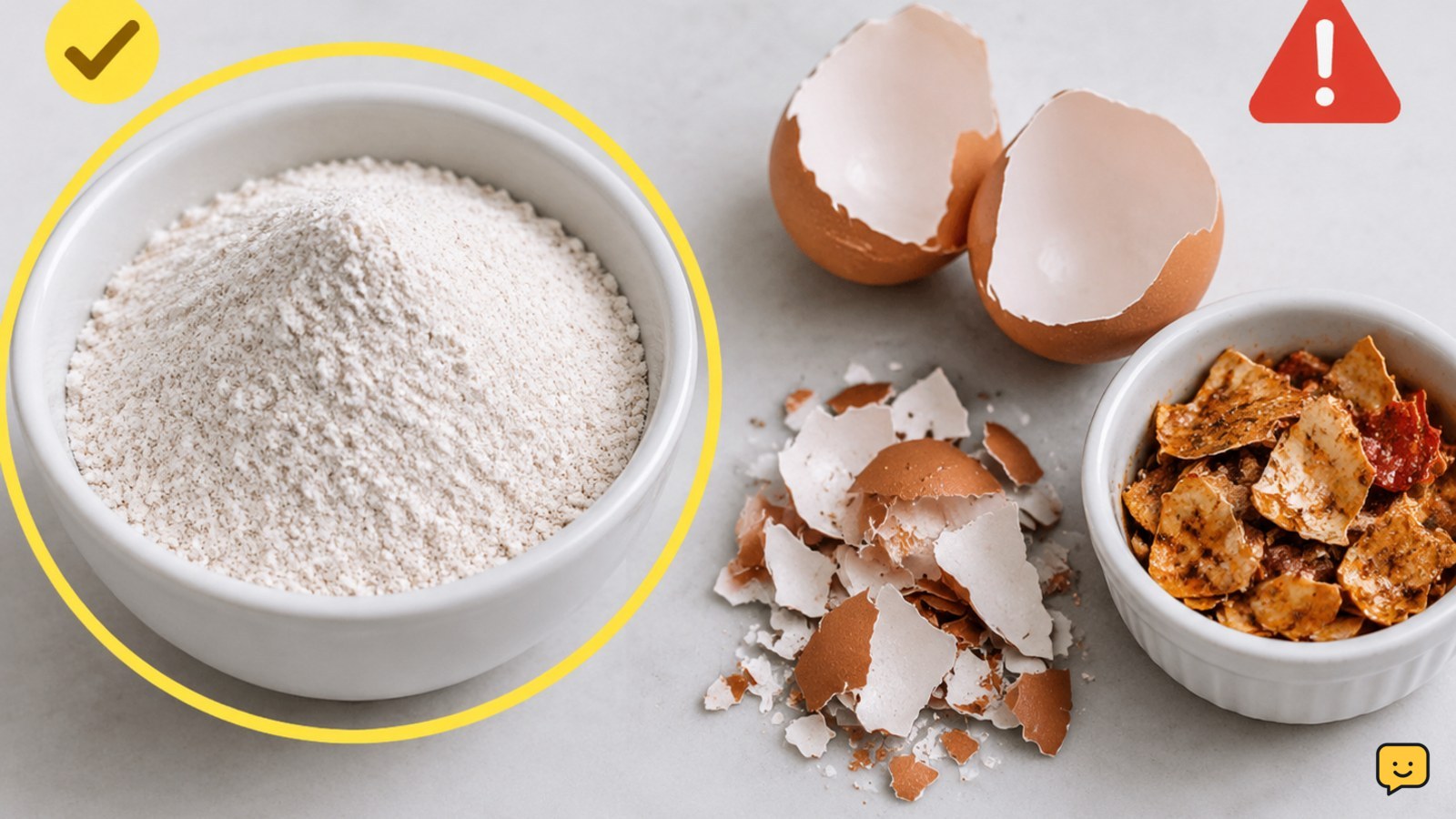
Dogs may tolerate eggshell when it is clean, heat-treated, and reduced to a fine powder, but whole or jagged pieces are a poor choice. The shell itself is not considered toxic, and veterinary clinic Lincolnway Veterinary Clinic notes that eggshell can provide calcium; it also warns that whole or large pieces can create a choking hazard.
Use only shell from a fresh, sound egg. Discard shells with visible dirt, fecal material, mold, spoiled egg, or unknown contamination. Avoid shells left on a counter, mixed with raw meat, or taken from a discarded plate. Raw eggshells may carry bacteria such as Salmonella, according to Loveland Regional Veterinary Hospital, creating a risk for the dog and people handling the shell.
Eggshell is different from the rest of an egg recipe. Plain, fully cooked egg may be tolerated by many dogs, but butter, oil, salt, sauces, onion, garlic, spicy coatings, and rich leftovers should not be carried over into the shell preparation. Pits, seeds, and fruit rinds are not relevant to a plain egg, but any mixed food still needs its own ingredient check.
Prepare eggshell with heat and a fine texture
To reduce the raw-shell risk, rinse a clean shell, remove visible egg residue, and heat it before grinding. Loveland Regional Veterinary Hospital describes baking shells at 300°F for about 10 minutes. Let the shell cool completely, then crush or grind it into a fine powder with no sharp flakes or large pieces.
- Wash your hands and handling surfaces before and after preparation.
- Rinse the shell and remove remaining egg or membrane that is visibly stuck to it.
- Heat the shell at 300°F for about 10 minutes, following the cited veterinary guidance.
- Cool it fully, then grind it until the texture resembles a fine powder.
- Discard the batch if it smells spoiled, remains visibly dirty, or contains sharp fragments after grinding.
There is no universal safe serving amount for every dog. Size, age, health conditions, current diet, and any prescribed mineral limits matter, so do not use eggshell powder as a routine calcium supplement without veterinary guidance. Treat it as an optional food ingredient, not a replacement for complete dog food.
Avoid whole, raw, seasoned, and contaminated shells
Do not give a dog a whole shell, large shards, raw shell, shells from spoiled eggs, or shells coated with salt, spices, oil, sauce, or leftovers. Large fragments can be swallowed awkwardly or irritate the mouth and digestive tract; raw or dirty shells add a bacterial-contamination concern. A dog that steals a small fragment is not automatically in danger, but the risk depends on the amount, texture, condition, and added ingredients.
Do not scrape shells from a trash can or let a dog chew shells discarded after cooking. Throw them away in a closed bin. If a shell came from a dish containing onion, garlic, chocolate, raisins, xylitol, or another potentially toxic ingredient, call a veterinarian or animal poison service rather than treating it as ordinary eggshell exposure.
Check for symptoms after accidental ingestion
After accidental eggshell ingestion, observe your dog for choking, coughing, gagging, repeated vomiting, diarrhea, abdominal pain, a swollen abdomen, unusual weakness, or difficulty breathing. These signs do not identify the cause by themselves, but they are reasons to obtain professional advice rather than waiting for the problem to resolve.
Call a veterinarian promptly if your dog swallowed sharp or whole pieces, ate a large quantity, consumed raw or visibly contaminated shell, or has a medical condition that makes dietary changes significant. Call an animal poison service when the shell was mixed with a potentially toxic food or household substance. Have the product or recipe, approximate amount, time of ingestion, and your dog’s weight available.
If your dog is choking, struggling to breathe, collapsing, severely painful, or repeatedly vomiting, stop home observation and seek emergency veterinary care. Do not induce vomiting or give a home treatment unless a veterinary professional tells you to do so.
Verify the preparation before offering any
Before a dog receives eggshell, verify four conditions: the shell is clean, it has been heat-treated, it is finely powdered, and it contains no seasoning or other ingredients. If any condition fails, discard it instead of trying to salvage the batch. If your dog has no symptoms after a tiny accidental exposure, continue monitoring and contact your veterinarian if symptoms appear or if the exposure involved sharp pieces or contamination.
For related ingredient checks, see the guidance on unsafe seasonings and brine and ingredient checks for dog treats.
For related ingredient checks, see the guidance on unsafe seasonings and brine.
Frequently asked questions
Can dogs eat raw egg shells?
Raw eggshell is not the safer choice because it may carry bacteria such as Salmonella. If eggshell is used at all, clean it, heat-treat it, and grind it finely. Contact a veterinarian if your dog ate a contaminated shell or develops vomiting, diarrhea, pain, weakness, or breathing trouble.
Can dogs eat whole egg shells?
No, whole eggshells and large shards should not be offered. They can be difficult to swallow and may create choking or irritation risks. Use only finely powdered, heat-treated shell, and ask a veterinarian about suitability if your dog has dietary restrictions.
Can eggshell powder replace calcium in dog food?
No. Do not use eggshell powder as a routine calcium supplement or replace complete dog food without veterinary guidance. A dog’s mineral needs vary with age, health, diet, and medical conditions, and excess supplementation can be inappropriate.
What should I do if my dog ate eggshells?
Remove any remaining shell and note whether it was raw, sharp, seasoned, contaminated, or mixed with another food. Contact a veterinarian for a large amount, sharp pieces, toxic ingredients, or any symptoms. Seek emergency care for choking, breathing difficulty, collapse, severe pain, or repeated vomiting.