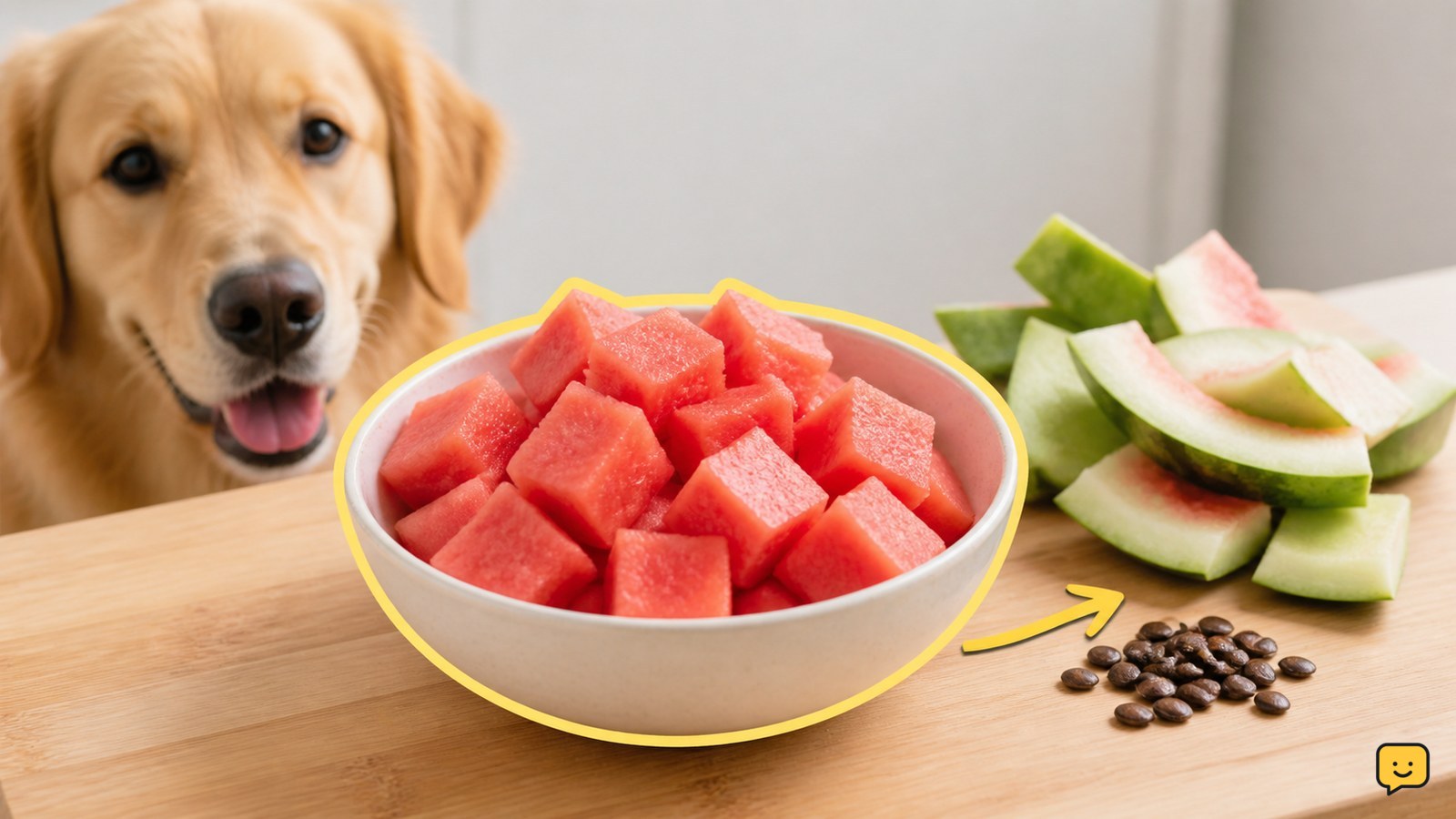
Yes. Dogs can eat plain, seedless watermelon flesh as an occasional treat when the rind and seeds are removed. Do not serve seasoned watermelon, fruit desserts, drinks, or products with unknown additives. If your dog swallows a large amount of rind or seeds, eats a prepared product, or develops choking, breathing, vomiting, pain, weakness, or collapse, contact a veterinarian promptly.
For more help with this topic, use the Everyday Pet Care guides.
Choose plain watermelon flesh only
Plain watermelon flesh is the form dogs can generally eat safely as an occasional treat. Purina states that watermelon can be safe for dogs when prepared correctly and that treats should remain a limited part of the diet.
Choose fresh flesh with no salt, sugar, spices, sauces, alcohol, chocolate, or other recipe ingredients. Watermelon should complement your dog’s normal food, not replace a balanced meal. If your dog has a condition that requires a restricted diet, ask your veterinarian before adding any treat.
To check the portion, offer a small piece first and observe your dog rather than making watermelon a large serving. Stop if it causes digestive upset or if your dog has difficulty chewing or swallowing.
Remove every piece of rind and visible seed
Dogs should receive only the soft inner flesh, with the green rind and as many seeds as possible removed. The rind is tough and may be difficult to digest; swallowed pieces can create a choking or gastrointestinal obstruction concern. Seeds are not a useful part of the treat and can also create a choking or blockage risk when many are swallowed.
- Cut the watermelon into manageable sections.
- Trim away the green outer rind and the pale layer immediately beneath it.
- Separate the flesh from the rind completely.
- Pick out visible black or pale seeds before cutting the flesh into bite-sized pieces.
- Serve the prepared pieces while supervising your dog.
Seedless watermelon still needs its rind removed. “Seedless” does not mean the fruit has no small, pale seed remnants, so inspect the pieces before serving.
Avoid watermelon with seasonings or unknown additives
Watermelon mixed with other ingredients is not automatically safe for dogs. Fruit salads, popsicles, smoothies, candy, baked goods, cocktails, and flavored drinks may contain ingredients that change the risk.
Check the full ingredient list when the food was commercially prepared or shared from a recipe. If you cannot identify the ingredients, do not offer it. If your dog has eaten a watermelon product containing an unknown sweetener, alcohol, chocolate, concentrated flavoring, or another potentially harmful ingredient, contact a veterinarian or animal poison service with the product name and package details.
For a related example of why recipe ingredients matter, see safe forms of cinnamon for dogs.
See safe forms of cinnamon to understand why plain ingredients are safer than seasoned or recipe-based treats.
Keep watermelon an occasional treat
Watermelon is a treat, not a substitute for complete dog food. Purina recommends keeping treats to no more than 10% of a dog’s daily calorie intake, with the remainder coming from a nutritionally complete diet.
That percentage is a general treat rule, not an individualized serving prescription. Your dog’s size, age, health, normal diet, and activity level affect what is appropriate. A veterinarian can help if you need a tailored treat plan.
After the first serving, watch for loose stool, vomiting, reduced appetite, or unusual discomfort. If these signs are persistent, severe, or accompanied by weakness, contact your veterinarian rather than offering more food to test the reaction.
What to do if your dog swallowed rind or seeds
If your dog swallowed a small accidental piece, remove the remaining watermelon, note approximately what was eaten, and monitor closely while contacting your veterinarian if you are concerned. Do not assume that the absence of immediate symptoms proves there is no risk.
Call promptly after a large amount of rind or seeds, an unknown quantity, or ingestion by a puppy or small dog. Have these details ready:
- Your dog’s approximate weight and age
- The amount and parts of watermelon eaten
- When the ingestion occurred
- Whether the watermelon included other ingredients
- Any symptoms present now
Do not induce vomiting or give oil, milk, medication, or another home treatment unless a veterinarian or animal poison service directs you. The safest response depends on what was swallowed and your dog’s individual circumstances.
For another preparation-focused comparison, review safe forms of sweet potatoes for dogs.
For another fruit-and-food preparation example, compare safe forms of sweet potatoes before sharing table foods.
Recognize symptoms that need professional help
Watermelon ingestion needs professional assessment when your dog shows signs that could indicate choking, digestive distress, or another urgent problem. Watch for repeated vomiting, persistent diarrhea, gagging, repeated retching, trouble swallowing, marked lethargy, weakness, abdominal pain, or a distended abdomen.
Treat breathing difficulty, blue or pale gums, collapse, severe weakness, or choking as an emergency and go to an emergency veterinary clinic immediately. Do not delay care while waiting to see whether symptoms improve.
If the exposure involved a prepared product or an unknown additive, call your veterinarian or a regional animal poison service even if your dog currently appears normal. Follow the professional’s instructions and keep the packaging available for reference.
Frequently asked questions
Can dogs eat seedless watermelon?
Yes, dogs can eat seedless watermelon flesh when the rind is removed and visible seed remnants are picked out. Seedless varieties may still contain small pale seeds, so inspect each piece. Serve it plain and as an occasional treat, not as a replacement for complete dog food.
Can dogs eat watermelon rind?
Dogs should not be given watermelon rind. It is tough and may be difficult to digest, and swallowed pieces can create choking or gastrointestinal obstruction concerns. If your dog ate a large amount, contact a veterinarian promptly instead of waiting for symptoms.
What happens if a dog eats watermelon seeds?
A few accidentally swallowed seeds may not cause a problem, but many seeds can increase choking or blockage concerns. Remove remaining watermelon, record roughly how much was eaten, and contact your veterinarian if the quantity is large, the dog is small or young, or any symptoms appear.
Can dogs eat frozen watermelon?
Dogs may be able to eat small pieces of plain frozen watermelon flesh if the rind and seeds are removed. Make sure the pieces are small enough for your dog to chew safely, and supervise the treat. Do not use frozen watermelon products containing sweeteners or other unknown additives.
When should I call a veterinarian after watermelon ingestion?
Call a veterinarian after a large amount of rind or seeds, any unknown watermelon product, or symptoms such as repeated vomiting, gagging, trouble swallowing, weakness, abdominal pain, or unusual lethargy. Breathing difficulty, collapse, or choking requires immediate emergency veterinary care.