To frost a cake, let the layers cool completely, level them if needed, and place one layer on a cake board or plate. Spread an even filling between layers, cover the cake with a thin crumb coat, then chill until firm. Add the final frosting layer and smooth the top and sides with an offset spatula.
For more help with this topic, use the Cooking Basics guides.
Prepare cool, level cake layers
Cold, level cake layers give a frosted cake a steadier shape and reduce sliding. Let the baked layers cool in their pans briefly, then turn them out and cool them completely on a rack. For cleaner handling, wrap cooled layers and chill them before trimming.
Set one layer with its flattest side down. If the top is domed, hold a serrated knife parallel to the work surface and remove only the raised portion. Rotate the cake as you cut instead of pushing the knife straight through. Brush away loose crumbs before adding frosting.
Verify: Each layer should feel cool, sit flat, and remain intact when lifted. If a layer cracks, press the pieces together and use frosting as adhesive; stop if it cannot support the next layer.
Stack the layers with an even filling
Stack a layered cake by securing the first layer and spreading a level amount of frosting over its top. Put a small dab of frosting on the cake board or plate, then center the first layer on it. The dab keeps the cake from sliding while you work.
Spread the filling from the center toward the edge with an offset spatula, leaving a narrow unfrosted margin. Place the next layer on top, cut side down when the surface is level, and press gently until it settles. Repeat for additional layers, checking the sides as you go.
Verify: The layers should line up at the edges, the filling should be visibly even, and no filling should bulge out. If the cake tilts, lift off the upper layer, scrape away excess filling, and restack it before continuing.
For a piping-guided fill, pipe a ring of firm frosting around the outside edge and spread softer filling inside it. This is useful for jams, curds, or other fillings that tend to move.
Apply a thin crumb coat and chill
A crumb coat is a thin first layer of frosting that traps loose crumbs before the final coating. Cover the top and sides with a small amount of frosting, then spread it into a thin, mostly even film. It does not need to look decorative.
Start at the top, pushing frosting toward the edge, then move down the sides. Use the offset spatula to fill gaps and the scraper to remove excess. Keep the tool lightly against the frosting; pressing hard can pull crumbs into the surface.
Chill the coated cake until the frosting feels firm when touched lightly. The supplied beginner method from Butternut Bakery places the crumb coat before the final layer, while Food52 also identifies chilling after this thin coating as a way to hold crumbs in place.
Verify: The cake should show no exposed crumbs that can fall into the final frosting, and the coating should not smear when your fingertip barely touches it. If crumbs are still loose, add another very thin coat and chill again.
Smooth the final frosting layer
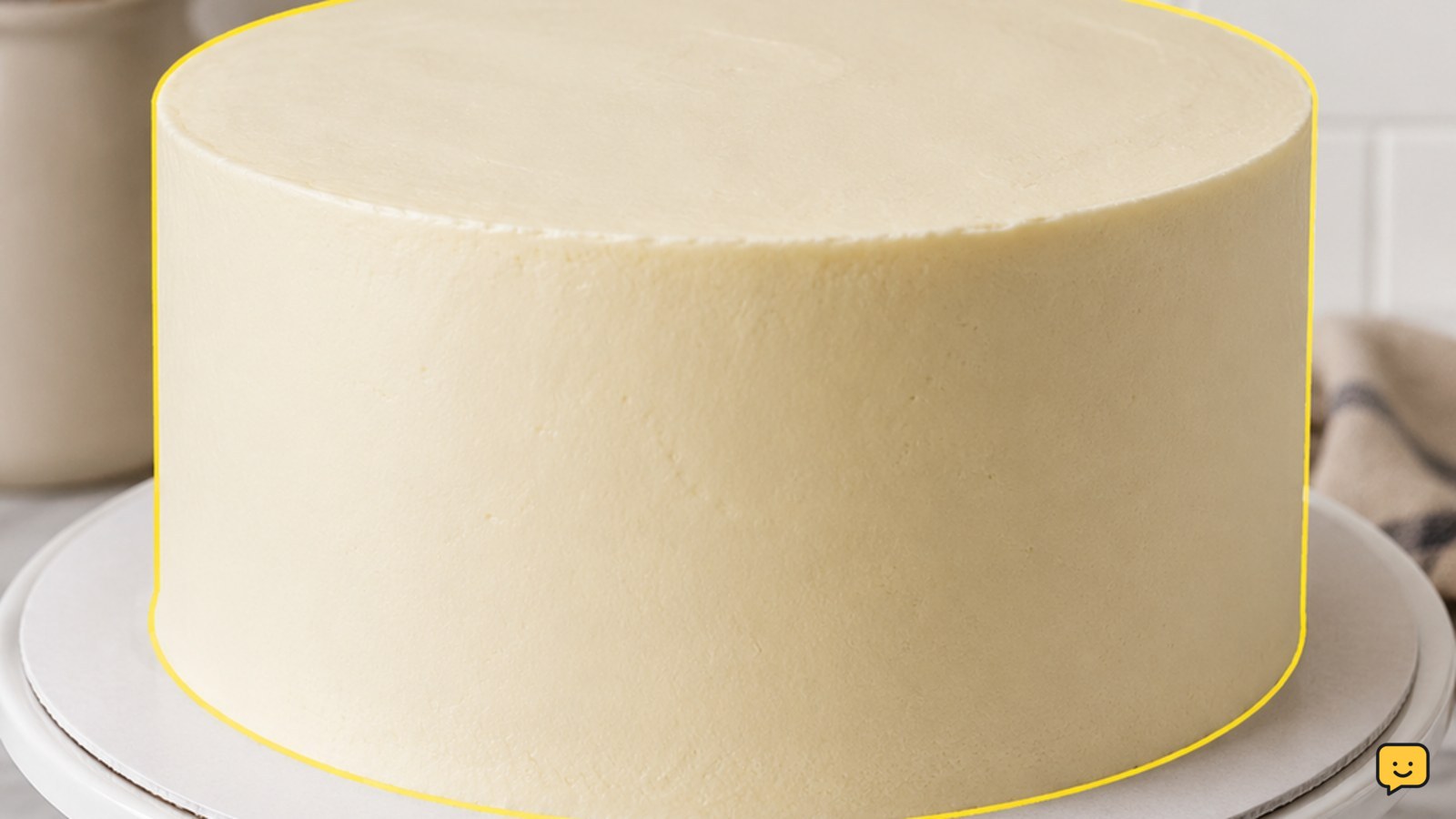
The final frosting layer gives the cake its finished surface, so apply enough frosting to cover the crumb coat without scraping down to the cake. Place a generous amount on top and spread it outward until it reaches the edge. Add frosting to the sides in sections rather than trying to cover everything at once.
Hold an offset spatula at a shallow angle and make long, light passes. On a turntable, rotate the cake while keeping the spatula steady against the side. A bowl scraper or bench scraper can remove high spots from the sides; warm and dry the tool first if your frosting recipe permits, then make one controlled pass.
For a simple finish, leave small spatula ridges. For smoother sides, scrape away excess frosting in several light passes, filling visible hollows between passes. Clean the tool often so removed crumbs do not return to the surface. C&H Sugar likewise recommends an even amount of frosting between layers and smoothing it with an offset spatula.
Verify: The top is level, the sides are covered from base to rim, and the frosting does not expose cake when viewed at eye level. Stop smoothing when the surface is even; repeated scraping can thin the coating and reveal crumbs.
Fix sliding layers, crumbs, or uneven frosting
Most frosting problems come from cake temperature, filling thickness, or frosting consistency. Use the visible symptom to choose the next action.
| What you see | Likely cause | What to do |
|---|---|---|
| Layers slide or lean | Warm cake or too much filling | Chill the cake, then remove excess filling and restack. |
| Crumbs spread through the final coat | Crumb coat is too thin or not firm | Scrape away loose frosting, add a thin coat, and chill until firm. |
| Frosting tears or pulls away | Frosting is too stiff or the tool is pressed too hard | Let the frosting soften slightly and use lighter passes. |
| Thin spots show cake | Too little final frosting | Add frosting directly to the spot, then smooth the surrounding area. |
| Frosting looks shiny or runs | Frosting or cake is too warm | Stop and chill both before attempting another pass. |
A turntable makes side smoothing easier, but it is optional. Without one, rotate the plate by hand in small increments and keep the spatula at the same angle. When the cake is covered and stable, finish with decorations or serve according to the frosting recipe’s storage directions.
Frequently asked questions
Can you frost a cake without a turntable?
Yes, you can frost a cake without a turntable. Set the cake on a flat plate or board and rotate it by hand a few inches at a time while holding the spatula against the side. Work slowly and check the cake from eye level so you catch leaning layers and uncovered spots.
Why does my cake get crumbs in the frosting?
Crumbs usually enter the frosting when the cake is warm, the first coating is too thin, or the spatula is pressed into the cake. Chill the layers, apply a thin crumb coat, and wait until it feels firm before adding the final layer. Use light, outward strokes and clean the spatula regularly.
How much frosting should go between cake layers?
Use enough frosting to make a level filling without reaching the edge. Leave a narrow margin because the upper layer will press the frosting outward. If filling squeezes out, remove the excess and use a smaller amount on the next layer. A piped frosting border can contain softer fillings.
Should cake layers be cold before frosting?
Yes, cake layers should be completely cool, and chilling them can make trimming and stacking easier. A warm layer can soften the frosting, drag crumbs across the surface, and cause the stack to slide. If the cake or frosting becomes soft during decorating, pause and chill it before continuing.