To cook barley, combine 1 cup rinsed barley with 3 cups water or broth. Bring it to a boil, reduce to a gentle simmer, and cook until the grains are tender but pleasantly chewy. Pearl barley usually takes 25 to 30 minutes. Drain excess liquid, rest briefly, then season and serve.
For more help with this topic, use the Cooking Basics guides.
Choose the Barley and Liquid Ratio
Choose the barley type before setting a timer: pearl barley is polished and cooks fastest, while hulled barley retains more of its outer layer and needs longer cooking. Pot barley falls between those styles. The package label is the deciding reference when the grain is not clearly marked.
Use 1 cup barley with 3 cups water or broth. The Mediterranean Dish and Arrowhead Mills both use this 3:1 stovetop ratio. Water gives a neutral result; broth adds savory flavor. Salt the cooking liquid lightly if you plan to use the barley in a grain bowl, soup, or side dish.
For a similar simmer-and-check approach with another dry grain, see this guide to cooking lentils until tender.
For a similar simmer-and-check approach with another dry grain, see this guide to cooking lentils until tender.
Simmer Barley Until the Grains Open
Stovetop barley cooks by gentle simmering, which hydrates the center without aggressively breaking the grains apart.
- Put the rinsed barley and measured water or broth in a saucepan.
- Bring the pot to a full boil over high heat.
- Reduce the heat to maintain a steady, gentle simmer. Cover the saucepan partially or fully if the liquid evaporates too quickly.
- Cook pearl barley for about 25 to 30 minutes, checking near the lower end of that range. The Kitchn and The Mediterranean Dish both identify this range as a starting point for pearl barley.
- For pot or hulled barley, begin checking when the grains have visibly swollen and continue until the texture matches your preference. Follow the package timing when it differs, because hulled barley takes longer than pearl barley.
Keep enough liquid in the pan to maintain a simmer. If the surface becomes dry while the center remains hard, add hot water in small amounts and continue cooking.
Verify a Tender, Chewy Center
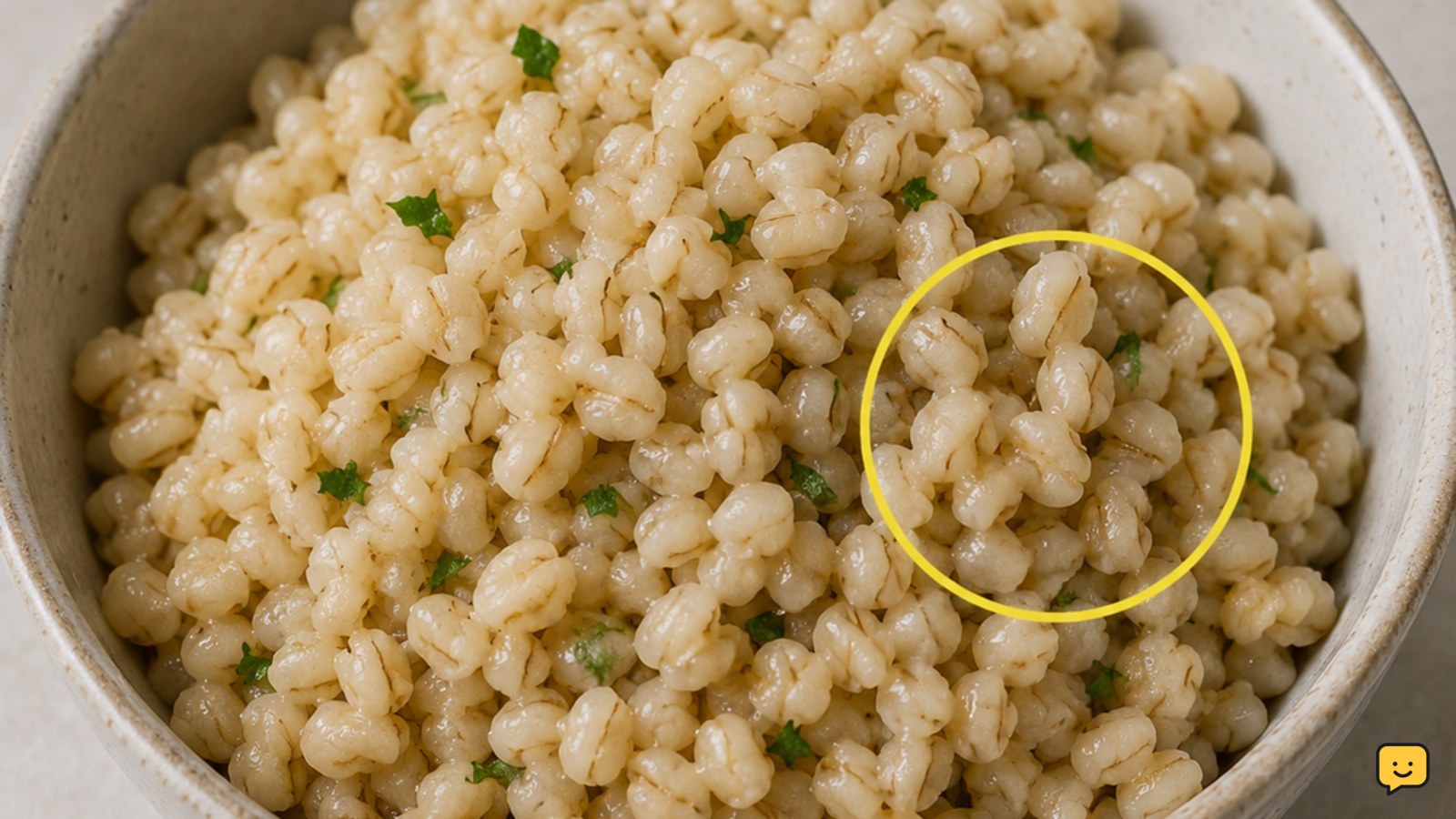
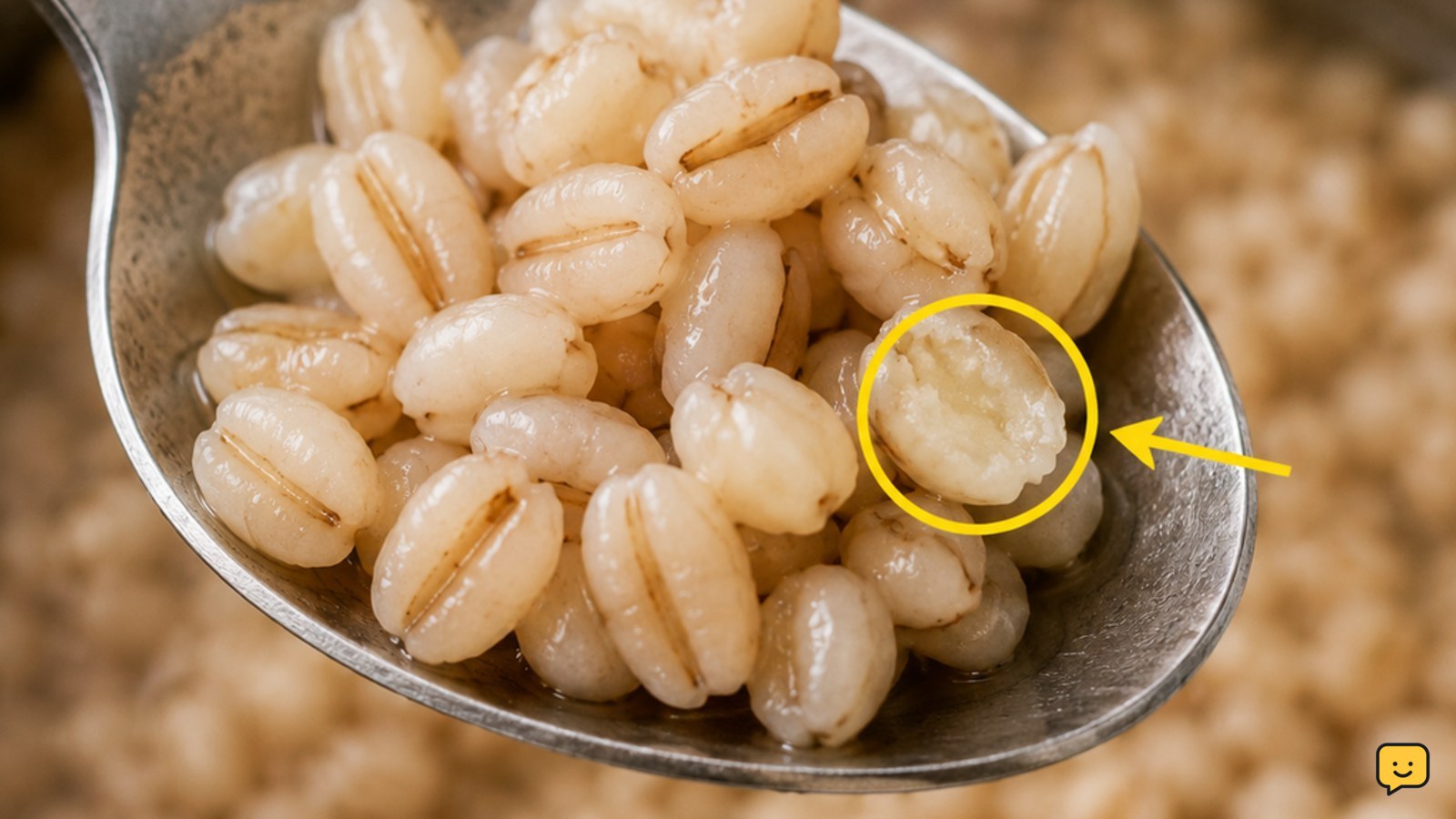
Barley is ready when a grain is swollen, tender throughout, and still slightly chewy rather than crunchy or mushy.
- Lift one or two grains from the pot with a spoon and let them cool briefly.
- Bite through the center. A tender grain should not have a hard, chalky core.
- Look for a plump, hydrated appearance and a soft texture that holds its shape.
Do not rely on the timer alone. Brand, barley type, pan size, simmer strength, and the age of the grain can change the finishing time. If the grain is firm but the liquid is nearly gone, add a little more hot water and check again after several minutes.
Once the texture is right, turn off the heat. Let the barley sit for about 5 minutes, then fluff it gently. A brief rest lets surface moisture settle before draining or serving.
Drain and Season the Cooked Barley
Drain barley when the grains are tender and excess liquid remains; the 3:1 method is intentionally forgiving because the finished grain can be drained like pasta.
- Set a fine-mesh strainer over the sink or a heatproof bowl.
- Pour in the cooked barley and allow the liquid to run off fully.
- Return the barley to the warm saucepan for a minute if it seems wet, stirring once or twice.
- Season with salt, pepper, olive oil, butter, herbs, or a splash of lemon juice according to the dish.
If the barley is watery but already tender, drain it rather than boiling it longer. If it is sticky, spread it on a tray or shallow bowl for a few minutes so steam can escape before adding it to a salad or grain bowl.
Fix Crunchy, Mushy, or Burned Barley
The texture usually identifies the problem: a hard center means insufficient hydration, while collapsed grains usually indicate excess cooking or liquid.
| What you see | Likely cause | Next action |
|---|---|---|
| Hard center and dry pan | Liquid evaporated too soon | Add hot water, cover, and simmer gently until tender. |
| Tender grains with lots of water | Liquid was not absorbed | Drain thoroughly and rest uncovered briefly. |
| Very soft or split grains | Cooked past the preferred texture | Stop heating and use it in soup, porridge, or a thick stew. |
| Dark bottom or smoky smell | Heat was too high or the pan ran dry | Stop stirring from the bottom. Transfer only the unburned barley to a clean pan; discard it if the burned flavor has spread. |
For a non-stovetop grain method, a rice cooker can simplify cooking, but use the appliance’s grain instructions and confirm the barley is tender before serving. This related guide explains the doneness and moisture checks used for quinoa in a rice cooker.
This related guide explains the doneness and moisture checks used for quinoa in a rice cooker.
Serve Barley While Warm or Chilled
Serve tender barley as a side dish, fold it into soup after cooking, or chill it for a grain salad once it has cooled quickly in a shallow container.
Warm barley pairs with roasted vegetables, beans, mushrooms, or a protein. Chilled barley benefits from a little oil or dressing to keep the grains separate. If you are preparing it ahead, cool it promptly, cover it, and refrigerate it within two hours. Reheat only the portion you plan to eat, adding a spoonful of water if the grains have firmed in the refrigerator.
Frequently asked questions
Should barley be soaked before cooking?
No, soaking is not required for the stovetop method. Rinse the barley, combine it with three parts liquid, and simmer until tender. Soaking may shorten cooking, especially for hulled barley, but the package instructions should determine the adjusted timing and liquid amount.
What is the difference between pearl and hulled barley?
Pearl barley has had more of its outer layer removed, so it cooks faster and becomes tender sooner. Hulled barley retains more of the outer layer and takes longer to soften. Check the label before cooking because the same timer does not reliably suit both types.
Can barley be cooked in broth instead of water?
Yes, broth can replace water at the same starting ratio and gives the grains a more savory flavor. Choose low-sodium broth if you want control over seasoning. Keep the simmer gentle and taste the barley for tenderness rather than stopping at a fixed time.
Why is my barley still crunchy?
Crunchy barley needs more hydration or cooking time. If liquid remains, continue simmering gently. If the pan is dry, add hot water, cover it, and cook until the center is tender. Stop and transfer the grains if the bottom begins to scorch or smell smoky.
Can cooked barley be frozen?
Yes, cooked barley can be frozen in portion-sized airtight containers after it has cooled promptly. Thaw it in the refrigerator or reheat it from frozen with a little water or broth. Discard cooked barley that was left at room temperature longer than two hours before freezing.