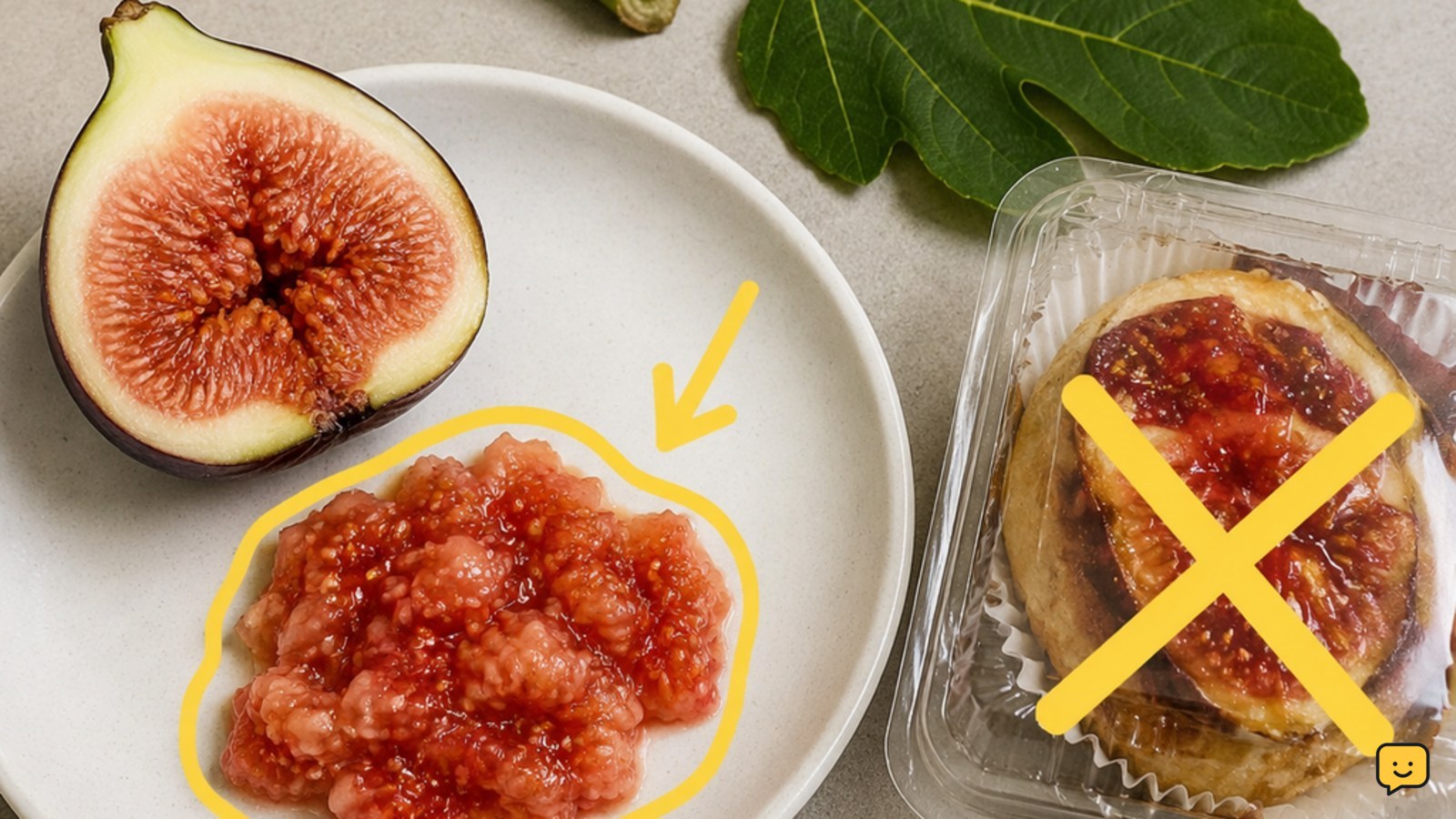
Yes, dogs can eat a small amount of plain fresh fig fruit, but it should be an occasional treat rather than a regular food. Wash the fig, remove the stem, and offer only the soft interior. Figs do not have a hard pit; their tiny seeds are part of the flesh. Avoid fig leaves, stems, sap, and processed fig desserts.
For more help with this topic, use the Everyday Pet Care guides.
Choose only plain fresh fig flesh
Plain fresh fig flesh is the form veterinary sources describe as generally safe for dogs in small amounts. PetMD says fresh figs are not toxic, while the American Kennel Club recommends offering only the soft interior.
Wash the fruit, remove the stem, and cut the soft flesh into manageable pieces. Start with a modest treat portion and do not replace a balanced dog food with fruit. Too much fig can cause digestive upset because even a non-toxic food may not agree with every dog.
Expected result: your dog eats only clean, plain flesh and remains comfortable afterward. If digestive symptoms appear, stop offering fig and contact your veterinarian for advice.
For another example of removing inedible fruit parts, see this plain fruit preparation guide plain fruit preparation guide.
Separate seeds, pits, rind, and plant parts
Figs have no hard pit like a peach or plum. Their small seeds are naturally embedded in the edible flesh, so there is no pit to remove from a normal fresh fig.
The safer boundary is the soft interior: remove the stem and do not let your dog chew fig leaves, branches, or other plant parts. The American Kennel Club specifically distinguishes the soft fruit interior from the fig plant, and plant material or sap may cause irritation.
Do not let a dog eat fruit that is moldy, spoiled, or contaminated. If your dog swallowed a stem, chewed the plant, or you cannot identify which part was eaten, stop home feeding and call a veterinarian or animal poison service for case-specific guidance.
Reject sweetened and seasoned fig products
Fig cookies, bars, preserves, and desserts are not the same as plain fresh fruit. They may contain added sugar, fats, spices, or other ingredients that can cause problems for dogs, so do not use them as treats.
Read the full ingredient label after any packaged-food ingestion. If the product contains raisins, grapes, sultanas, or Zante currants, treat the exposure as urgent: ShowU’s guide to raisin ingestion explains why these ingredients can cause acute kidney injury.
Do not rely on removing visible fruit pieces from a recipe. If the product contains an unfamiliar sweetener, concentrated extract, alcohol, chocolate, or a potentially toxic ingredient, call a veterinary professional or animal poison service before taking further action.
Check the ingredient list against this guide to raisin ingestion guide to raisin ingestion if the product included dried grapes.
Watch for digestive warning signs
Vomiting, diarrhea, abdominal pain, and lethargy are the main warning signs reported by PetMD after a dog eats too many figs. These symptoms can also occur after an individual dog reacts poorly to even a small amount.
Record what your dog ate, approximately how much, when it happened, and your dog’s current symptoms. Watch for observable changes rather than assuming the food is harmless because fresh fig itself is generally non-toxic.
If symptoms are persistent, severe, or worsening, contact your veterinarian promptly. Stop monitoring at home and seek emergency care for collapse, trouble breathing, seizures, marked weakness, or any rapidly worsening condition.
Call a professional after uncertain or plant ingestion
Contact a veterinarian or animal poison service promptly when the amount is unknown, the dog ate a large quantity, the food was processed, or any leaf, stem, sap, or other plant material was swallowed.
Call immediately rather than waiting for signs if the label lists raisins, grapes, sultanas, or Zante currants. Have the product packaging or a clear ingredient list ready, along with your dog’s weight, age, health conditions, and the time of ingestion.
Do not induce vomiting or give a home remedy. A professional can decide whether the specific exposure needs examination or monitoring. If your dog is already showing severe signs, go to an emergency veterinary clinic while contacting the clinic for instructions.
Frequently asked questions
Can dogs eat fig skin?
It is safer to offer only the soft interior because the American Kennel Club recommends that form specifically. Wash the fruit, remove the stem, and peel away the outer skin if you are preparing a piece for your dog. Never allow your dog to chew fig leaves, stems, branches, or sap.
Are fig seeds poisonous to dogs?
No, the tiny seeds inside a normal fresh fig are part of the soft fruit, and figs do not contain a hard stone pit. Remove the stem and offer plain flesh only. The greater concern is overeating, processed ingredients, or swallowing parts of the fig plant.
Can dogs eat dried figs?
Dried figs are not the same as plain fresh figs because drying concentrates the fruit and packaged versions may contain added ingredients. Avoid giving processed fig snacks or desserts. If your dog ate dried or packaged fig, check the label and call a veterinarian for guidance if the amount or ingredients are uncertain.
What should I do if my dog ate a Fig Newton?
Check the ingredient label and note how much was eaten. Do not give more food as a home treatment or induce vomiting. Contact a veterinarian or animal poison service if the product contains raisins, grapes, sultanas, Zante currants, an unfamiliar sweetener, chocolate, alcohol, or another concerning ingredient.
When should I call a veterinarian after my dog eats figs?
Call promptly for repeated vomiting, diarrhea, abdominal pain, lethargy, an unknown amount, a large amount, or any swallowed fig plant material. Seek emergency care for collapse, breathing trouble, seizures, marked weakness, or rapidly worsening symptoms. Do not wait for symptoms after a potentially toxic additive or raisin exposure.