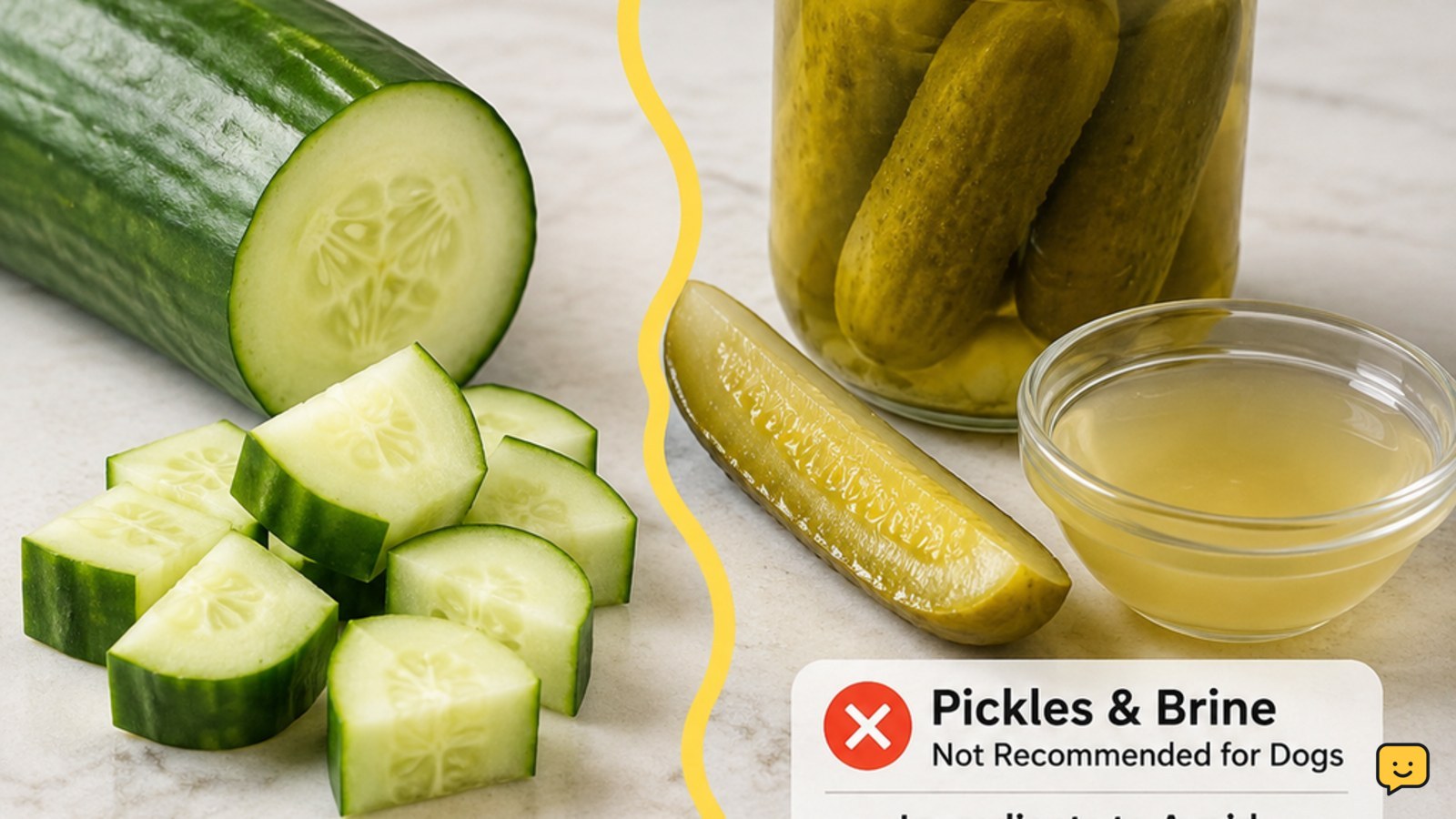
Dogs can usually tolerate a small bite of a plain pickle, but pickles are not a recommended dog treat. Their brine may contain excessive salt, onion, garlic, hot spices, or other additives. Never offer pickle juice. Choose plain cucumber instead, and contact a veterinarian or animal poison service after a large amount, unknown ingredients, or any concerning symptoms.
For more help with this topic, use the Everyday Pet Care guides.
Choose plain cucumber instead of pickled slices
Plain cucumber is the safer form for dogs; pickled cucumber is a poor routine treat because the preserving liquid adds salt and may add ingredients dogs should avoid. Wash the cucumber, remove any tough stem, and offer a small bite-sized piece with no brine, seasoning, dressing, or dip.
Cucumber seeds and peel are not the same concern as pickle brine, and they are generally not poisonous to dogs. However, a large or tough piece can be difficult to chew or digest. Cut food into pieces suited to the dog and supervise the first taste. Stop if gagging, coughing, vomiting, or diarrhea appears.
There are no pits in an ordinary cucumber or pickle. Do not confuse a pickle spear with a safe serving: its size, firm texture, and salty coating can increase choking or stomach-upset risk.
Check the label for onion, garlic, and excess salt
Pickles with onion, garlic, shallots, leeks, or chives should not be shared with dogs. These allium ingredients can damage red blood cells, and signs may be delayed rather than appearing immediately. The ASPCA lists garlic and related allium foods among ingredients that can poison dogs.
Salt is another reason to avoid pickles. The Merck Veterinary Manual identifies excessive salt intake as a cause of salt toxicosis, with possible signs including vomiting, diarrhea, depression, tremors, and seizures. Risk depends on the amount eaten, the product, and the dog, so do not estimate safety from the size of one slice alone.
Also avoid hot-and-spicy pickles, heavily seasoned varieties, and products with an unfamiliar additive. If the label is missing or your dog ate a homemade batch with unknown ingredients, treat the exposure as uncertain and call a veterinary professional for product-specific guidance.
For another plain-food comparison, see safe watermelon preparation before sharing fruit with a dog.
For another plain-food comparison, see safe watermelon preparation before sharing fruit with a dog.
What to do after a dog eats a pickle
If a dog takes one small bite of a plainly seasoned pickle and is acting normally, remove the remaining food and monitor closely. Record the brand, ingredients, approximate amount, and time eaten. Do not give more pickles, brine, or salty foods while you determine the next step.
Call a veterinarian or animal poison service promptly if the dog drank pickle juice, ate several pickles, consumed a product containing onion or garlic, is very small or medically vulnerable, or the amount is unknown. Have the packaging ready. A professional can decide whether observation or an examination is appropriate based on the exposure.
Do not induce vomiting, give medication, administer a home antidote, or wait for symptoms after a potentially toxic ingredient. These actions can create additional harm or delay advice that depends on the exact product and amount.
Watch for warning signs and emergency symptoms
After pickle ingestion, watch for vomiting, diarrhea, unusual thirst, depression, weakness, loss of coordination, tremors, or seizures. Digestive upset can follow salty or spicy food, while weakness or neurologic signs are more concerning and require professional assessment.
Onion or garlic exposures may not cause obvious signs right away. Because delayed effects are possible, do not use a normal first few hours as proof that the exposure is harmless. Contact a veterinarian or animal poison service when those ingredients are listed or suspected.
Go to an emergency veterinary clinic immediately for collapse, seizures, difficulty breathing, severe weakness, repeated vomiting, or marked tremors. Do not transport an unstable dog without calling ahead if doing so would delay emergency care; follow the clinic’s instructions.
Verify that the dog is back to normal
A dog that remains alert, breathes normally, walks normally, and has no vomiting, diarrhea, tremors, weakness, or other new signs is showing reassuring observable behavior, but that does not rule out delayed effects from onion or garlic. Follow the veterinarian’s monitoring instructions whenever you have called.
Prevent a repeat exposure by storing pickle jars, open containers, discarded brine, and sandwiches with pickles where the dog cannot reach them. Offer an unseasoned, bite-sized piece of plain cucumber only when the ingredient is clearly separate from pickling liquid and toppings.
For a different snack question involving a potentially hazardous food, plain cooked sweet potato guidance explains why preparation matters.
For a different snack question involving a potentially hazardous food, plain cooked sweet potato guidance explains why preparation matters.
Frequently asked questions
Can dogs eat dill pickles?
A small accidental bite of a plain dill pickle may not cause a problem for many dogs, but dill pickles are not a good regular treat. Check the label for onion, garlic, high salt, and hot spices. Never offer the brine, and call a veterinarian or animal poison service if the dog ate several slices or an unknown amount.
Can dogs drink pickle juice?
No. Pickle juice is concentrated brine and can contain a high amount of salt plus seasonings such as onion, garlic, or chili. If a dog drinks any substantial amount, contact a veterinarian or animal poison service promptly. Do not try to dilute or counteract it with a home remedy.
Are pickle seeds and skin safe for dogs?
Pickles do not have pits, and cucumber seeds and peel are generally not poisonous to dogs. The practical concerns are the pickle’s salt, seasonings, firm texture, and size. A large piece can cause choking or stomach upset, so plain cucumber cut into manageable pieces is the safer option.
What if my dog ate pickles with garlic or onion?
Call a veterinarian or animal poison service promptly, even if the dog appears normal. Garlic, onion, and related allium ingredients can have delayed effects, so immediate symptoms may not show the full risk. Keep the jar or recipe available and report the product, amount, and time eaten.