Yes. Most dogs can eat a small amount of plain, ripe papaya flesh as an occasional treat. Remove the rind and all seeds, and do not serve papaya mixed with seasoning, sweeteners, dairy, or other ingredients. Contact a veterinarian if your dog ate a large amount, swallowed rind or seeds, or develops concerning symptoms.
For more help with this topic, use the Everyday Pet Care guides.
Choose plain ripe papaya flesh only
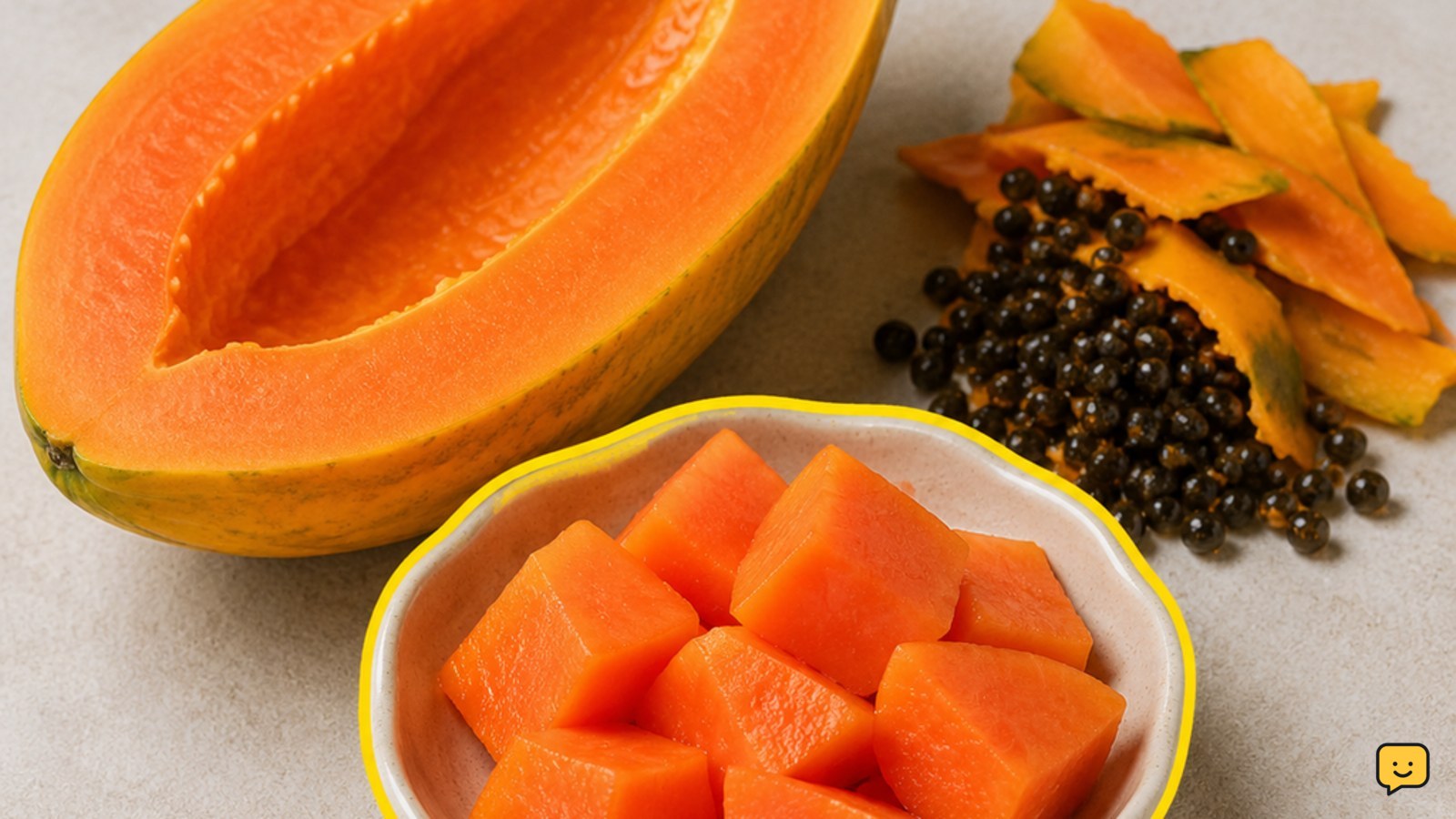
Plain, ripe papaya flesh is the part dogs may have as an occasional treat. Cut it into small, manageable pieces and offer only a little at first. Fruit should complement your dog’s normal complete diet, not replace it. Individual dogs can still react poorly to unfamiliar foods, so stop if digestive symptoms appear.
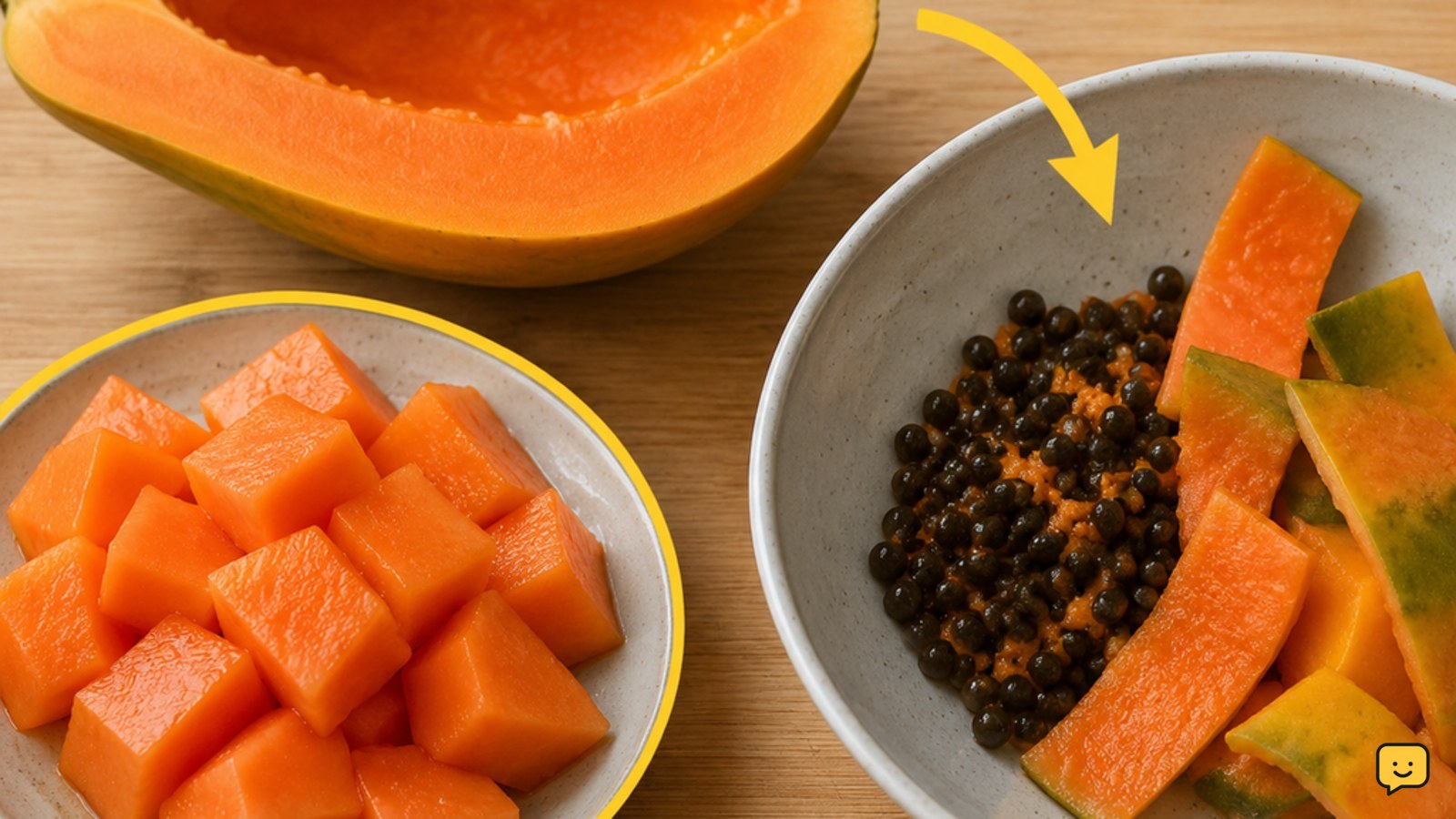
Wash the outside, cut the fruit open, scoop out every seed, and remove the thick outer rind before serving. Refrigerated leftovers should be kept plain and discarded if they become spoiled or fermented.
Veterinary nutrition guidance commonly treats papaya as a nonessential snack rather than a treatment for digestive disease. Claims that papaya enzymes prevent or cure a medical problem should not replace veterinary advice. The supplied Canine Craving and Herbal Goodness references likewise limit the recommendation to small amounts of plain fruit.
Remove papaya seeds and rind before serving
Papaya seeds and rind should not be deliberately fed to dogs. Seeds can be difficult to digest, and swallowed fruit parts may create a choking or gastrointestinal-obstruction concern, particularly when a dog gulps food or eats a large quantity. The rind is tough and offers no necessary nutritional benefit for a pet.
- Slice the papaya and scoop out the seed cavity.
- Peel away all rind, including firm pieces near the ends.
- Cut the remaining soft flesh into small pieces.
- Offer a small taste and observe your dog before giving any more.
If a dog swallowed a seed or piece of rind, do not assume that symptoms will appear immediately. Call your veterinarian for advice, especially if the amount is unknown, the dog is small, the piece was large, or the dog has a history of digestive obstruction.
Avoid seasoned, sweetened, dried, and mixed papaya
Dogs should receive papaya plain, not as a seasoned recipe or sweetened product. Avoid fruit salad, smoothies, desserts, canned preparations in syrup, dried papaya with added sugar, and foods containing spices, alcohol, chocolate, macadamia nuts, raisins, grapes, onions, garlic, or xylitol.
The added ingredient—not necessarily the papaya—may create the main hazard. For example, raisins and grapes can cause serious kidney injury in dogs, as explained in ShowU’s guide to raisins and accidental ingestion. If your dog ate a prepared food, save the package and read the complete ingredient list before calling for advice.
Plain preparation is also easier to assess. If the product contains an unknown sweetener, concentrated extract, essential oil, or multiple ingredients, stop feeding it and contact a veterinarian or animal poison service rather than trying to estimate which ingredient caused the risk.
Prepared foods can hide dangerous ingredients; see raisins and accidental ingestion for the specific kidney-injury risk from grapes and raisins.
Use a small occasional treat, not an individualized serving plan
A reasonable treat context for papaya is a small, plain taste offered alongside your dog’s regular food routine. There is no universal serving amount that fits every dog, and this guide does not prescribe an individualized portion. Size, age, health conditions, current diet, and sensitivity to new foods all matter.
Start with less than you think your dog will want and watch for loose stool, vomiting, gas, reduced appetite, or signs of abdominal discomfort over the next several hours. If there is no problem, papaya can remain an occasional treat rather than a daily requirement.
Dogs with a prescribed diet, recurring gastrointestinal disease, diabetes, food allergies, or other medical concerns should have new treats cleared with their veterinarian. For another plain-fruit preparation example, see ShowU’s guide to safe watermelon preparation; the same principle of removing inedible parts does not mean every fruit has identical risks.
For a related fruit-preparation example, review safe watermelon preparation while remembering that each fruit has different risks.
Call a veterinarian after risky or accidental ingestion
Contact a veterinarian or animal poison service promptly if your dog ate a large amount of papaya, swallowed substantial rind or seeds, consumed a mixed or packaged product, or may have eaten a potentially toxic additive. Have the product name, ingredient list, estimated amount, time of ingestion, and your dog’s weight ready if known.
Watch for repeated vomiting, persistent diarrhea, drooling, gagging, trouble swallowing, loss of appetite, unusual tiredness, weakness, abdominal pain, a distended abdomen, collapse, or breathing difficulty. These signs can have many causes, so an article cannot determine whether an obstruction, poisoning, or another emergency is present.
Go to an emergency veterinary clinic immediately for choking, breathing problems, collapse, severe weakness, repeated unproductive retching, or a rapidly swollen or painful abdomen. Do not wait for symptoms after a known exposure to a toxic additive, and do not induce vomiting or give a home remedy unless a veterinary professional gives explicit instructions.
Frequently asked questions
Can puppies eat papaya?
Yes, a puppy may tolerate a tiny piece of plain ripe flesh, but puppies can be more sensitive to diet changes. Remove the seeds and rind, introduce only one new food at a time, and ask your veterinarian before offering fruit if the puppy has digestive symptoms or a special diet.
Are papaya seeds toxic to dogs?
Papaya seeds are not a safe part to feed deliberately. They may cause digestive upset or become a choking or obstruction concern when swallowed, especially in quantity. If your dog ate seeds, contact your veterinarian for advice based on the amount and your dog’s size.
Can dogs eat dried papaya?
Only if it is completely plain and free of added sugar, sweeteners, spices, and other ingredients, but fresh flesh is the simpler choice. Many dried-fruit products are concentrated or mixed with unsafe additives. Check the label, and call a poison service if the ingredients are unclear.
What should I do if my dog ate papaya rind?
Call your veterinarian if the amount was large, the piece was substantial, or your dog is small or has a history of obstruction. Monitor for gagging, vomiting, abdominal pain, reduced appetite, weakness, or a swollen abdomen. Seek emergency care for breathing trouble, collapse, or severe symptoms.