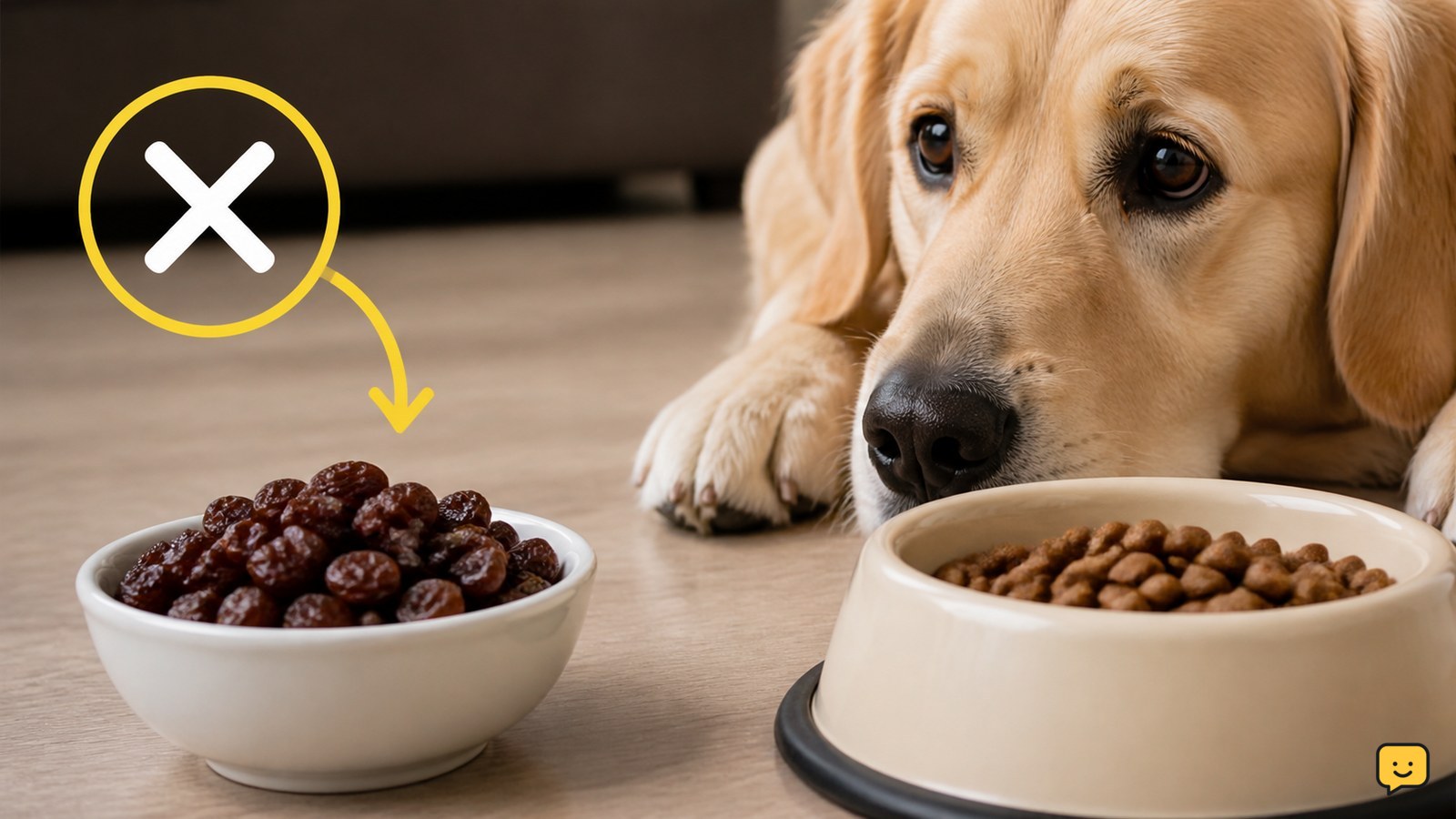
No. Dogs should not eat raisins, grapes, sultanas, or Zante currants. These fruits can cause acute kidney injury, and veterinary sources cannot predict a reliably safe amount for every dog. If a dog may have eaten any amount, contact a veterinarian or animal poison service promptly rather than waiting for symptoms. Do not give a home antidote or delay urgent care.
For more help with this topic, use the Everyday Pet Care guides.
Decide whether raisins are safe for dogs
Raisins are not a safe treat for dogs. Cornell’s Riney Canine Health Center reports that grapes, raisins, Zante currants, and sultanas can cause acute kidney injury in dogs. The exact amount that causes toxicity is not reliably known, so there is no dependable serving size to use at home.
This applies to ordinary raisins and foods made with them. A dog should not be given raisins as a reward, mixed into food, or used as a training treat.
Identify every raisin form to avoid
Raisins are unsafe whether they are eaten plain, cooked, soaked, chopped, or baked into another food. Check breads, cakes, cookies, granola, cereal, trail mix, fruit bars, and other recipes for raisins, sultanas, or Zante currants.
Removing visible raisins from a baked or mixed food does not let you verify that the remaining portion is safe. Treat the entire food as a possible exposure when the ingredient list or recipe includes one of these dried fruits.
There is no protective preparation step involving pits, seeds, or rind. Raisins are dried grapes, so “seedless,” peeled, crushed, or cooked does not make them appropriate for dogs. If a food also contains another potentially harmful ingredient, tell the veterinarian or poison service about the complete ingredient list.
What to do if your dog may have eaten raisins
If your dog may have swallowed raisins or a food containing them, contact a veterinarian, emergency veterinary clinic, or animal poison service promptly. Cornell identifies the potential outcome as acute kidney injury, and waiting for visible illness can make the situation harder to manage.
- Move the food away and check how much may be missing.
- Write down the product name, ingredients, approximate amount, and time of ingestion.
- Note your dog’s weight, age, health conditions, and any symptoms already present.
- Call for professional guidance and follow the instructions you receive.
Do not try to make your dog vomit, give a home antidote, or administer medication without direct veterinary instruction. If you cannot determine the amount, report it as an unknown amount rather than estimating that it was harmless.
Recognize warning signs after possible ingestion
Early signs can include vomiting, diarrhea, reduced appetite, lethargy, weakness, abdominal discomfort, increased thirst, or changes in urination. More serious illness may involve very little urine or no urine. These signs are not a safe way to decide whether to seek help; some dogs may become seriously ill after the exposure is already underway.
Contact a veterinarian immediately if any of these symptoms appear after possible ingestion. Go to an emergency clinic for collapse, severe weakness, repeated vomiting, breathing difficulty, seizures, or inability to urinate. Do not wait for symptoms if you already know or strongly suspect that raisins were eaten.
Verify the safest next step with a professional
The safest result is a clear plan from a veterinarian or animal poison service based on the food, estimated amount, timing, and dog-specific details. Have the packaging or recipe ready and tell the professional whether the dog is acting normally or showing symptoms.
If the professional says home observation is appropriate, ask what exact warning signs require an immediate return call or clinic visit and how they want you to monitor eating, drinking, energy, and urination. If you cannot reach one service, call an emergency veterinary clinic instead. Continue seeking professional help; do not substitute internet advice or a guessed safe amount.
Choose a different fruit treat instead
Raisins should be replaced with a food your veterinarian considers appropriate for your dog. Any substitute should be plain and prepared without ingredients that are unsafe for dogs, and treats should remain a small part of the overall diet rather than replacing balanced food.
For preparation ideas, compare the plain, seed- and rind-free approach in safe watermelon preparation. Plain cooked sweet potato is another topic covered in safe sweet potato forms.
For a fruit alternative, review safe watermelon preparation without raisins, seeds, or rind.
Frequently asked questions
Can one raisin hurt a dog?
Possibly. Veterinary sources cannot identify a reliably safe amount for every dog, so one raisin should not be assumed harmless. Call a veterinarian or animal poison service promptly if your dog may have eaten one, and provide the dog’s weight, the estimated amount, and the time of ingestion.
Are seedless grapes or raisins safe for dogs?
No. Seedless status does not make grapes or raisins safe for dogs. The concern is the fruit itself, not only pits or seeds. Avoid grapes, raisins, sultanas, and Zante currants in plain form and in foods such as baked goods or trail mix.
What symptoms can raisins cause in dogs?
Possible signs include vomiting, diarrhea, poor appetite, lethargy, weakness, abdominal discomfort, increased thirst, and reduced or absent urination. Symptoms may not appear immediately, so do not use a normal-looking dog as proof that no professional help is needed.
Should I make my dog vomit after eating raisins?
No. Do not induce vomiting or give a home treatment unless a veterinarian specifically directs you. Call a veterinarian, emergency clinic, or animal poison service promptly and follow the instructions for your dog’s situation.
Are cooked raisins in bread or cake still dangerous?
Yes. Cooking or baking does not make raisin-containing food safe for dogs. Treat bread, cake, cookies, granola, cereal, trail mix, and similar products as possible exposures if they contain raisins, sultanas, or Zante currants.