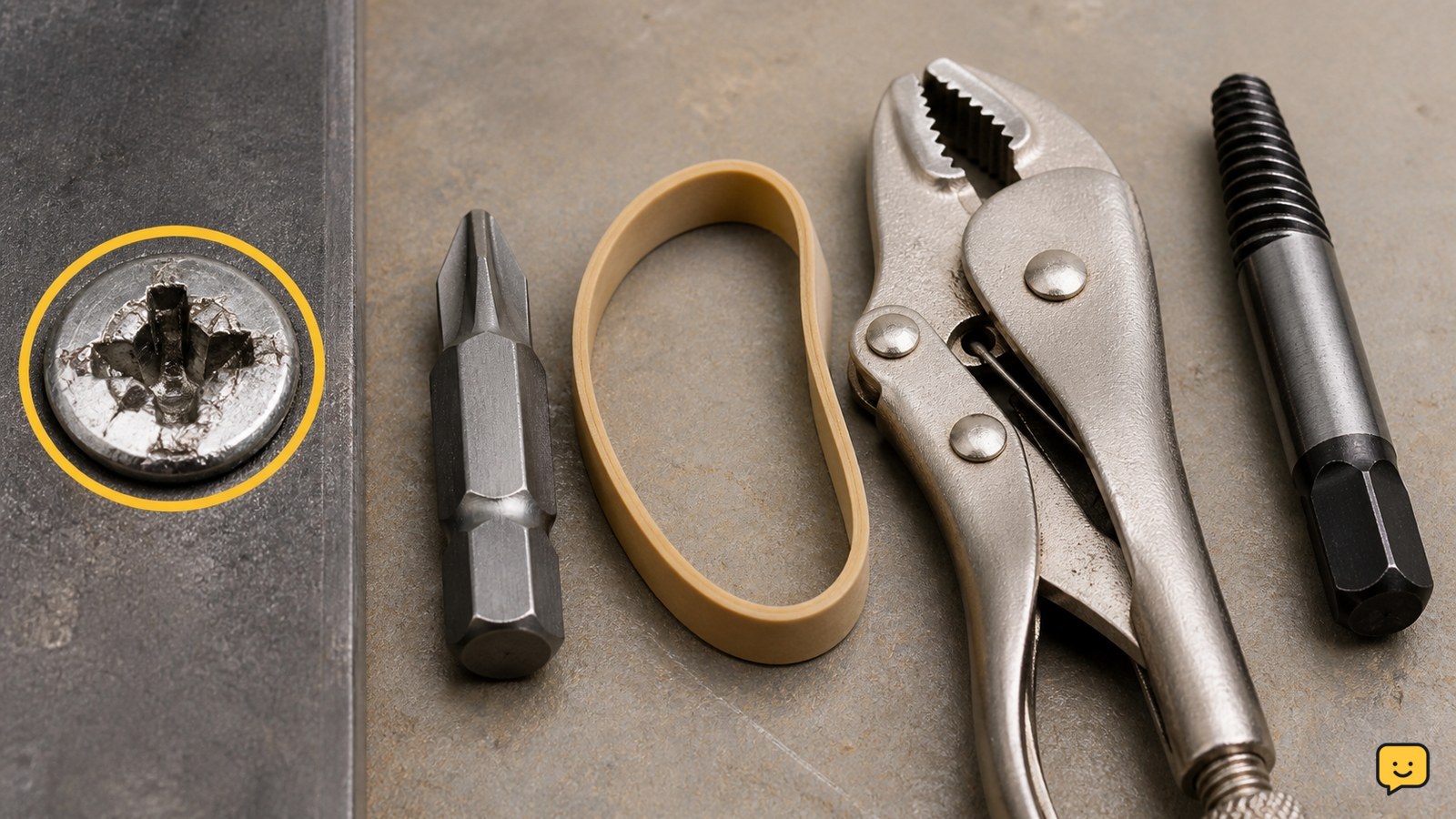
To remove a stripped screw, first press the correct driver bit firmly into the head and turn slowly. If it slips, add a rubber band for grip, then try locking pliers if the head stands proud. For a recessed or badly damaged head, use a screw extractor. Stop if the fastener will not move without damaging the surrounding material.
For more help with this topic, use the Home Maintenance guides.
Choose the least destructive removal method
A stripped screw should be removed by escalating from improved grip to cutting or drilling only when the simpler method fails. Examine how much of the head is visible, whether the recess still has usable edges, and whether the screw appears corroded or seized.
- Usable recess: start with the correct driver bit and firm downward pressure.
- Shallow damage: try a rubber band between the bit and screw head.
- Head above the surface: grip the outside with locking pliers.
- Recessed or rounded head: use a screw extractor.
- Severely damaged head: cut a straight slot or drill the head only as a last resort.
The goal is to create torque without enlarging the damaged area. If the bit slips immediately, do not keep turning; move to the next method.
If corrosion appears to be locking the fastener, see how to remove rust from metal before applying more torque.
Seat the correct bit and add grip
The safest first action for a stripped screw is to seat the correct bit fully and turn it slowly by hand. A hand screwdriver gives better control than a drill and makes it easier to feel slipping.
- Clean the screw recess with a small brush or pick without gouging the surrounding surface.
- Choose the largest matching bit that fills the recess without rocking. Do not substitute a nearly matching Phillips, Pozidriv, Torx, or hex bit.
- Push straight down while turning counterclockwise with steady pressure.
- If the bit still slips, place a wide rubber band over the screw head, press the bit through it, and try again with light force.
Success looks like the screw head turning with the bit staying centered. If the rubber band shreds or the bit rises out of the recess, remove it and stop repeating this method; more attempts can erase the remaining edges.
Grip an exposed screw head with locking pliers
Locking pliers are the best next choice when the stripped screw head extends above the surface far enough to grip its sides. They are not suitable for a flush or recessed screw.
- Apply penetrating oil only when it is compatible with the workpiece and cannot reach electrical parts, finishes, seals, or food-contact areas.
- Allow the product to work according to its label, then wipe away excess.
- Clamp the locking pliers tightly across the screw head, using the widest flat section available.
- Rock the screw slightly in both directions before turning counterclockwise.
A successful attempt produces visible movement at the screw head and then a steadily widening gap as the threads release. If the pliers chew the head without moving it, improve the clamping angle once. If it still slips, stop and use an extractor rather than crushing the head further.
Use a screw extractor on a recessed or rounded head
A screw extractor is the controlled option when the screw head is flush, recessed, or too damaged for pliers. Match the extractor size to the screw and follow the kit’s instructions for the required pilot hole or left-hand drill bit.
- Center-punch the middle of the screw head lightly so the drill does not wander.
- Protect nearby surfaces and keep the tool aligned with the screw axis.
- Drill only as deep as the extractor instructions require, using slow speed and frequent checks.
- Insert the extractor fully and turn it counterclockwise by hand or with the specified handle.
- Apply gradual torque. Do not jerk the tool or use an oversized wrench.
The screw is coming out when the extractor bites, the screw begins rotating with it, and the surrounding material remains unchanged. If the extractor spins without biting, stop, clear debris, and check alignment and size. Do not force a stuck extractor: hardened extractor fragments are difficult to drill.
Cut a slot or drill the head only as a last resort
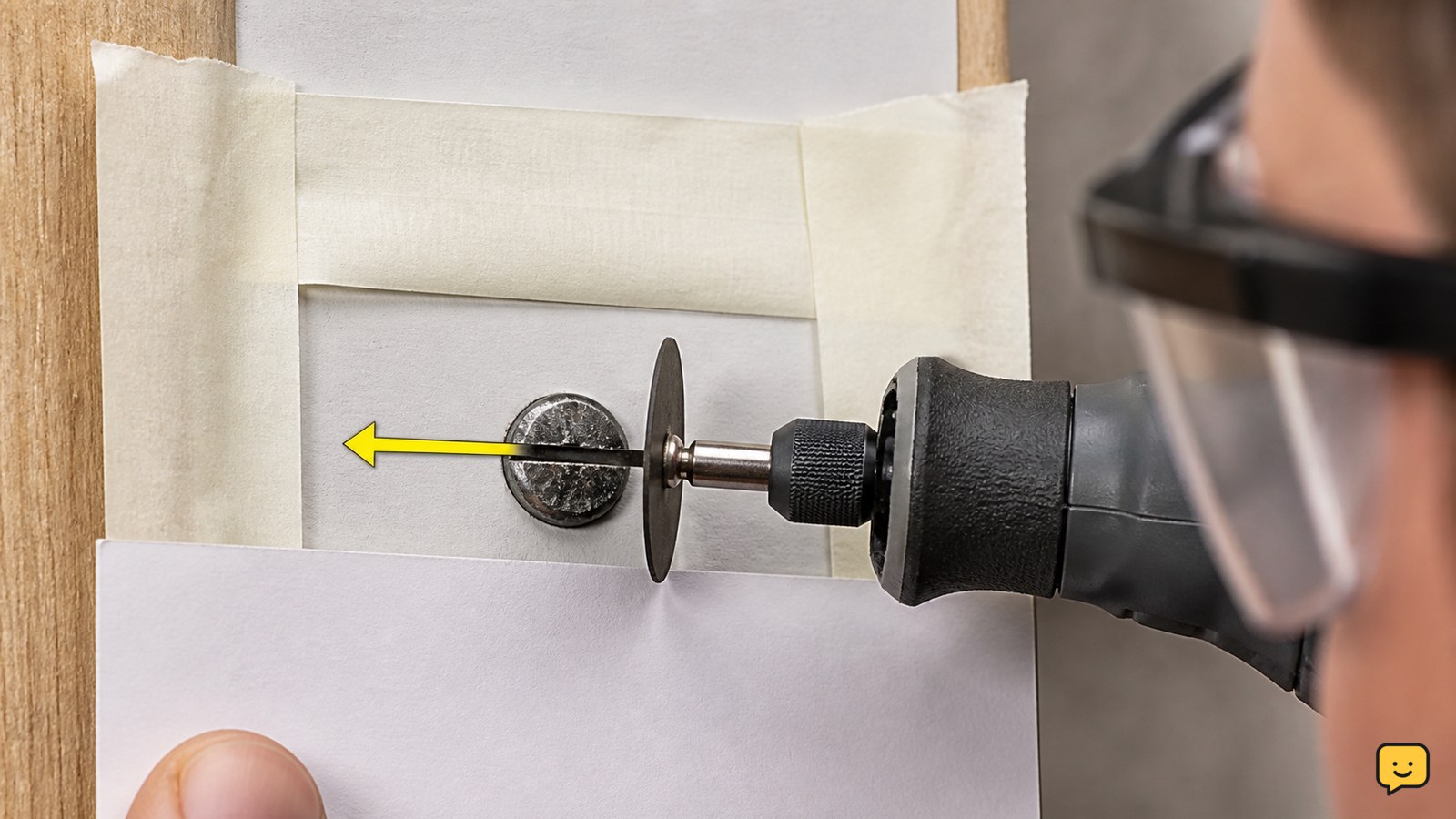
Cutting a new slot can remove a badly damaged screw when there is enough room around the head for a rotary tool. The iFixit stripped-screw discussion documents cutting a groove with a thin rotary cutting disc and then using a flat-head screwdriver; it also warns not to cut too deeply.
- Cover the surrounding area and wear eye protection.
- Use a thin cutting disc to make one straight slot across the screw head, stopping before the slot reaches the fastener’s shoulder or the surrounding surface.
- Choose a flat-head screwdriver that fills the new slot and press down while turning slowly.
- If the slot breaks away or the screw remains fixed, stop cutting and switch to professional removal.
If the screw head is flush and there is no safe clearance for a cutting disc, drilling is the final mechanical option. Drill through the head carefully until it separates from the shank, remove the attached part, and extract the remaining shank with pliers only if it is safely exposed.
Verify removal and repair the fastening point
Removal is complete when the screw is fully out, the surrounding material is intact, and no metal fragments remain in the work area. Vacuum or brush away filings before reassembly, especially around motors, switches, hinges, and electronics.
- Inspect the hole for damaged threads, packed debris, or a broken screw shank.
- Compare the replacement screw with the original for diameter, length, head style, and material.
- Use a new screw rather than reinstalling one with a damaged drive recess.
- Start the replacement by hand and tighten only until the joint is secure; excessive torque is a common cause of another stripped head.
If the hole no longer holds a screw, do not compensate by using a longer fastener without checking what is behind the surface. Use a suitable repair insert or have the fastening point assessed.
Frequently asked questions
Can I remove a stripped screw with a rubber band?
Yes, a rubber band can help when the screw recess is only lightly damaged. Place it over the head, press the correct bit firmly through the band, and turn slowly by hand. It will not help much when the head is fully rounded, recessed, or filled with debris. If the band tears or the bit slips repeatedly, stop and use pliers or an extractor.
What is the best tool for a completely stripped screw?
A screw extractor is usually the best tool for a completely stripped, recessed, or flush screw head. The correct size and centered pilot hole matter more than force. If the head stands above the surface, locking pliers may be simpler. Use a rotary-tool slot or drilling only when there is safe clearance and the earlier methods have failed.
How do I remove a stripped screw without damaging the surface?
Start with a matching hand-driver bit, firm downward pressure, and a rubber band for added grip. Protect the surface with masking tape or cardboard, and avoid cutting or drilling until the screw’s location and surrounding hazards are visible. If the screw still will not turn, a professional extractor service is safer than escalating force near fragile finishes, wiring, glass, or plastic.
Why does my screwdriver keep slipping out of the screw?
The bit may be the wrong type or size, the screw recess may contain debris, or the screw head may already be too damaged to transmit torque. Clean the recess, try the correct larger matching bit, and push straight down while turning slowly. If the bit cams out again, stop; continuing can remove the remaining edges and make extraction harder.