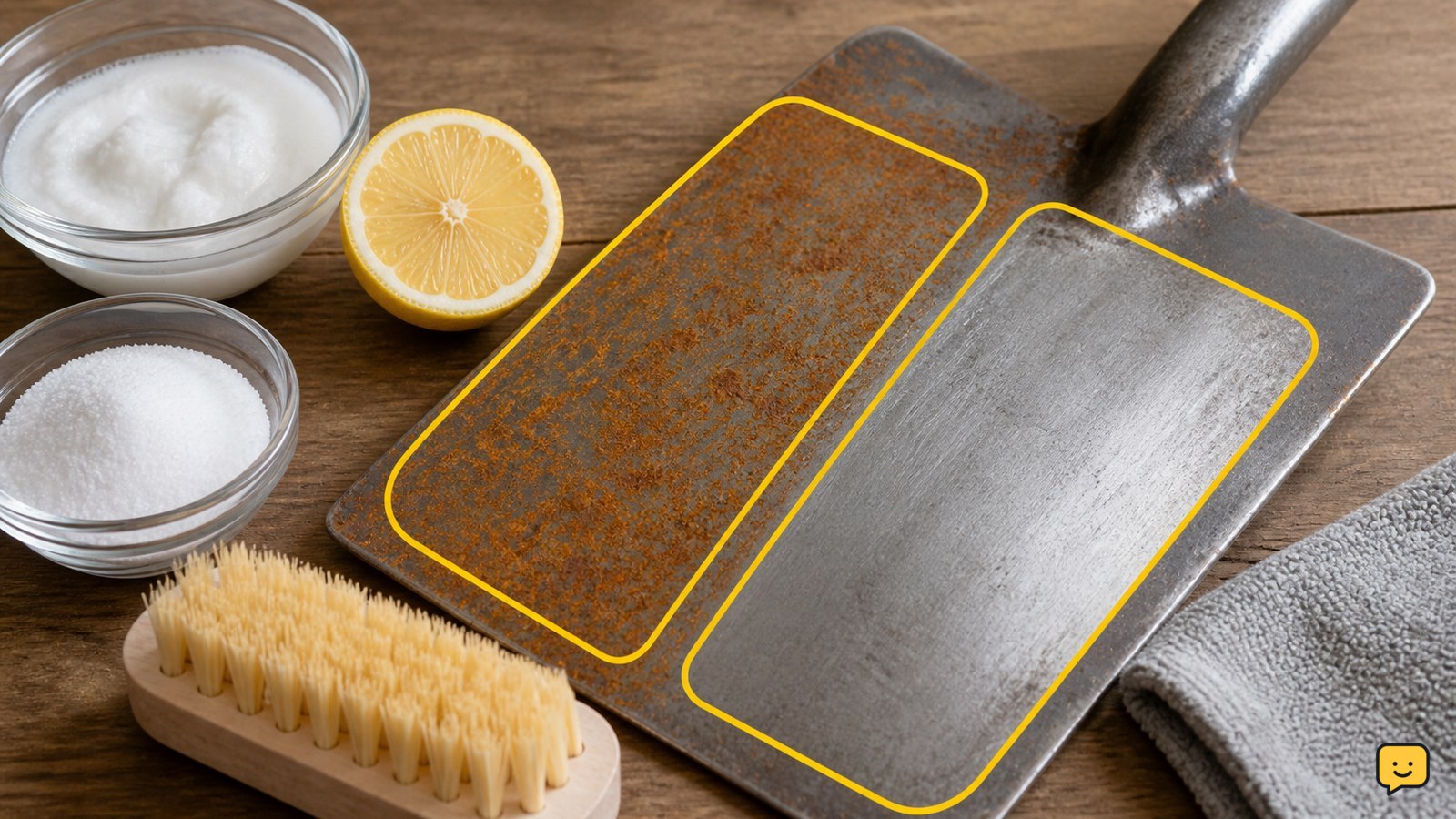
To remove surface rust from metal, brush away loose flakes, then apply either a baking-soda-and-water paste or lemon juice with salt. Leave the treatment for a few hours, scrub, rinse, and dry completely. For heavier rust, use a labeled rust remover according to its instructions. Stop if the metal is deeply pitted, thin, plated, or structurally weakened.
Check whether the rusted metal can be cleaned safely
Rusted metal can usually be cleaned when the corrosion is a thin, loose surface layer on a sturdy, uncoated item such as a hand tool, knife or small household object. Deep pits, holes and flaky edges are signs that cleaning may not restore the metal’s strength.
Separate the item from anything that could be damaged by moisture or rust dust. Painted, plated and coated metal needs extra caution because removing the rust may also remove the finish. For food-contact items, use only a treatment and final cleaning process that the item’s manufacturer permits.
Verification: Proceed only when the metal remains solid, stable and clearly identifiable, and a hidden-area test shows no finish change.
Prepare the metal by removing loose rust and dirt
Preparing the metal removes loose flakes that would otherwise block the treatment from reaching the remaining rust. Wipe off dust and dirt, then brush gently with a dry toothbrush or soft cleaning brush.
- Place the item on a washable work surface.
- Brush loose rust away from your body and eyes.
- Wipe the surface with a dry cloth.
- Inspect the edges, joints and underside for cracks, holes or heavy pitting.
Use only light pressure at first. If brushing exposes a fragile edge, a hole or a thinning section, stop rather than trying to make the surface look clean.
Expected result: Loose orange-brown powder and flakes are gone, while the remaining rust is attached to the metal and ready for treatment.
Choose a rust treatment that matches the corrosion
For light surface rust, choose a baking soda paste or a lemon-and-salt treatment; for heavier corrosion, choose a labeled commercial rust remover that is compatible with the item.
- Baking soda paste: Mix baking soda with enough water to make a spreadable paste. Coat the rusted area and leave it for a few hours, as described by Ella Claire & Co., then scrub with a brush.
- Lemon and salt: Cover the rust with salt, add lemon juice, leave it for a few hours, and scrub. CRC Industries lists this as a household rust-removal method.
- Labeled rust remover: Use this for heavier rust only when the label lists the metal and item as suitable. Follow its contact time, protective-equipment instructions and rinsing directions instead of extending the treatment.
Keep treatments localized. Do not combine rust removers, household cleaners or acids. If the first test area becomes dull, discolored or rough in a new way, rinse it off and do not use that treatment on the rest of the item.
Scrub until the remaining rust film lifts
Scrubbing removes the loosened rust after the treatment has had time to work. Use a toothbrush or suitable soft brush for grooves and a cloth for broad, smooth areas.
- Apply the selected treatment only to the rusty area.
- Wait for the product’s stated contact time, or several hours for the household methods above.
- Scrub in short strokes, checking the surface often.
- Wipe away the loosened residue before applying another round.
A clean result means the orange-brown residue has lifted and the surface feels solid rather than powdery. Dark staining or shallow marks can remain after the loose rust is removed; that does not necessarily mean more aggressive scrubbing is safe.
If the rust does not loosen, do not keep increasing pressure indefinitely. Repeat the compatible treatment once, or switch to a labeled product after checking its metal-safety directions. Stop when pitting or thinning is exposed.
Rinse, dry and protect the cleaned metal
Rinsing removes treatment residue, and complete drying matters because leftover moisture can allow rust to return. Use the smallest amount of water that safely removes the cleaner, especially around joints, seams and mechanisms.
- Wipe or rinse away all paste, salt, lemon residue or product residue.
- Dry immediately with a clean cloth.
- Air-dry the item in a warm, ventilated place until no moisture remains in grooves or joints.
- Apply the manufacturer-approved protective coating, oil or finish if the item normally requires one.
For a tool or household object, inspect the cleaned area in bright light. The surface should be dry, free of loose orange residue and mechanically sound. If rust reappears quickly, check for trapped moisture, scratches through a coating or continued exposure to water before treating it again.
Store the item dry and keep it away from recurring leaks or condensation. Protection slows new corrosion, but it will not restore metal that has already been eaten away.
Frequently asked questions
Does baking soda remove rust from metal?
Yes. Baking soda mixed with water can help loosen light surface rust. Apply the paste, leave it for a few hours, then scrub and rinse. It is better suited to small areas and mild corrosion than to deeply pitted metal. Test first on painted, plated or coated surfaces.
Can lemon juice and salt remove rust?
Yes. Salt and lemon juice can loosen household surface rust after several hours, followed by brushing. Rinse the residue away and dry the metal immediately. Because the treatment is acidic, test it first and avoid it when the finish or manufacturer instructions do not permit acidic cleaners.
Why does rust come back after removal?
Rust can return when moisture remains in grooves, under coatings or around joints, or when the bare metal is left unprotected. Dry the item completely, identify the source of moisture and apply a compatible protective finish. Repeated rapid rusting can also indicate damaged plating or coating.
Can I remove rust from painted or plated metal?
Only with extra caution. Rust removal can dull paint, plating or other finishes, so test a hidden area and follow the item’s care instructions. Stop if the finish changes or the corrosion has spread beneath it. Replacement or professional refinishing may be safer than aggressive scrubbing.
For more help with this topic, use the Home Maintenance guides.