Yes—you can freeze mushrooms, but they keep a firmer, more useful texture when cleaned, sliced, cooked, cooled, and packed airtight before freezing. Raw mushrooms can also be frozen, according to Love Food Hate Waste, but thawed mushrooms are usually best in soups, sauces, casseroles, and other cooked dishes rather than fresh salads. Store for up to 3 months.
Choose mushrooms that are still fresh enough to freeze
Fresh mushrooms freeze well enough for later cooked dishes when they are firm, clean and free from spoilage. Check the whole batch before preparing it: a little surface dirt is manageable, but mold, persistent slime, dark wet patches or a sour smell are reasons to discard affected mushrooms.
Button, cremini, portobello and other common culinary mushrooms can be handled this way. Remove tough stem ends and separate any damaged pieces. If only one mushroom is spoiled, keep it away from the rest and inspect the others closely before continuing.
Clean and slice the mushrooms without soaking them
Clean mushrooms by brushing or wiping away dirt, then trim the ends and slice them into the size you expect to use later. Avoid leaving them submerged in water because mushrooms readily hold moisture, which can lead to a wetter result after thawing.
- Wipe the caps and stems with a damp towel or rinse them briefly if needed.
- Pat them dry with paper towels.
- Slice larger mushrooms evenly so they cook at the same rate.
- Keep small mushrooms whole only if that shape suits the final recipe.
The mushrooms should feel dry on the outside before they go into the pan. If they are visibly wet, pat them again rather than freezing them immediately.
Cook mushrooms first for the most useful frozen texture
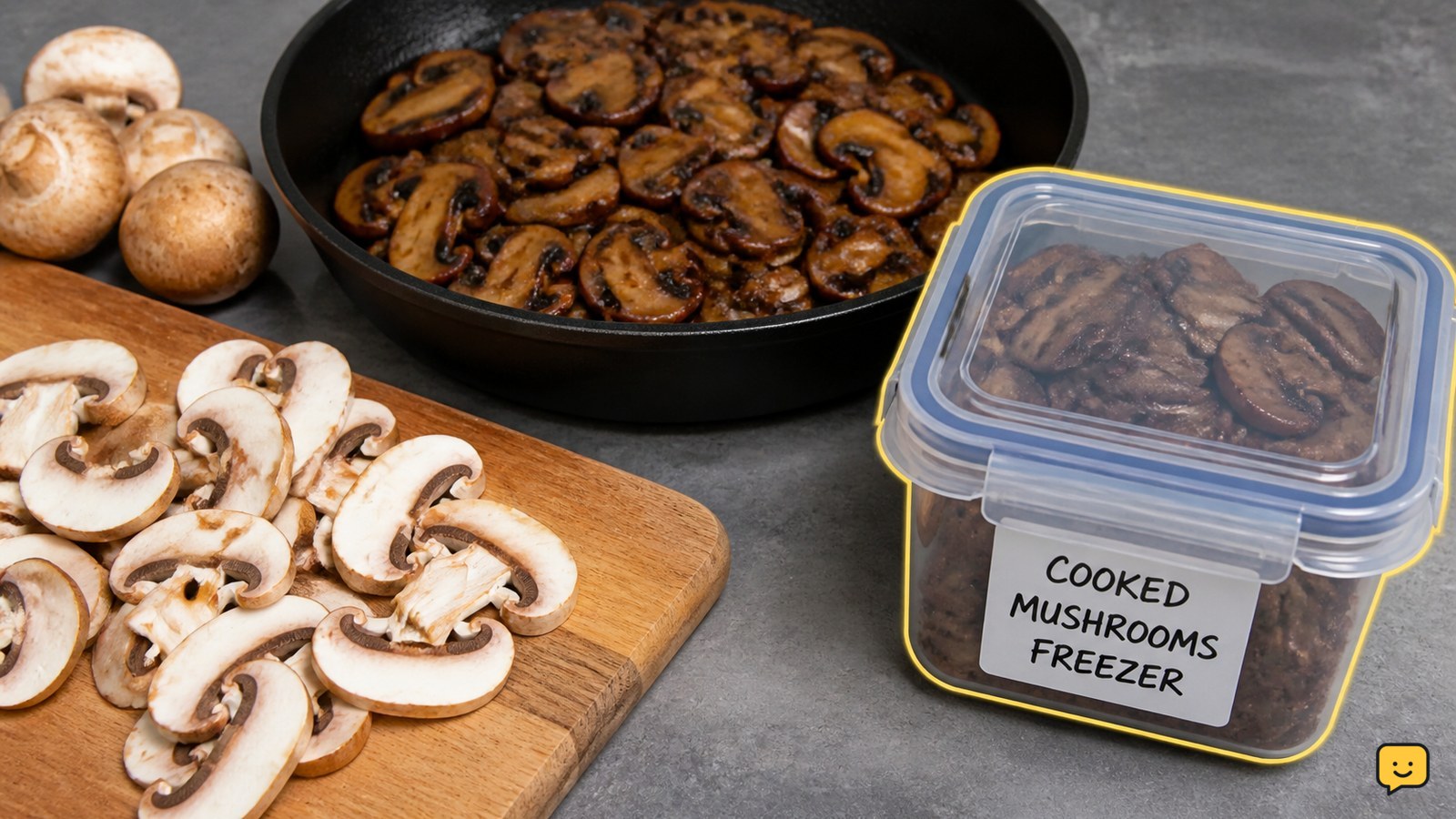
Cooking mushrooms before freezing removes some surface moisture and makes the thawed pieces easier to add to cooked recipes. Heat a wide skillet over medium-high heat, add the sliced mushrooms, and cook until they are tender and the liquid released into the pan has mostly evaporated.
- Spread the mushrooms in a single layer instead of crowding the pan.
- Stir occasionally so the pieces brown or soften evenly.
- Continue cooking until the pan is no longer holding a pool of mushroom liquid.
- Season lightly, or leave seasoning until the final recipe.
Success looks like tender mushrooms with little or no free liquid in the skillet. If the pan fills with water and the mushrooms are steaming rather than cooking, transfer some to a second pan or cook in batches. Love Food Hate Waste states that mushrooms may also be frozen raw or cooked; the cooked method is the practical choice when you want better control over moisture.
Cool, portion and pack mushrooms for the freezer
Cooked mushrooms must cool before packing so warm steam does not become excess ice inside the container. Spread them on a clean tray or shallow plate and let them cool until they are no longer warm to the touch.
- Divide the mushrooms into recipe-sized portions.
- Arrange them in a single layer on a tray and freeze until firm if you want separate pieces.
- Transfer the frozen pieces to an airtight freezer bag or container.
- Press excess air from a freezer bag without crushing the mushrooms.
- Label the package with the contents and date.
A sealed bag or airtight container helps protect the mushrooms from freezer air. Love Food Hate Waste recommends storing frozen mushrooms for up to 3 months. Keep the package flat while it freezes when possible; a thinner layer freezes more evenly and is easier to break into portions later.
Thaw mushrooms only when the recipe needs it
Frozen mushrooms can go directly into many hot dishes, or they can be thawed in the refrigerator when you need to measure or separate them. Add frozen pieces to soups, stews, sauces, casseroles, pasta dishes or stir-fries and allow the recipe to heat them through.
If thawing first, place the sealed portion in the refrigerator until softened, then drain away any excess liquid. Do not expect the original raw texture to return: frozen mushrooms are more likely to be soft or watery, so they are not the best choice for salads, garnishes or dishes where crisp texture matters.
If the thawed mushrooms smell normal but release liquid, drain them and cook them thoroughly. If they smell sour, feel slimy or show mold, stop and discard them rather than trying to rescue the portion.
Freeze raw mushrooms only for a quick cooking option
Raw mushrooms can be frozen, but this option is best when convenience matters more than texture. Love Food Hate Waste specifically notes that mushrooms may be frozen raw or cooked, either in a sealed bag or airtight container for up to 3 months.
- Wipe, trim and slice the mushrooms.
- Pat them as dry as possible.
- Freeze the slices in a single layer so they do not form one solid clump.
- Move the frozen slices into an airtight bag or container.
- Label and date the package, then use it within 3 months.
Use raw-frozen mushrooms directly in a cooked recipe. If the slices thaw into a wet mass, skip recipes that depend on browning and use them in a soup, sauce or casserole instead.
Frequently asked questions
Can you freeze mushrooms without cooking them?
Yes, mushrooms can be frozen raw. Clean, dry and slice them, freeze the pieces separately first, then transfer them to an airtight bag or container. Raw-frozen mushrooms may become softer and wetter after thawing, so use them in cooked dishes rather than salads or fresh toppings.
How long can frozen mushrooms be stored?
Frozen mushrooms can be stored for up to 3 months in a sealed bag or airtight container, according to Love Food Hate Waste. Label the package with the freezing date and keep the freezer consistently cold. Discard any portion that develops an off odor, mold or a slimy texture after thawing.
Do frozen mushrooms need to be thawed before cooking?
No, frozen mushrooms do not always need to be thawed. Add them straight to soups, stews, sauces and casseroles, allowing extra liquid to cook off. Thaw them in the refrigerator first only when you need to portion them, drain them or add them to a recipe with tightly controlled moisture.
Why do frozen mushrooms turn watery?
Frozen mushrooms can turn watery because their structure releases moisture as it freezes and thaws. Cooking them until most pan liquid evaporates before freezing helps limit this problem. If thawed mushrooms are still watery, drain them and use them in a dish where added moisture can cook away.
For more help with this topic, use the Food Storage guides.