Yes, you can freeze milk. Pour it into a clean, freezer-safe container, leave space for expansion, seal and label it, then freeze it promptly. Thaw the milk in the refrigerator—not on the counter—and shake or stir it because separation is normal. For the best texture, use frozen milk within about one month; it may remain usable for up to six months if continuously frozen.
Check the milk and choose a freezer-safe container
Milk can be frozen safely when it is fresh and transferred to a clean, freezer-safe container. Check the smell and appearance first; freezing only pauses deterioration and does not reverse spoilage.
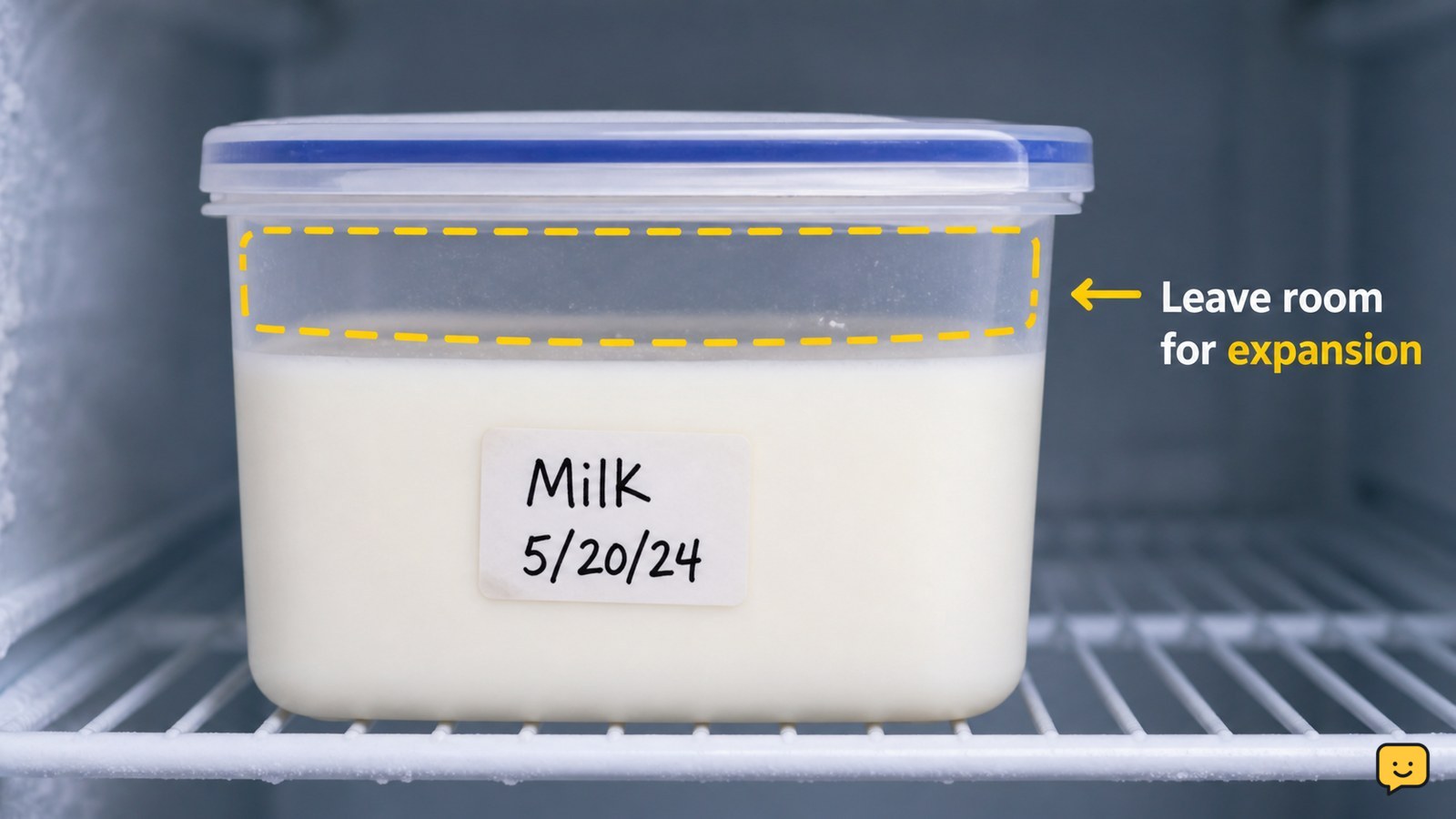
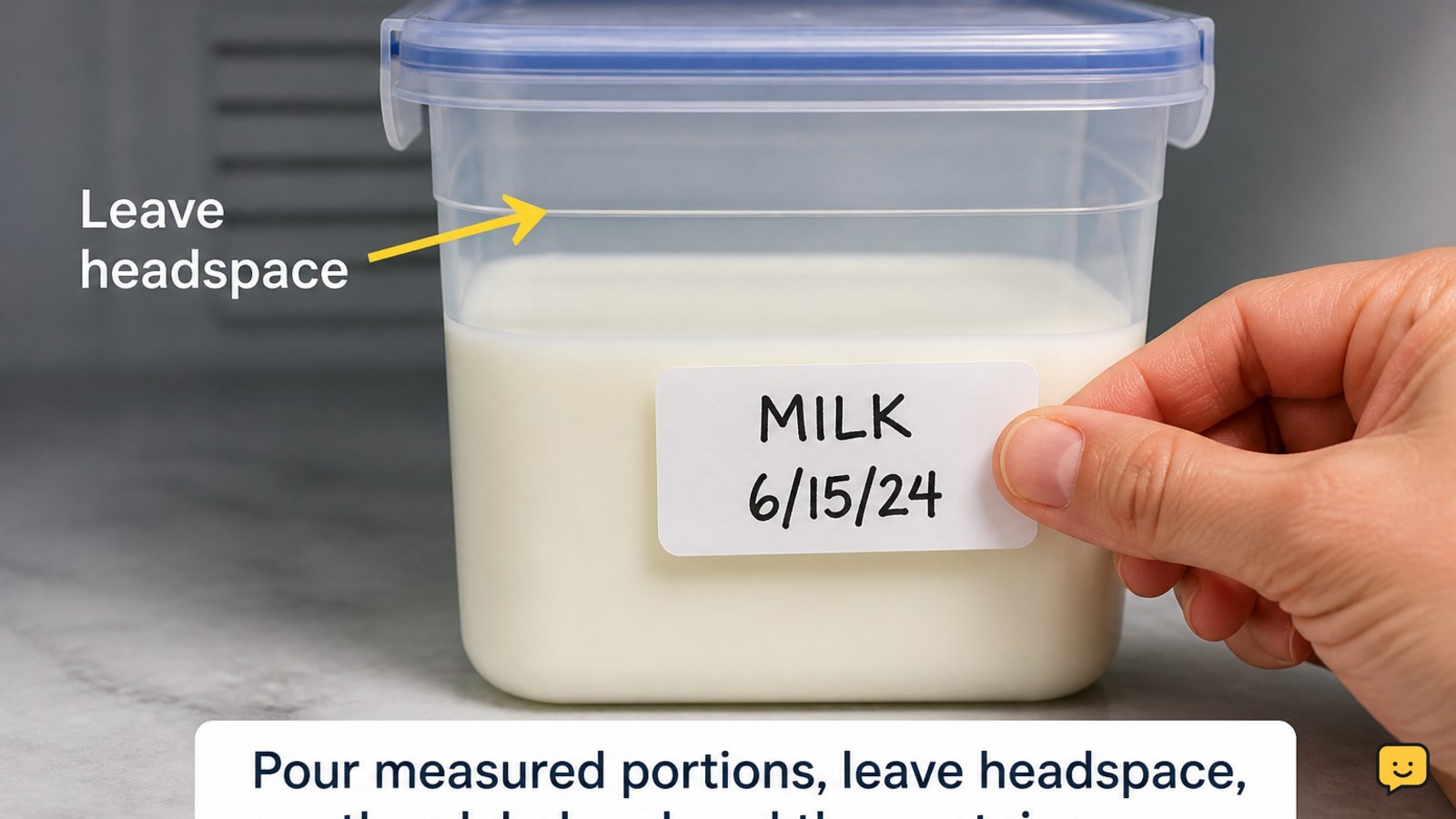
Leave visible headspace between the milk and the lid so expansion does not split the container or force the seal open. A rigid plastic freezer container works well for larger amounts, while a freezer bag placed inside a bowl can work for smaller portions. Avoid ordinary glass jars unless the manufacturer specifically marks them as freezer-safe.
Choose portions you can use at one time. Smaller containers freeze and thaw more evenly and reduce repeated warming and cooling.
Freeze milk in labeled portions
To freeze milk, pour the fresh milk into the prepared container, leave expansion room, close the lid securely, and place it in the coldest part of the freezer.
- Measure the milk into the container or freezer bag.
- Leave headspace instead of filling the container completely.
- Seal the package, wipe away any milk on the outside, and label it with the date.
- Freeze it promptly at a consistently frozen temperature. Keep the container upright until the milk is solid.
U.S. Dairy says frozen milk can keep for up to six months, although its guidance recommends using it within one month for the best quality. Longer storage can produce a more noticeable change in texture.
Thaw frozen milk in the refrigerator
Frozen milk should be thawed in the refrigerator until it is completely liquid and cold. Set the container on a plate or in a bowl to catch leaks, and allow extra time for a large portion.
Do not thaw milk on the counter, beside a hot appliance, or in warm water. If you need milk sooner, divide future batches into smaller portions rather than using a warm-thawing method.
Once thawed, keep the milk refrigerated and use it promptly. Do not return milk to the freezer after it has fully thawed.
Remix the milk and verify its quality
Thawed milk commonly separates, so shake a sealed container or stir an open one until the color and texture look reasonably uniform. A small amount of separation is a quality change, not automatically a safety problem.
Pour a little into a clean glass and check three things: it should smell like fresh milk, have no mold, and lack unusual curds or a sharply sour taste. If it passes those checks but feels slightly grainy or less smooth, use it in pancakes, sauces, soups, baking, smoothies, or other cooked dishes instead of relying on it as a cold drink.
U.S. Dairy notes that freezing can affect milk’s texture. If remixing does not improve the consistency, the milk may still be suitable for cooking, but stop using it if the odor or appearance is abnormal.
Choose a different storage option when texture matters
If you need milk to stay completely smooth for drinking, coffee, or foaming, refrigerating the original carton and using it before its use-by guidance may give a better result than freezing.
For occasional cooking, freezing measured portions prevents waste and makes the milk easier to add to recipes. If only a small amount remains, freeze it in an ice-cube tray or small freezer-safe portions, then transfer the solid pieces to a labeled freezer bag. Keep the pieces sealed to limit freezer odors and use them in a recipe after refrigerator thawing.
Frequently asked questions
Can you freeze milk in its original carton?
Yes, an unopened carton may be frozen if it has enough room for expansion and the package is suitable for freezing. A rigid carton can split or leak, so transferring milk to a freezer-safe container is the safer choice. Leave headspace, keep the package upright, and place it on a tray until solid.
How long can frozen milk stay in the freezer?
Frozen milk may remain usable for up to six months when kept continuously frozen, according to U.S. Dairy. For better flavor and texture, use it within about one month. Labeling each portion with the freezing date makes the quality window easier to track.
Why does milk separate after thawing?
Milk can separate after thawing because freezing changes the way its water, fat, and protein components are distributed. Shake or stir it thoroughly, then check the smell and appearance. If it remains grainy but otherwise fresh, reserve it for cooking or baking; discard it if it smells sour or shows mold.
Can you freeze milk for drinking?
Yes, but thawed milk may be less smooth than fresh milk. It is usually more forgiving in cereal, smoothies, sauces, soups, and baking. If the texture remains unpleasant after shaking or stirring, use it for cooking rather than drinking it plain.
For more help with this topic, use the Food Storage guides.