A repeated clicking or popping noise while turning commonly points to a worn CV joint or axle component, especially when the sound gets faster with vehicle speed and louder on tight turns. Tie-rod ends, ball joints, steering-rack bushings, tires, or loose hardware can create similar noises. Stop driving if steering changes, vibration, tire damage, or a warning sign appears.
Browse more Maintenance & Repair guides
Match the clicking pattern to the most likely component
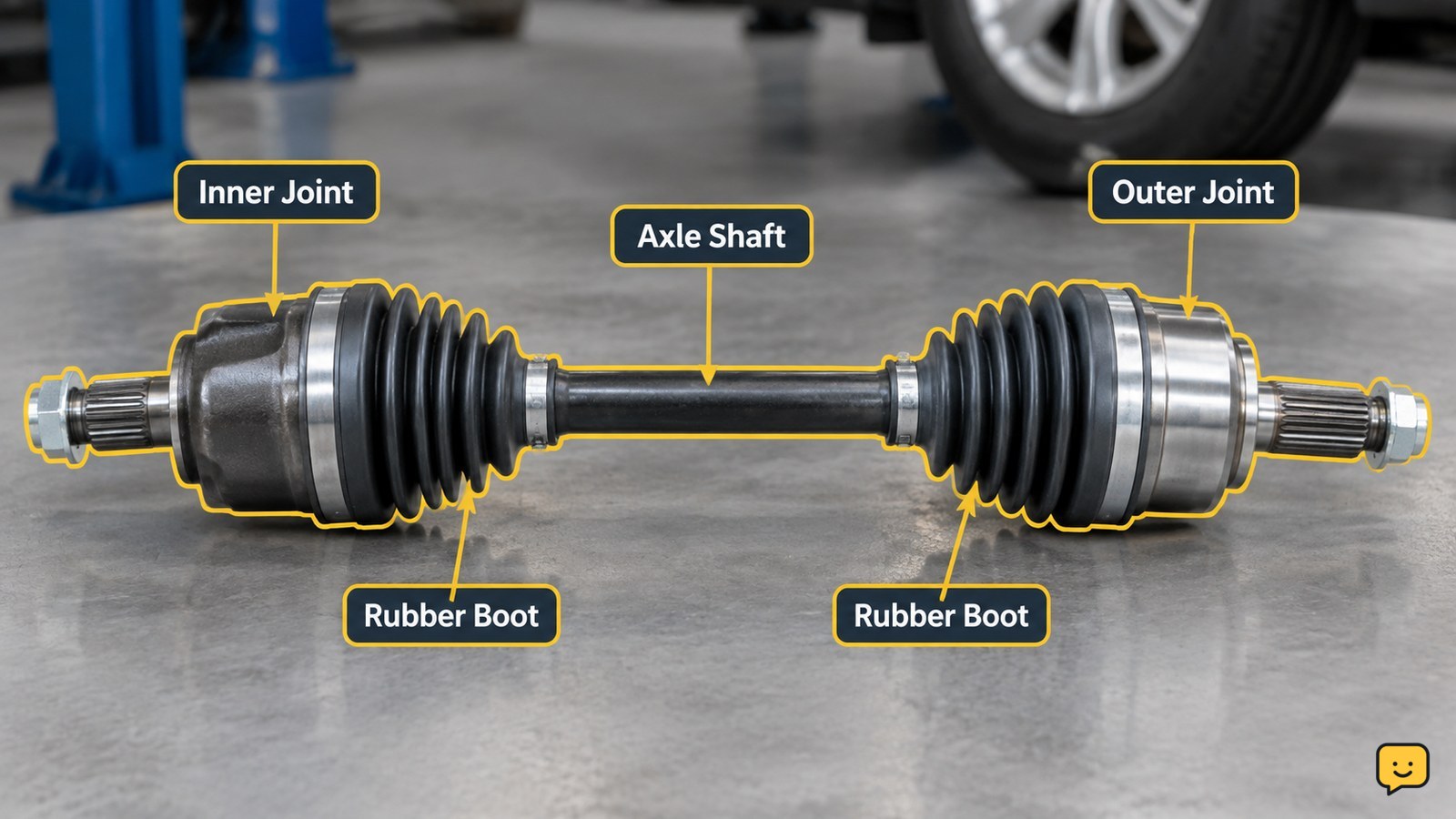
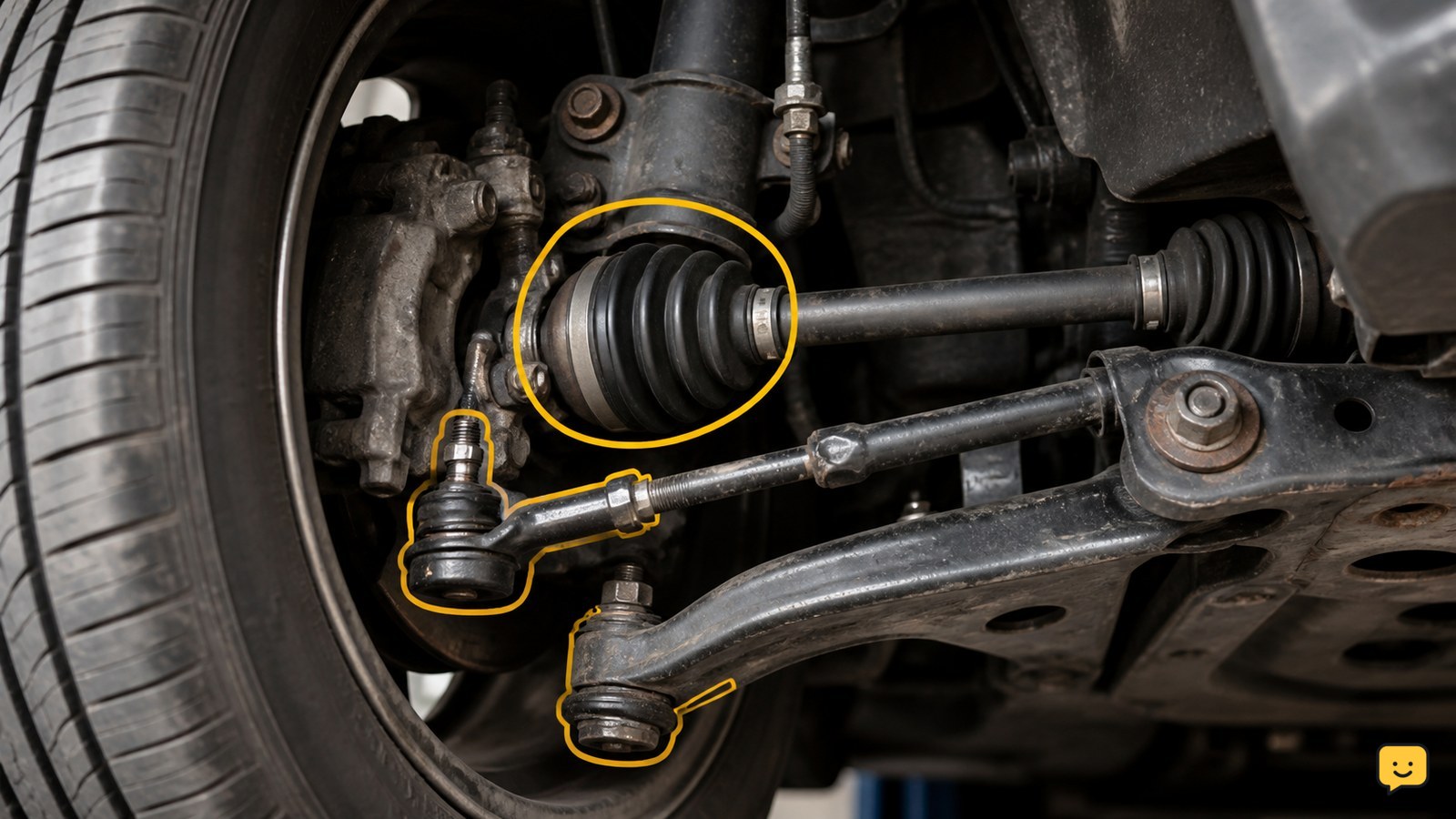
A clicking noise during a turn is most suggestive of a worn CV joint or axle component when it repeats through the turn and changes with vehicle speed. A Dakota Ridge Auto service reference also lists tie-rod ends, ball joints, and steering-rack bushings as possible causes, so the sound pattern is a starting point rather than a final diagnosis.
| What you notice | What it may suggest | Next action |
|---|---|---|
| Repeated clicking on a tight turn, often under light acceleration | CV joint or axle component | Arrange a driveline inspection, including the axle boots and surrounding area. |
| Single pop or clunk as steering direction changes | Steering or suspension play, such as a tie-rod end or ball joint | Limit driving and request a steering and suspension check. |
| Noise mainly over bumps while turning | Suspension or steering component movement | Have the front-end components checked for looseness or damaged mounting parts. |
| Scraping, rubbing, or thumping rather than a click | Tire, wheel-well liner, brake shield, or other contact | Inspect for fresh tire marks, loose plastic, or an object contacting the wheel. |
Check when the noise appears without stressing the car
You can narrow the cause by observing the noise at low speed in a safe, open area, but do not force the steering against its stop or continue if handling changes. Make one observation at a time.
- Drive slowly in a circle with the steering partly turned. Note whether the sound repeats once per wheel rotation or only occurs as the steering angle changes.
- Repeat in the opposite direction. A difference between left and right turns can help a technician identify which side or component needs closer inspection, but it does not prove the failed part.
- Notice whether gentle acceleration makes the clicking louder. A speed-related repeating click supports an axle or CV-joint suspicion.
- Drive straight over a smooth surface, then over a small normal road imperfection at low speed. If the noise occurs mainly with suspension movement, steering or suspension parts deserve priority inspection.
- Test braking separately and gently. If the noise occurs while stopping, or the brake pedal feels soft, use the brake guidance in Car Brakes Squeaking When Stopping: Unsafe? and stop if braking performance is reduced.
If the sound cannot be reproduced safely, stop the test. Record when it happens and describe the pattern to a repair shop instead of taking unnecessary road-test risks.
Inspect the wheel, tire, and CV-axle area from outside
An outside inspection can reveal obvious damage, but it cannot confirm that an internal joint or load-bearing steering part is safe. With the car parked and the wheels straight, compare both sides without reaching behind moving or hot components.
- Look at each tire for a bulge, cut, exposed cord, uneven damage, or a fresh mark on the inner sidewall.
- Look inside the wheel area for loose plastic, a bent shield, or anything that could rub when the wheel turns.
- Inspect the visible CV-axle boots for a split boot or grease sprayed around the inside of the wheel. Grease near a damaged boot supports an axle-joint concern, but a clean boot does not rule out internal wear.
- Check for an obviously loose wheel or missing hardware only if you know what your vehicle’s wheel fasteners should look like. Do not tighten critical fasteners to a guessed value; use the owner’s manual specification.
Do not jack up the vehicle for a hands-on steering or suspension test unless you have the correct lifting points, secure stands, and the vehicle-specific procedure. Otherwise, arrange an inspection.
Choose whether to drive, inspect soon, or stop now
The safest driving decision depends on handling and visible damage, not on the noise alone. A quiet car can still have a worn steering or suspension component, while a minor rubbing noise may not be an immediate failure.
- Stop now: the vehicle pulls, wanders, shakes, has loose-feeling steering, shows tire or wheel damage, loses braking performance, or displays a relevant warning light.
- Drive only as needed for a short inspection: the sound is mild and repeatable, steering and braking feel normal, tires look sound, and no warning signs are present. Avoid tight turns, high speed, heavy loads, and rough roads.
- Book service promptly: any repeated click or pop continues after basic observations, particularly after a curb or pothole impact. Tell the technician the turn direction, speed, steering angle, acceleration, and whether bumps change the noise.
If the sound worsens during the trip or the handling changes, stop in a safe location and arrange roadside assistance rather than continuing to the destination.
Verify the repair by reproducing the original symptom
A repair is verified when the original clicking pattern is gone during a controlled, low-speed check and the vehicle still steers, brakes, and tracks normally. Ask what component was found damaged and whether any related part, boot, fastener, or alignment condition also required attention.
- Before leaving, confirm that no warning light remains on and that the tire and wheel area is free of fresh grease or rubbing marks.
- On a safe road, repeat the same type of turn that produced the noise, without forcing the steering against its stop.
- Check a gentle turn in the opposite direction and a straight drive over a smooth surface.
- If the noise remains, changes location, or is replaced by a clunk or vibration, return to the repair facility. A remaining symptom means the original cause may not have been fully identified.
Frequently asked questions
Is it safe to drive a car that clicks when turning?
Sometimes a short, careful trip to an inspection is reasonable if steering, braking, tires, and handling all feel normal and no warning signs are present. Do not keep driving if the car wanders, shakes, pulls, has a damaged tire, or the clicking becomes louder. A suspected ball joint or tie-rod problem deserves extra caution because those parts affect steering control.
Why does my car click only when turning left or right?
A one-direction clicking pattern can help identify which side or component needs inspection, but it does not prove the diagnosis. A CV joint, axle component, tie-rod end, ball joint, or steering-rack bushing may respond differently under load in each direction. Note the turn direction, speed, steering angle, and whether acceleration changes the sound.
Can low tire pressure cause a clicking noise when turning?
Low tire pressure is not the usual explanation for a repeated mechanical click, but a tire or wheel problem can create rubbing, thumping, or handling changes during turns. Check all tire pressures against the vehicle’s door-jamb label or owner’s manual and inspect for damage. If the tire-pressure warning stays on, address that separately before extended driving.
Does a clicking noise always mean the CV joint is bad?
No. A worn CV joint or axle component is a common possibility, but steering and suspension parts such as tie-rod ends, ball joints, and steering-rack bushings can produce similar sounds. The repetition, speed, steering angle, acceleration, and response to bumps help narrow the cause, while a proper inspection confirms it.