For most modern cars, change engine oil at the mileage or time limit listed in the owner’s manual, whichever comes first. A common range is 5,000 to 7,500 miles, according to AAA and Walser, but severe driving may require a shorter interval. Use the specified oil grade and never treat an oil-pressure warning as a routine service reminder.
Check the vehicle manual before choosing mileage
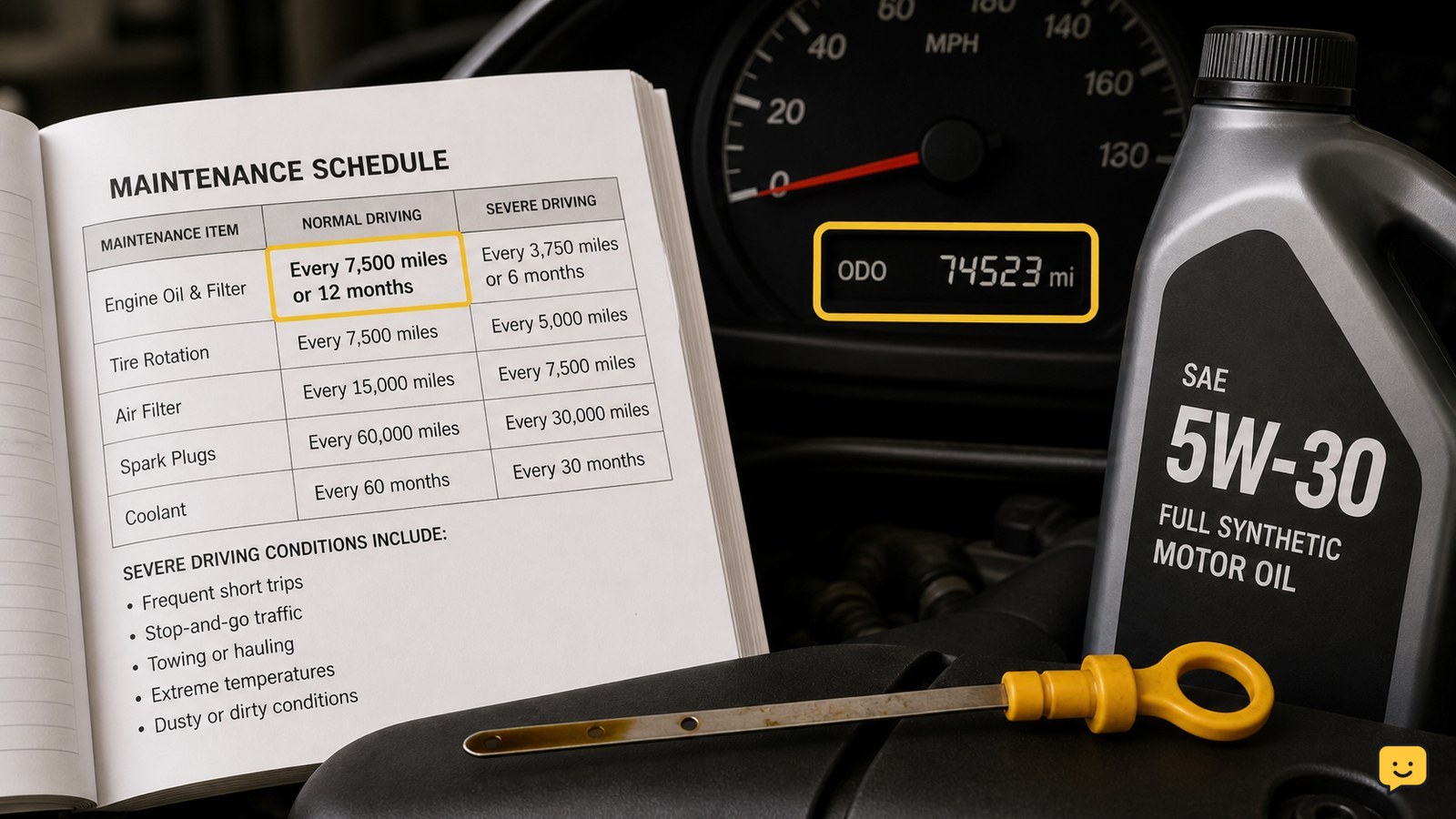
The owner’s manual gives the controlling oil-change interval for your vehicle, so check it before relying on a general mileage range. Look for the maintenance schedule, engine-oil section, or service reminder information for your exact engine and model year.
Some vehicles list separate normal- and severe-service intervals. If the manual provides both, select the schedule that matches how the car is actually driven. If the manual and a dashboard reminder disagree, follow the manufacturer’s stated service requirements and have the reminder checked at the next service.
Verify the result: you should be able to identify a mileage limit, a time limit, or both. If the schedule is missing, use the manufacturer’s current documentation or ask a qualified service provider rather than guessing.
Use oil type as a limit, not a replacement for the schedule
The required oil grade and specification must match the vehicle manual, but synthetic oil does not automatically authorize a longer interval. The service schedule is based on the engine, oil requirement, operating conditions, and manufacturer testing—not only on whether the oil is synthetic or conventional.
AAA says many vehicles fall in the 5,000- to 7,500-mile range depending on oil type and driving conditions. Walser gives a similar general range and notes that time can matter as well. Treat these figures as a broad reference only; a vehicle-specific schedule takes priority.
Failure path: if the oil container does not clearly meet the required viscosity and specification, do not use it. Confirm the correct product before adding oil or booking service.
Shorten the interval for severe driving
Severe driving means the vehicle experiences conditions that place more heat, contamination, or operating stress on the engine oil. Use the severe-service schedule when the manual classifies your driving that way, even if the odometer mileage is low.
- Frequent short trips that do not fully warm the engine
- Long periods of idling or stop-and-go traffic
- Towing, carrying heavy loads, or repeated hard use
- Dusty, very hot, very cold, or otherwise demanding conditions
These conditions can make an ordinary mileage assumption unsuitable. A car used mainly for short trips may reach the time limit before it reaches the mileage limit, while a heavily used vehicle may reach the mileage limit quickly.
Check your choice: compare your regular use with the severe-service description in the manual. If more than one severe condition applies, use the manufacturer’s shorter schedule rather than averaging the intervals.
Change the oil at whichever limit comes first
Engine oil should be changed when either the mileage limit or the elapsed-time limit is reached, whichever occurs first. This prevents a low-mileage vehicle from going too long between services.
For example, if the schedule says 6,000 miles or six months and you drive only 2,000 miles in that period, the six-month limit still applies. If you reach 6,000 miles in three months, the mileage limit applies instead. AAA and Walser both describe time and mileage as relevant parts of the interval.
Do not reset the service reminder before the oil and filter are changed. After service, record the date, mileage, oil specification, and next due point. That record makes the next interval easier to verify, especially when more than one person drives the car.
Verify the service and separate warnings from reminders
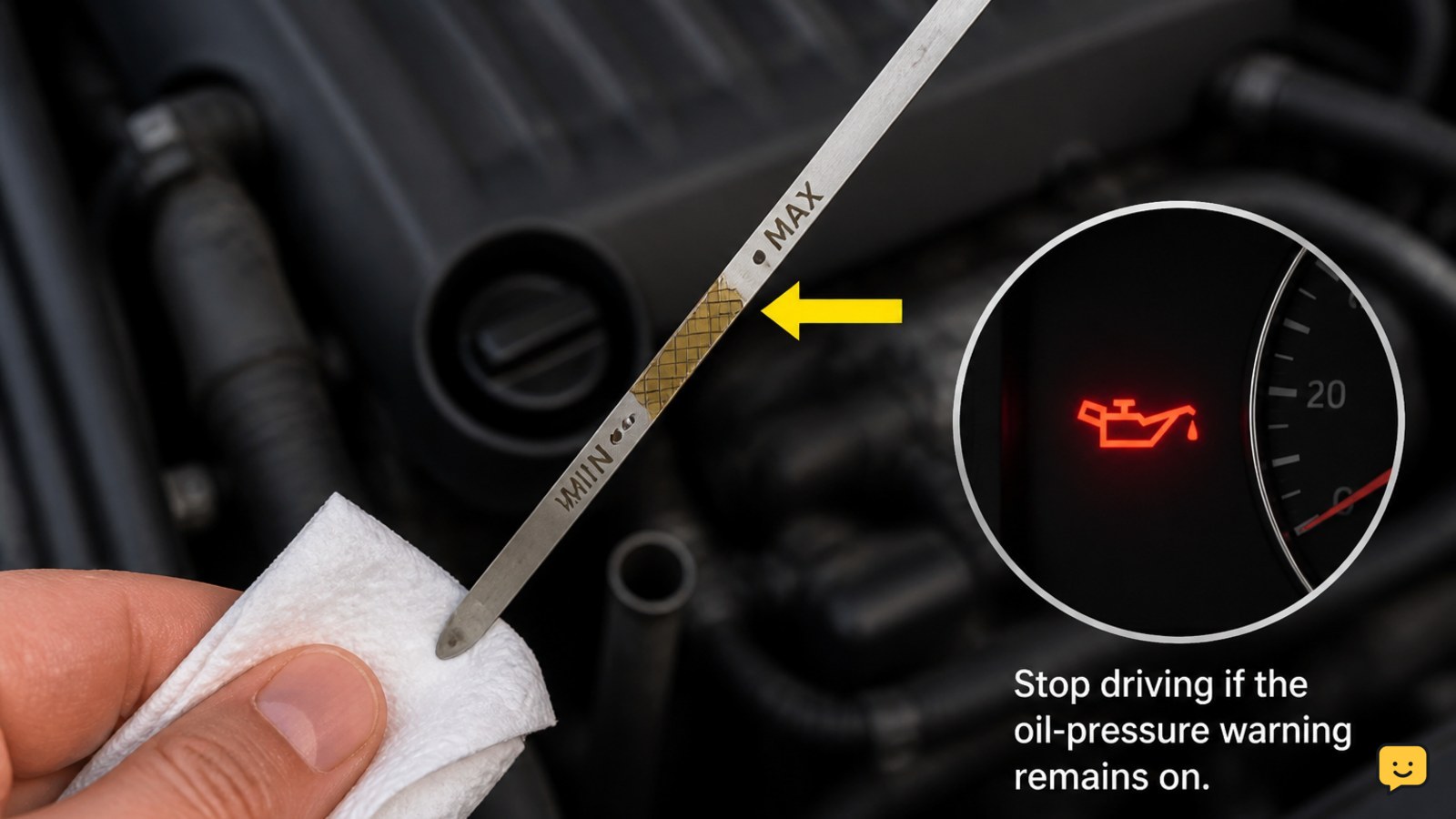
After an oil change, verify that the engine contains the correct amount of oil, the filler cap is installed, and there are no fresh leaks under the vehicle. The oil level should be checked on level ground using the procedure in the owner’s manual.
An oil-life or maintenance reminder is different from an oil-pressure warning. A maintenance reminder tells you that scheduled service is due. An oil-pressure warning can indicate an immediate lubrication problem and should not be postponed until the next routine interval.
If the oil-pressure light appears, safely stop as soon as possible, switch off the engine, and check the oil level. If the level is normal, the light remains on, or the engine sounds abnormal, stop driving and arrange professional diagnosis. ShowU’s guide to an oil-pressure light at idle covers additional warning signs and checks.
Frequently asked questions
Is an oil change every 3,000 miles still necessary?
Not for every vehicle. Many modern cars have manufacturer intervals longer than 3,000 miles, and AAA describes a common 5,000- to 7,500-mile range. The correct answer depends on your vehicle, oil specification, mileage, time, and driving conditions. Use 3,000 miles only if your manual or severe-service schedule specifically calls for it.
How often should you change engine oil if you barely drive?
Follow the time limit in the maintenance schedule even when mileage is low. Short, infrequent trips can also qualify as severe use, depending on the manufacturer’s definition. If the vehicle has been parked for an extended period or the service history is unknown, confirm the correct interval and oil level before regular driving.
Does full synthetic oil mean you can wait longer?
Not automatically. Full synthetic oil may be specified for a longer interval on some vehicles, but the manufacturer’s schedule controls. Use the required viscosity and specification, then follow the stated mileage or time limit. Extending the interval solely because the oil is synthetic can exceed the engine maker’s recommendation.
Can you drive with the oil-pressure warning light on?
No. Safely stop, turn off the engine, and check the oil level according to the manual. If the level is normal, the warning remains on, or the engine makes unusual noise, do not continue driving. Arrange professional diagnosis because low oil pressure can damage the engine quickly.
For more current help, browse all Maintenance & Repair guides.