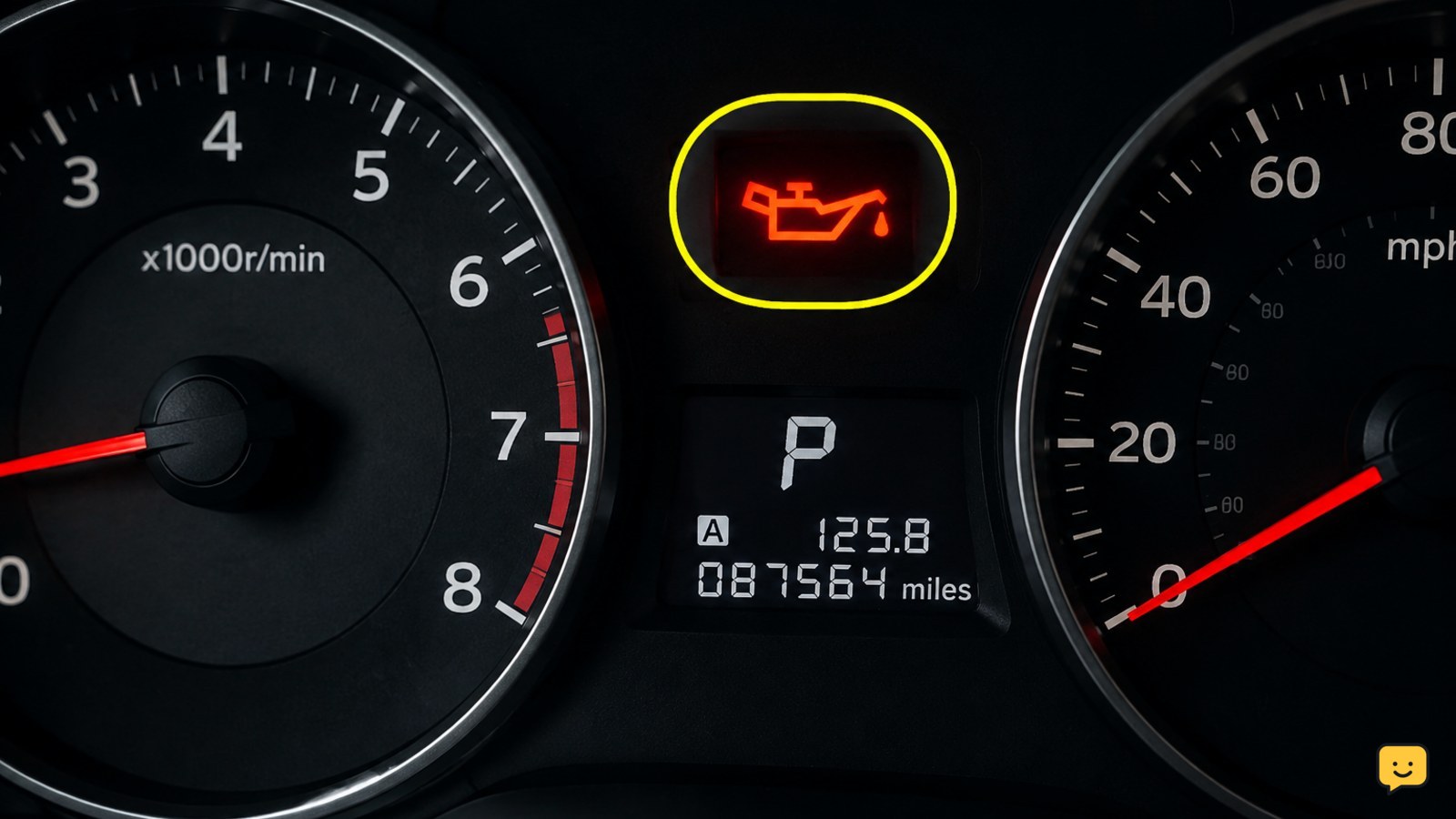
Your car oil pressure light may come on at idle because engine speed produces less oil pressure, exposing a low oil level, incorrect oil viscosity, worn bearings, a restricted filter, a weak oil pump, or a faulty pressure sensor. Stop safely, switch off the engine, and check the oil level. If the warning returns, do not keep driving until pressure is tested.
What the oil pressure light means
The oil pressure warning indicates that the engine may not be receiving enough pressurized oil. It is different from a low-oil-level reminder: the light is reacting to pressure measured by a switch or sensor, while the dipstick shows how much oil is in the engine.
Oil pressure is normally lower at idle because the oil pump turns more slowly. That can expose a marginal condition, especially after the engine becomes hot. A brief light during engine start-up may be part of the normal warning-light check, but a light that remains on or returns at idle needs attention.
Why it appears only at idle
The most common starting point is a low oil level. With less oil available, the pump can struggle to maintain pressure, and the problem may become visible first at hot idle. An oil leak or an engine that consumes oil can cause the level to fall between services.
Other possibilities include oil that is too thin or the wrong specification, a restricted oil filter, a worn oil pump, a blocked pickup screen, or excessive clearance at internal engine bearings. These mechanical problems can allow oil to escape through the engine faster than the system can maintain pressure at low speed.
A faulty oil-pressure sensor, warning switch, connector, or wire can also trigger the light even when actual pressure is acceptable. The light turning off when you raise the engine speed does not prove that the engine is safe; it only shows that pressure may rise enough to switch the warning off.
Check the oil level safely
- Park on a level surface, switch off the engine, and wait several minutes so oil can drain back into the pan.
- Find the dipstick using the owner’s manual. Remove it, wipe it clean, reinstall it fully, and remove it again.
- Read the oil level on the marked range. If it is below the lower mark or does not appear, do not keep running the engine.
- Add only the oil grade and amount specified for your vehicle. Add a small amount at a time, then recheck the level.
- Inspect beneath the vehicle and around the oil filter, drain plug, and engine for fresh oil. Also check whether the engine has been using oil between services.
Do not overfill. Too much oil can also cause engine problems. If the level is correct but the warning remains, adding more oil is not a solution.
Decide whether you can restart
If the level was low and you found no major leak, adding the specified oil may allow a brief restart for verification. Start the engine while parked and watch the warning. It should go out promptly after the engine starts. Do not rev the engine to hide the warning or repeatedly run it for testing.
Turn the engine off immediately if the light stays on, returns at idle, or comes with unusual engine noise. A warning that disappears when the engine speed rises can still indicate dangerously low hot-idle pressure.
Separate a sensor fault from real pressure loss
The reliable next test is a mechanical oil-pressure gauge connected at the engine’s pressure-sender port. A qualified technician should compare the measured pressure with the vehicle manufacturer’s specifications at cold and hot idle, and at the specified higher engine speeds.
If mechanical pressure is within specification, the likely fault is in the pressure sensor or switch, its connector, the wiring, or the warning circuit. If measured pressure is below specification, the technician must investigate the oil level and grade, filter, pump, pickup, pressure-relief system, and internal engine wear.
Do not approve a sensor replacement as the only diagnosis when the light is active. Actual pressure should be verified first, particularly if the engine is noisy or the warning appears after the oil becomes hot.
What to tell the repair shop
Record when the light appears: only at hot idle, during cold starts, while braking or turning, or at all engine speeds. Note whether it flickers or stays solid, how long it remains on, the oil level, the last oil and filter change, the oil grade used, and any visible leak or engine noise.
Ask whether pressure was measured with a mechanical gauge and whether the result was compared with the manufacturer’s specification. This helps distinguish a warning-circuit problem from a condition that could damage bearings, the pump, or other lubricated parts.
Frequently asked questions
Is it normal for the oil pressure light to come on at idle?
No. Oil pressure is naturally lower at idle, but the warning light should not remain on during normal operation. A hot engine, low oil level, incorrect oil grade, worn internal parts, or a faulty sensor can make the warning appear first at idle. Check the oil and stop driving if the light returns.
Can low oil cause the oil pressure light to flicker at idle?
Yes. A low oil level can reduce the oil available to the pump, allowing pressure to fall below the warning threshold at idle. Check the level on level ground after the engine has been off for several minutes. Add only the specified oil, and arrange diagnosis if the light returns or the level drops again.
Can I drive with the oil pressure light on at idle?
No, not as a normal driving condition. Switch off the engine and check the oil level. If the level is correct, the light returns after adding oil, or the engine makes ticking or knocking sounds, do not drive it to a shop. Have the vehicle towed and request a mechanical pressure test.
How do I know whether the oil pressure sensor is bad?
You cannot confirm a bad sensor from the dashboard light alone. A technician should connect a mechanical pressure gauge and compare the reading with the vehicle’s specifications. Normal measured pressure points toward the sensor, switch, wiring, or warning circuit; low measured pressure indicates a mechanical or lubrication-system problem.
Will changing the oil fix an oil pressure warning at idle?
Sometimes, but only when the cause is overdue oil, the wrong viscosity, or a restricted filter. An oil change will not repair a worn pump, blocked pickup, bearing wear, major leak, or faulty wiring. If the warning remains after correct service, stop running the engine until pressure is checked.
Browse more Maintenance & Repair guides for help with this topic.