If your car smells like exhaust inside the cabin, treat it as a possible exhaust leak and carbon monoxide hazard. Open the windows, switch the climate system to fresh air, and pull over somewhere safe. Get everyone out into fresh air, especially if anyone feels dizzy, sick, sleepy, or develops a headache. Do not continue driving until the vehicle is inspected.
Ventilate the cabin and get to fresh air first
Exhaust fumes inside the vehicle are a safety problem, not an interior odor to mask. If you notice the smell while driving, open the windows, turn the climate system away from recirculation, and pull over at the first safe location. Turn the engine off, exit the vehicle, and move everyone to fresh air.
Do not sit in the car with the engine running to see whether the smell fades. Carbon monoxide can enter with exhaust gases, and the smell may come from other exhaust components even though carbon monoxide itself has no smell. Do not rely on an air freshener, a cabin filter, or a short drive with the windows open as a repair.
Verification: Once outside, the cabin should no longer be occupied while the engine is running. If anyone feels unwell, do not return to the vehicle; seek medical advice and arrange recovery.
Check when the smell appears
Note the conditions that make the odor stronger. This helps a technician narrow the fault without requiring you to keep testing the vehicle on the road.
- Only at idle: A leak near the engine or front section of the exhaust may be drawn toward the ventilation intake when the car is stationary.
- During acceleration: Increased exhaust flow can make a crack, failed joint, or loose connection more noticeable.
- With the heater or defroster on: Outside air is drawn through the HVAC intake, so fumes near the engine bay can enter through the vents.
- With the hatch, trunk, or rear windows open: Airflow can pull exhaust from behind the vehicle into the cabin, especially if a rear seal or body opening is damaged.
- After recent exhaust or engine work: A loose fastener, damaged gasket, displaced heat shield, or incomplete connection should be checked first.
Do not repeat a road test if the odor is strong or anyone has symptoms. Record the pattern from outside the vehicle or tell the repair shop when it occurred.
Inspect the common exhaust leak locations
With the engine cold, look without touching hot parts or entering the area beneath an unsupported vehicle. Start at the front and follow the exhaust path toward the rear.
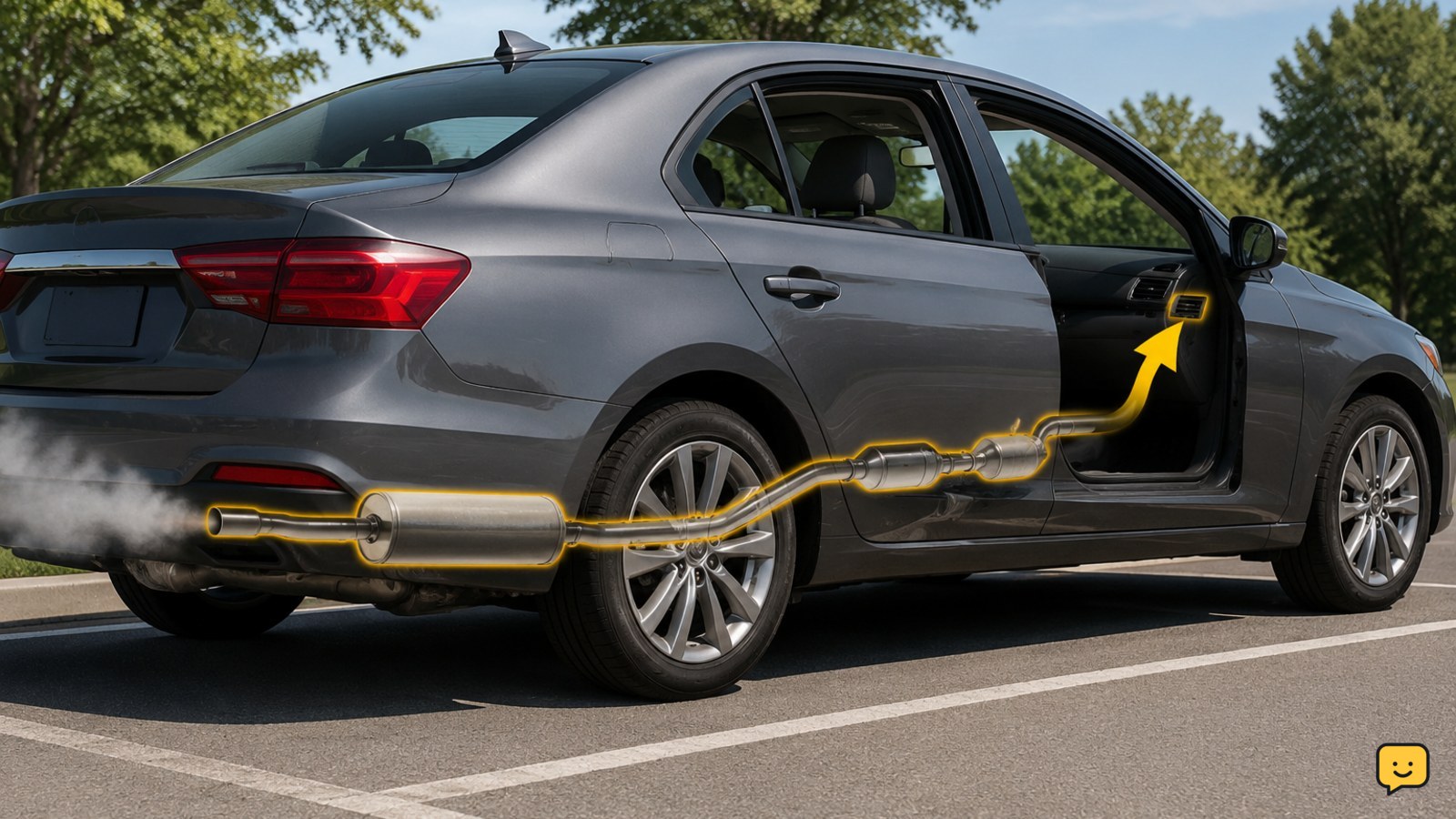
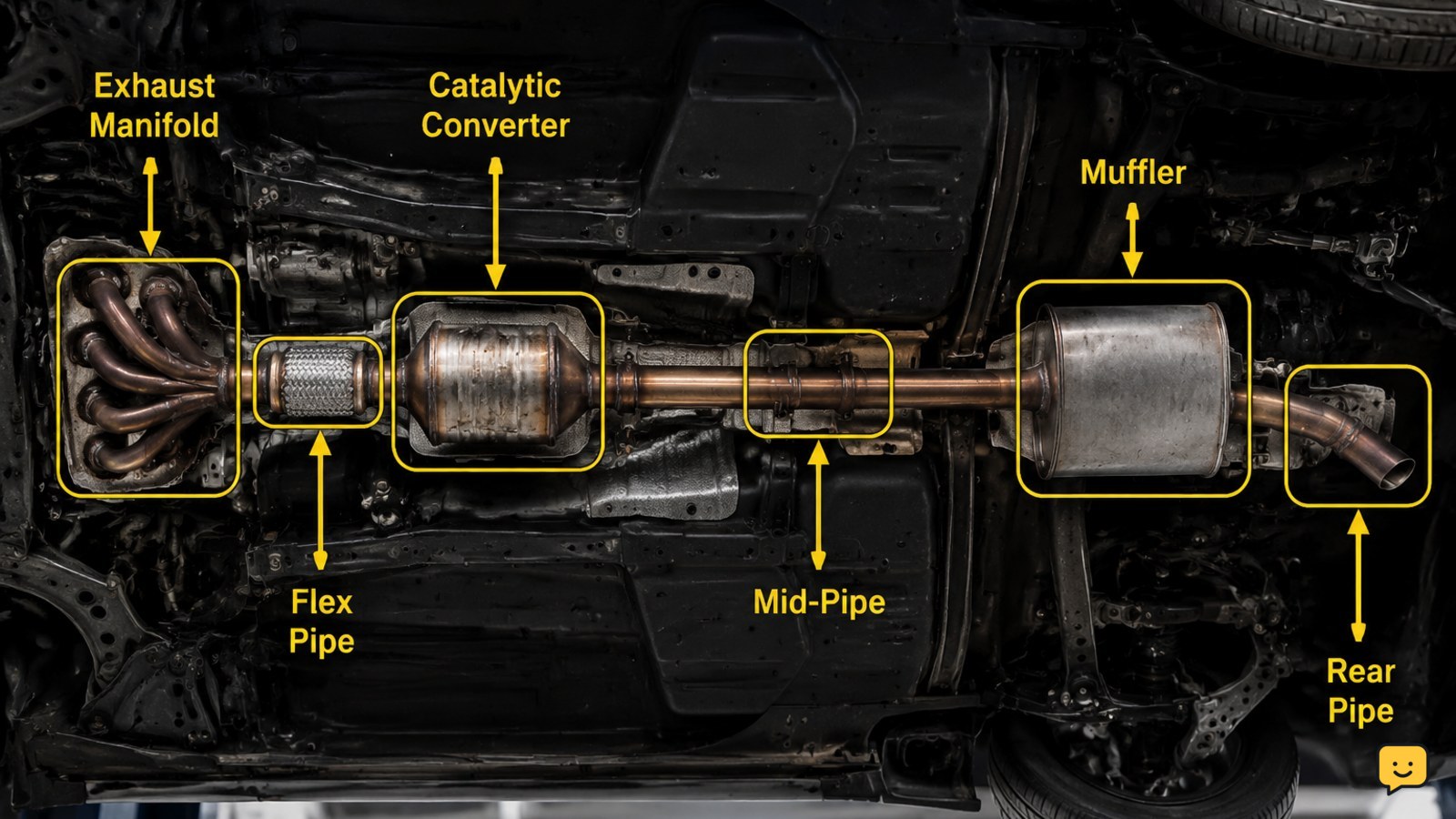
- Exhaust manifold and gasket: The manifold joins the engine’s exhaust ports. A failed gasket or crack here can release fumes in the engine bay, close to the cabin’s fresh-air intake.
- Flex pipe and front pipe: Flexible sections can crack from age, vibration, or road impact. Look for a split braid, a hole, or dark soot around a joint.
- Catalytic-converter area: Inspect the surrounding pipe connections and welds for damage, holes, or soot. Do not touch the converter; it can remain extremely hot after the engine is switched off.
- Mid-pipe, muffler, and rear pipe: Rust, impact damage, or a separated seam can allow exhaust to escape beneath the floor or near the rear of the cabin.
- Cabin entry points: Check for damaged trunk or hatch seals, missing floor plugs, and openings around the firewall or other body grommets. These can let fumes bypass the normal airflow path.
A visible black or gray soot mark is useful evidence, but no visible mark does not prove the system is sealed. Exhaust leaks can be difficult to hear and may open only as the engine moves or the system heats up.
Check the ventilation setting and cabin filter
Set the climate system to fresh-air mode rather than recirculation during normal driving, but do not use the HVAC system to keep driving with an exhaust smell. The filter may reduce dust and some odors; it cannot make an exhaust leak safe.
- With the vehicle parked outdoors and the engine off, confirm that the air intake area below the windshield is clear of leaves and debris.
- Check the cabin-filter housing for a missing cover, damaged seal, or incorrectly fitted filter.
- Use the owner’s manual to identify the firewall, cowl, and HVAC intake areas without removing parts that require special procedures.
- Look for signs of recent body, engine, or HVAC work that may have left a panel or grommet loose.
Failure path: If the odor is strongest from the vents, do not assume the filter is the cause. A leak near the manifold, flex pipe, or front exhaust can be pulled into the ventilation intake. Book an inspection instead of replacing the filter first.
Arrange the right repair and verify the result
Tell the repair shop that exhaust fumes entered the cabin and describe when the smell occurred. Ask for the exhaust system, engine-bay area, cabin seals, and HVAC fresh-air intake to be checked. A proper diagnosis may require an inspection for leaks while the system is cold and warm; leave that testing to a qualified technician.
Do not patch a damaged exhaust with household tape, sealant, or temporary material. Exhaust components operate at high temperatures and may need replacement, welding, a new gasket, or correctly tightened hardware. The exact repair depends on the failed part and the vehicle model.
Verification: After repair, the shop should confirm that the exhaust system is sealed and that no fumes enter the cabin during idle and normal operation. Do not accept “the smell is weaker” as proof. If the odor returns, stop driving and have the vehicle checked again.
Frequently asked questions
Is it safe to drive if I smell exhaust inside my car?
No. Stop as soon as it is safe, open the windows, get out into fresh air, and arrange an inspection or tow. Driving with the windows open may reduce the smell but does not remove the leak or guarantee protection from carbon monoxide.
Can a bad cabin air filter cause an exhaust smell?
Usually, no. A dirty or poorly sealed cabin filter can allow ordinary odors and debris into the HVAC system, but it does not normally create exhaust fumes. An exhaust smell near the vents should be treated as a possible leak near the manifold, flex pipe, front pipe, firewall, or fresh-air intake.
Why does my car smell like exhaust only with the heater or defroster on?
The heater or defroster often uses outside air from an intake near the base of the windshield. If exhaust escapes in the engine bay or near the front pipe, the ventilation system can draw it into the cabin. Stop using the vehicle until the exhaust system and HVAC intake area are inspected.
Where do exhaust fumes commonly enter a vehicle?
Common routes include leaks at the exhaust manifold gasket, flex pipe, front pipe, catalytic-converter connections, muffler or rear pipe, plus damaged firewall grommets, floor plugs, trunk seals, and hatch seals. The exact entry point varies by vehicle, so a technician should inspect the full exhaust path and cabin seals.
Browse more Maintenance & Repair guides for help with this topic.