Your coolant may be escaping from a leak that appears only when the system is hot or under pressure, evaporating on a hot engine, entering the cabin through a heater-core leak, or entering the engine through a failed gasket or cracked component. Check the level only when cold, track the change, and arrange pressure testing if it drops again.
Verify that the coolant level is actually falling
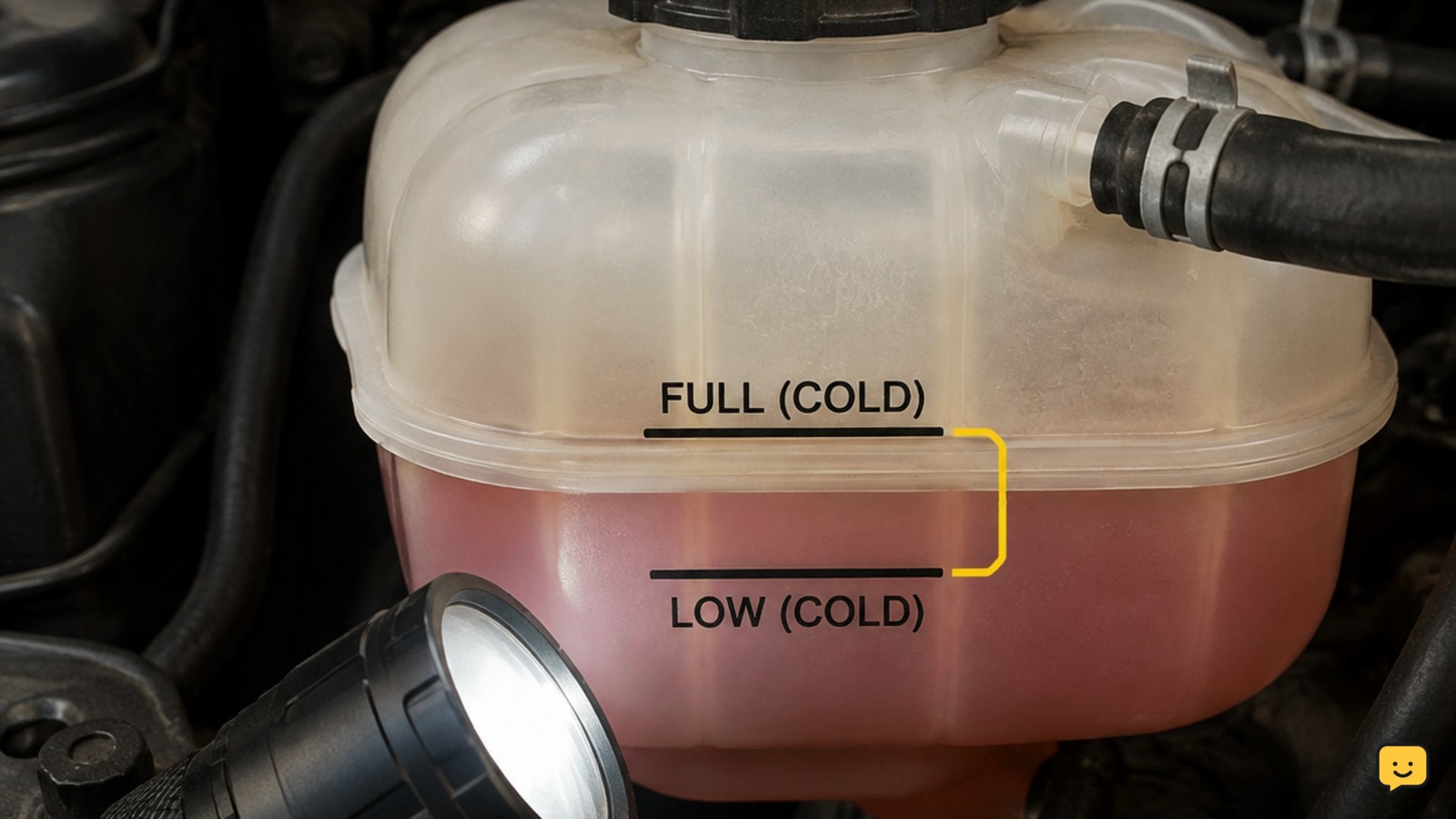
Check the reservoir only with the engine cold, ideally before the first start of the day. The level should sit between the cold markings specified on the tank or in the owner’s manual. A level that appears lower after the engine cools can reflect normal expansion and contraction rather than a new loss.
Photograph or mark the cold level, then recheck it under the same conditions after each drive. If it stays at the same cold mark, the earlier reading may have been taken while the system was warm or while air was still being purged after service. If it continues to fall, treat the cooling system as losing coolant until tested.
Inspect hidden external leak points when the engine is cold
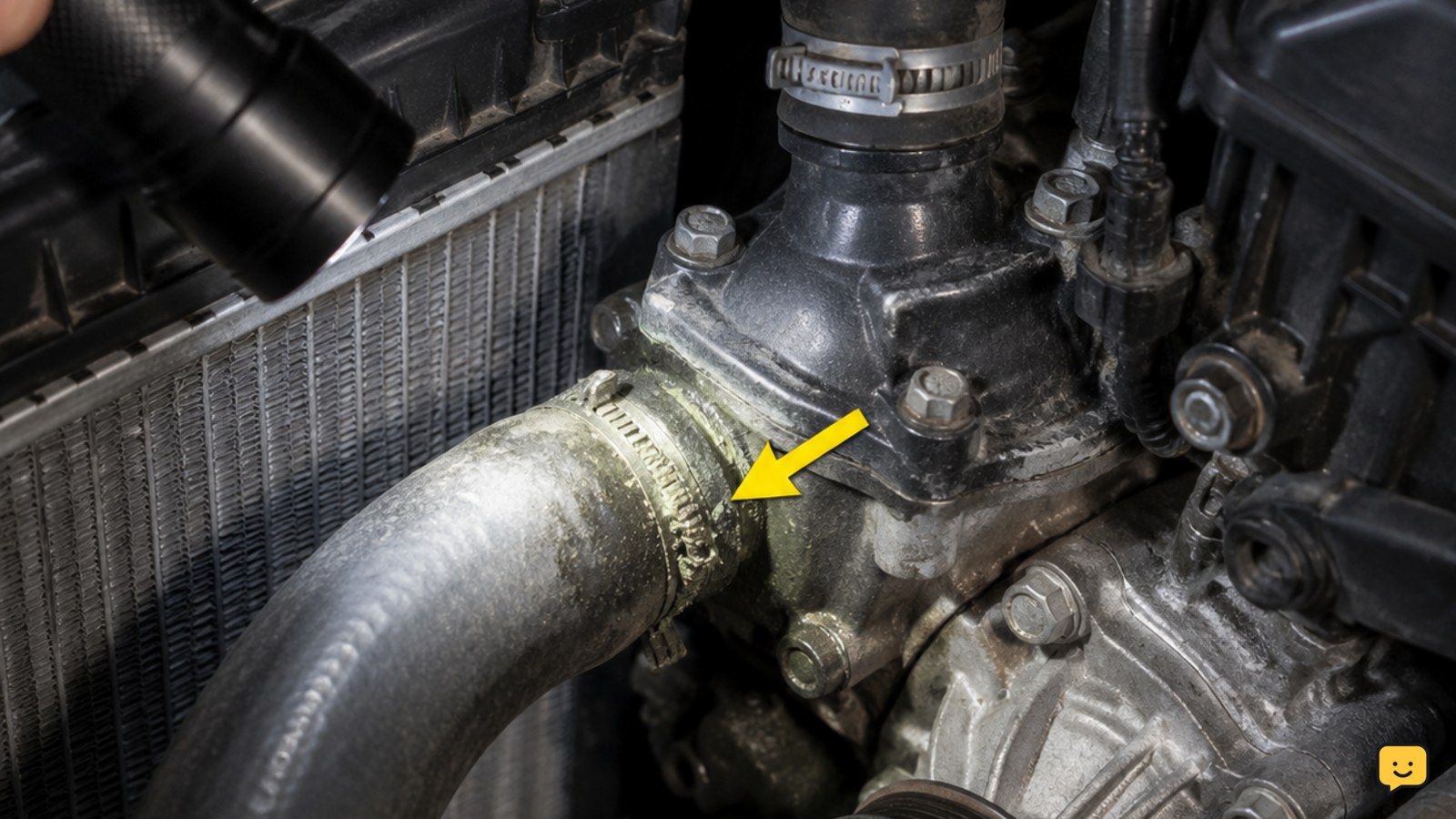
Use a flashlight around the reservoir, radiator seams, cap, hoses, hose joints, thermostat housing, water pump area, and the underside of the engine. Look for wetness, dried white or colored residue, a sweet coolant smell, or a narrow trail running down a component. A small leak may evaporate on a hot engine or drip onto a shield instead of forming a puddle.
Check the ground and splash shield after parking, but do not rely on a dry driveway to rule out a leak. Inspect again after a drive without touching hot parts. If residue is present, photograph its location and ask a shop to pressure-test the system rather than replacing parts by guesswork.
Check for cabin signs of a heater-core leak
A heater-core leak can lose coolant inside the ventilation housing, leaving no obvious engine-bay puddle. Check for a sweet smell from the vents, windows that develop an unusual greasy film, damp front carpets, or coolant traces near the passenger-side footwell. These signs make a cabin-side leak more likely.
Do not keep using the heater to mask the smell. A leaking heater core can reduce coolant level and may eventually put coolant on electrical or interior components. If the carpet is damp or the smell is strong, arrange repair and avoid driving if the temperature begins to rise.
Use pressure testing to reveal a leak that only appears hot
A cooling-system pressure test is the most useful next check when a cold visual inspection finds nothing. A technician applies controlled pressure with the engine off and watches whether it holds. Falling pressure, wet residue, or a drip then helps locate a hose, radiator, cap, housing, pump, or other external fault.
Some leaks appear only at operating temperature or while the vehicle is moving. If a basic pressure test is inconclusive, the shop may need to inspect the system hot, use an approved dye, or check the cap separately. The exact test method depends on the vehicle’s design, so follow the service information for that model.
Test for an internal engine coolant leak
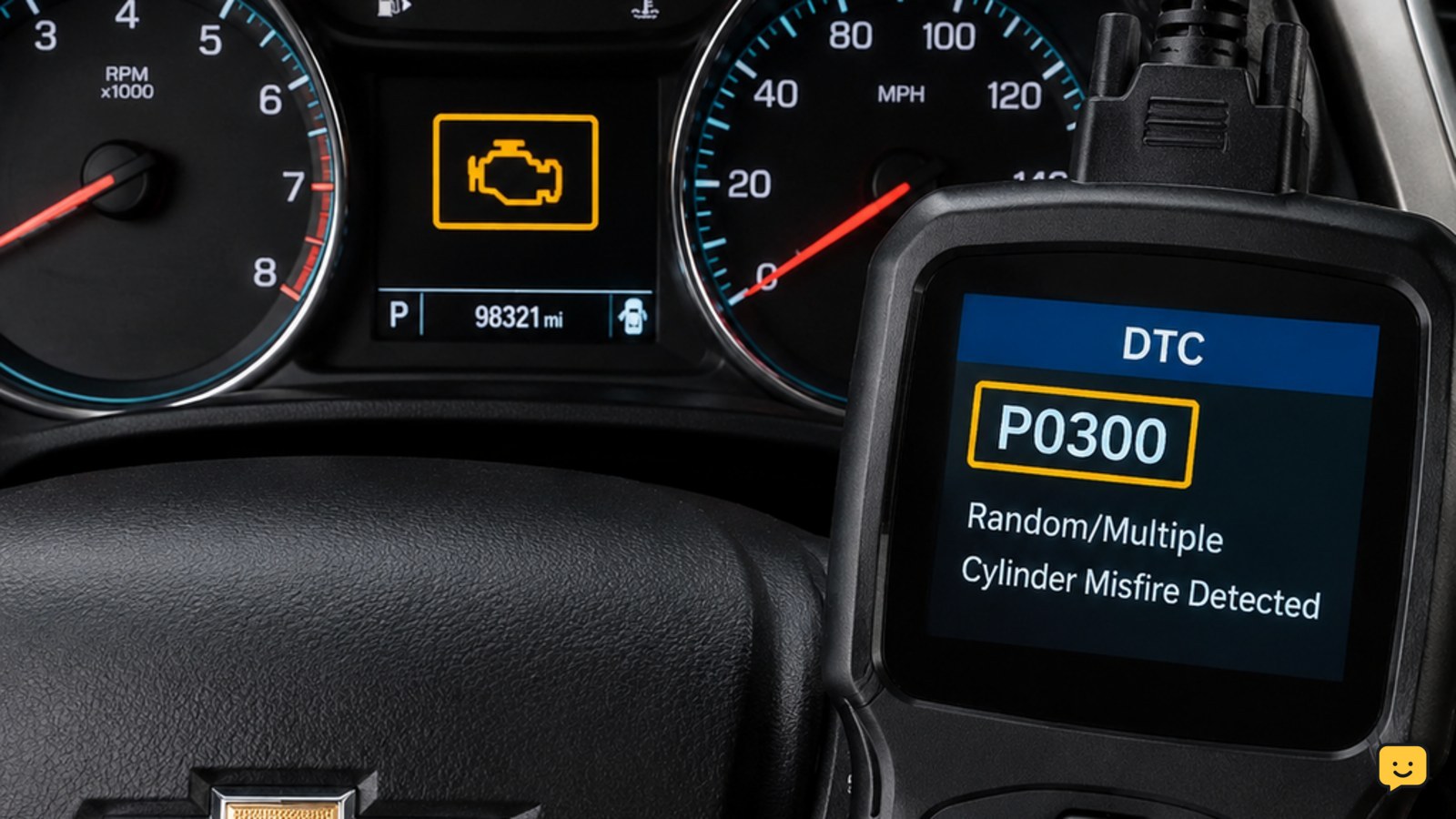
If the system holds no visible external leak but the level keeps dropping, coolant may be entering the engine or combustion system through a failed head gasket, cracked cylinder head, cracked block, or another internal fault. Possible clues include repeated overheating, a misfire after startup, persistent white exhaust after the engine is fully warm, bubbles in the expansion tank, or milky-looking engine oil.
None of these clues proves an internal leak on its own. A repair shop can use a combustion-gas test, compression or leak-down testing, and model-appropriate inspection to confirm the cause. Do not keep topping up indefinitely: low coolant can lead to overheating, and overheating can turn a smaller leak into major engine damage.
Decide what to do after the next cold-level check
If the level is stable and there are no warning signs, continue checking it cold at regular intervals and record any change. If it drops once after recent cooling-system work, trapped air may have been released during the first heat cycles; follow the vehicle’s specified bleeding or refill procedure rather than opening the system repeatedly.
If it drops again, book a cooling-system pressure test and provide the recorded levels, coolant type, smell, exhaust observations, and any temperature changes. A shop should identify the leak or test for internal loss before recommending a gasket, pump, radiator, or stop-leak product. If the temperature warning appears, stop driving rather than trying to reach the shop.
Frequently asked questions
Can coolant disappear without leaving a puddle?
Yes. A small leak can evaporate on a hot engine, land on a splash shield, appear only under pressure, or drain inside the cabin through a heater-core leak. Coolant can also enter the engine through an internal failure. Repeated cold-level loss needs pressure testing or internal-leak testing even when the ground is dry.
Is it normal for coolant to drop after a refill?
A small change can occur when trapped air leaves the system after a refill or repair. Check the level cold under the same conditions and follow the vehicle’s specified bleeding procedure. If it continues falling after the system has been properly filled and purged, assume there is a fault rather than normal settling.
How far can I drive with low coolant?
Do not use distance as a safety limit. Driving with low coolant can cause overheating and severe engine damage, especially if the gauge rises or the warning light appears. Stop when temperature increases, steam appears, coolant sprays, or the reservoir is empty. Let the engine cool fully and arrange assistance.
Does white exhaust always mean a blown head gasket?
No. Persistent white exhaust after warm-up can indicate coolant entering the combustion system, but it is not conclusive by itself. Condensation, especially during a cold start, can look similar. Repeated coolant loss combined with misfire, overheating, or persistent white exhaust should be checked with a combustion-gas or other internal-leak test.
Browse more Maintenance & Repair guides for help with this topic.