To write meeting minutes, record the meeting name, date, time, location, attendees, and purpose first. Then summarize the main decisions, motions or approvals, action items with owners and deadlines, unresolved issues, and the next meeting date. Review the notes for accuracy, remove unsupported assumptions, and share them promptly with the participants.
For more help with this topic, use the Writing Communication guides.
Record the meeting details before summarizing discussion
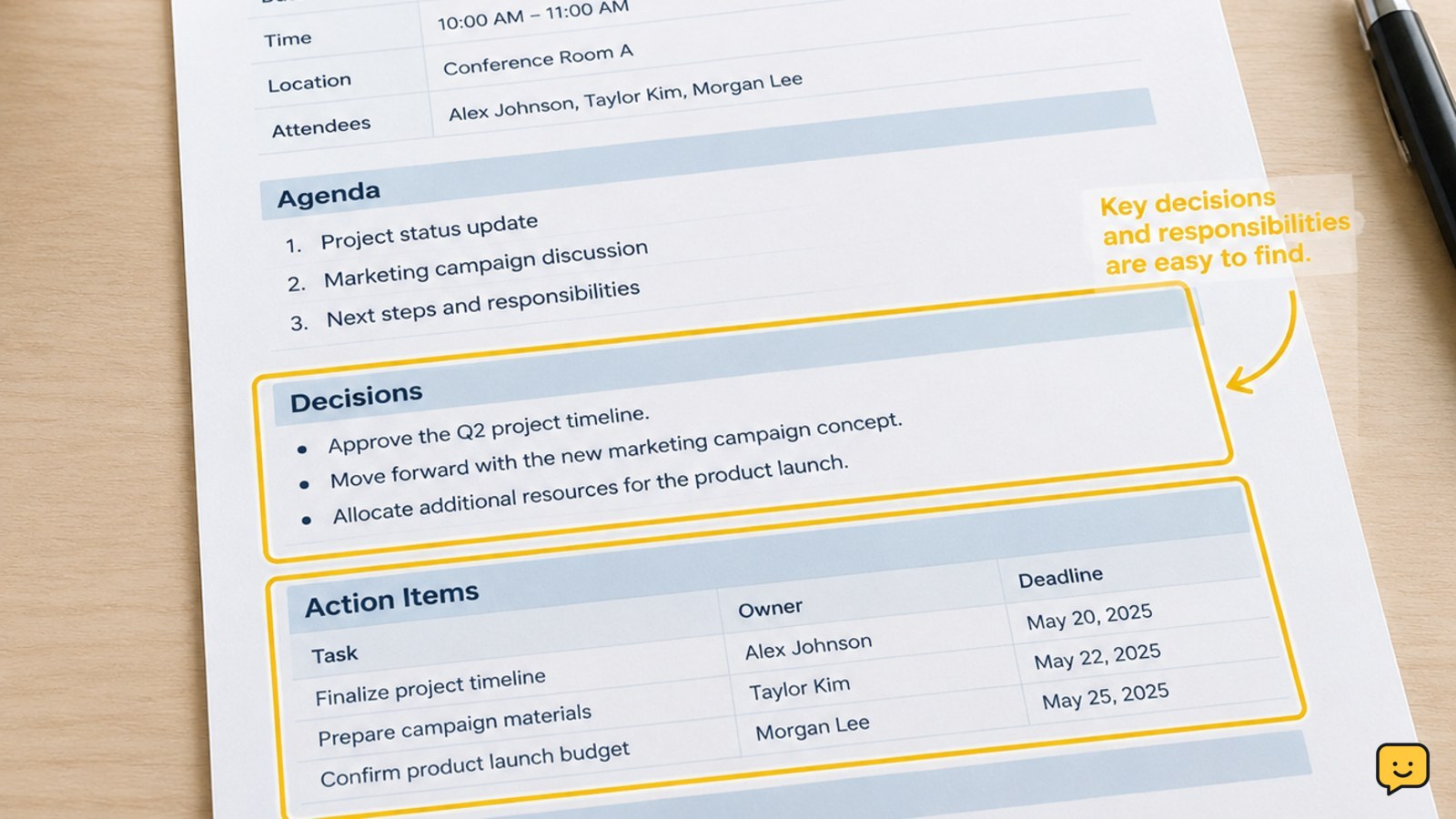
Meeting minutes should begin with facts that identify the meeting: organization or team name, meeting title, date, start and end time, location or virtual venue, chair, minute taker, and attendees. BoardBook’s minutes guidance specifically lists the organization, date, time, and location as core details.
List absent members separately when that distinction matters. You can also note guests, presenters, and people who left early. Add the meeting purpose or agenda near the top so a reader can understand the record without opening another document.
Do not start with a paragraph about everything that happened. A structured header makes the record searchable and lets readers verify whether they are looking at the correct meeting.
Summarize each agenda item by outcome
For each agenda item, write the topic, the relevant discussion outcome, and the resulting decision or next step. Meeting minutes are usually a record of outcomes, not a word-for-word transcript. Capture the information a person needs to understand what was decided and what happens next.
Use neutral wording such as “The team approved the revised launch date” or “The group discussed the supplier change and requested cost comparisons.” Separate confirmed decisions from suggestions, questions, and background context.
If a motion, vote, or formal approval occurred, record the exact proposal in your organization’s preferred format, the result, and any required abstentions or dissent. If no decision was reached, say so plainly and record the question that remains open.
Write action items with owners and deadlines
An action item is complete only when the minutes identify the task, the person or group responsible, and the due date or timing. iBabs recommends highlighting decisions and action items so participants can follow up on the meeting’s outcomes.
Use a compact list or table:
- Task: Send the revised project estimate.
- Owner: Finance team.
- Deadline: Before the next project review.
- Status: New, in progress, blocked, or complete.
Do not assign an owner based on your assumption. If nobody accepted the task during the meeting, write “Owner to be confirmed” and flag it for the chair. Avoid vague entries such as “Follow up on budget,” which do not tell readers what must be done.
Review the draft for accuracy and neutral wording
Before sharing the minutes, compare every decision and action item with your notes, the agenda, and any referenced documents. Check names, dates, numbers, deadlines, vote results, and whether each task has the correct owner.
Remove speculation, emotional descriptions, side conversations, and claims you cannot support. If the notes conflict, mark the point as unclear and ask the chair or relevant participant to confirm it. Do not silently resolve a disagreement by choosing the version that seems most likely.
MeetingKing advises including the reason for the meeting and what it covered; use that check to confirm that the final record explains the meeting’s purpose without becoming a transcript.
For a related writing task, use these principles of clear professional writing when polishing formal workplace documents: clear professional writing
Share the minutes and verify the follow-up record
Send the draft to the intended participants or approver using the team’s normal channel. Upmeet recommends writing minutes soon after the meeting while details are fresh; a prompt review also gives participants a practical chance to correct errors.
Label the document clearly as a draft if approval is still pending. After corrections, mark the approved version according to your organization’s process and preserve the date of approval. Keep the action-item list visible in the next meeting so completed, overdue, and blocked tasks can be updated.
Success means a reader who did not attend can identify what was decided, who is responsible for each next step, when the work is due, and which questions remain unresolved. If any of those answers is missing, return to the relevant agenda item rather than publishing an ambiguous record.
Frequently asked questions
What should meeting minutes include?
Meeting minutes should include the meeting name, date, time, location, chair, minute taker, attendees, agenda topics, decisions, action items, owners, deadlines, unresolved questions, and next steps. Add motions, votes, or approvals when your organization requires them.
Should meeting minutes be written in the past tense?
Usually, yes. Past tense makes the record clear after the meeting, as in “The group approved the proposal.” Use direct, neutral statements and avoid turning the minutes into a transcript of who said every sentence.
How detailed should meeting minutes be?
Include enough detail to explain decisions and follow-up without recording every comment. Formal governance, legal, or regulated meetings may require a specific format, so follow the organization’s policy when it calls for more detail.
What should you do if you are unsure what was decided?
Do not guess. Mark the point for confirmation and ask the meeting chair or relevant participants to verify the decision, owner, deadline, or vote result before distributing the minutes.