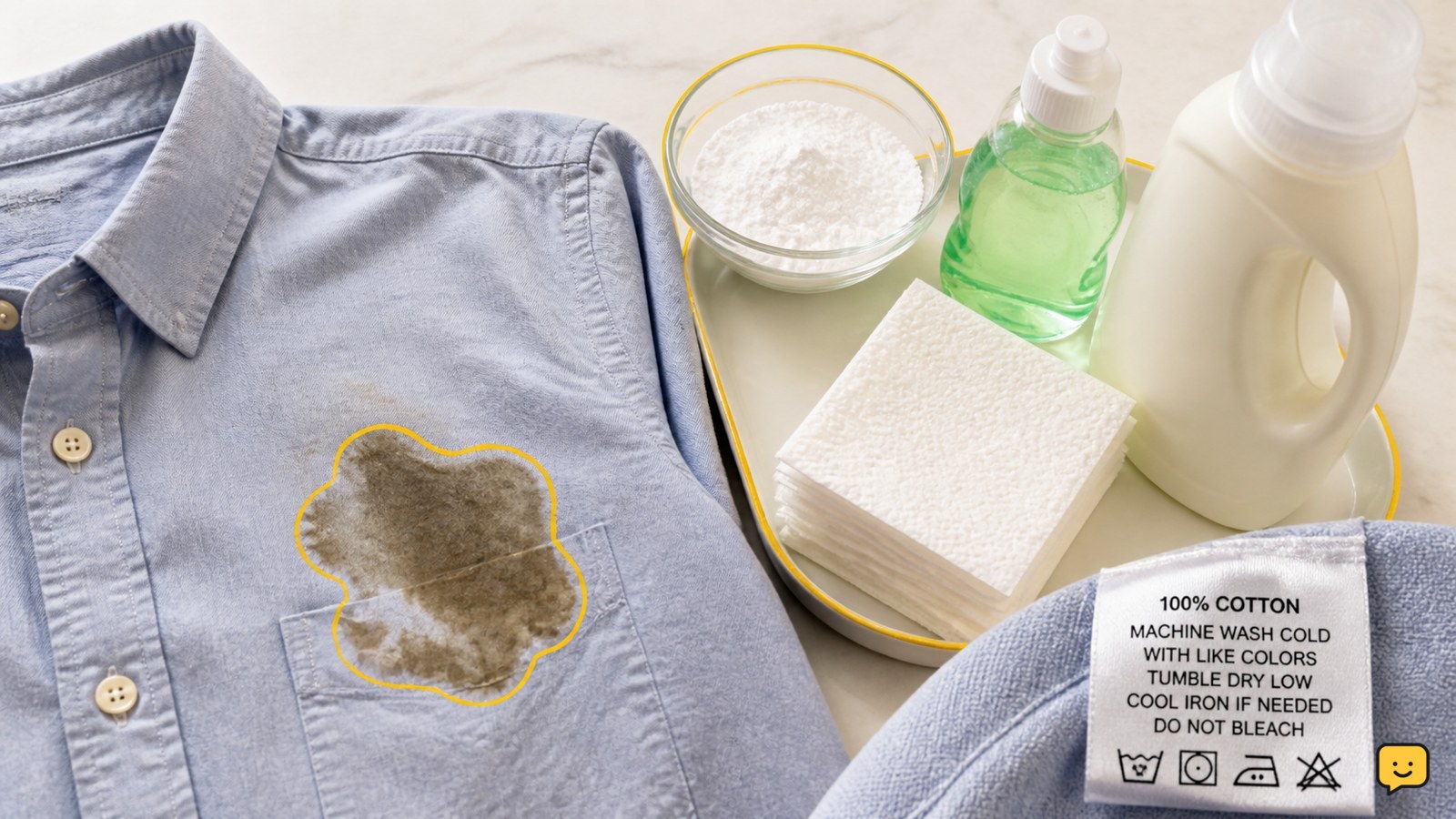
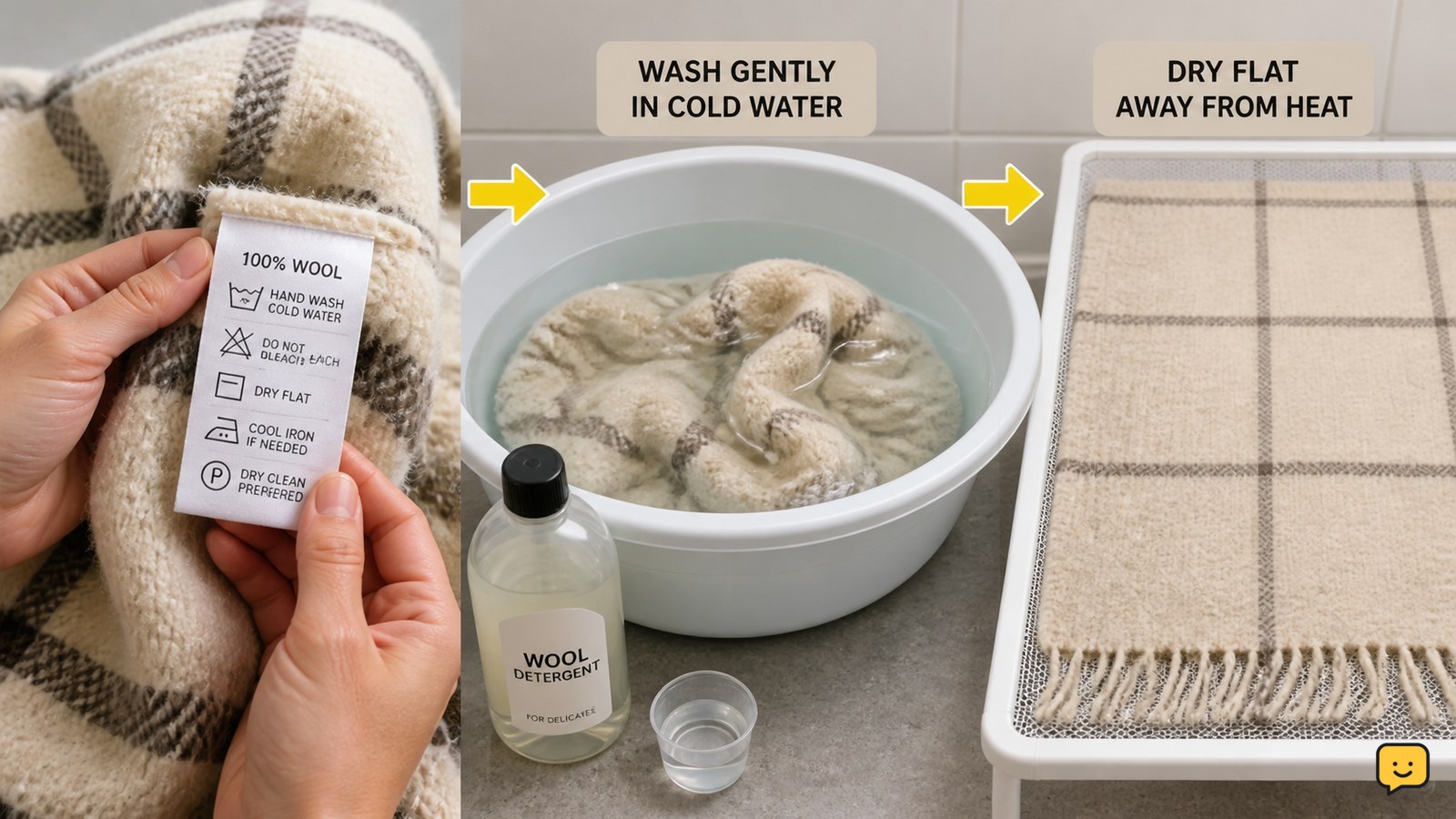
Check the care label first. If washing is allowed, hand-wash the blanket in cold water with a wool-specific detergent, or use a machine’s gentle wool cycle if the label permits it. Do not wring, twist, use hot water, or tumble-dry unless the label specifically allows it. Press out water and dry the blanket flat.
Check the care label before washing the wool blanket
The care label determines whether this wool blanket can be washed at home, machine-washed, or only dry-cleaned. “Dry clean only” is a stop condition, especially for blankets with trims, linings, or delicate construction.
If washing is allowed, inspect the blanket for stains, loose seams, and color transfer. Treating one small area first is safer than soaking the entire blanket. Woolmark advises washing wool blankets sparingly because wool resists odors and staining better than many fabrics; air the blanket out between washes when it is otherwise clean.
Choose hand washing or a gentle wool cycle
Hand washing is the lowest-agitation option, while a machine’s wool or delicate cycle is suitable only when the care label permits machine washing. Woolmark recommends a gentle wool cycle, cold water, and a detergent specified for wool.
- Choose hand washing when the blanket is oversized, loosely woven, vintage, or missing a clear machine-wash instruction.
- Choose machine washing only if the blanket fits freely in the drum and the label names a wool, delicate, or similarly gentle cycle.
- Use cool or cold water and the recommended amount of wool detergent. Avoid regular heavy-duty detergent, bleach, fabric softener, and stain removers that are not labeled safe for wool.
The blanket should move gently through the water rather than being tightly compressed. If it barely fits in the washer, stop and hand-wash it or use a cleaner with equipment sized for large wool items.
Hand-wash the blanket without felting it
To hand-wash a wool blanket, soak it in cold water with wool detergent and use minimal movement. Sudden temperature changes, rubbing, twisting, and vigorous agitation can cause wool fibers to felt or distort.
- Fill a clean tub with enough cold water to cover the blanket, then mix in wool detergent according to its label.
- Lower the blanket into the water and press it down gently until fully saturated.
- Let it soak for the detergent’s stated time, or for a short gentle soak if no time is given. Move it slowly through the water without scrubbing.
- Drain the tub and refill it with cold water. Press the blanket gently to release detergent, repeating until the rinse water is clear and no longer slippery.
Verify the rinse: the water should be clear, and the blanket should feel clean rather than coated. If it still feels soapy, rinse again instead of rubbing it harder.
Machine-wash only on the wool setting
A machine-washable wool blanket should go through the coldest permitted wool or delicate cycle with low agitation and no ordinary spin-heavy treatment.
- Close fasteners and place the blanket by itself in the washer so it is not rubbing against zippers, hooks, or rough fabrics.
- Add wool detergent, selecting the amount for the load size rather than adding extra soap.
- Select the wool or delicate cycle with cold water. Do not use a hot wash, intensive cycle, or extra agitation.
- Remove the blanket promptly when the cycle ends.
If the blanket comes out heavily twisted, stretched, or covered in suds, do not wring it. Run a cold rinse only if detergent remains, then handle it as a wet, heavy textile during drying.
Press out water and dry the blanket flat
Drying a wool blanket flat helps it keep its shape while the fibers are wet and heavy. The British Blanket Company also recommends cold water, wool detergent, gentle agitation, and avoiding wringing to reduce felting risk.
- Support the entire blanket with both hands or a laundry basket as you lift it from the tub or washer.
- Press it gently against the side of the tub or washer to remove water. Never twist or wring it.
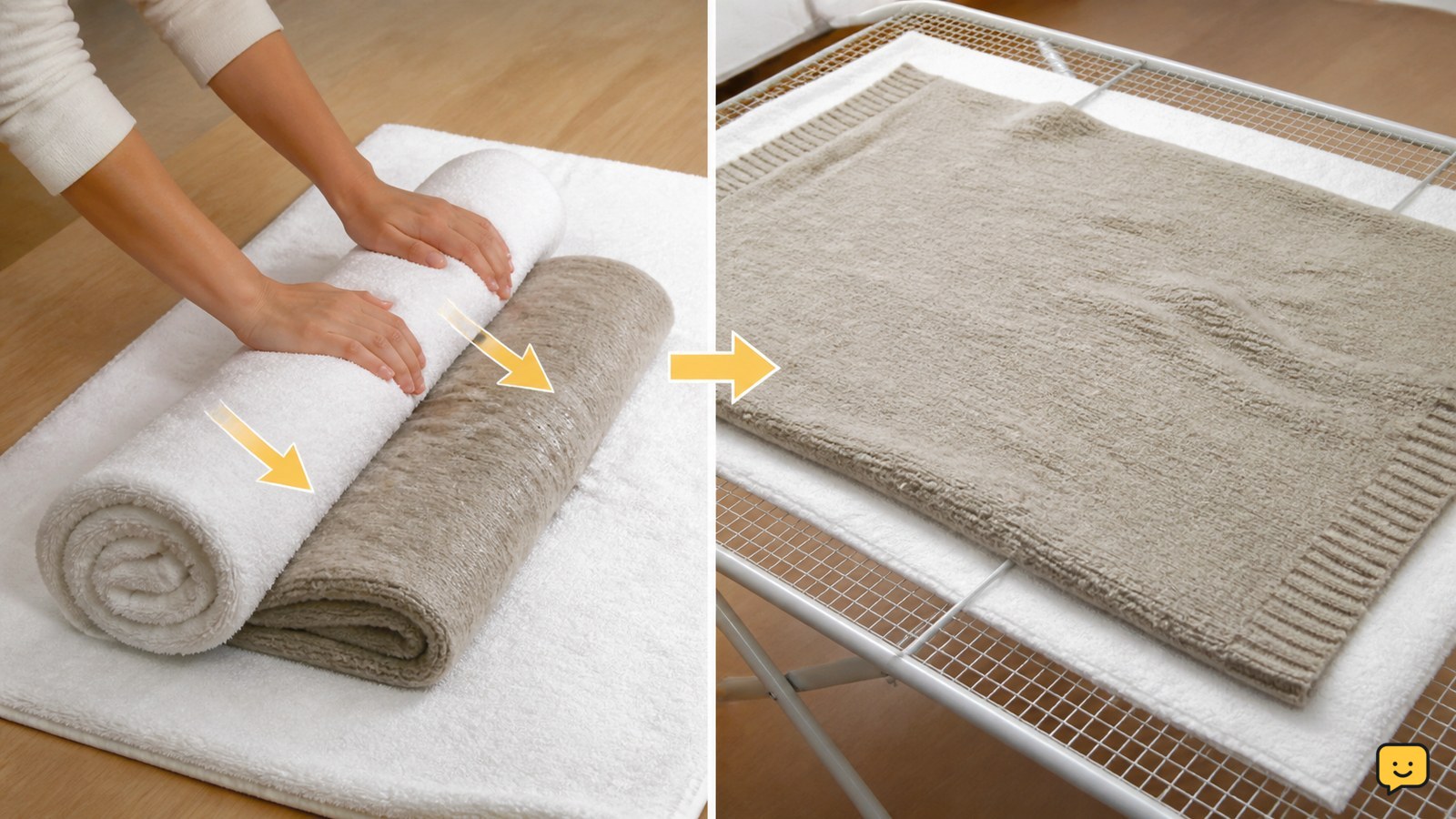
- Lay it on clean towels and roll the towels around it, pressing lightly to draw out excess moisture.
- Unroll the blanket and place it flat on a clean, dry surface or a mesh drying rack. Smooth the edges and restore its original dimensions without pulling.
- Turn it occasionally so air reaches both sides, keeping it away from direct high heat and strong sunlight.
Success check: the blanket is evenly shaped, no longer dripping, and completely dry through the center before storage. If it smells damp or feels cool and heavy in the middle, continue drying; do not fold it yet.
What to do if the blanket shrinks, sheds, or still smells
A changed size, matted surface, excess shedding, or lingering odor indicates that the blanket needs gentler handling or professional assessment rather than another aggressive wash.
- If it feels matted or stiff: stop rubbing and do not repeat a hot wash. Allow it to dry flat and ask a professional cleaner whether reshaping is possible.
- If it has shrunk: do not pull forcefully while dry. Severe shrinkage or felting is unlikely to reverse safely at home.
- If a stain remains: stop spot-treating if the color moves or the area becomes fuzzy. Use a cleaner experienced with wool.
- If odor remains after complete drying: air the blanket in a shaded, well-ventilated place. If the smell is musty or the blanket was stored damp, professional cleaning is safer than repeated soaking.
Frequently asked questions
Can you wash a wool blanket in a washing machine?
Yes, but only when the care label allows machine washing. Use the wool or delicate cycle, cold water, and a wool-specific detergent. Wash the blanket alone if possible, and remove it as soon as the cycle ends. If it is tightly packed in the drum, choose hand washing or professional cleaning instead.
What detergent should you use for a wool blanket?
Use a detergent specifically labeled for wool or delicate animal fibers. Follow the product’s dosage instructions and avoid bleach, fabric softener, and standard heavy-duty detergent. Too much detergent can leave a slippery residue, so rinse again if the blanket still feels coated after washing.
How do you dry a wool blanket after washing?
Press out water without twisting, roll the blanket in clean towels, then lay it flat on a clean surface or mesh rack. Smooth it back to its original shape while damp and allow it to dry fully before folding. Avoid high heat and do not use a dryer unless the care label permits it.
How often should a wool blanket be washed?
Wash it only when it is dirty or has absorbed an odor that airing cannot remove. Woolmark notes that wool blankets generally do not need frequent washing and can be aired between washes. Spot-clean small marks when possible rather than soaking the entire blanket.
For more help with this topic, use the Clothing Care guides.