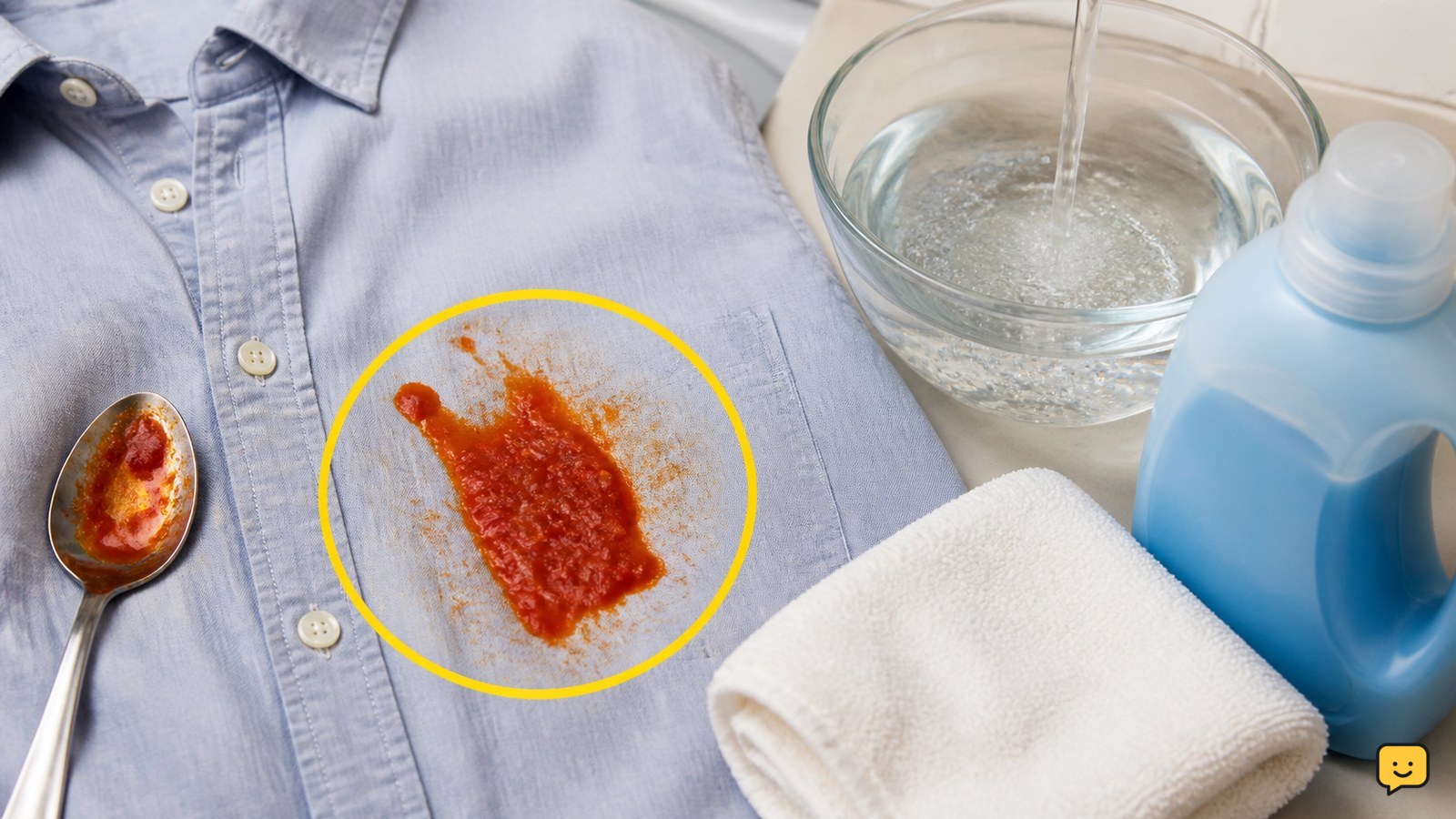
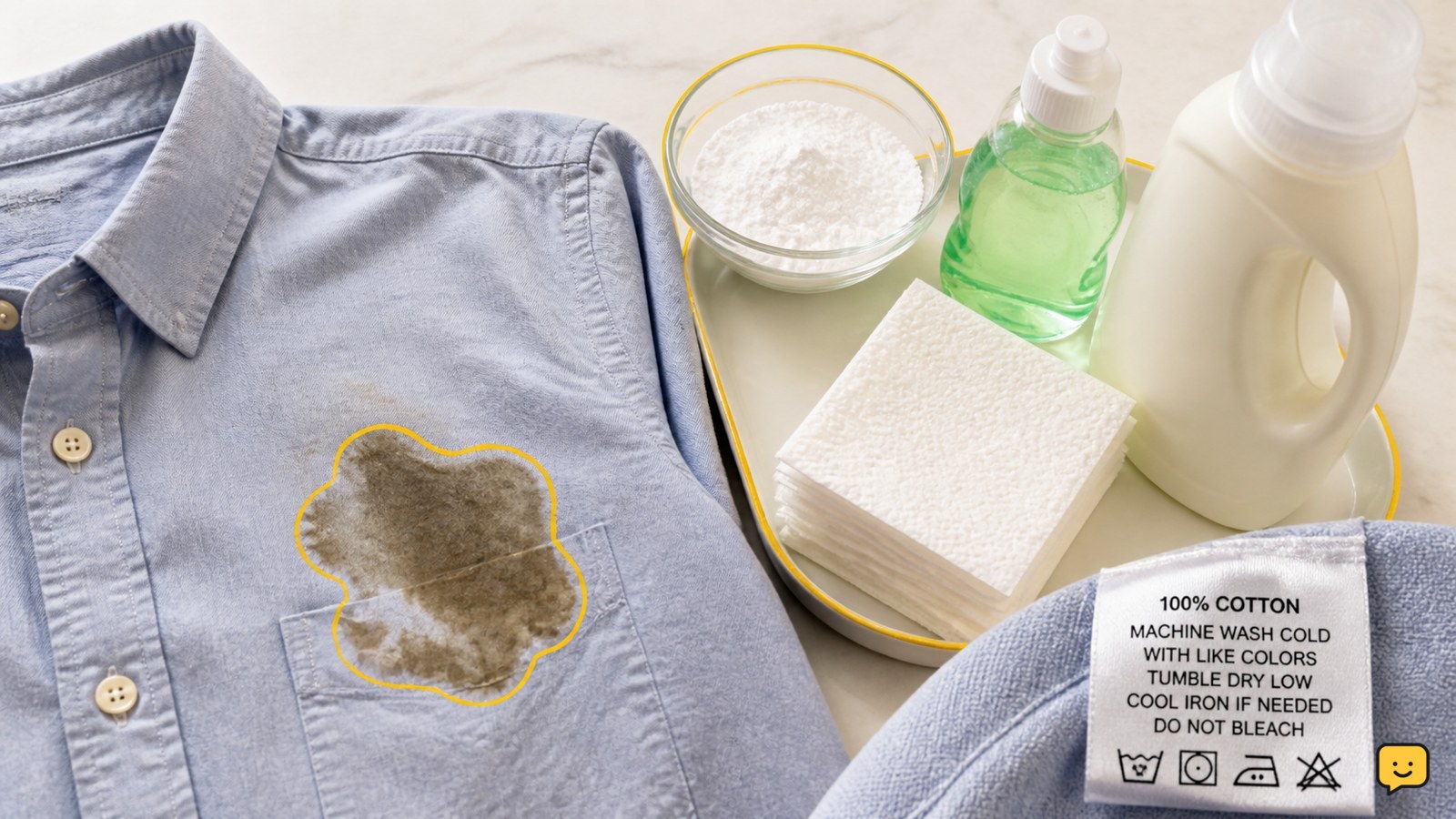
To get oil out of fabric, blot away excess oil, cover the spot with baking soda or cornstarch, brush it off, then work in a small amount of clear dish soap. Rinse from the back, apply liquid laundry detergent, and wash according to the care label. Air-dry and inspect the fabric before using heat.
Check the fabric label before treating the oil
Washable fabric can usually be treated at home, but the care label determines the safest water temperature, wash cycle, and whether the item can be washed at all. Check the label before applying soap.
Place a clean towel behind the stained area so loosened oil does not spread to another layer. On a hidden seam, test a drop of dish soap diluted with water. If the fabric keeps its color and texture, continue. If not, stop and use a professional cleaner.
Blot excess oil and absorb the fresh residue
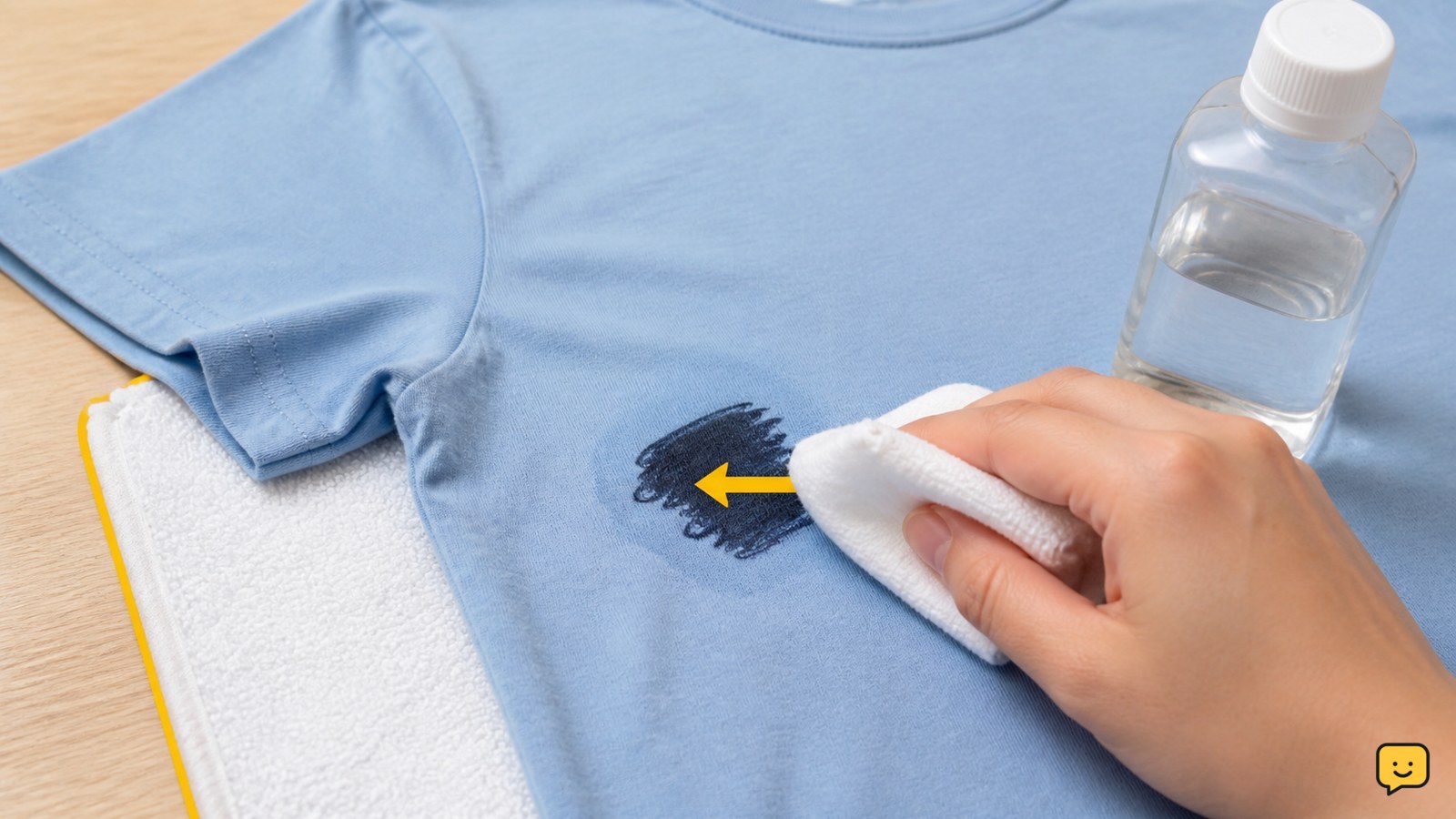
Fresh oil on fabric should be blotted first because rubbing can push it farther into the fibers. Press a paper towel or clean cloth onto the spot, lift it, and repeat with a clean section until no more wet oil transfers.
Cover the mark with a generous layer of baking soda or cornstarch. Leave it for about 30 minutes, then brush or shake the powder away. Seventh Generation recommends this absorbent-powder approach for oil stains, while Whirlpool also recommends removing excess oil before treating the fabric. Do not wet the stain before removing surface oil, or you may spread it.
Work clear dish soap into the remaining stain
Clear dish soap helps loosen the oily residue left in washable fabric. Apply a small amount directly to the mark, using only enough to cover it, then gently work it in with your fingers or a soft toothbrush.
Let the soap sit for 5 to 10 minutes. Avoid vigorous scrubbing on knits, loosely woven fabric, printed designs, or delicate finishes. The treated area should look evenly damp and soapy, not saturated through the entire garment.
Rinse from the back and wash with detergent
Rinse the fabric from the back of the stain with the warmest water allowed by the care label. Water flowing from the reverse side helps push loosened oil out instead of driving it deeper into the fabric.
Next, rub a small amount of liquid laundry detergent into the damp spot and wash the item according to its label. Whirlpool and Seventh Generation both describe detergent as part of the follow-up wash for oil or grease stains. Use the normal amount of detergent for the load unless its product label says otherwise.
Air-dry and verify that the oil mark is gone
Air-dry the fabric after washing, then inspect the original spot in bright light. Success means the dark, translucent, or glossy patch is no longer visible and the fabric no longer feels slick when dry.
If you can still see or feel oil, repeat the dish-soap and detergent treatment before using any dryer heat. Do not iron the area. A faint shadow may need a second treatment, but repeated aggressive scrubbing can damage fibers or surface finishes.
Choose a safer alternative for dried or delicate stains
Dried oil stains on washable fabric can still be treated, but they may need more than one cycle because the residue has had longer to bond with the fibers. Begin with the powder step if the surface feels greasy, then use dish soap and liquid detergent as above.
For wool, silk, rayon, velvet, lined garments, upholstery, or any item with a dry-clean-only label, do not use this home treatment without checking the care instructions. Blot the area, avoid adding water or heat, and take the item to a cleaner. For upholstery, test an inconspicuous area and avoid soaking the padding.
Frequently asked questions
Can I remove an oil stain after it has been through the dryer?
Yes, you can try, but a dried-in oil stain may require repeated treatment. Let the fabric cool, apply clear dish soap to the mark, wait 5 to 10 minutes, rinse from the back, and wash with liquid detergent. Air-dry after each attempt. Stop if the fabric changes color or texture.
What removes cooking oil from fabric without baking soda?
Cornstarch can replace baking soda as an absorbent powder for fresh cooking oil. Cover the spot, leave it for about 30 minutes, brush it away, and continue with clear dish soap followed by liquid laundry detergent. If the stain is already dry, skip straight to the tested soap treatment.
Should I use hot water on an oil stain?
Use the warmest water permitted by the care label, not automatically the hottest setting. Begin by blotting and absorbing excess oil, then rinse from the back after applying dish soap. High heat from a dryer or iron should be avoided until inspection confirms that no oily mark remains.
How do I get motor oil out of fabric?
Treat a washable work garment by blotting, applying baking soda or cornstarch, working in dish soap, and washing with detergent. Motor oil can contain additional compounds and may be harder to remove than cooking oil. If the stain remains after one careful wash, or the fabric is delicate or dry-clean only, use a professional cleaner.
For more help with this topic, use the Clothing Care guides.