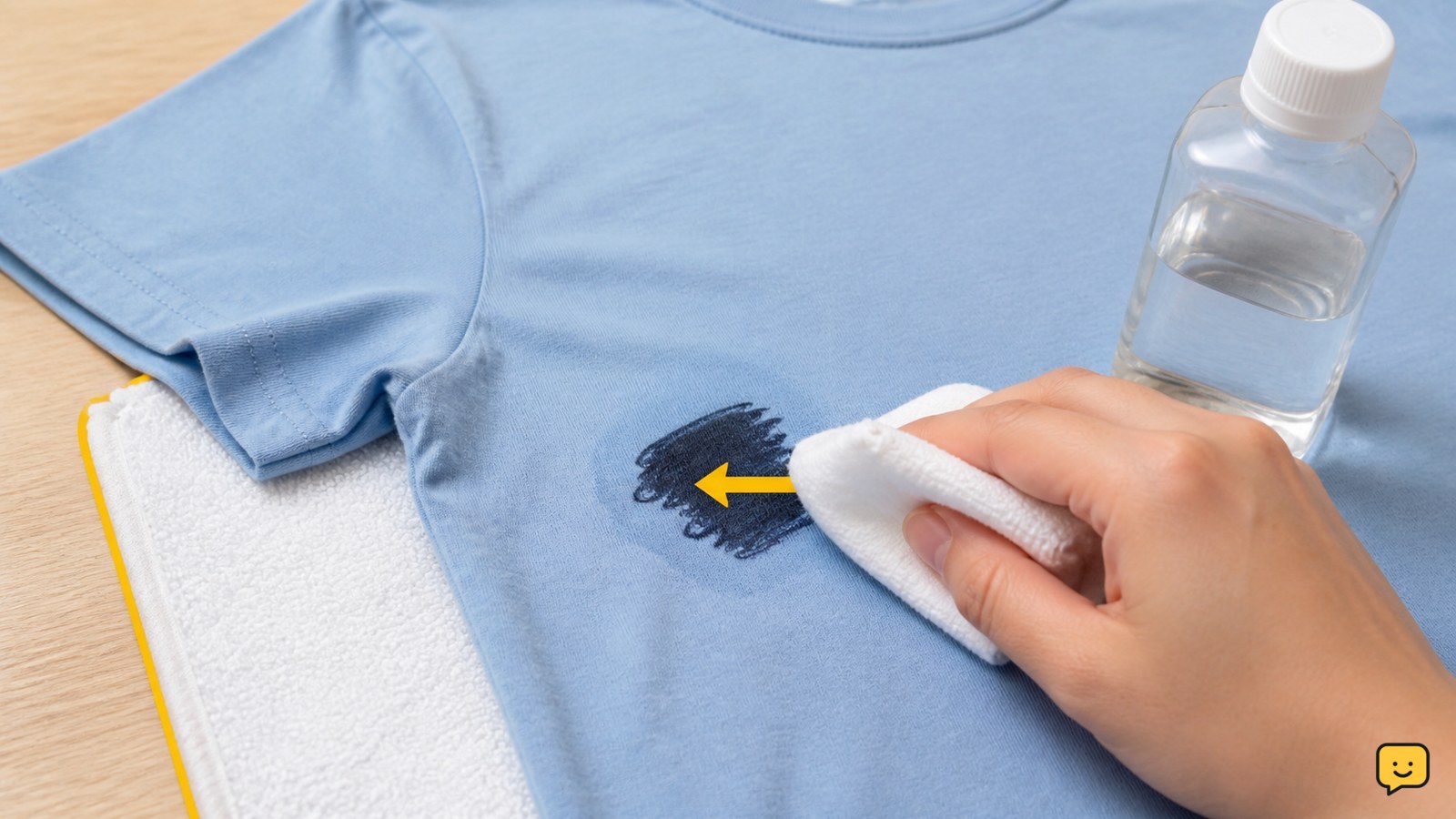
To get dry erase marker out of clothes, place a clean towel behind the stain and dab the front with a small amount of rubbing alcohol. Work from the outside inward, replacing the towel as ink transfers. Rinse with cold water, wash according to the care label, and air-dry. Do not use a dryer until the stain has disappeared.
Check the care label and test the fabric first
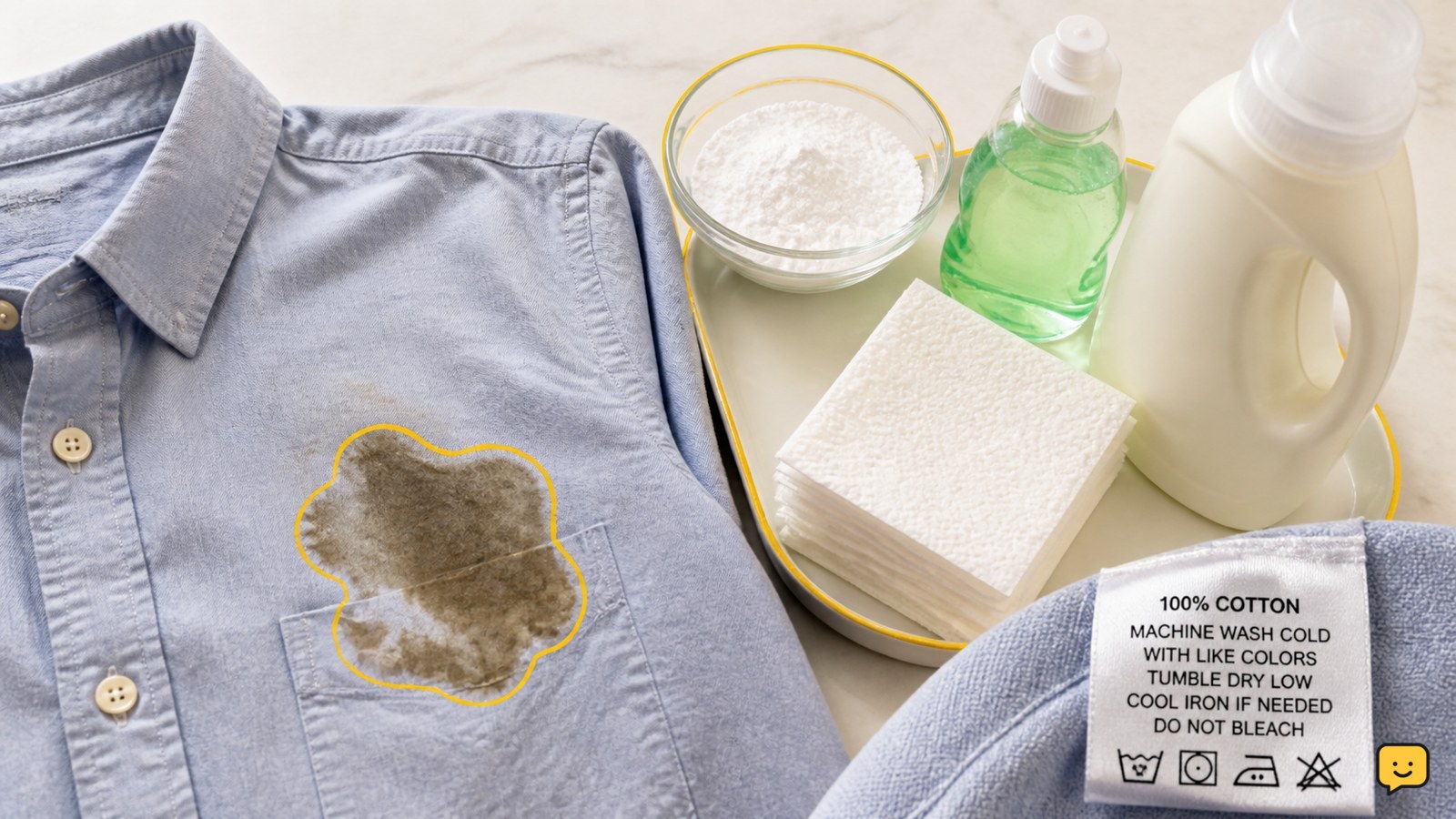
Dry erase marker removal is safest on washable, colorfast clothing that tolerates gentle spot treatment. Read the care label, then test rubbing alcohol on an inside seam or hem. Wait briefly and compare the test area with the surrounding fabric. If the color, texture, or sheen changes, stop and use a professional cleaner instead.
For a garment marked “dry clean only,” avoid experimenting with household solvents. The same caution applies to leather, suede, coated fabric, and other specialty materials.
1. Place an absorbent towel behind the mark
Put a clean white towel or folded paper towel directly behind the dry erase marker stain. The backing gives the ink somewhere to transfer instead of letting it spread through the garment.
Keep the stained area flat. If the mark is on a sleeve or pant leg, separate the fabric layers so the solvent cannot carry ink onto another part of the garment.
2. Dab the stain with rubbing alcohol
Rubbing alcohol is the primary spot-treatment step for dry erase marker on suitable washable fabric. Apply a small amount to a clean white cloth or cotton pad, then dab the stain from the outer edge toward the center. Do not scrub, because friction can spread the ink and damage fibers.
Check the towel after several dabs. When ink appears on it, move the garment to a clean section or replace the towel. Continue with light dabbing until little or no color transfers. The Laundry Sauce treatment sequence likewise recommends placing a cloth beneath the stain and dabbing with rubbing alcohol; a professional-cleaner video also emphasizes treating the mark early.
3. Rinse with cold water and wash by the label
Rinse the treated area with cold running water from the back of the fabric toward the front. This helps push loosened ink away from the garment rather than through it.
Apply your usual laundry detergent to any remaining shadow, then wash using the care label’s recommended cycle and water temperature. Do not add chlorine bleach unless the label permits it and the product is appropriate for that fabric and color.
4. Air-dry and verify that no shadow remains
Air-dry the garment, then inspect the original stain in bright light. Success means the ink and any gray or colored halo are gone when the fabric is dry—not merely hidden while wet.
If a faint mark remains, repeat the alcohol test and spot-treatment sequence before washing again. Use a fresh towel and stop if the fabric or dye starts to change. Only use a tumble dryer after the stain is fully gone, because heat can make leftover staining more difficult to remove.
Choose a labeled stain remover when alcohol is unsuitable
If rubbing alcohol fails the hidden-area test or is unavailable, choose a commercial prewash stain remover whose label states that it is suitable for the garment’s fabric and color. Test it first, follow its directions, rinse as instructed, and air-dry for inspection.
Do not mix stain removers, rubbing alcohol, bleach, ammonia, or other cleaning chemicals. If the stain remains after two careful treatments, or the item is valuable or delicate, stop home treatment and take it to a cleaner with the product information available.
What to do if the stain spreads or remains after washing
If the mark spreads, stop rubbing and place a clean towel beneath the area. Blot the outside edge with a fresh alcohol-dampened cloth only if the fabric passed the original test; otherwise rinse and stop.
If washing leaves a faint outline, do not dry the garment with heat. Repeat one compatible pretreatment, inspect again, and seek professional help if the outline does not improve or the fabric begins to discolor.
Frequently asked questions
Can I use rubbing alcohol on colored clothes?
Yes, but only after testing an inside seam or hidden hem. Rubbing alcohol can affect some dyes, finishes, and synthetic fabrics. If the test area fades, bleeds, becomes dull, or changes texture, rinse the test spot and do not treat the stain at home.
Should I use hot water on a dry erase marker stain?
No. Start with cold water after blotting with rubbing alcohol, and follow the garment’s care label for washing. Avoid heat from hot rinses, irons, or dryers until you have verified that the stain is completely gone.
What if the dry erase marker stain has already been washed?
Air-dry the garment if possible and inspect it before using a dryer. If a mark remains, repeat a compatible spot treatment after testing the fabric. Heat may make the remaining stain more difficult to remove, so avoid further drying until the mark is gone.
Can I remove dry erase marker from a dry-clean-only shirt at home?
It is safer not to use rubbing alcohol or other solvents on a dry-clean-only shirt without professional guidance. Take the garment to a cleaner, identify the marker stain, and explain any treatment already attempted.
For more help with this topic, use the Clothing Care guides.