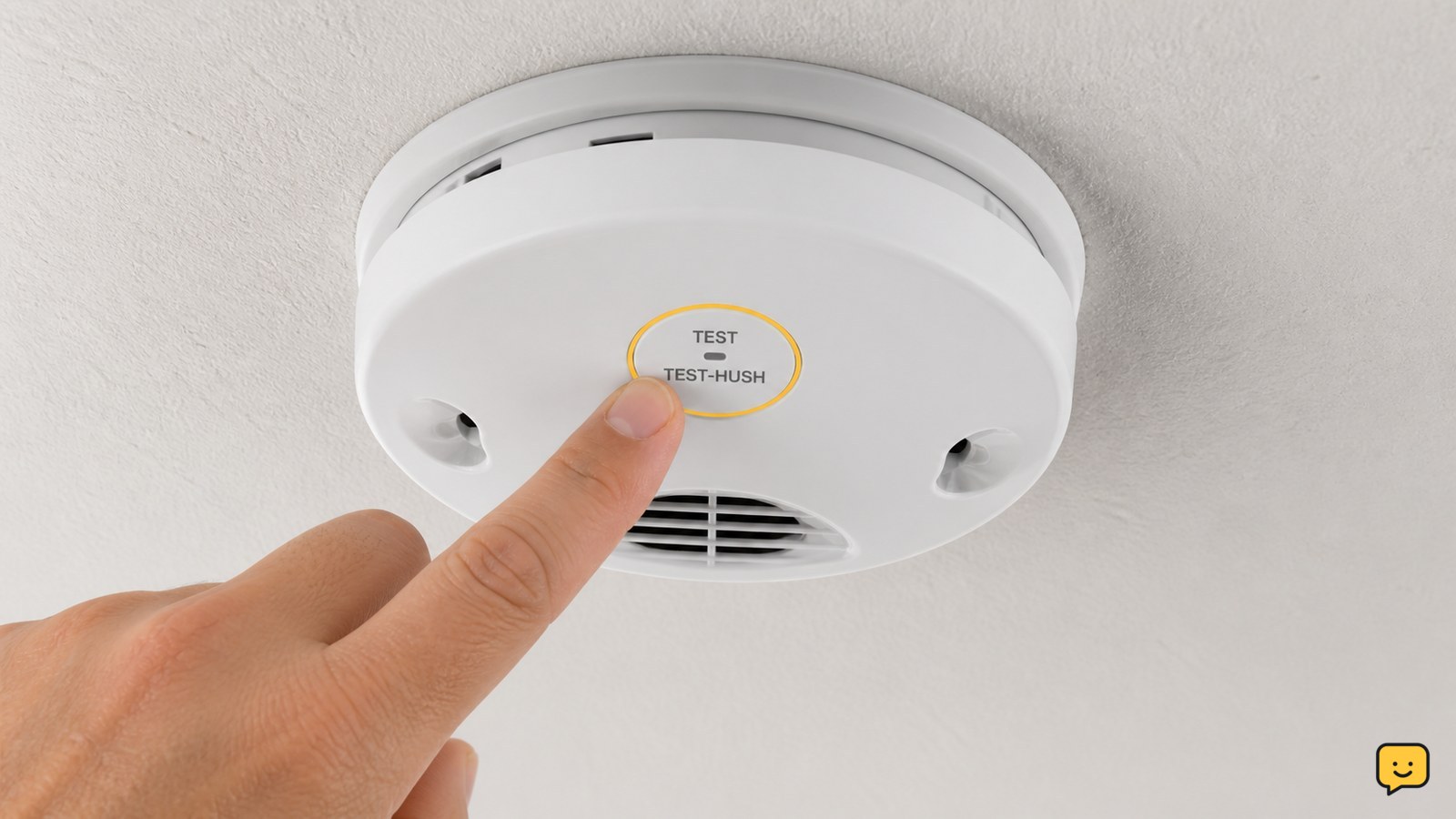
To test a smoke alarm or smoke detector, press and hold its Test or Test/Hush button until the alarm sounds, then release it. Test every unit, including hardwired and interconnected alarms, and confirm the sound is loud and clear. Never use a flame or real smoke. If testing still fails after the approved battery or power checks, replace the alarm or arrange service.
Press and hold the Test button on every alarm
The standard way to test a smoke alarm or smoke detector is to press and hold its Test or Test/Hush button until the alarm sounds. Hold the button for the period stated in the manual; Kidde specifies holding it for at least five seconds on supported models.
- Stand where you can reach the button safely.
- Press and hold the button until you hear the alarm.
- Release it and wait for the alarm to stop or for the hush period to end.
- Repeat the test on every alarm in the home, not just the one closest to you.
A successful test produces a loud, clear alarm signal. A brief chirp, a dim indicator light or silence is not a passing result. The button checks the alarm’s electronics, power and sounder; it does not recreate every condition of a real fire.
Match the test to the alarm’s power type
Battery, sealed-battery, hardwired and combination alarms share the test-button method, but a failed test needs a different next check.
- Replaceable-battery alarm: If the alarm is silent or chirps, install the battery type listed on the alarm or in its manual. Check the positive and negative orientation, then test again.
- Sealed-battery alarm: Do not open or replace the internal battery. If the unit is at the end of its service life or still fails after a reset allowed by the manual, replace the entire alarm.
- Hardwired alarm: Confirm the household circuit has power and that the backup battery is installed correctly. Do not disconnect or alter fixed wiring yourself. Ask the landlord or a qualified electrician to investigate wiring problems.
- Combination smoke and carbon monoxide alarm: Use the model’s own test procedure. A smoke-alarm button result should not be treated as proof that every carbon monoxide sensing function is working unless the manual says it tests both functions.
After any power check, press the Test button again. If the alarm remains silent, leave it treated as unprotected until it is repaired or replaced.
Verify that interconnected alarms sound together
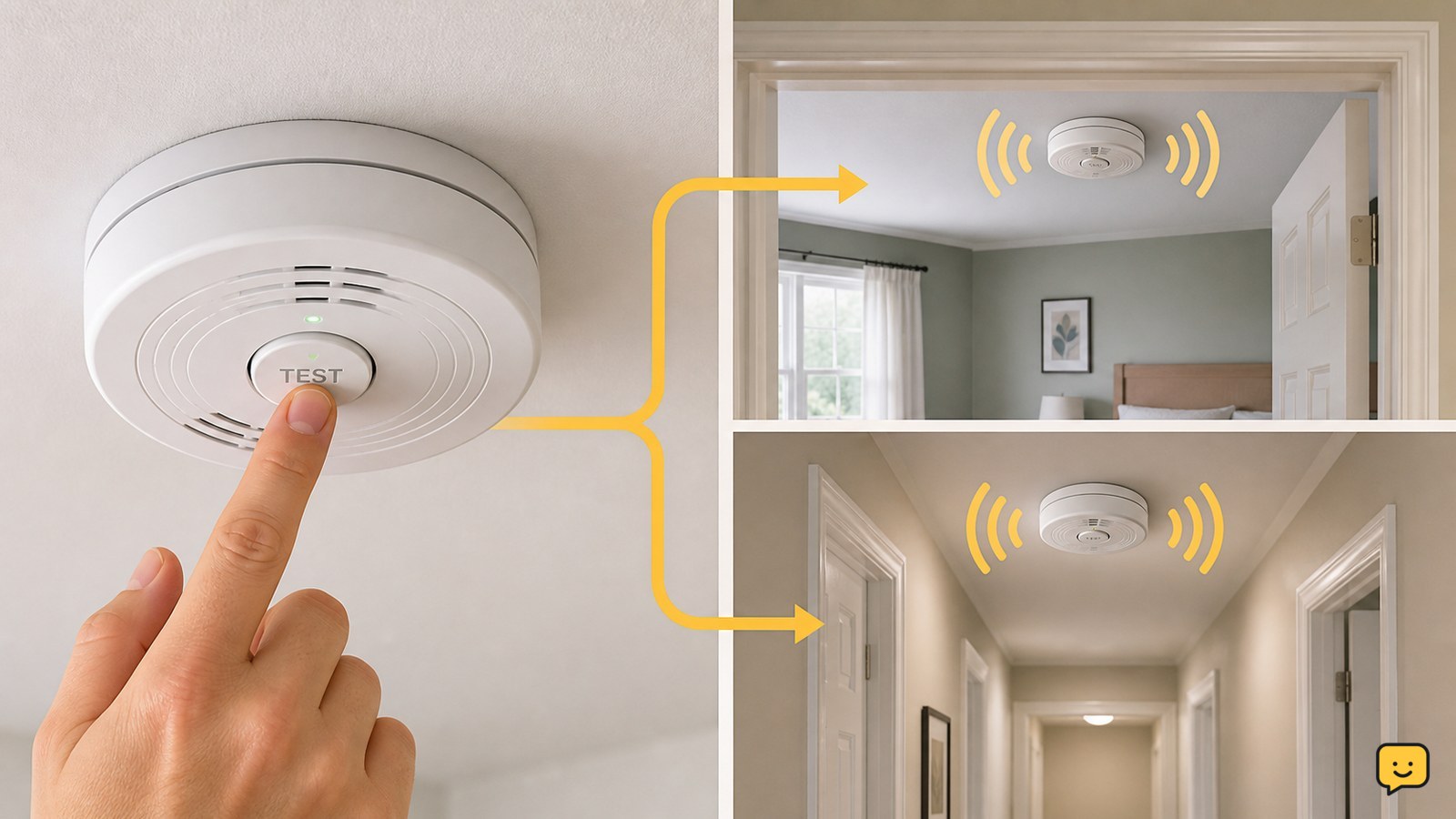
For interconnected smoke alarms, a passing test means the initiating unit sounds and the other connected units respond as the manual describes.
- Test one alarm while standing where you can hear the other units, or have another person listen in separate rooms.
- Confirm the tested alarm sounds first.
- Check that every linked alarm sounds within the expected sequence or delay for that model.
- Repeat from another alarm so the system is tested in both directions when the manufacturer permits it.
If one alarm sounds but another does not, check whether the units are compatible and whether the silent unit has power, a correctly fitted battery and an unobstructed sounder. Do not assume that alarms from different manufacturers can interconnect. Use the product manual or contact the manufacturer; for hardwired systems, arrange qualified service.
Use aerosol smoke only when the manual permits it
The Test button verifies the alarm circuit, but some manufacturers also describe a separate functional test with approved canned smoke. Use that method only when the owner manual permits it and the aerosol product is intended for smoke alarms.
- Follow the aerosol label and the alarm manual for distance, spray duration and reset instructions.
- Keep the test controlled and avoid spraying into vents, fans or other equipment.
- Wait for the alarm to respond, then ventilate or reset it exactly as directed.
Never use a candle, match, lighter, burning paper or real fire smoke. These methods can damage the sensor, create a fire or leave residue, and they are not a safe substitute for the manufacturer’s procedure. If the manual does not describe aerosol testing, use the Test button and contact the manufacturer about further diagnosis.
Fix a failed test or choose replacement over another battery
A failed smoke-alarm test is not fixed by repeatedly changing batteries when the unit is expired, damaged or still silent after the correct power check.
| Observed result | Safest next action |
|---|---|
| No sound after a fresh approved battery | Check battery orientation and contacts once, then replace the alarm if it still fails. |
| Chirping continues after battery replacement | Check the manual for low-battery, end-of-life or fault patterns. Replace the alarm if the chirp indicates expiration or the cause cannot be cleared. |
| Hardwired alarm is silent | Check the backup battery and whether the circuit has power without touching fixed wiring. Request qualified service if it remains silent. |
| One interconnected unit does not respond | Check compatibility, power and the manual’s interconnection limits. Replace or service the failed unit before relying on the network. |
Check the manufacture or replacement date on the alarm. NFPA advises replacing smoke alarms every 10 years, while the manufacturer may specify a different service-life instruction for a particular model. Replace sooner if the alarm is damaged, contaminated, repeatedly false-alarms, fails a button test, or has a sealed battery that has reached the end of its life. After replacement, test the new unit and verify interconnection again.
Frequently asked questions
How often should I test a smoke alarm?
Test smoke alarms at least once a month, following the button-hold time in the owner manual. USFA and NFPA safety guidance also emphasizes regular testing and keeping alarms powered. Test again after installing a battery, replacing an alarm or restoring power, and check every interconnected unit rather than relying on a single alarm.
Can I test a smoke detector with a candle or match?
No. Never use a candle, match, lighter or burning material to test a smoke detector. A flame or uncontrolled smoke can cause a fire, damage the sensor or leave residue. Use the Test button, or use approved canned smoke only when the manufacturer specifically permits that procedure.
Why does my smoke alarm chirp after I change the battery?
A chirp may indicate that the battery is installed incorrectly, the contacts need attention, the unit has a fault or the alarm has reached its end of life. Check the manual for the sound pattern, reseat the correct battery once and press Test. If chirping continues, replace the alarm rather than repeatedly changing batteries.
How do I test a sealed-battery smoke alarm?
Press and hold the Test button as directed by the manual. A sealed-battery alarm does not accept a user-replaceable battery, so do not open it. If it fails the test, gives an end-of-life warning or has reached its replacement date, replace the complete alarm and test the new one.
For more help with this topic, use the Home Maintenance guides.