To stop a car from fogging up, select the windshield defrost or defog setting, turn on the air conditioner, use fresh outside air instead of recirculation, and set the fan to a moderate or high speed. Adjust the temperature until the glass clears. Do not drive until you can see clearly; pull over safely if visibility remains poor.
For more help with this topic, use the Maintenance Repair guides.
Use defrost, fresh air and air conditioning
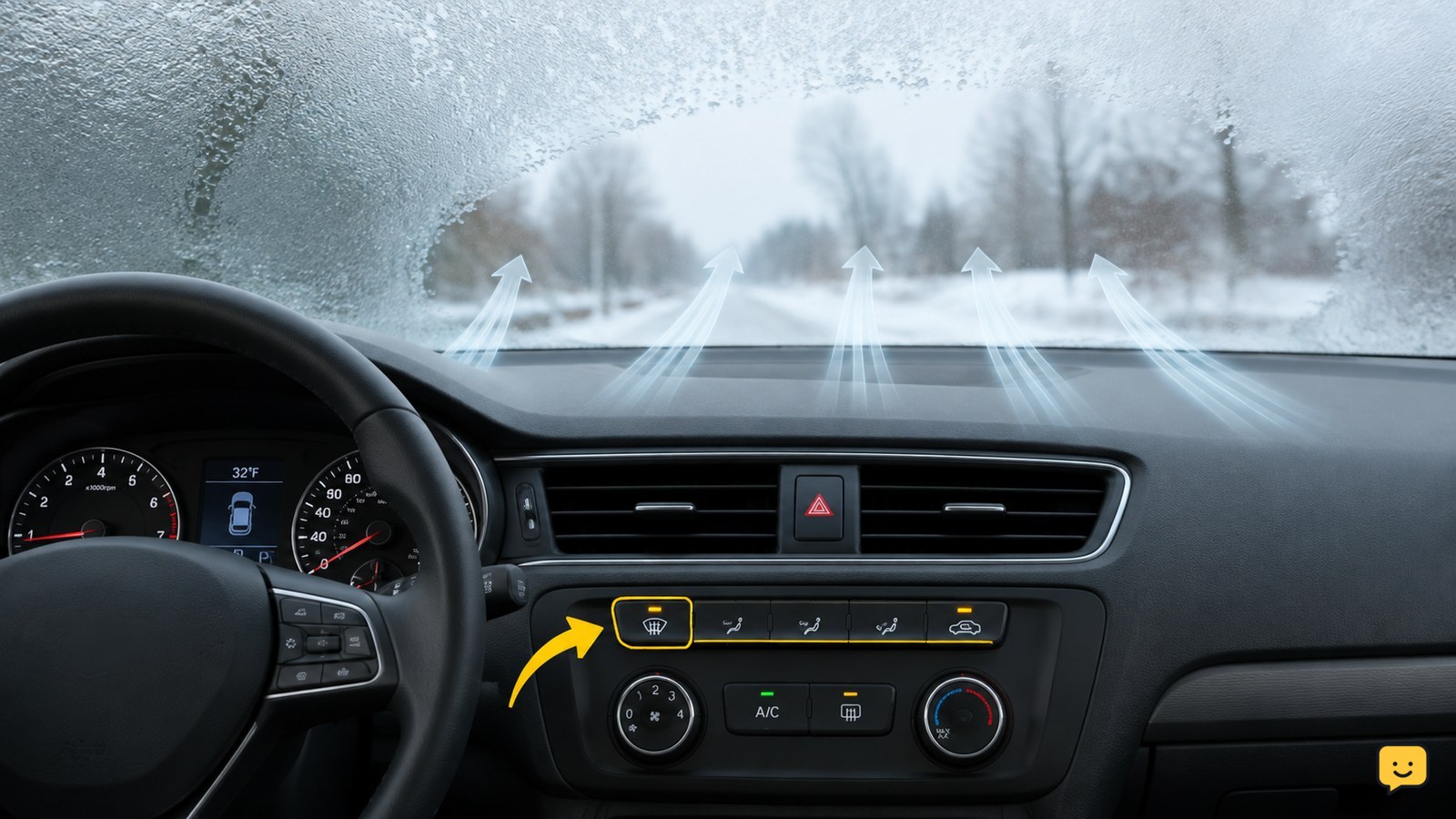
The fastest general fix for interior car fogging is windshield defrost with the air conditioner on and fresh outside air selected. Defrost directs airflow at the windshield; the air conditioner removes moisture, while outside air prevents humid cabin air from continually recirculating. Allstate describes the same basic approach as balancing temperature and humidity, bringing in drier air and avoiding recirculation.
- Select the windshield defrost or front defog control. Some vehicles combine this with the highest temperature setting; others let you adjust temperature manually.
- Turn on the air conditioner, even in cold weather, if your vehicle permits it. Set the fan to medium or high.
- Turn recirculation off and choose fresh-air intake. Open a window slightly only if needed to release humid cabin air and weather conditions make that safe.
- Keep the airflow aimed at the glass until the entire viewing area is clear.
Success means you can see through the full windshield and check the side windows and mirrors before moving. If the center clears but the edges stay cloudy, keep the airflow running and use the vehicle’s side-window vents where fitted.
Adjust the temperature for the type of fog
Interior condensation clears when the climate system dries the cabin air and reduces the moisture difference at the glass. Start with warm defrost air in cold weather, then lower or raise the temperature as needed until the haze disappears.
If the windshield fogs again when you select recirculation, leave recirculation off. If warm air makes the haze worse at first, keep the airflow directed at the glass, run the air conditioner and allow the system time to remove moisture. Vehicle controls vary, so use the symbols in the owner’s manual when the defrost or fresh-air icon is unclear.
Do not use the maximum-cooling setting as a universal fix. The useful combination is directed airflow, dehumidification and a temperature that clears the glass without creating new condensation.
Clean the inside of the glass
A dirty interior windshield holds a thin film that makes condensation spread and headlights produce more glare. Once parked, clean the inside of the windshield and side windows with a product suitable for automotive glass, then dry them with a clean, lint-free cloth.
- Work on cool glass in a ventilated area.
- Apply cleaner to the cloth rather than soaking the dashboard or nearby electrical controls.
- Wipe in overlapping passes, paying attention to the lower windshield and corners.
- Finish with a dry cloth until no streaks remain.
Check the result by viewing the glass from several angles under reflected light. A clear surface should not show oily rainbow patches or streaks. Avoid products that leave a greasy coating, because that can make night-time glare and fogging harder to manage.
Reduce moisture inside the car
Wet items and trapped water can make a car’s windows fog repeatedly even when the defroster works. Dry wet clothing, remove standing water from mats, and check whether the cabin is damp after rain or washing the vehicle.
Inspect the door seals and the area around the windshield for obvious water entry. If carpet or padding remains wet, drying the surface alone may not solve the problem. A persistent damp smell or wet footwell is a reason to have the leak located and repaired.
Keep the cabin’s fresh-air intake clear of leaves and debris. Restricted intake can reduce airflow, although the exact intake location differs by vehicle. Check the owner’s manual before removing trim or attempting to access the filter.
What to do if the glass will not clear
If the windshield remains fogged after defrost, air conditioning and fresh air are selected, treat the loss of visibility as a safety problem rather than a minor climate-control issue. Stop in a safe place and verify that the fan is running, the vents are aimed at the windshield, the intake is not blocked and the glass is clean.
Exterior fogging is different: use the wipers and washer system when safe, then check that the windshield surface is clean. Do not keep wiping a dry windshield if it could scratch the glass; use suitable washer fluid.
Rapid recurring fog, an oily film, a sweet smell or damp carpet can indicate a heater-core or water-leak problem. Do not continue driving if the film or moisture prevents a clear view. Arrange qualified inspection, particularly if the coolant level is falling or the vehicle begins overheating.
Frequently asked questions
Should I use air conditioning when the car windows fog up in winter?
Yes. Air conditioning can help dry the air even when the heater is producing warm airflow. Use windshield defrost, fresh outside air and a moderate or high fan speed. If your vehicle does not allow the air conditioner to run in the selected mode, follow the owner’s manual and keep airflow directed at the glass.
Is recirculation good for clearing a fogged windshield?
Usually no for interior fogging. Recirculation keeps humid cabin air inside, especially when passengers are breathing or wet items are present. Select fresh air while using defrost. Recirculation may be useful only after the glass is clear and the cabin air is dry, subject to your vehicle’s operating instructions.
Why does my car windshield keep fogging up after I clear it?
Repeated fogging usually means moisture is still inside the cabin, the glass has a greasy film, airflow is restricted or the climate setting is recirculating humid air. Dry wet mats and clothing, clean the glass, use fresh air and check the fan and vents. Persistent dampness, a sweet smell or oily film needs inspection.
What should I do if the outside of the windshield fogs up?
Use the wipers and washer fluid when it is safe, because exterior condensation is on the outside surface. Interior defrost alone may not remove it. If the windshield remains obscured, pull over rather than continuing with reduced visibility.