To secure a sliding door, close and lock the panel, then add a correctly sized security bar or solid dowel in the track. Check for lifting, reinforce or replace a weak latch, and consider professionally installed security film for vulnerable glass. Test the door from inside, keep required exits usable, and stop if the frame, glass or track is damaged.
For more help with this topic, use the Home Maintenance guides.
Check the door and identify its weak points
A residential sliding door is most vulnerable when its latch does not engage, its panel can be lifted from the track, or its glass is easily reached. Close the moving panel fully and inspect the latch, frame, rollers and upper clearance with a flashlight.
- Lock the door normally and confirm that the latch enters its receiver instead of stopping against the frame.
- From inside, push the locked panel horizontally. It should not slide or rattle significantly.
- Lift gently at the handle side. A small amount of roller movement can be normal, but the panel should not rise enough to clear the lower track.
- Look for bent track sections, missing screws, loose keepers or a gap between the panel and frame.
Vivint identifies lifting the panel, prying the latch and attacking the glass as common sliding-glass-door weaknesses. Treat any visible damage as a repair issue rather than trying to compensate with a stronger bar.
Add a track bar or solid dowel
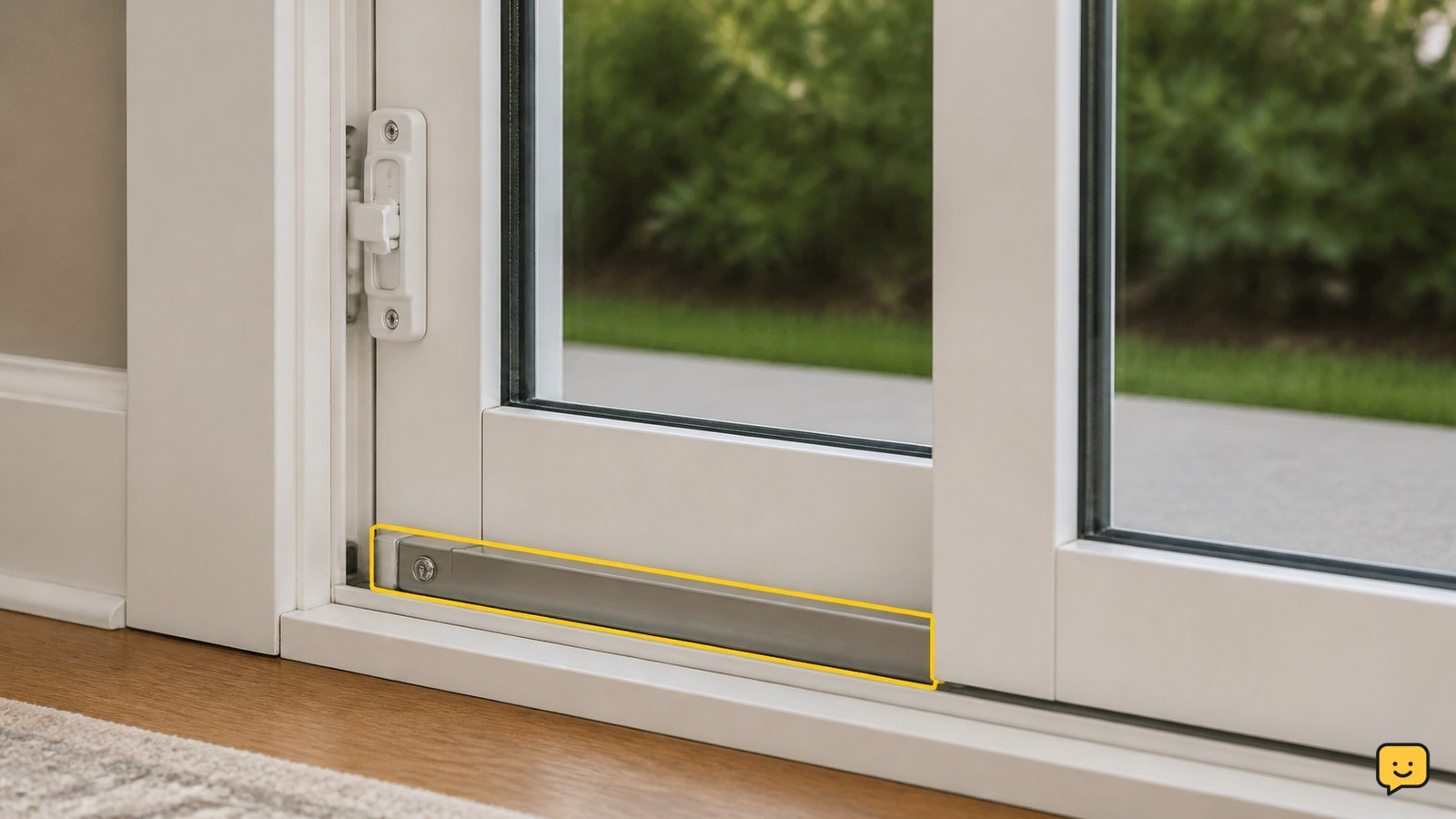
A track bar or solid dowel prevents the moving panel from traveling when the door is closed. Use a purpose-made bar with a stable end stop, or cut a rigid dowel so it fits snugly in the exposed section of the lower track.
- Close and lock the sliding panel.
- Place the bar or dowel in the lower track between the moving panel and the fixed jamb or frame.
- Adjust its length so it cannot slide out when the panel is pushed, but can still be removed by an occupant.
- Try the handle and push the panel firmly from inside. The panel should contact the bar and remain closed.
ADT describes a security bar as a pressure-mounted device placed on the track. A loose stick that can roll, splinter or be removed through the gap is not a reliable substitute.
Remove the bar before opening the door and store it where occupants can reach it. Never use a track block if it prevents a required exit or creates a trip hazard.
Fix the latch and reduce panel lifting
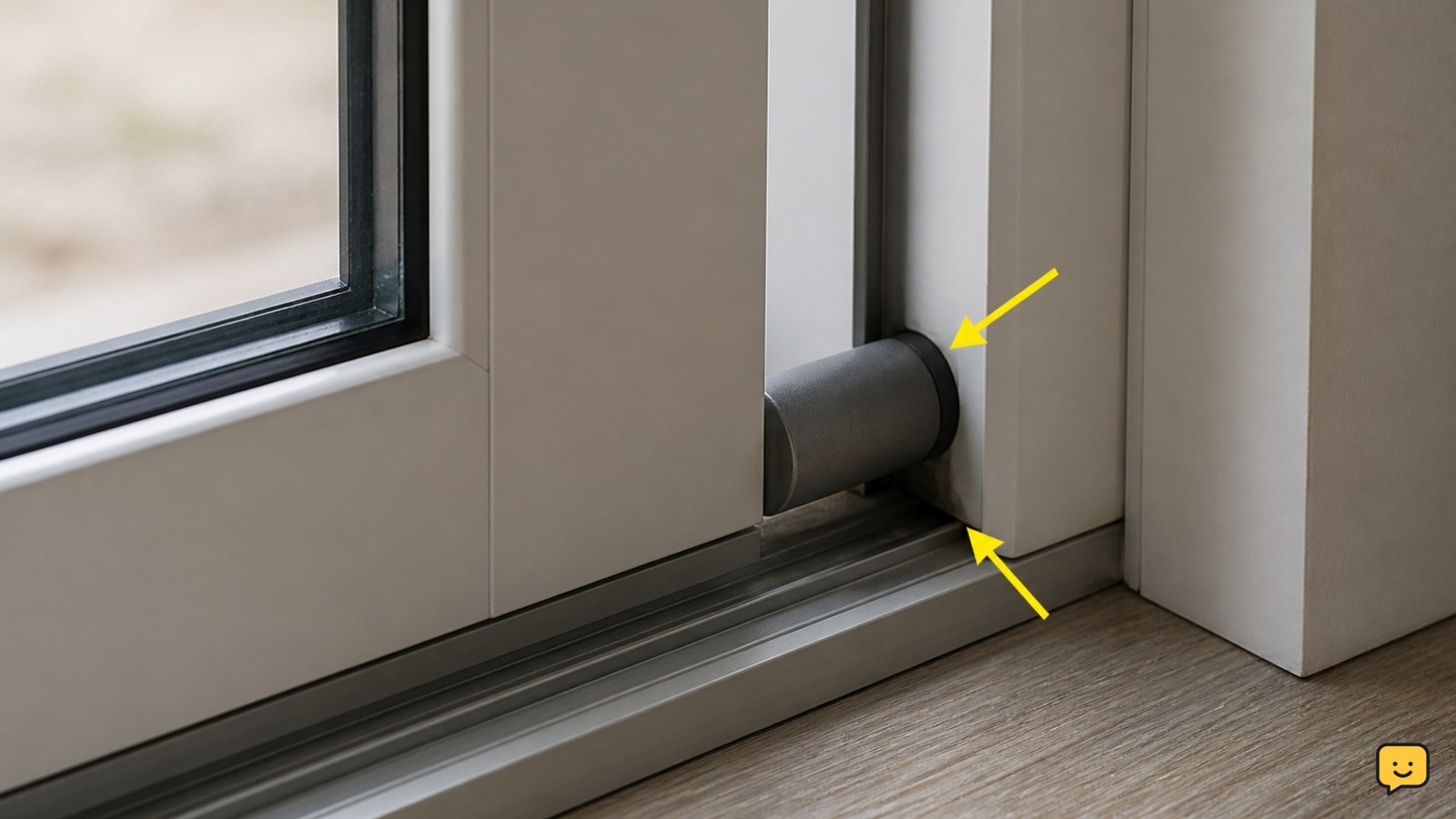
The existing latch must hold the panel against the frame, while the rollers and frame must prevent the panel from being lifted free. A track bar helps stop sliding but does not repair a misaligned or damaged lock.
- Clean debris from the latch area and track without spraying lubricant onto the glass or walking surface.
- Close the door slowly and watch whether the latch lines up with its receiver.
- Tighten accessible hardware only if the screws turn normally and the frame is not cracked or distorted.
- Have a compatible replacement latch, anti-lift device or roller adjustment installed when the lock misses its receiver or the panel rises excessively.
After any adjustment, repeat the horizontal push and gentle lift checks. If the panel still lifts high enough to leave the track, stop using the door as a security barrier and arrange professional repair. Do not add random pins or screws where they could interfere with tempered glass, rollers or emergency release.
Choose glass protection for exposed panels
Security film can help hold broken glass together, but it does not make a sliding door unbreakable and it does not stop the panel from sliding or lifting. Use a film specifically rated and installed for the glass and frame system.
- Check the door manufacturer’s guidance and the film manufacturer’s compatibility instructions.
- Choose an installer who can explain whether the product bonds to the frame or only covers the glass.
- Keep the lock and handle unobstructed and confirm that the film does not affect door operation.
- Inspect the finished edges for lifting, bubbles that obscure damage or gaps around the glass.
The security-film approach is mentioned in the supplied home-security evidence, but the correct product and installation depend on the panel, glazing and local requirements. Stop and seek advice if the glass is cracked or the frame cannot support the specified installation.
Verify the complete setup from inside
A secured sliding door should resist sliding and lifting while remaining operable by the people who live there. Test the complete setup after fitting the bar, adjusting the latch or changing the glass treatment.
- Close the panel fully and engage the built-in latch.
- Confirm the latch is visibly seated in its receiver.
- Place the track bar and push the panel firmly toward the opening direction. The panel should stop against the bar without the bar tipping out.
- Apply gentle upward pressure at two points along the panel. It should remain captured by the track.
- Remove the bar and open the door normally. Confirm that it does not catch, scrape or bind.
- Re-secure it and check that every household member who may need the exit knows how to release the added device.
If the door slides despite the bar, the bar is too short, misplaced or unstable. If the panel binds after hardware work, remove the added device and stop until the latch, rollers and frame are inspected.
What to do if the door still feels weak
If a sliding door still moves, rattles or lifts after the checks, the problem is likely alignment, worn rollers, a damaged frame or incompatible hardware rather than a missing extra lock.
- Latch does not meet the receiver: stop forcing it and arrange alignment or latch repair.
- Panel lifts noticeably: stop relying on the door until rollers, upper clearance and anti-lift protection are assessed.
- Bar slips or tips: replace it with a correctly sized model designed for the track; do not wedge unstable scrap material.
- Glass or frame is damaged: keep people away from the area and contact a qualified glazier or door professional.
- The door is an emergency exit: use only a device that releases quickly from inside and complies with local safety requirements.
For a persistent security concern, ask a qualified professional to assess the entire door assembly, including the fixed panel, frame attachment and glazing—not just the latch.
Frequently asked questions
Is a security bar enough for a sliding glass door?
A security bar is a useful second barrier against sliding, but it does not fix a failed latch, prevent all lifting or protect the glass from impact. Use it with a working lock and a panel that remains captured in its track. If the door still lifts or the frame flexes, arrange repair rather than relying on the bar alone.
Should the dowel go in the top or bottom track?
Place the bar or dowel in the lower track where it can stop the moving panel before it opens. It must fit securely between the panel and the frame without rolling or falling out. Check the door design first, because some tracks have limited clearance or require a manufacturer-approved security device.
Can I use a broom handle to secure a patio door?
A rigid dowel cut to the correct length is safer than an improvised broom handle, which may be too short, tapered, weak or unstable. The blocking piece should resist the panel’s movement and remain removable from inside. Replace it with a purpose-made track bar if it shifts, splinters or creates a trip hazard.
Does security film stop a sliding door from being broken?
No. Security film is intended to help retain broken glass, not make the glass impossible to break or prevent the door from opening. It also needs to match the glazing and frame system. Have suitable film professionally specified and installed, especially when the panel is damaged or part of an emergency exit.