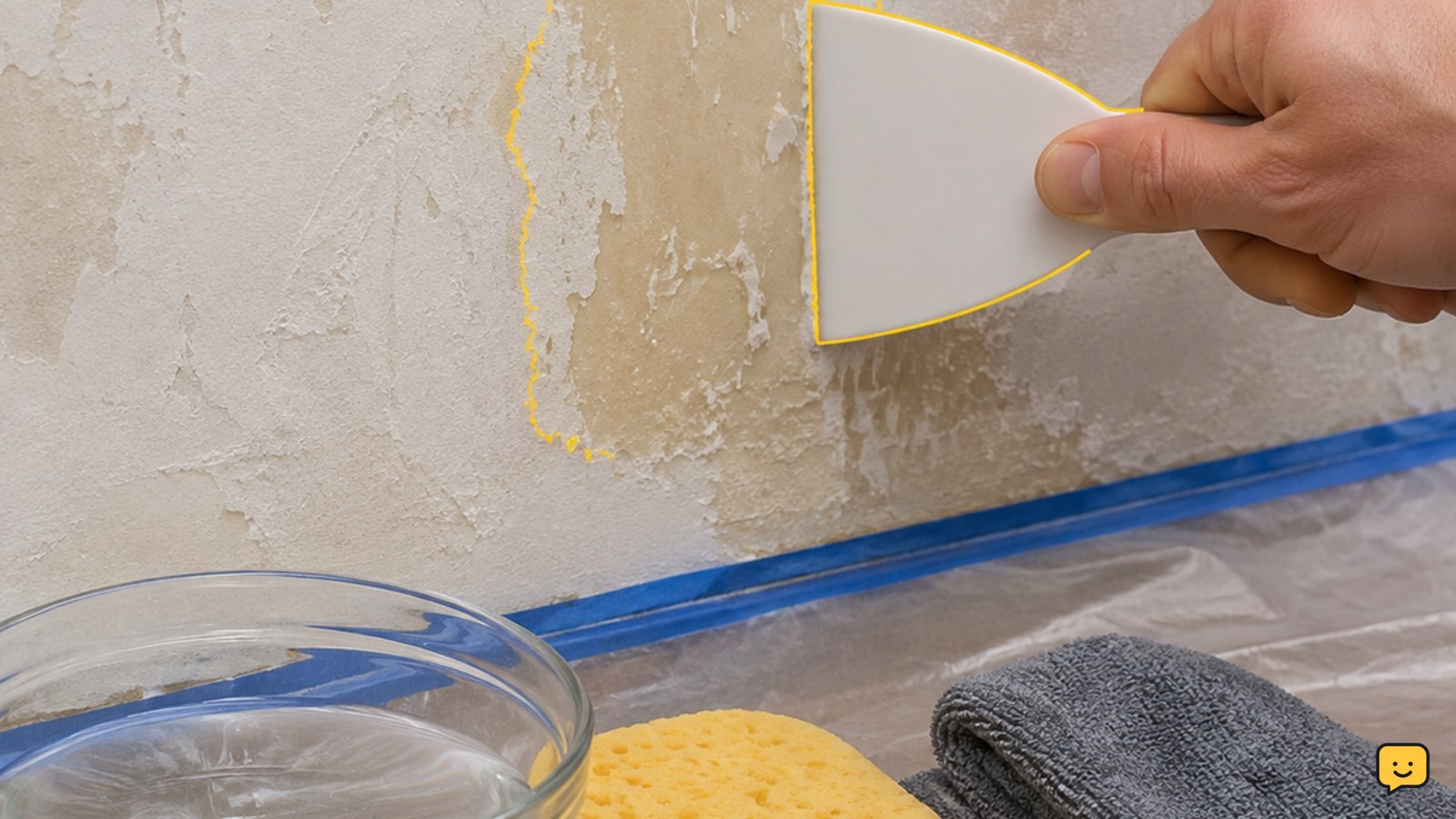
To remove wallpaper glue, work in small sections: protect the floor, soften the residue with warm water or a label-approved wallpaper adhesive remover, then lift it with a plastic scraper. Wipe, rinse lightly and let the wall dry. Test every product first, avoid soaking drywall, and stop if paint or paper facing starts lifting.
For more help with this topic, use the Home Maintenance guides.
Check the wall and protect the surface before cleaning
Wallpaper glue removal starts with a dry inspection and a protected work area. Run your fingertips lightly over the wall to locate raised ridges, glossy patches and areas that already feel soft.
Remove loose flakes with a dry scraper or cloth before adding water. Cover floors and nearby trim because softened adhesive can drip. If the old wallpaper has not been removed completely, follow the removal sequence recommended by Benjamin Moore: prepare the space, score where appropriate, choose an adhesive remover, then peel and remove adhesive. Do not score or scrape a painted wall simply to reach glue if the wall surface is already exposed.
Verification: the wall should be exposed, stable and free of loose paper before you wet a test patch.
Soften wallpaper glue in small sections
Warm water softens many wallpaper adhesives, while a wallpaper adhesive remover can help when residue remains firm. Start with an area about 2 to 3 square feet so the wall does not stay wet longer than necessary.
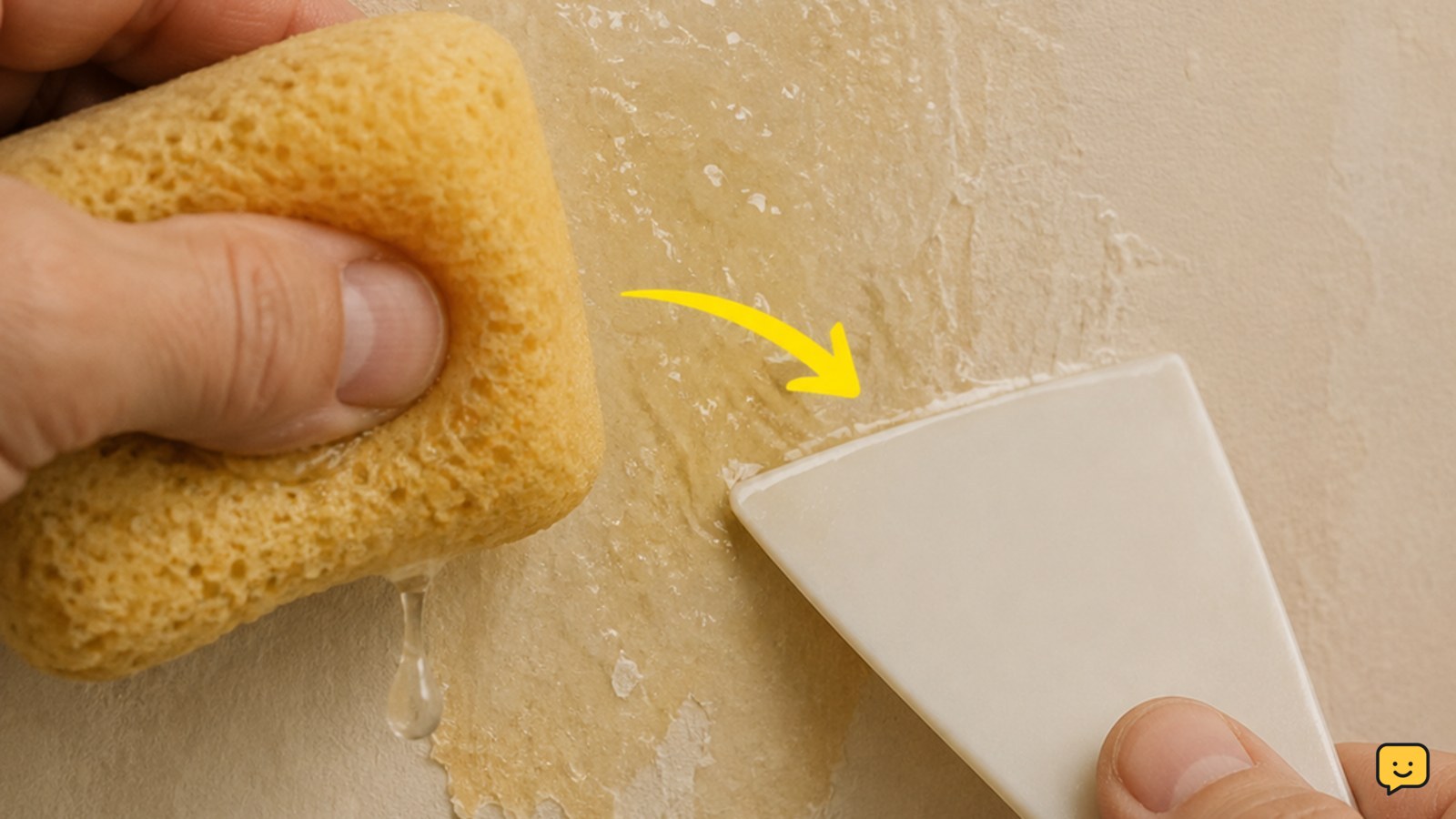
- Dampen a sponge or microfiber cloth with warm water and wring it until it is wet but not dripping.
- Press or wipe the cloth over the glue for several minutes, re-wetting the section lightly as needed.
- If the residue remains hard or glossy, use a wallpaper adhesive remover that is labeled for your wall surface and follow its label directions.
- Wait until the glue looks softened, tacky or visibly loosened rather than trying to force it dry.
On drywall, use the least liquid that works. A soaked wall can swell or loosen the paper facing. The practical glue-removal method described by Miss Mustard Seed also uses a sprayed cleaner followed by scraping, but any cleaner should be tested first and used according to its label.
Verification: a plastic scraper should slide under the softened residue with light hand pressure. If it does not, re-wet briefly instead of pressing harder.
Scrape the softened residue without gouging drywall
A plastic putty knife or wallpaper scraper removes softened glue with less risk of cutting the wall than a sharp metal edge. Hold the blade almost flat and push in one direction using short, controlled strokes.
- Start at the edge of the softened patch.
- Lift residue into a disposable container or onto a cloth rather than spreading it across the wall.
- Wipe the scraper clean frequently so dried particles do not scratch the surface.
- Repeat softening and scraping only on the remaining ridges.
Do not sand thick glue before softening it. Sanding can spread adhesive dust and create low spots in the wall. Do not use a razor, chisel or aggressive rotary tool on drywall.
Verification: shine a flashlight across the wall at a shallow angle. Remaining glue usually appears as raised, darker, shinier or uneven patches. A clean section should feel consistently smooth when checked with your fingertips.
Wash, rinse and dry the wall completely
After scraping, wipe the section with a clean, lightly damp cloth to collect the remaining adhesive film. Change the water when it becomes cloudy so you do not redistribute glue.
- Wipe with the damp cloth until the surface no longer feels slippery or tacky.
- Use a second cloth lightly dampened with clean water to remove cleaner or adhesive residue.
- Dry the wall with a clean towel and provide ventilation.
- Leave the surface undisturbed until it is fully dry before filling, priming or painting.
Do not saturate the wall during rinsing. If water runs down the surface, pause and remove the excess immediately. For floor protection, keep the drop cloth in place until all wet wiping is finished; a barely damp cleaning method is also the safer approach for moisture-sensitive finished floors, as explained in ShowU’s hardwood floor cleaning guide.
Verification: the dry wall should have no sticky feel, visible glossy adhesive islands or raised edges when inspected in side light.
Protect finished flooring from drips with the moisture limits described in hardwood floor cleaning guide.
Fix remaining glue and decide when to stop
Remaining wallpaper glue usually needs another short soften-and-scrape cycle, not more force. Treat only the visible residue and keep the surrounding wall as dry as possible.
- A thin tacky film remains: wipe with a clean, damp cloth, rinse the cloth often and dry the area.
- Hard shiny spots remain: retest a label-approved adhesive remover on a small patch, then repeat the plastic-scraper method.
- Paint comes off with the glue: stop wetting and scraping. Let the wall dry, then plan for surface repair or professional advice.
- Drywall paper is exposed or damaged: stop removal in that area. Further moisture can enlarge the damage.
- The wall stays tacky after repeated cleaning: stop adding products. Let it dry fully and check the adhesive-remover label or ask a paint professional about preparation before priming.
The job is complete when the wall is stable, dry and smooth enough for the next finish step. Perfectly bare drywall is not the target if achieving it would remove sound paint or the wall’s paper facing.
Frequently asked questions
What is the easiest way to remove wallpaper glue from drywall?
Use a lightly damp warm cloth on a small section, wait for the adhesive to soften, and lift it with a plastic scraper held nearly flat. Wipe away the residue, rinse with a clean damp cloth and dry the area. Use as little water as possible because drywall paper can swell or loosen.
Can vinegar remove wallpaper glue?
Vinegar is not necessary for the basic method and may be unsuitable for some wall finishes. Start with warm water, then use a wallpaper adhesive remover labeled for the surface if residue remains. Always test any cleaner in a hidden spot and stop if paint changes, softens or lifts.
Should I sand wallpaper glue off the wall?
Avoid sanding thick or raised glue first. Soften and scrape the residue, then wipe and dry the wall. Sanding a remaining thin edge may be part of later surface preparation, but stop if the wall paper facing or stable paint begins to show damage.
How do I know the wallpaper glue is completely removed?
Inspect the dry wall with a flashlight held at a shallow angle and run clean fingertips over it. The surface should feel consistently smooth, without tacky areas, raised ridges, glossy adhesive spots or darker patches that return after drying.