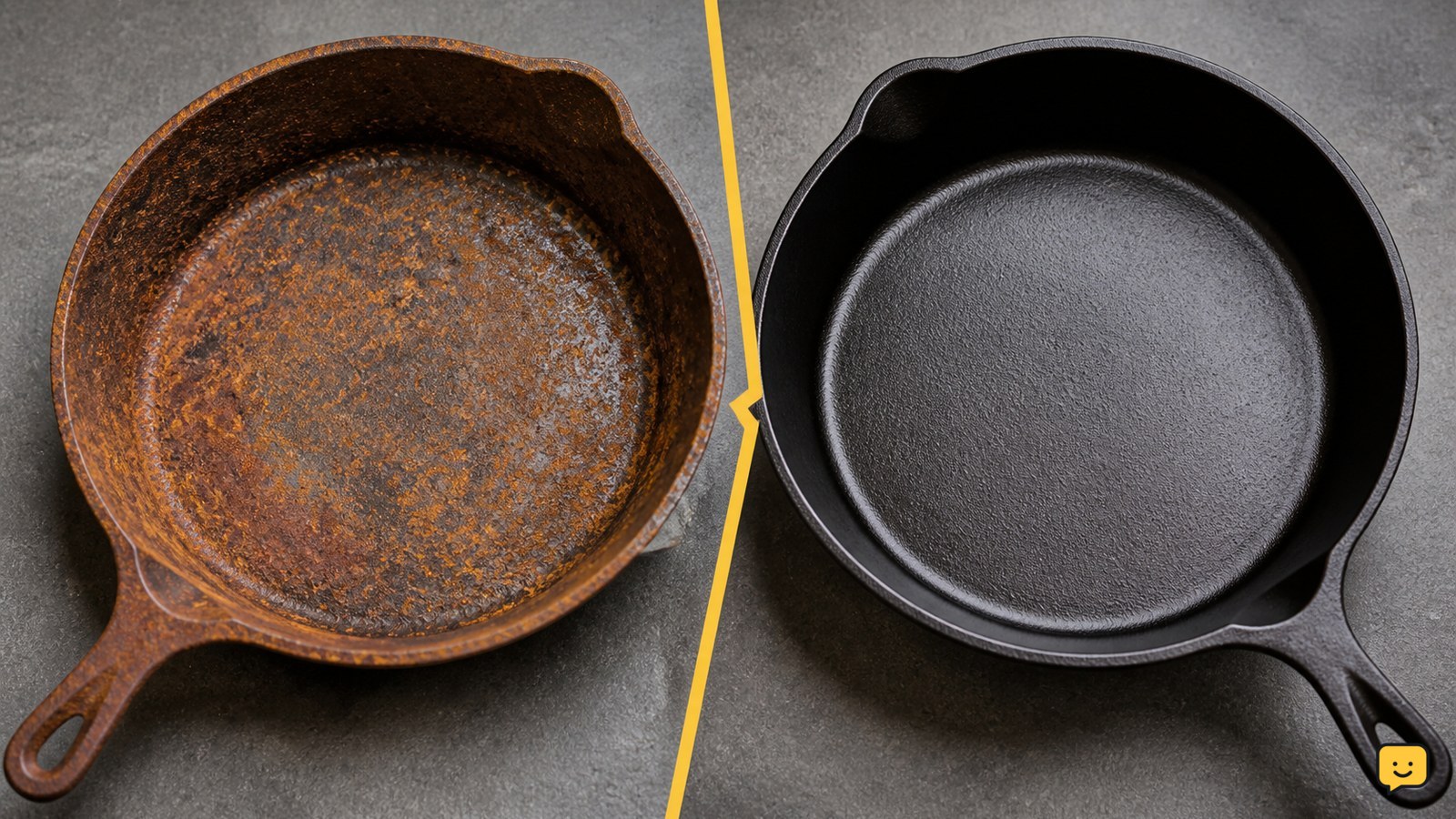
To remove rust from bare cast iron, scrub the rusty areas with steel wool or a cast-iron rust eraser, then wash with warm soapy water. Rinse, dry immediately and completely, and apply a very thin coat of cooking oil before re-seasoning according to the pan or oil maker’s instructions. Stop if you find cracks, deep corrosion or damaged enamel.
For more help with this topic, use the Home Maintenance guides.
Check whether the rust is removable surface corrosion
Rust on bare cast iron is usually removable when it appears as orange-brown powder, thin patches or light roughness on the cooking surface. Lightly scrape one small area with steel wool; if the dark metal underneath remains solid and the rust dust lifts, continue with the cleaning method.
Do not use this process on a coated nonstick pan. Enamelled cast iron needs a different decision: rust on an exposed rim may be treated carefully, but abrasives can permanently damage the enamel. Stop if the coating is cracked, loose or missing across the cooking area.
Scrub away loose rust without gouging the iron
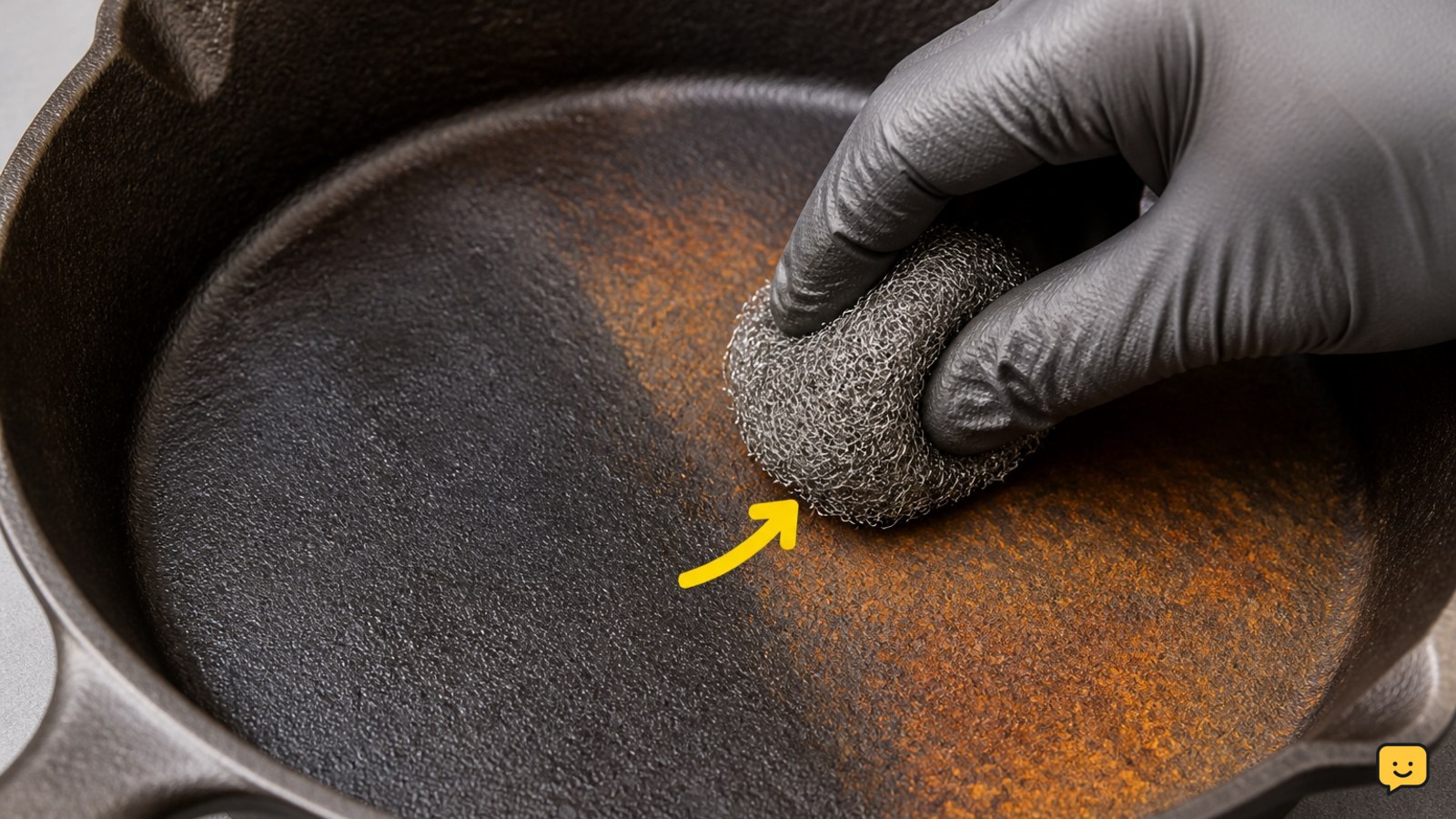
Steel wool or a purpose-made cast-iron rust eraser removes loose rust and damaged seasoning while leaving the solid iron intact. Lodge’s restoration guidance recommends scouring rusty sections with steel wool or a rust eraser before washing the pan.
- Place the dry pan on a protected work surface.
- Scrub the rusty areas with firm, even strokes. Follow the shape of the pan rather than concentrating force on one small spot.
- Wipe away rust dust and inspect the surface under good light.
Success looks like a mostly uniform dark-gray or black metal surface, although shallow pits or discoloration may remain. If orange residue still transfers to a dry cloth, scrub that area again before washing.
Wash off rust dust and cleaner residue
Warm water and dish soap remove loosened rust particles, grease and old residue after scrubbing. Lodge specifically places warm, soapy washing after scouring in its cast-iron restoration sequence.
- Wash the pan with warm water, dish soap and a non-metal scrub pad or clean brush.
- Rinse until the water runs clear and no gritty residue remains.
- Check the handle joint, pour spouts and underside, where rust dust can collect.
Do not leave the pan soaking while you work on another task. If the surface still feels gritty, wash it again rather than trapping particles under new oil.
Dry the cast iron completely before oiling
Cast iron must be completely dry before re-seasoning because remaining water can cause fresh rust beneath the oil. Towel-dry every surface, then warm the pan gently on a stovetop or in an oven until no damp areas remain.
Use heat-resistant gloves when handling the warmed pan. Let it cool enough to handle safely, but do not leave it exposed to humid air for a long period. Verify that the cooking surface, rim, handle joint and underside are dry to the touch before continuing.
Apply a thin oil layer and rebuild the seasoning
A thin coat of cooking oil protects the cleaned iron and forms the base for new seasoning. Pour in a small amount, spread it over the inside and outside, then wipe away excess until the pan looks lightly coated rather than wet or glossy.
- Cover the cooking surface, sides, rim and underside with the thin oil film.
- Use a clean cloth to remove visible pools, especially around the rim and corners.
- Heat the pan using the temperature and duration specified by the cookware or oil manufacturer.
- Allow it to cool safely, then inspect the surface before storing.
Properly treated cast iron should look dry, evenly dark and lightly protected, not sticky. If the finish feels tacky, too much oil was applied; wipe it down and repeat the manufacturer’s heating cycle.
Choose vinegar only for rust that scrubbing cannot lift
Distilled white vinegar can loosen heavier rust when ordinary scrubbing is insufficient. Serious Eats identifies acetic acid in vinegar as an option for restoring rusty cast-iron cookware, but the pan must be monitored rather than left in acid indefinitely.
Use vinegar as a controlled alternative: dilute it with water, treat only until the rust softens, then scrub, rinse thoroughly with plain water and dry immediately. Do not combine vinegar with bleach or other cleaners. If the iron becomes unusually rough, darkens rapidly or the rust does not release, stop the acid treatment and move to professional assessment or replacement.
Verify the restoration before cooking or storing
Restoration is complete when no loose orange rust transfers to a cloth, the surface is free of gritty residue, the pan is fully dry and the new oil finish is smooth rather than sticky.
For a final check, wipe the cooled pan with a clean light-colored cloth. Orange powder means more cleaning is needed; a sticky film means excess oil or insufficient heating. Correct either issue before cooking. Store the pan dry, with its protective oil film intact and enough airflow to prevent trapped moisture.
Frequently asked questions
Can I remove rust from cast iron with soap?
Yes. Soap helps remove rust dust, grease and residue after you scrub the corrosion away. It does not replace abrasion or re-seasoning. Wash with warm soapy water, rinse thoroughly, dry immediately and rebuild the oil seasoning before using the pan.
How long can cast iron sit in vinegar?
Use vinegar only until the rust softens, then scrub and rinse it away rather than leaving the pan unattended in acid. The exact time depends on rust thickness, so inspect frequently. Stop if the iron becomes rough or the rust does not release.
Is rusty cast iron safe to cook with?
Not until the loose rust and residue are removed and the surface is completely dry and re-seasoned. Light surface rust is commonly restorable, but cracks, holes, severe pitting or structural thinning are reasons to stop using the cookware.
Why is my restored cast iron sticky?
A sticky finish usually means too much oil was left on the surface or the heating cycle was not completed as directed. Wipe away excess oil and repeat the cookware or oil manufacturer’s seasoning instructions. Do not cook on a tacky surface.