To prevent rust on a classic car, keep it dry, wash salt and mud from the underside, clear drain holes, inspect seams and hidden cavities, and repair paint chips before corrosion spreads. Store the car in a ventilated, low-humidity garage rather than sealing a damp vehicle under a cover. Use cavity wax or a compatible rust inhibitor only on clean, dry, rust-free or properly repaired surfaces.
For more help with this topic, use the Maintenance Repair guides.
Keep moisture and road salt from sitting on the body
A classic car stays more corrosion-resistant when moisture, salt, and road dirt do not remain against painted or bare metal. Avoid driving in salted conditions when possible, but treat every wet or dirty drive as a reason to clean and dry the car rather than putting it straight into storage.
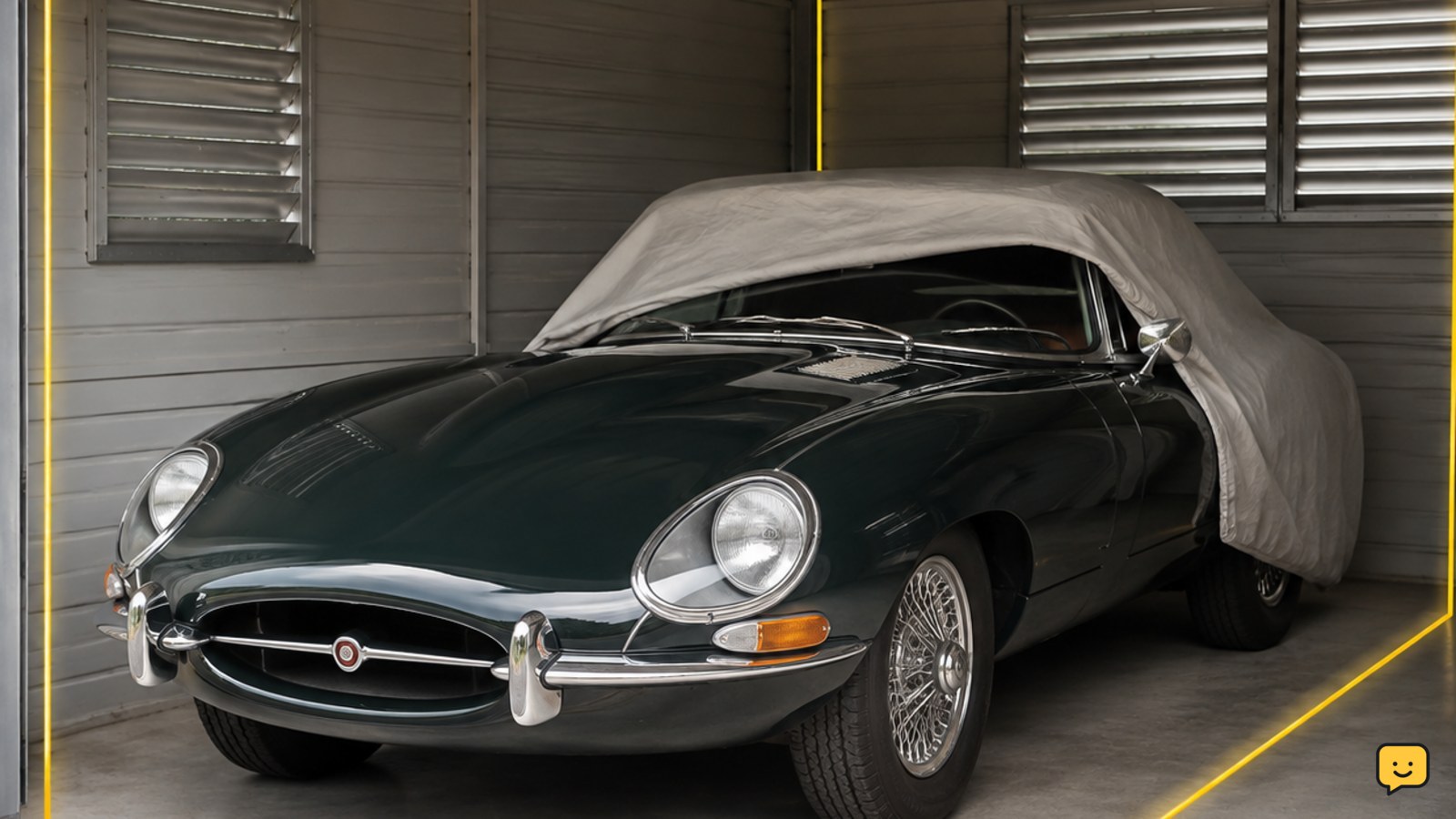
Park on a dry, hard surface with room for air to move around the vehicle. A ventilated garage is preferable to a damp shed. Do not use a non-breathable cover on a wet car: it can hold condensation against the paint and trim. Krown Akron identifies moisture exposure as a central rust risk and recommends rust-inhibiting protection as part of a broader prevention routine.
Check: After storage, the paint, glass, chrome, wheel wells, and floor beneath the car should be dry. If the cover feels damp underneath or condensation appears on the body, improve ventilation and dry the vehicle before covering it again.
Wash the underside, wheel wells, and drain paths
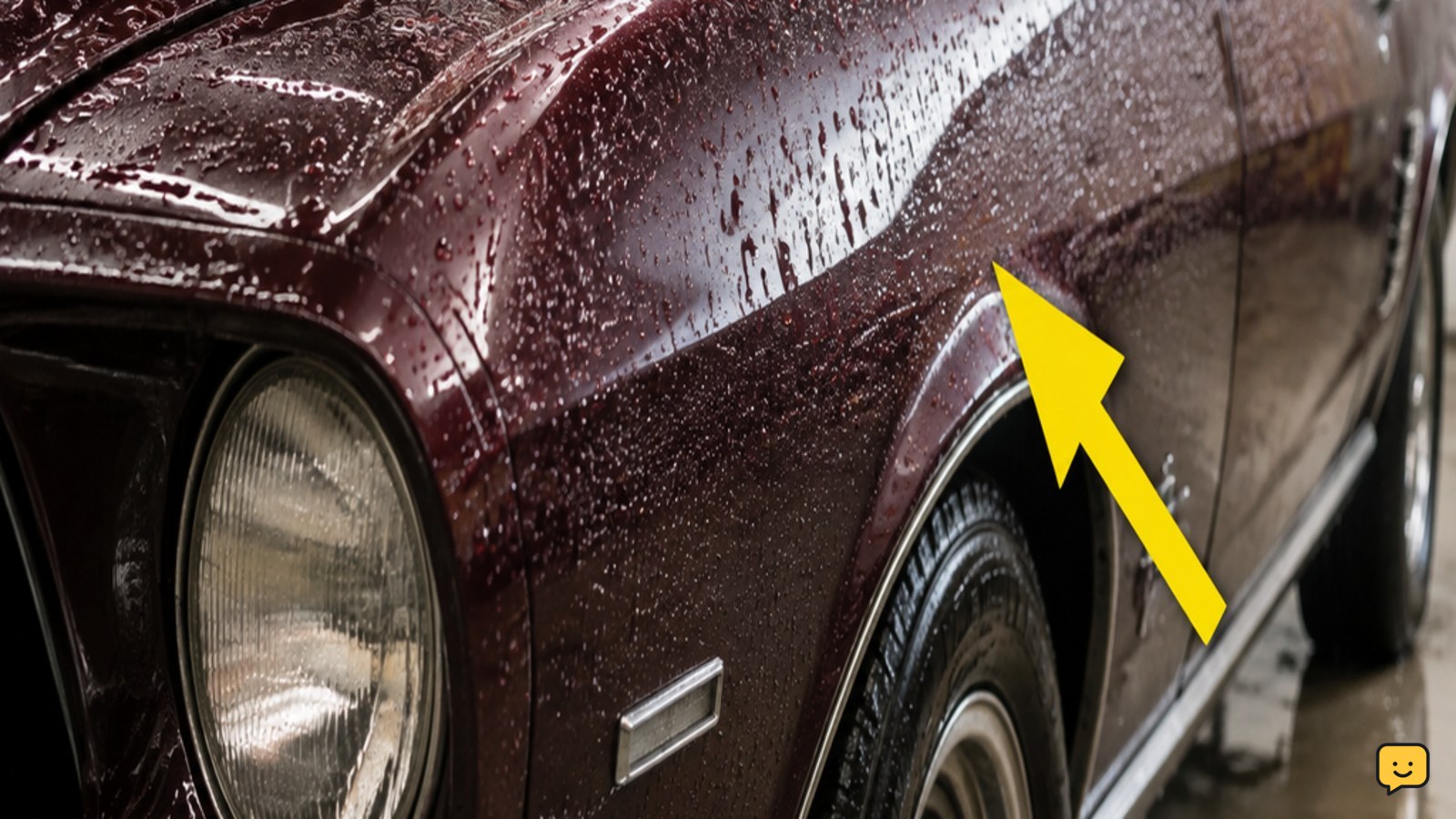
Washing a classic car prevents rust most effectively when it removes salt and packed dirt from the underside, wheel wells, rocker panels, bumpers, and seams without forcing water into sensitive components.
- Rinse loose grit from the body and wheel wells using a gentle stream.
- Use automotive shampoo rather than household detergent, working from the roof downward.
- Clean behind wheel-arch lips, under rocker panels, around splash shields, and beneath bumper brackets.
- Flush visible door, hood, trunk, rocker, and floor-pan drain paths so trapped water has an exit.
- Dry the car with microfiber towels and allow hidden areas to air-dry before covering it.
Use low pressure around weatherstripping, fresh paint, decals, wiring, and engine-bay equipment. A strong jet can drive water and grit into seams or damage fragile finishes.
If you need to lift a wheel for access, follow a model-specific jacking point and secure the car on stands; the safe wheel-changing method explains the basic lifting precautions before you inspect behind a tire.
Check: Water should drain from the designed openings rather than pool inside a door, rocker, trunk, or cowl area. If a drain remains blocked, clear it gently with a flexible non-sharp tool. Do not enlarge factory holes without a repair plan.
If you need to lift a wheel for access, the safe wheel-changing method explains basic lifting precautions before you inspect behind a tire.
Inspect classic-car rust points before coating anything
Inspecting a classic car before applying protection reveals early corrosion that a coating could hide. Use a flashlight and inspection mirror to check these areas:
- Lower door edges, door bottoms, and inner door seams
- Wheel-arch lips, fender bottoms, rocker panels, and quarter-panel seams
- Windshield and rear-window edges, cowl drains, and fresh-air vents
- Floor pans, trunk corners, spare-wheel wells, and battery trays
- Frame rails, crossmembers, suspension mounts, and body-to-frame attachment points
- Areas where trim clips, mud, rubber seals, or old undercoating touch the metal
Look for bubbling paint, orange staining, flaking scale, damp seams, pinholes, and a dull hollow sound around a suspicious area. Rust Bullet’s classic-car guidance also emphasizes reducing moisture exposure and keeping the vehicle in a warm, dry environment, but its product directions should control any coating-specific preparation.
Decision rule: Surface discoloration on sound metal may be treated after cleaning and preparation. Bubbling, perforation, spreading scale, or rust that returns through paint needs metal repair or a body-shop assessment first.
Choose cavity protection without trapping corrosion
Use cavity wax or a compatible corrosion inhibitor inside clean, dry enclosed areas only after confirming that the product suits painted metal, bare steel, rubber, wiring, and the car’s originality requirements.
Typical targets include door interiors, rocker cavities, quarter panels, boxed frame sections, hood and trunk seams, and other factory access points. Apply a light, even film rather than filling a cavity until material runs out. Keep products away from brake friction surfaces, belts, exhaust parts, tire tread, electrical contacts, and drain openings.
Do not treat a hidden cavity as protected merely because its outer surface looks clean. If the cavity contains wet dirt, loose rust, standing water, or old coating that is lifting, adding another layer can conceal the problem and slow drying. Follow the chosen product’s ventilation, curing, and reapplication instructions; Rust Bullet notes that coating systems require appropriate surface preparation rather than application over uncontrolled corrosion.
Check: The treated area should have a continuous film with no dripping onto unsafe components. Factory drain paths should remain open, and the product should not soften adjacent seals or lift existing paint during the following inspection.
Protect paint, chrome, and small chips before storage
Paint protection prevents rust on a classic car only when chips and failed seams are repaired before water reaches the steel beneath them.
- Wash and dry the panel completely.
- Inspect stone chips, scratches, cracked seam sealer, loose trim, and exposed fasteners.
- Touch up small chips with a compatible automotive paint system after removing loose contamination.
- Repair failed seam sealer or damaged weatherstripping so water cannot repeatedly enter the same joint.
- Use a suitable wax or paint protectant on sound painted surfaces, following the label and avoiding fresh repairs until cured.
Chrome and bright metal should be clean and dry before storage. Avoid abrasive polishing that removes plating or thin original finishes. Keep leaves, road grit, and standing water away from the cowl and window channels, where debris can block drains.
Check: A repaired chip should be sealed, not still showing bright bare steel. Rubber seals should sit evenly, and water should not remain in trim channels after the car is dried.
Verify the prevention routine is working
A classic-car rust-prevention routine is working when inspections show dry cavities, open drains, stable paint, and no new bubbling or orange staining.
Inspect the car after each wet or salty outing, before covering it for storage, and again when returning it to regular use. Record photographs of known weak points so you can compare the same seams and panels over time. Check beneath floor mats and trunk liners occasionally because moisture can remain hidden from an outside inspection.
If rust appears in the same location after cleaning and touch-up, suspect trapped moisture, a blocked drain, failed seam sealer, or corrosion on the hidden side of the panel. Remove the affected trim or liner only when you can do so without damaging scarce original parts, or have a classic-car body specialist investigate.
Successful result: The car is dry after washing, no drain backs up, protective films remain in place, and previously sound paint has no new bubbles or spreading edges.
What to do if you find active rust
Active rust requires cleaning, neutralizing or removing corrosion as appropriate, and restoring the metal and paint system; routine washing and wax cannot repair perforated steel.
For a small, isolated chip or light surface mark on accessible sound metal, follow a compatible automotive refinishing system and allow each layer to cure. For bubbling paint, deep scale, rust beneath glass or trim, or corrosion on structural parts, stop cosmetic work and obtain an assessment before applying a converter, filler, or undercoating.
Never use a thick coating to hide a questionable frame, suspension mount, floor section, brake line, or fuel line. The safe outcome is a documented repair that removes or stabilizes the corrosion and restores drainage, sealing, and protective finish.
Frequently asked questions
Should I cover a classic car after washing it?
Yes, but only after it is fully dry. Use a breathable, properly fitted cover and store the car where air can circulate. A damp, non-breathable cover can hold condensation against the paint, trim, and seams. Recheck the cover and the body after storage; persistent moisture means the garage or storage space needs better ventilation or humidity control.
Does undercoating stop rust on a classic car?
Undercoating can protect prepared metal from water and road debris, but it does not correct rust underneath. Do not apply it over loose scale, wet dirt, bubbling paint, or perforated metal. Inspect and repair the surface first, keep factory drains open, and choose a product compatible with the existing finish and the car’s restoration goals.
Where does rust usually start on a classic car?
Common starting points include door bottoms, wheel-arch lips, rocker panels, cowl drains, windshield edges, trunk corners, floor pans, battery trays, frame sections, and seams hidden by trim or old undercoating. These areas collect moisture or dirt. Use a flashlight and mirror, and compare photographs over time to identify spreading corrosion.
Can I drive a classic car in the rain without causing rust?
Occasional rain does not automatically cause rust if the car is washed, dried, and stored properly afterward. The greater risk is leaving moisture, mud, or salt trapped in seams and cavities. Avoid driving in salted conditions when possible. Stop driving and arrange an inspection if corrosion affects structural metal, suspension mounts, brake or fuel lines, or other safety-critical parts.