To measure for curtains, first decide whether the rod will sit inside or outside the window recess. Measure the planned rod width, then measure from the rod or track to the desired bottom edge. Choose fullness based on the fabric, divide the finished width between panels, and record every measurement with width listed before length.
Choose an inside or outside mount before measuring
Decide whether the curtain rod or track will be installed inside the recess or outside the window trim, because the measuring points change. An outside mount usually measures across the area the curtains must cover, including the planned overlap beyond the trim. Home Depot’s measuring guidance starts with the outside of the trim for a window or bank of windows.
For an inside mount, measure the clear recess rather than the trim. Check the depth as well as the width so the rod, curtain heading and fabric can sit without hitting the frame, handles or glass. If the recess is not deep enough for the chosen hardware, switch to an outside mount before taking the final order measurements.
Measure the rod or track width at its installed position
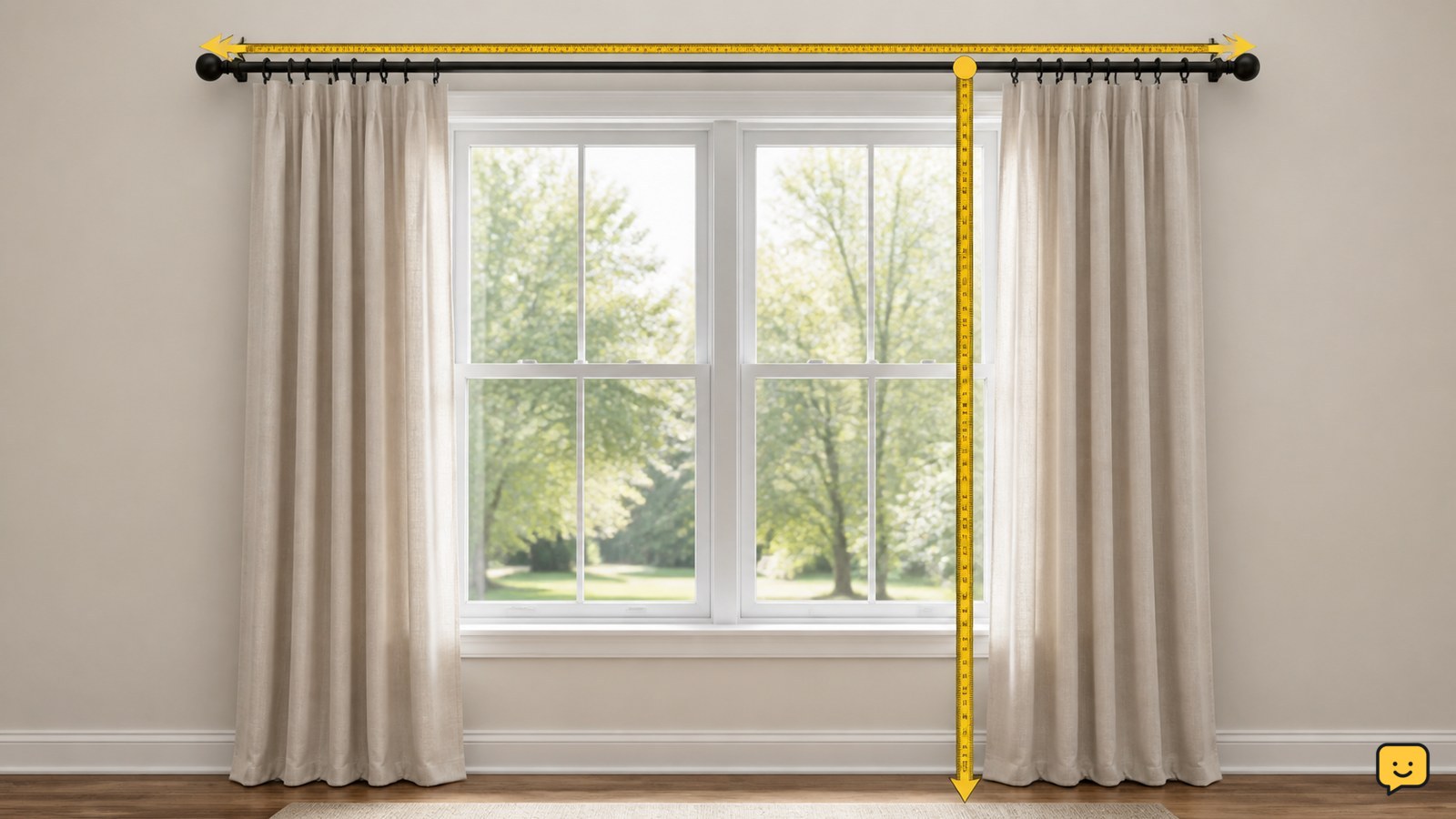
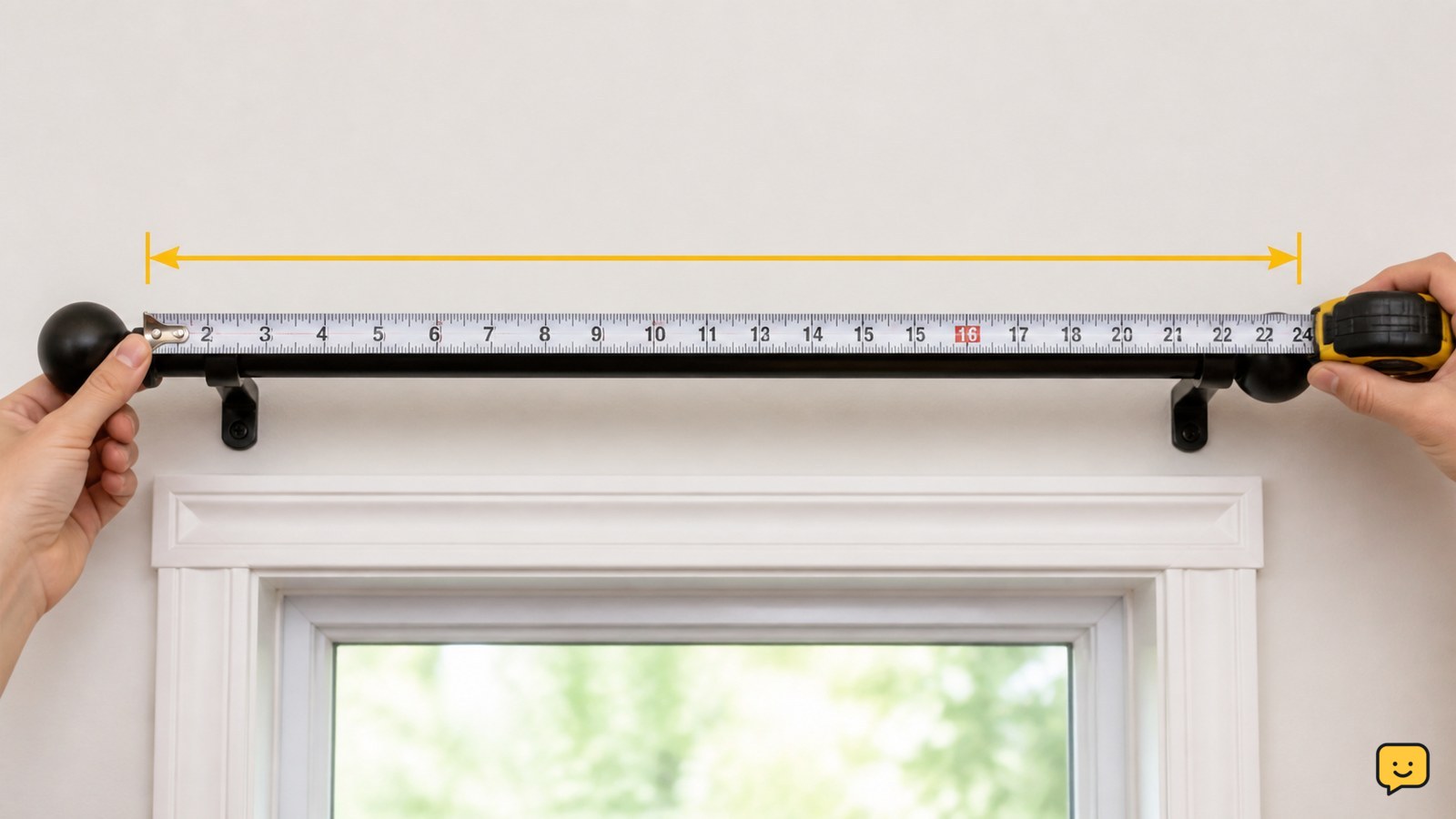
The curtain width is based on the rod or track span, not automatically on the glass width. Measure from the left end of the planned rod or track to the right end. If the hardware is already installed, measure the usable span between the end points that support the curtains.
- Hold the tape level across the full span.
- Measure a second time, especially on a wide window or a bank of windows.
- Record the result as the rod or track width.
For an outside mount, include the planned extension past each side of the trim. For an inside mount, use the clear opening and check the width at the top, middle and bottom. If those measurements differ, do not assume the opening is square; use the retailer’s inside-mount sizing rule or ask the installer which measurement controls.
Calculate curtain fullness and panel width
Finished curtain width must provide enough fabric for the desired folds. A common planning range is about 1.5 to 3 times the rod width, with the exact choice depending on the fabric and the fullness you want; 3H Linen describes this range as a basis for calculating curtain width.
Use this calculation:
Required finished fabric width = rod or track width × fullness factor.
For example, a 60-inch rod multiplied by 2 gives 120 inches of finished fabric width. If you are buying two equal panels, divide that finished width by two, so each panel would need 60 inches of finished width before applying the retailer’s product-specific sizing rules.
Check whether the retailer lists one panel, a pair, or a finished width for the package. Quince identifies rod width and panel count as separate measurements to plan, so do not assume that a listed curtain width describes the whole window treatment.
Measure the finished curtain length from the hardware
Measure length from the point where the curtain will hang to the intended bottom edge. For a rod, start at the top of the curtain heading, clip position or ring position that matches the selected hanging method. For a track, measure from the carrier or hook position. Do not measure from the top of the window unless the hardware will actually be installed there.
- Mark or identify the exact hanging point.
- Extend the tape vertically to the sill, below the sill or floor, depending on the look and clearance you want.
- Record the finished drop in the retailer’s required unit.
Allow for the heading style. Grommets, rod pockets, rings, hooks and pinch pleats hang from different points, so the same window can require different finished lengths. If the curtain should stop above a radiator, vent, handle or furniture edge, measure to that clearance point instead of allowing the fabric to cover it.
Verify the order measurements and write them clearly
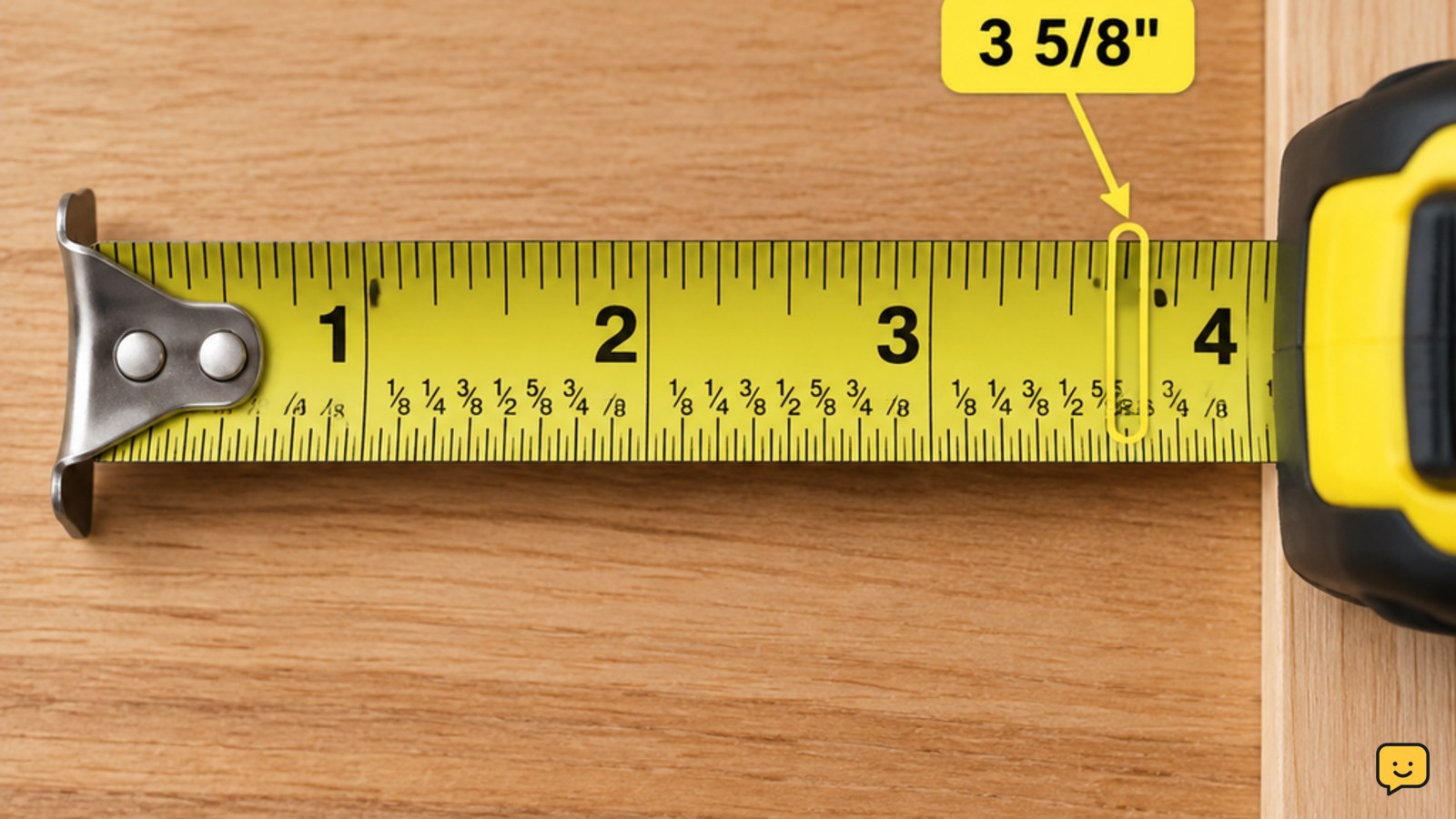
Verify curtain measurements by checking the width, length, panel count and hardware setback together. Quince’s guide identifies these as four key planning measurements, while JCPenney’s measuring guidance recommends a metal tape, rounding to the nearest eighth of an inch, and listing width before length.
- Repeat the width measurement from the same fixed points.
- Repeat the length on the left and right sides; investigate any difference rather than averaging it automatically.
- Confirm whether the product price and listed dimensions apply to one panel or a pair.
- Check that the heading measurement matches the rod, rings, hooks or track carriers.
- Write the final order as width × length, followed by the number of panels.
Success is a complete note such as “60-inch rod × 84-inch finished drop, two panels, outside mount, 2× fullness.” If the retailer’s size options do not match your calculation, stop and use its measuring chart before ordering rather than rounding to a convenient size.
What to do if the window is unusual or the fit is uncertain
Use the installation plan as the deciding reference when a window has unusual trim, multiple sections or nearby obstructions. Measure each separate opening if one rod will not span the entire bank, and check whether a center support, corner, door swing or wall edge limits the curtain’s movement.
For bay windows, corner windows, angled recesses, extra-tall openings or curtains that must clear heating equipment, stop at the planning stage if the rod position or finished drop is unclear. Mark the intended hardware points, take photographs for reference, and use the curtain or hardware manufacturer’s measuring service. A professional measurement is also the safer option when reaching the installation height would require an unstable ladder position.
Frequently asked questions
Do I measure the window or the curtain rod for curtains?
Measure the planned curtain rod or track for the finished curtain width. For an outside mount, include the span beyond the trim that the curtains must cover. For an inside mount, measure the clear recess and check it at more than one point.
How much wider should curtains be than the window?
Use the rod or track width as the starting point, then multiply it by the fullness factor recommended for the fabric. A commonly cited planning range is about 1.5 to 3 times the rod width. Divide the finished width by the number of panels and follow the retailer’s sizing rules.
Do curtain measurements list width or length first?
Curtain measurements normally list width first and length second. Write the result in that order, such as 50 inches wide by 84 inches long, and confirm whether the dimensions describe one panel or a pair.
Where do I start measuring curtain length?
Start at the actual hanging point: the rod position, clip position, ring position or track carrier. Measure down to the planned bottom edge, such as the sill, below the sill or floor. The heading style can change the point where the fabric begins.
For more help with this topic, use the Home Maintenance guides.