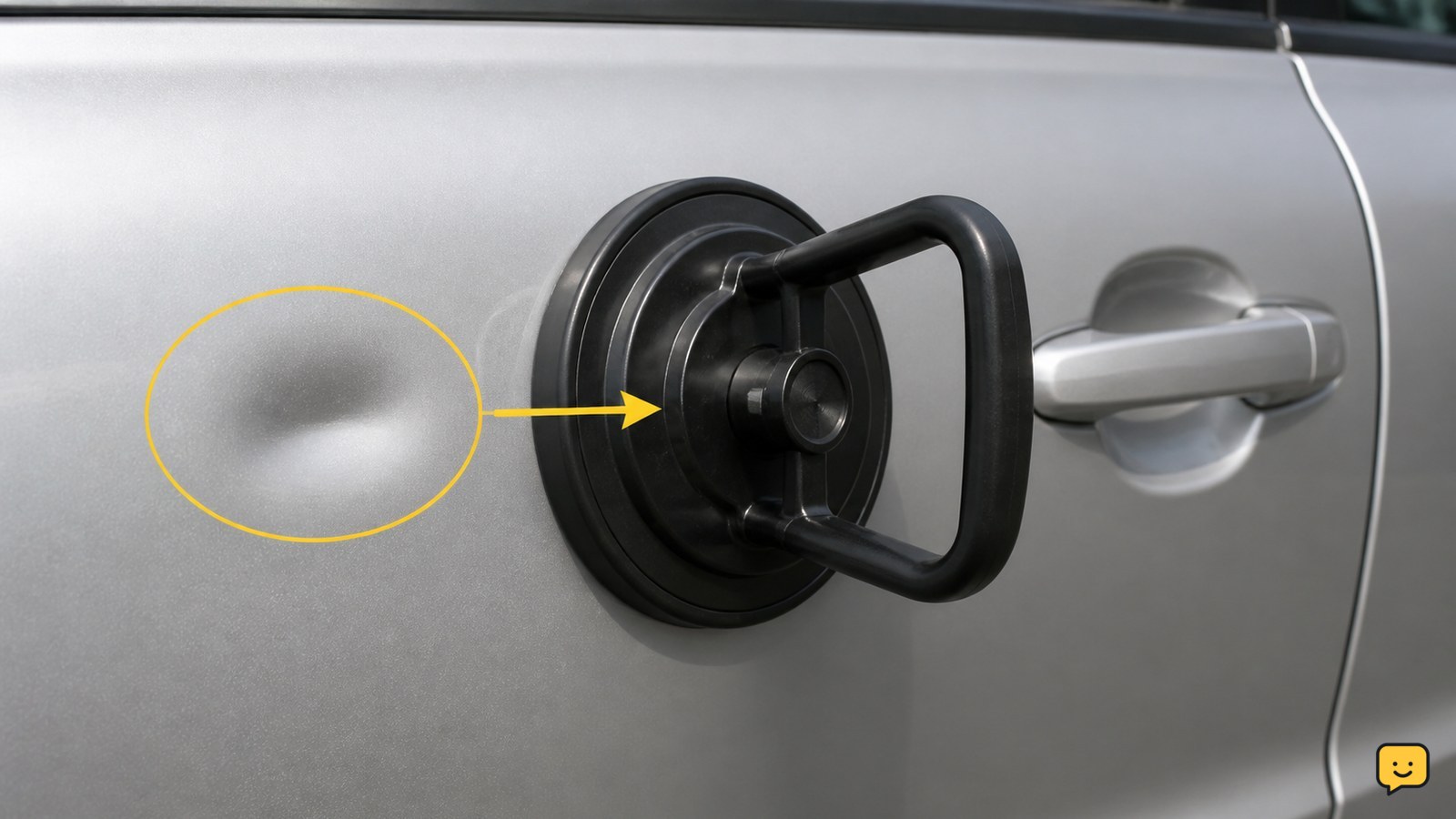
To get rid of a small, shallow dent, wash and dry the panel, then try a clean automotive suction cup or plunger on the center of the dent. Pull gradually rather than sharply. Stop if the paint cracks, the panel starts to stretch, or the dent does not improve after a few careful attempts. Creases, sharp edges, exposed metal, and dents near structural seams are better handled by a paintless dent repair technician or body shop.
Browse more Maintenance & Repair guides
Check whether the dent is suitable for DIY removal
A shallow dent on a broad, accessible section of a door, fender, or quarter panel is the best candidate for a suction-based attempt. Look at the reflection of a straight object, such as a garage-door edge, across the panel. A smooth dip with intact paint may respond; a sharp crease, stretched-looking metal, or dent that reaches an edge is much less suitable.
Run a clean fingertip lightly around the perimeter without pressing into the damage. If the outer edge feels sharply folded, stop and choose paintless dent repair or a body shop. The same applies when the dent sits over a character line or where the panel curves tightly. These areas need controlled access and pressure, not repeated pulling from the outside.
Clean and prepare the damaged panel
Clean the panel and the suction tool before testing the seal. Spray car-safe soapy water onto the area, wipe away grit with a microfiber towel, and dry both surfaces. The practical DIY guidance from AutoZone and the documented demonstration from ChrisFix both emphasize cleaning before applying a tool; a dirty surface can reduce grip and drag grit across the clear coat.
Inspect the panel again from several angles. Mark the center mentally rather than placing tape or adhesive on the paint. Open the door or trunk only if doing so gives safe access; do not remove trim, wiring, sensors, or interior panels unless the vehicle service information specifically explains how to do it.
Try a suction cup or plunger on a shallow dent
A clean suction cup or plunger can improve a shallow dent when it forms a good seal on a relatively flat painted panel. AutoZone describes a plunger-style approach for minor dents, while ChrisFix’s practical demonstration uses low-cost suction equipment for larger cosmetic dents. These methods are not a substitute for controlled body repair.
- Wet the rubber rim lightly if the tool manufacturer permits it. Do not flood gaps, door seals, lamps, or electrical openings.
- Center the cup over the deepest part of the dent and press it down evenly so the rim contacts smooth paint.
- Pull the handle steadily and with moderate force. Do not jerk, twist, or use a strap, rope, or vehicle jack to increase force.
- Release the seal, inspect the reflection and panel edge, and reposition the cup only if the dent has moved slightly.
- Allow no more than two or three controlled attempts before stopping if the shape does not improve.
Success means the low spot is visibly smaller, the panel no longer catches the same reflection, and the surrounding paint remains smooth. A small high spot or uneven edge means the dent has not been fully corrected; do not keep pulling harder.
Use a warm-panel method only when the material allows it
Gentle warming is sometimes suggested for a flexible plastic bumper cover, but it is a higher-risk option on painted panels. Credit Acceptance describes warming a dented area with a hair dryer or heat gun before cooling it, yet the method can soften paint, damage clear coat, or deform plastic when heat is concentrated.
If you try this alternative, use only a hair dryer on a moderate setting, keep it moving, and warm the surface until it is merely warm to the touch—not hot. Do not use boiling water, an open flame, or a heat gun close to the paint. Avoid this method on metal body panels, cracked paint, sensors, lamps, trim, or panels with unknown material. Stop immediately if the finish changes, the plastic smells hot, or the dent does not move with light pressure.
Choose paintless dent repair when the panel needs controlled pressure
Paintless dent repair is usually the safer next step when the paint is intact but suction cannot restore the shape. A technician can inspect the back of the panel and use controlled pressure or access tools to move the metal gradually. This is particularly appropriate for creases, dents near body lines, and damage that cannot be reached safely from the outside.
Traditional body repair is more appropriate when paint is chipped or cracked, metal is torn or stretched, rust is present, or the panel needs filling, sanding, repainting, or replacement. Tell the repairer whether the impact affected a door, hood, trunk, lamp, bumper, parking sensor, or window. Keep the vehicle parked if any latch, lamp, sensor, or closure no longer operates normally.
Verify the repair before returning the car to normal use
Verify the result in direct and angled light after wiping away any remaining soap. Check the panel from the front, side, and rear; a successful cosmetic improvement should show a continuous reflection without a new ridge, ring, or stretched area around the original dent.
Test any nearby door, hood, trunk, or hatch by opening and closing it gently. Confirm that lamps, parking sensors, cameras, and trim are secure. If the panel looks better but a gap has changed, a closure binds, or a warning appears, stop using the affected function and arrange an inspection rather than treating the job as cosmetic.
Frequently asked questions
Can you remove a dent without repainting the car?
Yes, a dent may be repaired without repainting when the paint is intact and the metal has not been badly stretched. Paintless dent repair is designed for this situation. Suction methods may improve a shallow cosmetic dent, but they cannot reliably restore sharp creases, damaged edges, or cracked paint.
Will a plunger remove every car dent?
No. A plunger works only when its rim seals against a smooth, fairly flat area and the metal can move back without a sharp fold. It is unlikely to correct a crease, a dent on a body line, or damage close to an edge. Stop after a few gentle attempts if the shape does not change.
Is boiling water safe for removing a car dent?
No. Boiling water can damage paint, soften trim, burn skin, or deform plastic. If a flexible plastic bumper is being considered for gentle warming, use a moving hair dryer on a moderate setting and stop if the surface becomes hot or the finish changes. Metal panels and painted damage are better assessed by a repair professional.
When should I use paintless dent repair instead of DIY?
Choose paintless dent repair when the paint is intact but the dent has a crease, sits near a body line or edge, cannot be reached safely, or does not respond to gentle suction. A technician can access the back of the panel and apply controlled pressure instead of increasing force from the outside.