To get cigarette smell out of a car, remove all ash and cigarette waste, vacuum the entire cabin, wash removable mats, wipe smoke residue from hard surfaces, and treat fabric seats and carpets without soaking them. Air the car out until fully dry. If the odor returns mainly when the fan runs, arrange HVAC or professional interior cleaning instead of spraying into the vents.
Browse more Maintenance & Repair guides
Remove ash, cigarette waste, and odor sources first
Removing ash, cigarette waste, and contaminated rubbish is the first step because surface cleaning cannot overcome an active odor source.
- Empty the ashtray, door pockets, center console, glove box, seat-back pockets, and floor areas.
- Check beneath seats and around the spare-wheel or cargo area for ash, filters, wrappers, or spilled tobacco.
- Take out floor mats and any removable fabric items before cleaning the cabin.
- Open the doors and windows in a dry, breezy location. Chemical Guys also recommends airing out the vehicle before treating smoke residue.
Success at this stage means no loose ash or tobacco remains and the cabin smells less concentrated before any cleaner is used.
Vacuum seats, carpets, mats, and hidden gaps
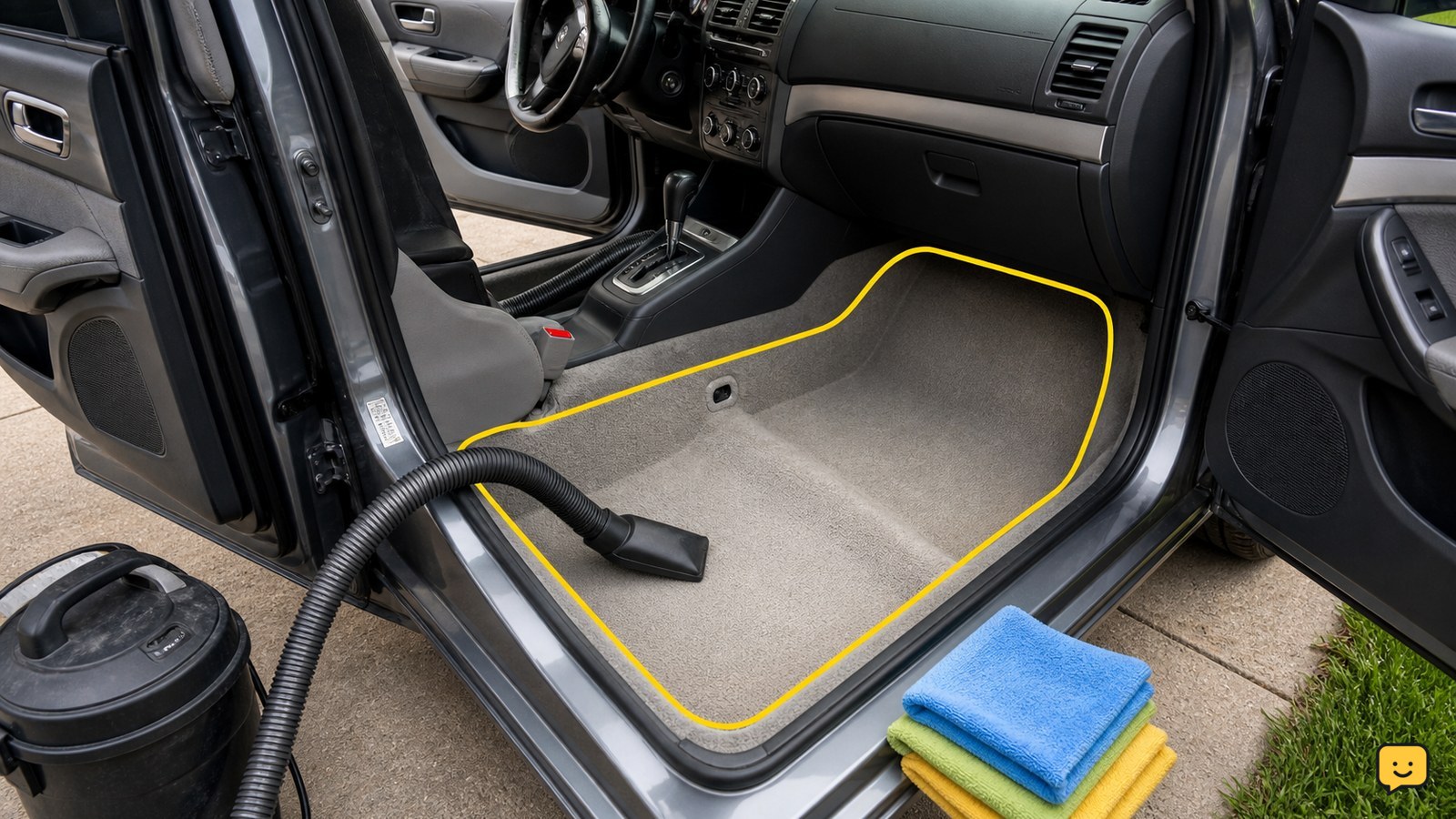
Vacuuming removes loose ash and particles from the fabric surfaces that commonly hold cigarette odor.
- Vacuum seat cushions, seat backs, carpet, floor mats, cargo lining, door pockets, and the gaps beside the center console.
- Use a soft brush attachment on cloth seats and headliners so you do not abrade the material.
- Move the front seats fully forward and backward to expose the rails and carpet underneath.
- Vacuum again after brushing because loosened residue can settle back onto the upholstery.
Do not skip the headliner: smoke residue can cling to it, but aggressive scrubbing or heavy moisture can loosen the fabric or leave water marks.
Wipe smoke residue from hard interior surfaces
Hard surfaces need a separate wipe-down because cigarette smoke leaves a film on plastic, vinyl, glass, trim, and controls.
- Apply an interior cleaner to a microfiber cloth rather than directly onto the dashboard or controls.
- Wipe the dashboard, door panels, steering wheel, center console, cup holders, trim, window surrounds, and interior glass.
- Use a lightly damp cotton swab or soft brush around seams and buttons, keeping moisture out of openings.
- Turn the cloth frequently so you lift residue instead of spreading it.
- Dry each area with a clean microfiber cloth.
Repeat the wipe-down if the cloth picks up a yellow or brown film. The surface should feel clean and dry, not greasy or strongly perfumed.
Treat fabric seats and carpets without soaking them
Fabric seats, carpets, and mats require light treatment followed by complete drying; soaking can drive odor deeper into padding.
- For washable mats, clean them according to their material and place them outside the car to dry completely.
- For cloth upholstery and carpet, use a cleaner labeled for that material and follow its dilution and dwell-time instructions.
- As an alternative, Chemical Guys describes lightly misting fabric with equal parts white vinegar and water to help break down smoke residue. Test first, use minimal moisture, and do not use this mixture on leather or unapproved materials.
- Blot treated fabric with a clean towel, then leave the doors or windows open until the material is fully dry.
- Once dry, sprinkle baking soda over cloth seats or carpet if needed. Jaguar of Willow Grove recommends baking soda as an odor absorber; vacuum it up thoroughly afterward.
Do not judge the result while vinegar or another cleaner is still wet. Recheck only after the fabric has dried and the temporary treatment smell has faded.
Clean the glass and check the climate-control symptom
Interior glass can retain smoke film, while an odor that appears mainly when the fan runs points to a possible HVAC-related source.
- Clean the inside of the windshield, side glass, rear glass, and mirror surfaces with a glass cleaner applied to the cloth.
- Use a second dry cloth to remove haze and streaks.
- After the cabin is clean and dry, operate the climate control briefly with the windows open and notice whether the cigarette smell returns.
If the odor is present while the car is parked but becomes much stronger from the vents, do not spray cleaner into the duct openings. Consult the owner’s manual for serviceable filters or have the HVAC system and cabin professionally cleaned.
Verify the odor is gone and repeat only the failed area
A successful treatment leaves the cabin smelling neutral after drying, with no strong odor returning when the doors close or the climate control operates.
- Close the windows and doors for a while after the interior is fully dry.
- Check the headliner, seat seams, carpet edges, ashtray area, cargo area, and vent output separately.
- If one area still smells, clean that area again rather than adding more fragrance throughout the car.
- If the odor remains strong after two careful cleaning cycles, use a professional detailer who can assess upholstery padding and HVAC contamination.
Air fresheners, dryer sheets, and odor absorbers may hide the smell temporarily, but they do not replace removal of smoke residue. Stop adding products once the cabin becomes heavily scented or surfaces feel coated.
Frequently asked questions
Will baking soda remove cigarette smell from a car?
Baking soda can help absorb odor from cloth seats and carpets, but it will not remove smoke film from hard surfaces or eliminate an active ash source. Vacuum first, apply it only to suitable dry fabric, leave it for a period allowed by the material, and vacuum it up completely. Do not use it as a substitute for cleaning the cabin.
Can I spray vinegar into my car’s air vents?
No. Do not spray vinegar or another liquid into the vents, blower motor, dashboard openings, speakers, or electrical controls. A smell that returns when the fan runs may indicate residue in the HVAC system. Check the owner’s manual for serviceable components or arrange professional HVAC cleaning instead.
How do I remove cigarette smell from leather car seats?
Use a leather cleaner approved by the seat manufacturer, test it in a hidden area, and apply it to a cloth rather than soaking the leather. Wipe the seats, seams, and nearby hard trim, then dry them. Do not use the vinegar-and-water fabric treatment on leather unless the manufacturer specifically permits it.
Why does my car still smell like smoke after cleaning?
Smoke odor can remain in the headliner, carpet padding, seat seams, cargo lining, or HVAC system. Recheck those locations after the cabin is fully dry. If the smell returns mainly through the vents or remains strong after repeated targeted cleaning, stop masking it with fragrance and arrange professional interior or HVAC treatment.