
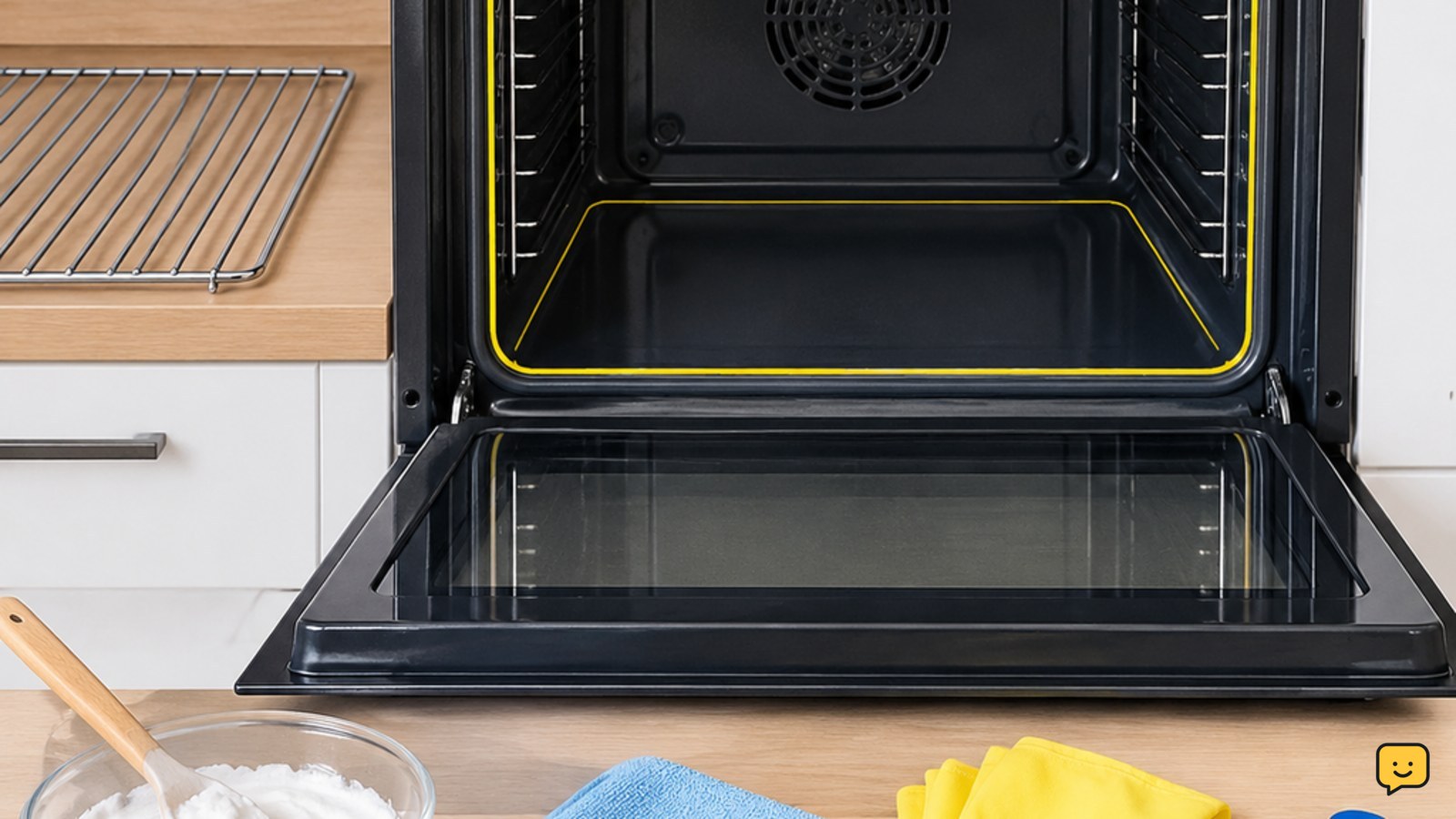
To clean an oven, switch it off, let it cool completely, and remove the racks. Wipe loose crumbs, spread a paste of baking soda and water over greasy interior surfaces, leave it several hours or overnight, then wipe with damp cloths. Clean racks separately, use a plastic scraper for residue, and follow your manual for self-cleaning or steam-clean modes.
For more help with this topic, use the Home Electronics guides.
Check the oven type and remove loose debris
A cool home oven is suitable for manual cleaning, but its lining and cleaning cycle determine which products and tools are safe. Read the care section of the manual first, especially if the oven has catalytic liners, a steam-clean setting, or a self-clean cycle.
- Switch the oven off and let every surface cool completely.
- Remove the racks and any trays, foil, stones, thermometers, or stored cookware.
- Use a dry cloth or handheld brush to collect loose crumbs from the floor and corners.
- Check for exposed heating elements, a rubber or woven door gasket, and areas where liquid could enter the controls.
Keep the gasket, heating elements, vents, and control panel dry. If a spill has reached an electrical opening, stop instead of pouring or spraying more liquid.
Apply baking-soda paste to baked-on grease
A baking-soda paste loosens many greasy, baked-on deposits without requiring a strong commercial cleaner. The Kitchn’s oven-cleaning method uses about 1/2 cup of baking soda mixed with a few tablespoons of water; add water gradually until the mixture spreads like a thick paste.
- Spread the paste over the dirty enamel interior and the inside of the door, avoiding the gasket, heating elements, vents, and unprotected glass edges.
- Leave the paste in place for several hours or overnight so it can soften residue.
- For a small fresh spill, a shorter dwell time may be enough; do not let the paste dry into a hard crust around moving parts.
Do not use this method on a surface your manual says requires a different cleaner. When the manual warns against abrasive materials, treat baking soda and scrubbing cautiously and test a small hidden area first.
Wipe the interior and remove stubborn residue
Wipe the softened paste away with a damp soft cloth, changing the water as it becomes greasy. Use a plastic scraper held nearly flat for residue that remains on smooth, approved interior surfaces; Whirlpool also recommends a plastic scraper for stubborn oven deposits.
- Lift softened grease rather than grinding it into the finish.
- Use a non-scratch sponge only on surfaces approved by the manual.
- Make several passes with clean, damp cloths until no gritty paste or greasy film remains.
- Dry the interior with a clean towel and leave the door open briefly so remaining moisture can evaporate.
Do not use a metal scraper, steel wool, abrasive powder, or force on chipped enamel. If a mark does not soften after repeated damp wiping, leave it in place and check the manufacturer’s care instructions rather than damaging the lining.
Clean the racks, door glass, and exterior
Oven racks are easiest to clean outside the appliance, while the door glass needs gentle wiping that avoids liquid entering the door. Soak the racks in warm water with dish soap, then scrub with a non-scratch pad and rinse them fully before drying.
- Wipe the cooled door glass with a damp soft cloth. For residue on an approved smooth surface, use a plastic scraper gently and keep the gasket dry.
- Wipe the control panel and handle with a barely damp cloth, then dry them immediately.
- Clean the exterior with the product recommended for its finish, such as stainless steel or painted enamel.
- Reinstall completely dry racks in their original positions.
Whirlpool advises wiping the oven interior with a damp cloth after using white vinegar or lemon juice, but never combine acidic products with bleach, ammonia, or commercial oven cleaner. Use one cleaning approach at a time.
Verify the oven is clean and safe to use
A successfully cleaned oven has no loose baking soda, greasy film, pooled water, or wet residue around the controls, gasket, vents, or heating elements. Run a clean, dry cloth over the interior; it should come away without gritty particles.
- Inspect the floor, corners, door seal, racks, and visible heating elements.
- Confirm that the racks slide normally and that the door closes evenly without pinching the gasket.
- Check that the control panel is dry and that no cleaner remains in seams or vents.
- Only after everything is dry, use the oven briefly at a normal cooking temperature while watching for smoke or an unusual smell.
A small amount of odor from remaining residue means the oven needs another cool-down and wipe. If it smokes heavily, sparks, or produces a strong chemical smell, switch it off, ventilate the room, and do not use it again until the cause is identified.
Choose self-clean or steam-clean only when the manual allows it
Self-clean and steam-clean cycles are model-specific options, not universal replacements for manual cleaning. Before starting one, remove items the manual excludes, wipe out heavy loose grease, and confirm that the kitchen can be ventilated.
Follow the exact control sequence, door-lock behavior, cycle limits, and cooldown instructions for your model. Never open or force a locked door. If the cycle produces persistent smoke, a burning smell, an error, or unusual heat around nearby cabinets, cancel only as the manual directs, keep clear of the appliance, and contact the manufacturer if the condition continues.
Frequently asked questions
Can I clean an oven with baking soda and water?
Yes, baking soda and water can clean many cool enamel oven interiors. Make a thick paste, leave it on greasy areas for several hours, then wipe with damp cloths. Check the manual first because specialty liners and some finishes may require a different method.
How do I clean baked-on grease from an oven?
Soften baked-on grease with a baking-soda paste and several hours of contact time. Wipe with damp cloths and use a plastic scraper gently on approved smooth surfaces. Do not use metal tools or scrape heating elements, the gasket, or chipped enamel.
Can I use vinegar after baking soda in the oven?
You can use a small amount of diluted vinegar as a separate wiping step if the oven manual permits it, but do not mix vinegar with bleach, ammonia, or commercial oven cleaner. Wipe away the baking soda first, then use clean water to remove remaining residue.
Should I use the oven’s self-clean setting?
Use self-clean only when your model’s manual supports it and explains the required preparation. Remove excluded items, ventilate the room, and follow the locking and cooldown instructions. Stop if there is persistent smoke, sparking, an error, or an unusual burning smell.