You can microwave Styrofoam only when the container is clearly labeled microwave-safe. If there is no label, treat it as unsuitable and move the food to a microwave-safe glass or ceramic dish. Stop immediately if the foam softens, warps, melts, smokes, or develops an unusual odor; do not eat food contaminated by melted foam.
For more help with this topic, use the Cooking Basics guides.
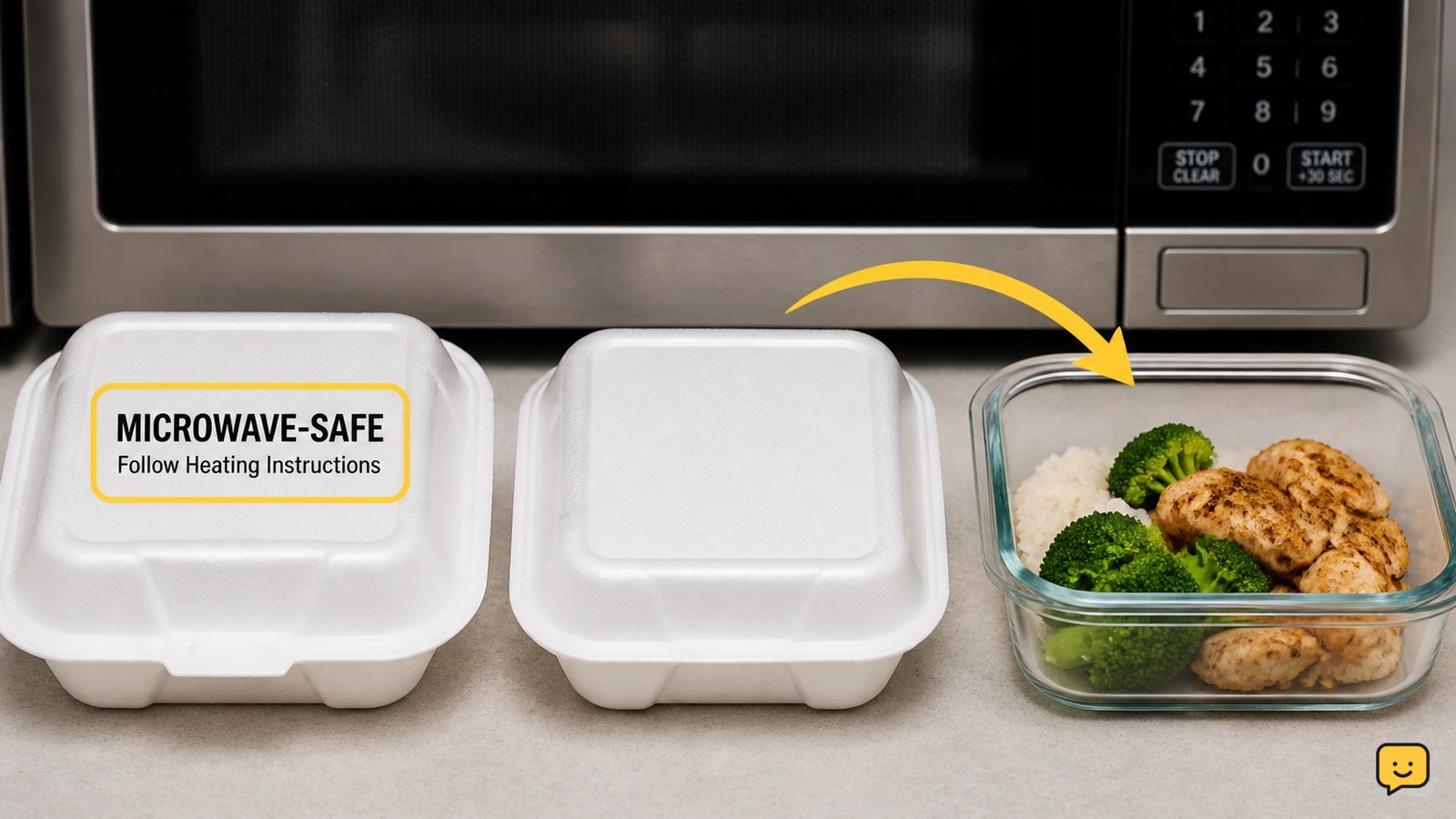
Check whether the container is labeled microwave-safe
A Styrofoam food container is suitable for microwave heating only when its manufacturer clearly identifies it as microwave-safe. Check the base, side, lid, or printed packaging for that wording or a microwave-safe symbol.
A foam container without a readable label is not confirmed safe. Do not assume that a takeout box, cup, tray, or packing insert can be heated just because it holds food. Cullen’s Home Center’s safety guide gives the same practical rule: most Styrofoam should not be microwaved unless it is labeled microwave-safe.
Also inspect the container for cracks, dents, soft areas, or old heat damage. If the label is missing, damaged, or too small to read, use a different dish.
Transfer unmarked food to glass or ceramic
Food in an unmarked Styrofoam container should be transferred to a microwave-safe glass or ceramic dish before heating. Remove any foam lid, wrapper, or insert rather than placing the complete package in the microwave.
- Move the food into a microwave-safe glass or ceramic bowl or plate.
- Cover it loosely with a microwave-safe lid or vented cover if needed.
- Heat according to the food’s instructions or use short heating intervals.
- Stir or rotate the food when appropriate, then check that the center is hot.
This transfer step removes the uncertainty created by an unlabeled container and lets you inspect the food without relying on the foam’s heat tolerance.
Inspect the foam while it heats
A labeled microwave-safe foam container should remain rigid and visibly unchanged during heating. Keep the container centered and make sure it does not touch the microwave’s interior walls.
Pause the microwave and check the container if you notice softening, warping, shrinking, melting, smoke, or an unusual odor. These are observable signs to stop rather than continue heating. A container that looks normal before heating can still change during use, so do not leave it unattended.
| What you notice | Safest action |
|---|---|
| No microwave-safe label | Transfer the food to glass or ceramic. |
| Foam stays firm and unchanged | Continue only if the label specifically permits microwave use. |
| Soft, warped, melted, smoky, or unusual-smelling foam | Stop the microwave and discard food touched by damaged foam. |
What to do if the foam melts or smells unusual
If Styrofoam melts, smokes, warps, or smells unusual, stop the microwave immediately and allow the container to cool before handling it. Do not scrape melted foam back onto the food or continue heating the same package.
Remove the food from the damaged container only if it can be done without touching melted material. If melted foam contacted the food, discard the food. Clean any residue from the cooled microwave according to the appliance manufacturer’s instructions, and stop using the container.
If there is active smoke or a flame, stop the microwave and keep the door closed until the situation is safe; disconnect power only if you can do so without approaching danger.
Choose a safer container for repeat reheating
Microwave-safe glass or ceramic is the simplest replacement when you regularly reheat food. These materials also make it easier to check the food, stir it, and serve it without transferring it again.
For another heat-material decision, compare the guidance on {link} before using paper products near an oven. Do not treat oven-safe, freezer-safe, or dishwasher-safe labeling as proof that a container is microwave-safe; look for microwave-specific wording.
For another heat-material decision, compare the guidance on wax paper heat guidance before using paper products near an oven.
Frequently asked questions
Can you microwave a Styrofoam takeout container?
Only if the takeout container is clearly labeled microwave-safe. If it has no label, transfer the food to microwave-safe glass or ceramic before heating. Do not rely on the container’s appearance or the fact that it was used for hot food.
Can you microwave Styrofoam with the lid on?
Only follow the lid’s instructions if both the container and lid are specifically marked microwave-safe. Otherwise, remove the foam lid and transfer the food to a suitable dish. A lid that seals tightly can also prevent steam from escaping, so use only a microwave-safe vented cover when heating.
What happens if Styrofoam melts in the microwave?
Stop the microwave when foam softens, warps, melts, smokes, or smells unusual. Let the container cool, discard food that touched melted foam, and clean the cooled microwave according to its manufacturer’s instructions. Do not continue heating the damaged container.
Is glass safer than Styrofoam for microwave reheating?
Microwave-safe glass is a more dependable choice when a foam container is unmarked or its label is unclear. Transfer the food to glass or microwave-safe ceramic, then heat it according to the food instructions and check the center before serving.