Dogs should not eat marshmallows as a planned treat. A small accidental amount of a plain, regular marshmallow may not become an emergency, but marshmallows offer little nutritional value and sugar-free versions may contain xylitol, a toxic sweetener for dogs. Check the package immediately and contact a veterinarian or animal poison service if the ingredients or amount are uncertain.
For more help with this topic, use the Everyday Pet Care guides.
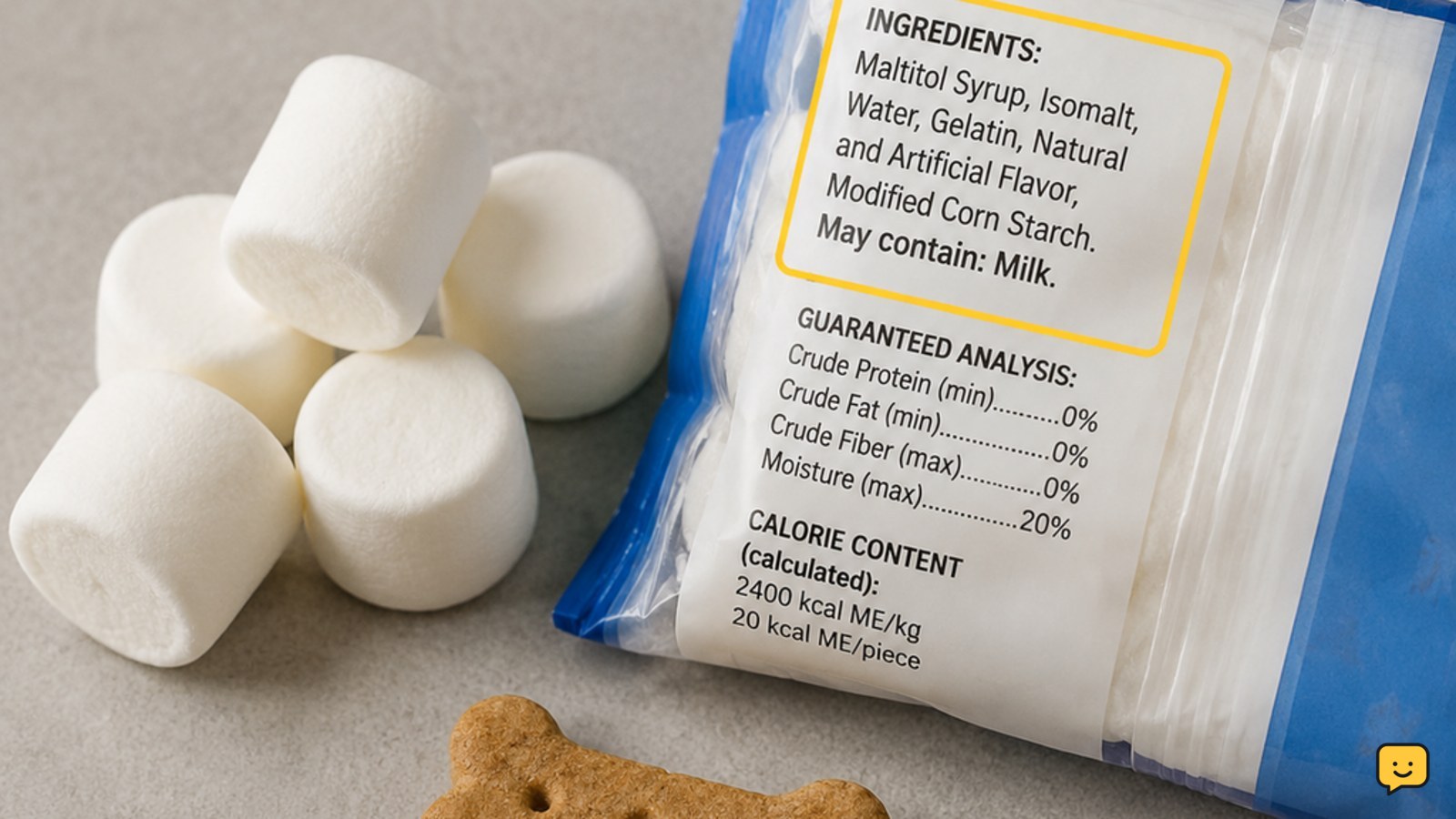
Check the Ingredient Label Before Doing Anything Else
Marshmallows are only conditionally less concerning when they are ordinary, non-sugar-free products with no questionable add-ins. The package determines the next step.
- Find the sugar-free claim. Sugar-free marshmallows require prompt professional advice because some contain xylitol.
- Read the full ingredient list. Do not rely on the front label, especially for flavored, coated, filled, or seasonal products.
- Set aside the package. A veterinarian or animal poison service may need the brand, product name, ingredients, package size, and estimated amount.
Veterinary sources including Garden State Veterinary Specialists and Walnut Creek Veterinary Clinic identify xylitol as toxic to dogs. If xylitol appears on the label, or the label is missing, stop home monitoring and call for guidance.
Avoid Marshmallows as a Planned Dog Treat
Regular marshmallows are not a good routine treat because they are mostly sugar and provide little nutritional value. Ashby Animal Clinic describes a plain standard marshmallow as unlikely to cause a life-threatening emergency in a small accidental ingestion, but still does not recommend marshmallows for dogs.
The safest preparation is not to serve one. Do not make marshmallows safer by cutting them into smaller pieces, melting them, roasting them, or mixing them into another food. Those changes do not remove the sugar or an unsafe additive.
Mini marshmallows, large marshmallows, marshmallow creme, and products containing marshmallow should all be treated as human sweets rather than regular dog treats. Avoid any product with an unknown recipe, sugar-free formulation, or added ingredients that you cannot verify.
Choose Plain, Purpose-Made Treats Instead
Plain, dog-appropriate treats are a better choice than marshmallows because their ingredients and serving format are intended for dogs. Avoid substituting another human snack without checking its preparation.
For examples of safer food-preparation decisions, see plain cooked sweet potato; the guide explains which forms and recipe additives matter.
Do not use an article’s general treat guidance as an individualized feeding plan. A veterinarian can account for conditions such as diabetes, obesity, food sensitivities, or a prescribed diet.
For examples of safer food-preparation decisions, see plain cooked sweet potato; the guide explains which forms and recipe additives matter.
What to Do After a Plain Marshmallow Is Eaten
If your dog ate a small amount of a confirmed plain, regular marshmallow and is acting normally, remove the remaining sweets, record what was eaten, and contact your veterinarian if you are unsure about the product or amount.
- Confirm that the product is not sugar-free and does not list xylitol.
- Estimate how many were eaten and when.
- Watch for vomiting, diarrhea, unusual weakness, or other changes in behavior.
- Call a veterinarian or animal poison service if symptoms appear, the amount was substantial or unknown, your dog is very small, or the label cannot be verified.
Do not induce vomiting, give medication, or offer a home antidote. A professional should decide whether further care is needed.
Treat Xylitol Exposure as a Time-Sensitive Risk
A marshmallow that contains xylitol needs professional attention even if your dog appears normal. Garden State Veterinary Specialists, Ashby Animal Clinic, and Walnut Creek Veterinary Clinic all warn that xylitol-containing sugar-free products can be toxic to dogs.
Have the package ready and tell the veterinarian or animal poison service the product, ingredients, amount, time, and your dog’s weight. Do not wait for a warning sign before calling, because the absence of symptoms does not verify that the exposure is harmless.
For another food-related toxicity decision, review what to do about raisins; raisin ingestion has a different risk profile and also warrants prompt professional guidance.
For another food-related toxicity decision, review what to do about raisins; raisin ingestion has a different risk profile and also warrants prompt professional guidance.
Recognize Symptoms That Need Urgent Veterinary Care
Urgent veterinary care is needed for collapse, seizures, severe weakness, difficulty breathing, repeated vomiting, or any symptom that is sudden, severe, or worsening.
Less severe signs such as vomiting, diarrhea, unusual tiredness, or a clear change from normal behavior still justify a call for advice, particularly when the product was sugar-free, flavored, coated, or eaten in an unknown amount.
Stop reading and contact an emergency veterinarian immediately if your dog is unconscious, having a seizure, struggling to breathe, or deteriorating quickly. Do not transport an animal in serious distress without first calling the emergency clinic for instructions.
Frequently asked questions
Are mini marshmallows safer for dogs than large ones?
No. Mini marshmallows are still sugary human sweets, and their smaller size does not make the ingredients safer. A sugar-free mini marshmallow may still contain xylitol. If your dog ate any amount and you cannot verify the product, keep the package and contact a veterinarian or animal poison service.
Can dogs eat sugar-free marshmallows?
No, not without professional confirmation of every ingredient. Sugar-free marshmallows may contain xylitol, which veterinary sources identify as toxic to dogs. Call a veterinarian or animal poison service promptly if your dog may have eaten one, even if no symptoms are visible.
Should I make my dog vomit after it eats marshmallows?
No. Do not induce vomiting or give a home antidote unless a veterinary professional specifically instructs you. First check the package, estimate the amount and timing, and call a veterinarian or animal poison service for product-specific guidance.
What if my dog ate a marshmallow with chocolate or another added ingredient?
Contact a veterinarian or animal poison service with the complete product label. Added ingredients can change the risk, and the front of the package may not show every relevant component. Do not assume a flavored, coated, or filled marshmallow has the same risk as a plain regular one.